The Best Toy Path for Fine Motor Skills: A Developmental Journey from Grasp to Precision
Introduction
Fine motor skills—the coordinated movements of small muscles in the hands, fingers, and wrists—are foundational to a child’s independence, academic success, and creative expression. From buttoning a shirt to writing with a pencil, these abilities underpin countless daily tasks. While natural development plays a role, purposeful play with carefully selected toys can accelerate and enrich this process. The concept of a “toy path” refers to a sequential, age-appropriate progression of toys that challenges a child’s fine motor abilities at each stage, building from primitive grasping patterns to refined, controlled movements. This article explores the best toy path for fine motor skills, dividing the journey into four key developmental phases, and explains why each category of toys is essential. By following this roadmap, parents, educators, and caregivers can provide children with the right tools to strengthen their hands, improve hand-eye coordination, and lay the groundwork for lifelong manual dexterity.
—
The Foundation: Toys for Infants (0–12 Months)
In the first year of life, infants transition from reflexive grasping to intentional reaching and holding. Their hands are still learning to coordinate with their eyes, and the primary goal is to build core strength in the palmar muscles and practice the open-and-close motion of the hand. The best toys for this stage are simple, safe, and sensory-rich, encouraging babies to use their whole hand.
Rattles and Teethers are classic starters. A lightweight rattle with a textured surface invites a baby to wrap their fingers around it, shake it, and hear the sound. This action strengthens the palmar grasp—the ability to hold an object against the palm with fingers curled. As babies bring the rattle to their mouth, they also practice transferring objects from hand to hand, a milestone known as cross-body coordination. Teethers with varied textures (silicone nubs, wooden rings, soft fabric loops) further stimulate tactile receptors and encourage repetitive gripping, which builds endurance.
Soft Blocks and Fabric Books are next in the sequence. Unlike hard plastic blocks, soft blocks allow an infant to squeeze, crumple, and release them without frustration. Picking up a lightweight block involves isolating one hand and coordinating with the eyes to judge distance. As babies grow from four to six months, they begin to rake small objects toward themselves using all fingers. Soft blocks placed just out of reach encourage this raking motion, which later evolves into a pincer grasp.
Activity Gyms and Hanging Toys serve a different purpose: they promote reaching and batting. When an infant lies on their back and swats at dangling rings or bells, they are practicing hand-eye coordination and shoulder stability. The arm movements required to hit a moving target help strengthen the proximal muscles (shoulders and upper arms), which are essential for fine motor control further down the chain. For children around nine to twelve months, introducing a shape sorter with large, chunky pieces (like the classic Fisher-Price Rock-a-Stack) sets the stage for the next phase. At this stage, the toy path emphasizes whole-hand manipulation and the joy of cause-and-effect, laying a solid foundation without demanding finger-specific control.
—
Building Control: Toys for Toddlers (1–3 Years)
Toddlers are eager to explore their environment with more intention. Their fine motor skills are transitioning from gross palmar grips to more precise pincer and tripod grasps. Between ages one and three, children learn to pick up small objects with thumb and forefinger, rotate their wrists, and coordinate two hands together. Toys in this phase should challenge these emerging abilities without causing frustration.
Stacking Rings and Nested Cups are ideal for the early toddler period. A one-year-old can slide a large ring onto a peg using a whole-hand grasp, but by eighteen months they begin using a three-finger pinch (thumb, index, and middle finger) to hold the ring and align it carefully. The act of stacking requires visual attention, wrist rotation, and releasing the object at the precise moment—three critical skills. Nested cups offer additional benefits: picking up a cup, turning it over, and placing it inside another cup requires two-handed coordination and spatial reasoning.
Peg Puzzles with Chunky Knobs are another cornerstone. Unlike floor puzzles that demand fine manipulation of small pieces, chunky peg puzzles allow toddlers to grasp a large knob with a palmar or tripod hold and match the shape to the corresponding hole. This activity refines hand-eye coordination and teaches the “in and out” concept, which is a precursor to inserting coins into a slot or placing pegs into a pegboard. As toddlers master single-piece puzzles, they can advance to puzzles with three to four pieces that interlock, which demands more precise finger pressure to push the pieces together.
Large Beads and Lacing Strings introduce threading, a complex bilateral task. A two-year-old can slide a bead with a large hole (about 1 inch in diameter) onto a wooden shoe lace or a stiff string. The child must hold the string with one hand (often using a whole-hand or tripod grasp) while stabilizing the bead with the other. This bilateral coordination is crucial for later skills like using scissors, writing, and fastening buttons. For safety, beads should be made of soft wood or silicone with no sharp edges. The toy path at this stage also includes simple shape sorters with fewer openings (e.g., a cube with three to four shapes) and large crayons or egg-shaped crayons for early scribbling. Scribbling forces toddlers to hold a writing tool with a fist grip initially, then gradually shift to a more mature grip as shoulder stability improves.
—
Refining Dexterity: Toys for Preschoolers (3–5 Years)
The preschool years are a golden period for fine motor development. Children’s hands grow stronger, their finger movements become more independent, and they begin to show interest in more complex, purpose-driven activities. The toy path now emphasizes isolated finger movements, wrist stability, and controlled force.
Scissors and Cutting Toys are transformative. Safety scissors (like Fiskars for kids) require a child to open and close the blades using the thumb, index, and middle fingers while keeping the ring and pinky fingers curled. This thumb-up, wrist-straight position directly mirrors the pencil grip. Starting with cutting play dough or strips of paper, then moving to curved lines and shapes, builds hand strength and bilateral coordination (the non-dominant hand holds the paper steady). Preschoolers who struggle with scissors often have underdeveloped thenar and hypothenar muscles (the pads of the hand), so including play dough and putty in the toy path is equally important.
Play Dough and Modeling Compounds are perhaps the most versatile fine motor tools. Rolling, pinching, flattening, and sculpting dough exercises every major hand muscle. When a child uses a plastic knife to cut a snake of dough, they practice controlled pressure. When they pinch off small pieces with thumb and forefinger, they strengthen the finger flexors. Adding tools like rolling pins, cookie cutters, and extruders (e.g., Play-Doh’s Fun Factory) introduces twisting and squeezing motions that develop hand arching—the ability to curve the palm inward, which is essential for holding pencils and using tools. For a more structured activity, small tweezers or tongs can be used to pick up cotton balls, marbles, or pom-poms and transfer them to a container. This simulates the pincer grip required for precise writing.
Lacing Cards and Sewing Kits take threading to the next level. Instead of large beads, preschoolers use cards with pre-punched holes and a blunt needle. The child must coordinate the needle through each hole, pull the string through, and keep tension. This activity demands in-hand manipulation: the ability to move the object within one hand without dropping it. For example, a child might hold the needle with thumb and forefinger while using the middle finger to push the card or adjust the string. Simple sewing cards with animal shapes are the most engaging. Similarly, small interlocking building blocks (like LEGO Duplo or Mega Bloks) require wrist pronation and supination (turning the hand palm-down and palm-up) to push blocks together and pull them apart. As children move from Duplo to standard-sized LEGO (around age four or five), they use a tripod grip to hold tiny bricks and apply just the right amount of pressure—a perfect rehearsal for handwriting.
Tracing and Stenciling Toys also belong in this phase. Magnetic drawing boards, stencil templates, and grooved letter/line cards (like the Montessori sandpaper letters) allow children to practice precise hand movements without the complexity of forming letters. The act of tracing a curved line or a zigzag pattern strengthens visual-motor integration—the brain’s ability to coordinate what the eye sees with what the hand does. Preschoolers can also enjoy simple board games with small pieces (e.g., Candy Land or Hi Ho! Cherry-O) that require them to pick up a token, move it, and place it precisely—turning fine motor practice into social fun.
—
Mastering Precision: Toys for School-Age Children (5+ Years)
By age five, children typically have developed sufficient fine motor control to begin formal handwriting, but they continue to need refinement in speed, endurance, and dexterity. The toy path for this stage focuses on complex multi-step tasks, small-scale manipulation, and tool use that mimics real-world skills.
Advanced Building Sets are superb for this age. Kits like LEGO Classic sets, K’NEX, or magnetic tiles (Magna-Tiles) require children to sort tiny pieces by color or shape, align them at specific angles, and press them together with controlled force. Building a model from instructions demands sequential processing and bilateral coordination—one hand holds a piece while the other attaches it. Working with small connectors (e.g., K’NEX rods and connectors) strengthens the intrinsic hand muscles responsible for finger independence. For an even greater challenge, model kits (like wooden dinosaur or airplane models) that require sanding, gluing, and painting involve precision cutting, pincer grips, and sustained hand use.
Beading and Jewelry-Making Kits advance to tiny beads (size 6/0 or 8/0) with fine needles or elastic thread. Threading a needle, picking up a tiny bead with tweezers or fingers, and pushing it onto the string requires fine force modulation—if the child squeezes too hard, the bead might break or slip; too loose, and it falls. This activity also develops pincer grasp endurance, as children may spend 20 minutes creating a bracelet. Adding clasps and jump rings introduces the use of small pliers, which further trains the intrinsic muscles and wrist rotation.
Origami and Paper Crafts are excellent for school-age children because they combine precise folding with bilateral coordination. Folding a simple crane or a tulip requires aligning edges, creasing with a thumbnail (which strengthens the index finger), and holding the paper steady with the opposite hand. More complex origami models (e.g., modular pieces) demand step-by-step memory and sustained attention—both of which are bolstered by fine motor practice. Similarly, cutting with more advanced scissors (e.g., crafting scissors that create wavy or zigzag edges) and using a paper punch to create holes in specific positions further refine precision.
Sewing, Embroidery, or Cross-Stitch Kits take fine motor skills to a professional level. Children aged six and up can learn to insert a needle into a small hole, pull the thread through, and maintain even tension. Cross-stitch on a plastic canvas with large holes is a good entry point. This activity develops tactile discrimination (feeling the needle pass through the fabric), bimanual coordination (one hand above, one below), and fine motor planning (which stitch comes next?). It also introduces the concept of tool use as an extension of the hand, a critical cognitive milestone.
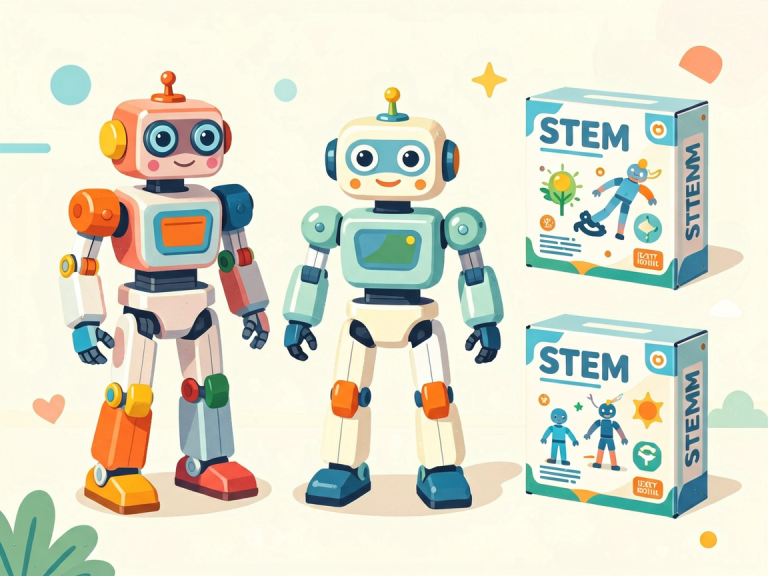
Science and Robotics Kits (such as snap circuits or simple robot-building sets) are an advanced option. These require children to manipulate tiny wires, screws, and gears using specialized tools (screwdrivers, pliers). The precision twist of a screwdriver into a small hole builds wrist rotation and finger strength. Tweezers to pick up resistors and LED lights mimic surgical precision. Such toys not only enhance fine motor skills but also integrate STEM learning, making practice engaging for older children. Additionally, keyboards and typing games should not be overlooked—while digital, they require finger isolation and rapid alternation, which benefits handwriting fluency.
—
The Path Beyond Traditional Toys: Everyday Activities and Creative Play
While commercial toys are valuable, the best toy path for fine motor skills also includes everyday activities that blend seamlessly into life. Cooking with a child—kneading dough, peeling oranges, snapping green beans, using a cookie cutter—offers unlimited fine motor practice. Gardening (digging with fingers, picking small seeds, weeding) strengthens hand endurance. Dressing (buttoning, zipping, tying shoelaces) is an authentic fine motor challenge that many toys try to simulate. Parents should remember that the true “toy path” is not a strict checklist but a philosophy: provide progressively harder tasks that require the hands to work together, apply controlled force, and manipulate objects with growing precision.
Music instruments, too, deserve mention. Percussion shakers, child-sized violins, recorders, and piano keyboards all demand finger articulation and hand-eye coordination. Even simple hand puppets encourage finger isolation when making the puppet “talk.” The key is to follow the child’s interests—if a four-year-old is fascinated by trains, use that interest to introduce threading activities (making a train track from beads) or building (LEGO train sets). Engagement guarantees practice.
Finally, open-ended art materials—clay, watercolor paints, glue bottles with small tips, stickers, hole punchers, and staplers—should be freely available. The more opportunities a child has to squeeze, pull, pinch, twist, and align, the more their fine motor skills will flourish. A well-designed toy path does not end at a specific age; it adapts. For older children, calligraphy pens, mechanical pencils, drafting tools, and even sculpting with wire can continue the journey through adolescence.
—
Conclusion
The best toy path for fine motor skills is not a single toy or a random collection, but a deliberate sequence that respects the child’s developmental readiness. Starting with rattles and soft blocks that build whole-hand strength, progressing through stacking rings and peg puzzles that teach precision, advancing to scissors and play dough that refine dexterity, and finally reaching complex building sets and crafts that demand mastery—each stage builds upon the last. By understanding the underlying motor milestones—palmar grasp, pincer grip, wrist stabilization, finger isolation, bilateral coordination—parents and educators can choose toys that challenge without overwhelming. The path is not rigid; it weaves in everyday life, art, music, and self-care. Ultimately, this journey transforms small hands into capable, confident tools, enabling children to write, create, and interact with the world in increasingly sophisticated ways. Whether the child is a toddler gripping a teether or a robotics enthusiast assembling a circuit, every play session is a step toward fine motor excellence. Choose wisely, play joyfully, and watch their fingers grow into their full potential.
Start with the complete guide: Unlocking Dexterity: The Best Toys for Fine Motor Development in Early Childhood.