From Blocks to Algorithms: The Toy Progression for Critical Thinking
Introduction: The Hidden Curriculum of Play
In a world increasingly defined by rapid technological change, information overload, and complex problem-solving, critical thinking has emerged as one of the most essential skills for success in both personal and professional life. Yet, while parents and educators often search for formal curricula or expensive enrichment programs to cultivate this ability, one of the most powerful and natural tools for developing critical thinking lies hidden in plain sight: toys. The toys children play with are not mere distractions or sources of entertainment; they are carefully designed tools that shape cognitive architectures, encourage hypothesis testing, and foster systematic reasoning. However, not all toys are created equal in this regard. The key lies in a deliberate toy progression —a thoughtful sequence of play materials that challenges children at each developmental stage, gradually increasing in complexity, abstraction, and strategic demand. This article explores how a well-structured progression of toys, from simple sensory objects to sophisticated coding kits, can systematically build the foundational skills of critical thinking: observation, comparison, classification, prediction, hypothesis formation, experimentation, evaluation, and inference. By understanding this progression, parents, educators, and toy designers can harness the transformative power of play to nurture minds that question, analyze, and create.
The Foundation: Sensory and Manipulative Toys (Ages 0–3)
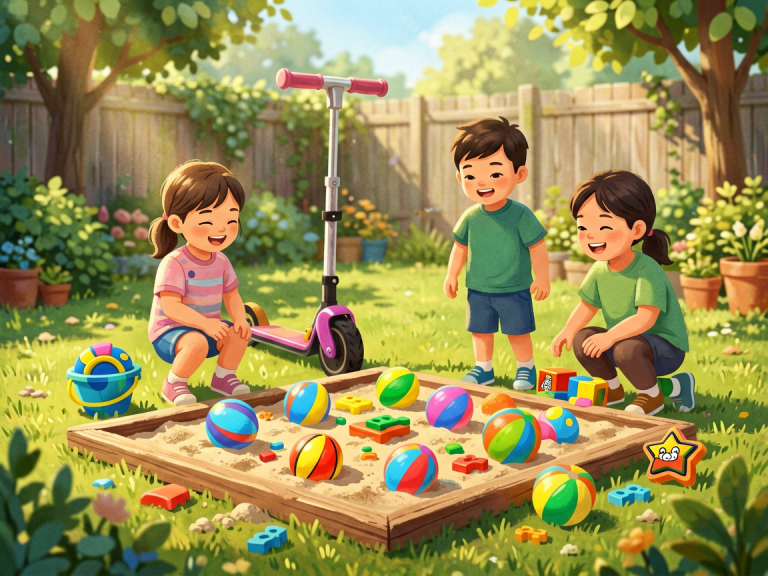
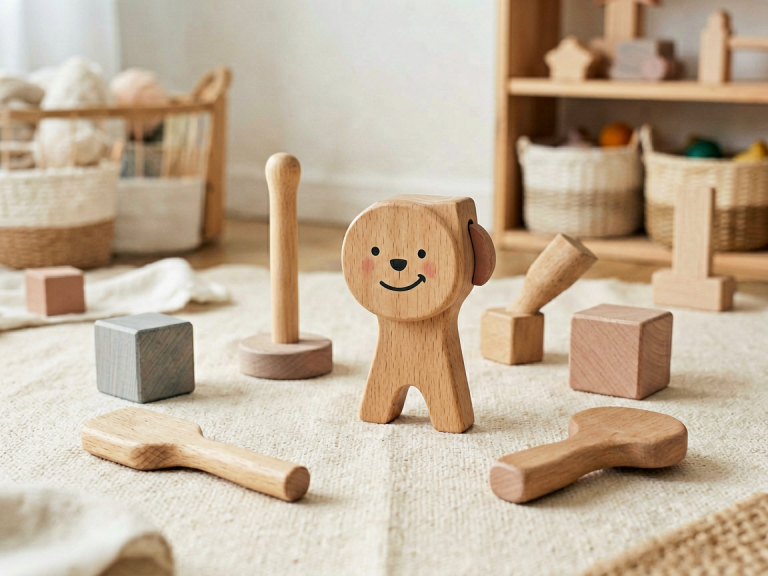
Critical thinking does not emerge fully formed; it begins with the most fundamental cognitive operations—sensing, grasping, and exploring cause and effect. For infants and toddlers, the first toys in a critical-thinking progression are those that engage the senses and invite manipulation. Soft blocks, rattles, textured balls, and simple shape sorters may appear elementary, but they lay the neurological groundwork for higher-order reasoning. When a six-month-old shakes a rattle and hears a sound, she is engaging in her first experiment: *Does shaking produce noise?* When she drops a block from her high chair and watches it fall, she is testing gravity—a primitive but real inquiry. These early interactions teach pattern recognition: every time I press this button, a light flashes; every time I put the square peg into the square hole, it fits. The brain begins to form mental models of the physical world.
Shape sorters, in particular, are deceptively rich in critical-thinking opportunities. A toddler trying to insert a triangular block into a circular hole must engage in trial and error, compare shapes, and adjust her strategy when she fails. This process—observe, hypothesize, test, evaluate—is the exact cycle used by scientists and engineers. The critical element here is the feedback loop: the toy provides immediate, unambiguous feedback. The block either fits or it does not. The child does not need a teacher to tell her she was wrong; the toy itself delivers the correction. This autonomy in learning fosters persistence and a willingness to revise strategies—two pillars of critical thinking. As children progress to stacking rings in order of size or fitting nesting cups, they learn seriation (ordering by a dimension) and classification (grouping by attribute). These are the building blocks of logical reasoning. Parents and caregivers can support this stage by offering varied sensory toys and, crucially, by allowing children to struggle. Rescuing a toddler too quickly from a frustrating puzzle robs them of the opportunity to develop problem-solving resilience.
Building Structures: Construction and Puzzle Toys (Ages 3–6)
As children enter the preschool years, their cognitive capacities expand dramatically. Language develops, working memory increases, and they begin to engage in symbolic thinking. The toy progression must now introduce materials that require planning, spatial reasoning, and the mental manipulation of objects. Construction toys—LEGO Duplo, wooden blocks, Magna-Tiles, and interlocking gears—become the central tools for critical thinking. Unlike the simple cause-and-effect of rattles, these toys demand that a child hold a goal in mind (e.g., “I want to build a tower that is taller than my brother”) and then execute a sequence of steps to achieve it. When the tower collapses, the child must analyze why: Was the base too narrow? Were the blocks misaligned? Did I add weight too quickly? This analysis requires diagnostic thinking: the ability to trace a failure back to its root cause.
Puzzles also play a crucial role at this stage. Jigsaw puzzles with 12 to 48 pieces train children in visual pattern matching, edge detection, and the strategy of sorting pieces by color or shape before assembly. More importantly, puzzles teach the concept of means-end analysis: breaking a large problem (completing the puzzle) into smaller subproblems (finding corners, assembling the border, filling in sections). This is a metacognitive skill that underlies all complex problem-solving. Additionally, board games designed for preschoolers—such as “Hoot Owl Hoot!” or “The Sneaky, Snacky Squirrel Game”—introduce simple rules, turn-taking, and the need to adapt strategies based on random events (like spinning a spinner). A child who must decide whether to move her token forward or collect acorns is making a rudimentary cost-benefit analysis. The adult’s role here is to ask open-ended questions: “What do you think will happen if you put the big block on top of the small one?” or “How could you fix your tower so it doesn’t fall again?” These prompts nudge children toward explicit reasoning, turning implicit knowledge into conscious thought.
Rules and Strategies: Board Games and Logic Toys (Ages 6–9)
With the onset of formal schooling, children develop improved attention spans, reading abilities, and the capacity to handle more abstract rules. The toy progression now shifts to games and puzzles that require strategic thinking, deduction, and the anticipation of multiple future scenarios. Classic board games like chess, checkers, and “Settlers of Catan Junior” are excellent vehicles for critical thinking because they force players to consider not only their own moves but also the potential responses of opponents. In chess, a six-year-old learning the game must ask: “If I move my knight here, what will my opponent do next? Is there a piece I should protect?” This is counterfactual thinking—imagining alternative realities and evaluating them. Chess also teaches the value of sacrifice: sometimes you must lose a piece to gain a positional advantage. That is a sophisticated trade-off analysis that requires delaying gratification and prioritizing long-term goals over immediate impulses.
Logic puzzles and brain teasers also become developmentally appropriate. Sudoku (with numbers or pictures), nonograms, and puzzles like “Rush Hour” or “Gravity Maze” challenge children to apply deductive reasoning: “If this car can only go forward, and that truck blocks the exit, then I must move the truck first.” These toys teach systematic trial elimination—a core strategy in scientific inquiry. Furthermore, strategy games like “Blokus” or “Qwirkle” require players to consider spatial constraints and plan several moves ahead, reinforcing sequential thinking. At this stage, children can also engage in more complex rule-based play that includes negotiation and compromise. Cooperative board games (where all players work together against the game itself) teach collective reasoning: how to share information, evaluate options as a group, and reach consensus. This builds social critical thinking—the ability to analyze arguments and make joint decisions. Adults can deepen the learning by debriefing after a game: “Why did you choose that move? What was your strategy? What would you do differently next time?” This reflective component transforms play into a metacognitive exercise, where children become aware of their own thinking processes.
Open-Ended Challenges: Coding Kits and Maker Toys (Ages 9–12)
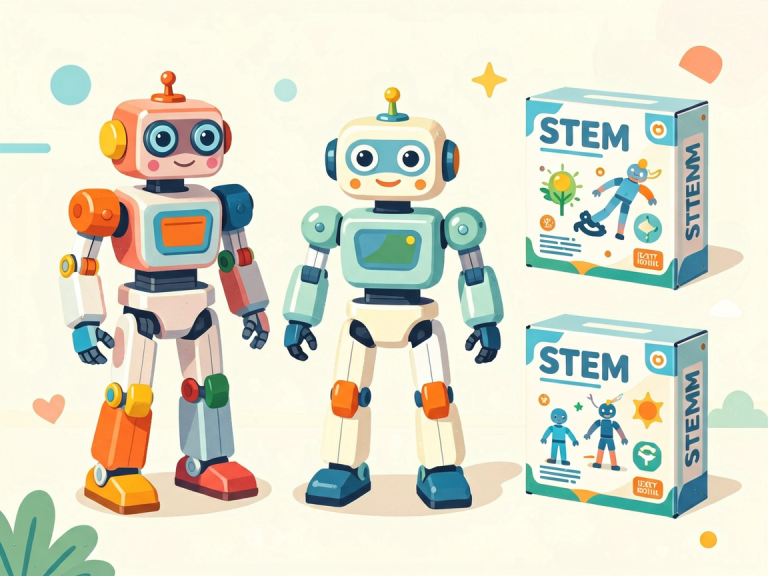
Pre-adolescence is a period of rapid cognitive development, marked by the emergence of formal operational thinking—the ability to reason about abstract concepts, variables, and hypothetical situations. The toy progression should now introduce tools that require computational thinking, systematic debugging, and iterative design. Coding kits such as “Sphero,” “Ozobot,” “LEGO Mindstorms,” or “Micro:bit” provide a tactile entry into programming. When a child writes a sequence of commands to make a robot navigate a maze, she engages in algorithmic thinking: breaking a task into discrete steps, ordering them logically, and predicting the outcome. When the robot crashes into a wall, she must debug—a process that involves identifying the error (e.g., “I told it to go forward too many seconds”) and formulating a correction. This cycle of plan, execute, test, fix mirrors the scientific method and is a direct training ground for critical thinking.
Maker toys, such as Snap Circuits, littleBits, or Arduino starter kits, take this a step further by introducing electronics and engineering principles. A child who wants to build a light-activated alarm must understand cause and effect (light sensor → transistor → buzzer), design a circuit, and troubleshoot short circuits or faulty connections. This requires systems thinking: seeing how individual components interact to produce a whole function. Moreover, many of these kits are open-ended; there is no single right answer. A child might choose to build a weather station, a game controller, or a robot arm. The freedom to define one’s own problem is a hallmark of advanced critical thinking. Unlike jigsaw puzzles with predetermined solutions, open-ended toys demand that the child engage in divergent thinking: generating multiple possible goals and evaluating which one is feasible or interesting. They also require resource management: “I have only three sensors. Which ones should I use to achieve my goal?” This scarcity-based decision-making is a real-world critical-thinking challenge.
Additionally, complex hobbyist games like “Magic: The Gathering” or “Pokémon TCG” involve deck-building, probability calculation, and adaptive strategy based on the opponent’s moves. Building a competitive deck requires analyzing synergies between cards, predicting meta-game trends, and balancing risk and reward. These games, when played thoughtfully, foster probabilistic reasoning—the ability to estimate likelihoods and make decisions under uncertainty. Parents and educators should encourage children to document their designs, keep engineering journals, or explain their code to others. Verbalizing reasoning clarifies thoughts and exposes gaps in logic. This is the essence of critical thinking: not just solving problems, but understanding *how* and *why* one solved them.
Beyond Play: The Transfer of Critical Thinking Skills
The ultimate goal of a toy progression is not merely to make children better at playing with toys, but to develop durable cognitive habits that transfer to academic subjects, professional challenges, and everyday life. Research in cognitive psychology supports the idea that skills acquired through structured play—such as metacognition, systematic reasoning, and hypothesis testing—can transfer to new domains when the underlying principles are made explicit. For example, a child who has learned to debug a robot’s code will be better equipped to revise an essay by identifying logical inconsistencies. A child who has mastered spatial reasoning through building with Magna-Tiles will likely excel in geometry. A child who has practiced strategic thinking in chess will approach a math word problem with a plan rather than random trial.
However, transfer is not automatic. It requires explicit bridging—adults helping children connect the thinking strategies used during play to other contexts. When a child says, “I tried three times to make the tower stand, and then I realized I needed a bigger base,” a parent can say, “That’s exactly what scientists do when they run experiments. They try, observe, and adjust their hypothesis. Can you think of a time at school when you used the same strategy?” Such conversations turn play wisdom into life wisdom. Additionally, the toy progression should not be a rigid ladder; children often revisit earlier types of toys in new ways. A twelve-year-old might build a complex marble run using blocks, applying physics knowledge that was absent at age four. The key is to provide a steady diet of increasingly complex, open-ended, and rule-rich play experiences, always calibrated to the child’s current zone of proximal development.
Conclusion: Play as Intellectual Formation
The journey from a baby’s rattle to a teenager’s robotics kit is not merely a journey of growing up; it is a deliberate pathway for sculpting the mind. A well-designed toy progression for critical thinking recognizes that each stage builds upon the previous one: sensorimotor exploration provides the raw data for pattern recognition; construction play teaches planning and analysis; board games introduce strategy and counterfactual reasoning; and coding kits demand algorithm design and debugging. At every step, the toy acts as a structured challenge that provides immediate feedback, encourages persistence, and rewards systematic thought. In an era when artificial intelligence can answer factual questions instantaneously, the uniquely human capacity for critical thinking—questioning assumptions, evaluating evidence, reasoning through complexity, and generating novel solutions—becomes ever more valuable. By thoughtfully curating the toys we offer our children, and by engaging in dialogue about their play, we are not just filling time; we are building the neural architecture of tomorrow’s innovators, problem-solvers, and thoughtful citizens. The humble toy, in the right progression, becomes a cornerstone of intellectual freedom.
Start with the complete guide: Building Minds: The Best Beginner Toys for Problem Solving.