The Learning Toy Path: A Developmental Guide for 4-Year-Olds
The age of four is a magical window in early childhood development. Children at this stage are no longer toddlers but not yet full-fledged preschoolers; they possess an insatiable curiosity, a rapidly expanding vocabulary, and a newfound ability to engage in more complex, imaginative play. Their brains are forging neural connections at an astonishing rate, and every experience—especially play—shapes the architecture of their minds. Choosing the right toys for a four-year-old is not merely about keeping them occupied; it is about thoughtfully constructing a "learning toy path" that nurtures cognitive, physical, social, and emotional growth. This article explores the essential components of that path, offering evidence-based recommendations and practical strategies for parents and educators who wish to maximize the developmental benefits of play.
1. Cognitive Development: Building Problem-Solving and Logical Thinking
At four years old, children begin to move from purely sensorimotor exploration to more symbolic and logical thinking. Piaget called this the preoperational stage, characterized by the emergence of language, mental imagery, and early reasoning—though still limited by egocentrism and centration. Toys that challenge a child’s ability to classify, sequence, compare, and solve problems are invaluable.
1.1 Puzzles and Pattern Games
Simple jigsaw puzzles with 12 to 24 pieces are perfect for four-year-olds. They teach spatial awareness, visual discrimination, and patience. Beyond traditional puzzles, consider pattern blocks and geometric shape boards that require children to match shapes or complete sequences. For example, a set of colorful wooden tangrams encourages trial-and-error reasoning and the concept of part-whole relationships. When a child tries to fit a triangle into a square opening, they are not just playing—they are developing early mathematical thinking.
1.2 Construction and Building Sets
LEGO Duplo or Mega Bloks remain excellent choices, but at age four, children can handle smaller pieces and more specific instructions. Construction sets that include wheels, axles, and connectors allow them to build vehicles, towers, and simple machines. This kind of play fosters engineering instincts: How do I make this bridge stable? Why does this tower fall? The child learns cause and effect, balance, and the value of iterative design. Additionally, following a picture guide (even simple step-by-step diagrams) strengthens working memory and sequencing skills.
1.3 Simple Board Games
Board games designed for preschoolers—such as "Candy Land," "Hi Ho! Cherry-O," or cooperative games like "Hoot Owl Hoot!"—introduce turn-taking, rule-following, and basic counting. They also provide a safe context for experiencing winning and losing, which is a critical emotional lesson. Look for games that require matching colors, counting spaces, or identifying simple shapes; these reinforce foundational math concepts without pressure.
2. Fine Motor Skills and Creativity: Strengthening Hands and Imagination
Fine motor development accelerates between ages four and five as children gain better control over their small hand muscles. This supports later skills like writing, drawing, and self-care (buttoning, zipping). Creative play also blossoms, allowing children to express emotions and explore new ideas.
2.1 Art Supplies and Open-Ended Crafting
A well-stocked art cart with washable crayons, markers, child-safe scissors, glue sticks, play dough, and a variety of paper types encourages sensory exploration and creativity. Play dough is especially valuable: rolling, pinching, cutting, and shaping it strengthens hand muscles and bilateral coordination. Add tools like rolling pins, cookie cutters, and plastic knives to extend the possibilities. Painting with watercolors or finger paints allows color mixing and texture experimentation, which stimulates the brain’s visual and tactile centers.
2.2 Lacing and Stringing Activities
Lacing cards (cards with holes and a string) and bead-stringing sets are superb for hand-eye coordination and dexterity. They require the child to guide a string through small holes—a precursor to threading a needle or tying shoelaces. Choose beads of different shapes and colors to incorporate sorting and pattern creation. For example, ask the child to string a pattern: red, blue, red, blue. This combines fine motor practice with cognitive patterning.
2.3 Scissors and Cutting Practice
With supervision, four-year-olds can begin using safety scissors to cut along straight lines, curves, and eventually simple shapes. This activity strengthens the intrinsic hand muscles needed for writing. Provide magazines, old greeting cards, or construction paper with pre-drawn lines. The sense of accomplishment when a child successfully cuts out a star or a circle is profound and boosts confidence.
3. Language and Communication: Expanding Vocabulary and Narrative Skills
A four-year-old’s vocabulary typically ranges from 1,000 to 2,000 words, and they are beginning to form longer, more complex sentences. They love telling stories, asking endless "why" questions, and engaging in dramatic play. Toys that stimulate language are essential for literacy preparation.
3.1 Pretend Play Sets
Dress-up costumes, play kitchens, tool benches, doctor kits, and puppet theaters are language goldmines. When a child pretends to be a doctor, they use vocabulary like "stethoscope," "check-up," and "prescription." They negotiate roles with playmates ("You be the patient, I'll be the nurse") and create narratives that involve sequencing and problem-solving. Pretend play also develops theory of mind—the understanding that others have different thoughts and feelings—because children must step into another character's perspective.
3.2 Storytelling and Sequencing Cards
Picture cards that depict a simple story in three or four steps (e.g., a seed growing into a flower) help children understand narrative order. They can arrange the cards and then tell the story aloud. This bridges oral language and early reading comprehension. Also consider flannel board sets where children move felt pieces around to create their own stories. The act of verbalizing the story forces them to organize their thoughts and use descriptive language.
3.3 Interactive Books and Audio Storytellers
While not strictly toys, touch-and-feel books, lift-the-flap books, and books with sound buttons engage multiple senses. Audio storytelling devices like Tonies or Yoto players allow children to listen to stories independently, reinforcing auditory comprehension and vocabulary. They can also press buttons to skip or rewind, which builds narrative tracking skills. Encourage children to retell the story in their own words after listening.
4. Social-Emotional Learning: Navigating Friendships and Feelings
Social and emotional skills are arguably the most important foundation for lifelong success. At age four, children are learning to share, take turns, express emotions verbally, and empathize with others. Toys can facilitate this learning in powerful ways.
4.1 Cooperative Games
Unlike competitive games, cooperative games require all players to work together toward a common goal. Games like "The Sneaky, Snacky Squirrel Game" or "Count Your Chickens" teach teamwork and reduce anxiety about losing. Children learn that helping others is part of fun. These games also provide a natural context for practicing patience and waiting for one’s turn.
4.2 Emotion Cards and Feelings Dolls
Simple flashcards with faces showing different emotions (happy, sad, angry, surprised) help children recognize and name feelings. Some sets include mirrors so children can mimic the expressions. Plush dolls with interchangeable face pieces (e.g., "Mr. Potato Head" style but for emotions) allow children to construct faces and talk about what makes them feel that way. This is a safe entry point for discussing difficult emotions like jealousy or frustration.
4.3 Dolls, Action Figures, and Playsets
Dolls and action figures are not just for entertainment—they are tools for social rehearsal. Children project their own experiences onto the characters, acting out scenarios like a doctor visit, a birthday party, or a conflict over a toy. Through these narratives, they process real-life events and practice social scripts. A simple dollhouse or a farm set with multiple characters encourages group play, negotiation, and shared storytelling. Observing a child at play can give parents valuable insight into their emotional world.
5. Physical Activity and Gross Motor Skills: Moving with Purpose
Four-year-olds need at least 60 minutes of active play daily. Gross motor development includes balance, coordination, strength, and body awareness. Toys that encourage running, jumping, climbing, and throwing are crucial, but they should also involve cognitive elements.
5.1 Balance Bikes and Scooters
A balance bike (no pedals) is ideal for four-year-olds because it teaches the core skill of balancing before introducing pedaling. Riding builds leg strength, spatial awareness, and confidence. Alternatively, a three-wheeled scooter with a lean-to-steer design helps with coordination. These toys also promote outdoor exploration and risk assessment in a controlled environment.
5.2 Obstacle Course Components
Set up a simple backyard obstacle course using items like noodle hurdles (pool noodles stuck in the ground), stepping stones, tunnels, and throw-and-catch targets. Ask the child to crawl under a low table, hop on one foot between circles, then toss a beanbag into a bucket. This type of play integrates gross motor skills with planning and following multi-step instructions. It can be done with inexpensive household items.
5.3 Sports Equipment for Pre-Schoolers
Soft, lightweight balls, foam bats, and child-sized basketball hoops introduce foundational sports skills without frustration. At age four, children are not ready for competitive team sports, but they can practice throwing, catching, kicking, and swinging. A simple parachute (or large bedsheet) used with a group of children encourages cooperative lifting and rhythmic movement, which strengthens upper body muscles and social bonding.
6. How to Create a Balanced Learning Toy Path
With so many options, parents may feel overwhelmed. The key is not to buy every toy, but to choose ones that are open-ended, developmentally appropriate, and varied across domains. Here are practical tips for curating a learning toy path for a four-year-old:
6.1 Rotate Toys to Maintain Engagement
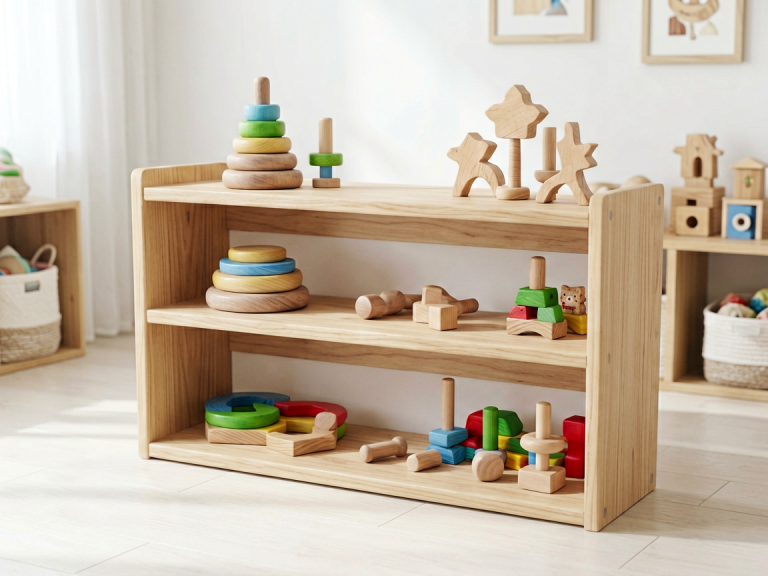
Instead of having all toys available at once, store most of them and rotate a selection every two to three weeks. This keeps the child’s interest fresh and prevents overstimulation. For example, Week 1 might feature puzzles, art supplies, and a construction set; Week 2 introduces a board game, play dough, and dress-up clothes.
6.2 Follow the Child’s Interests
Notice what captures your child’s attention. If they are fascinated by dinosaurs, incorporate dinosaur-themed puzzles, books, and figurines into the toy path. This intrinsic motivation deepens learning. Similarly, if they show an affinity for music, add a simple xylophone, maracas, or a rhythm instrument set.
6.3 Prioritize Quality Over Quantity
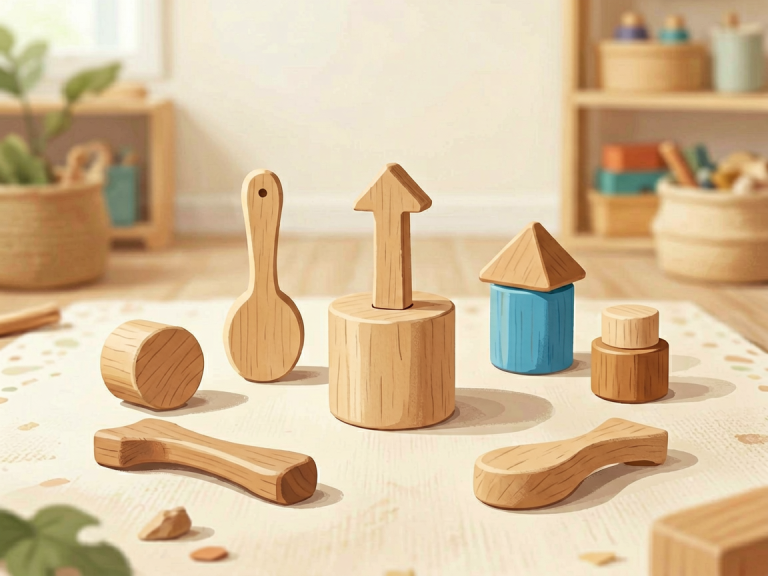
Well-made wooden toys often outlast plastic ones and provide richer sensory experiences. However, even simple cardboard boxes, fabric scraps, and kitchen utensils can be powerful learning tools. The most important factor is adult involvement: a toy’s potential is unlocked when a parent or caregiver sits with the child, asks questions, and extends the play.
6.4 Include Unstructured Play Materials
Blocks, sand, water, clay, and loose parts (beads, buttons, bottle caps) allow for infinite creativity. These materials have no prescribed outcome, so children must invent their own uses. Unstructured play is where higher-order thinking—divergent thinking, problem-finding, and innovation—flourishes.
Conclusion: The Journey, Not the Destination
The learning toy path for a four-year-old is not a rigid checklist but a flexible, joyful journey of discovery. Each toy, if chosen with intention, can be a stepping stone toward a more capable, confident, and compassionate child. Remember that the best "toy" in a child’s life is the undivided attention of a loving adult. When a parent builds a block tower alongside their child, listens to their made-up story, or cheers them on as they balance on a scooter, they are providing the richest learning environment of all. So take a deep breath, trust your instincts, and let the play begin. The path is full of wonder, and every step—every puzzle solved, every tower rebuilt, every pretend tea party—is a building block for a lifetime of learning.