Unlocking Imagination: A Comprehensive Toy Guide for Creativity Development
Creativity is not a gift reserved for a select few; it is a skill that can be nurtured, practiced, and expanded—especially during childhood. In a world increasingly driven by standardized tests and structured activities, the simple act of play remains one of the most powerful engines of creative thinking. Toys are not just entertainment; they are tools for exploration, problem‑solving, and self‑expression. This guide will help parents, educators, and caregivers choose toys that actively foster creativity, turning playtime into a foundation for lifelong innovation. Whether you are shopping for a toddler or a pre‑teen, understanding the principles behind creative play will transform the way you select and use toys.
Why Creativity Matters and How Toys Support It
Creativity goes beyond artistic talent—it is the ability to connect disparate ideas, see new possibilities, and adapt to changing circumstances. Research shows that children who engage in open‑ended, imaginative play develop stronger executive function skills, including flexible thinking, self‑regulation, and planning. Toys can either encourage this process by offering endless possibilities or stifle it by prescribing a single outcome. The key is to prioritize toys that invite exploration rather than instruction. A toy that can be used in multiple ways, that responds to the child’s own ideas, is worth far more than one with flashing lights and fixed functions.
The Core Principle: Open‑Ended Toys
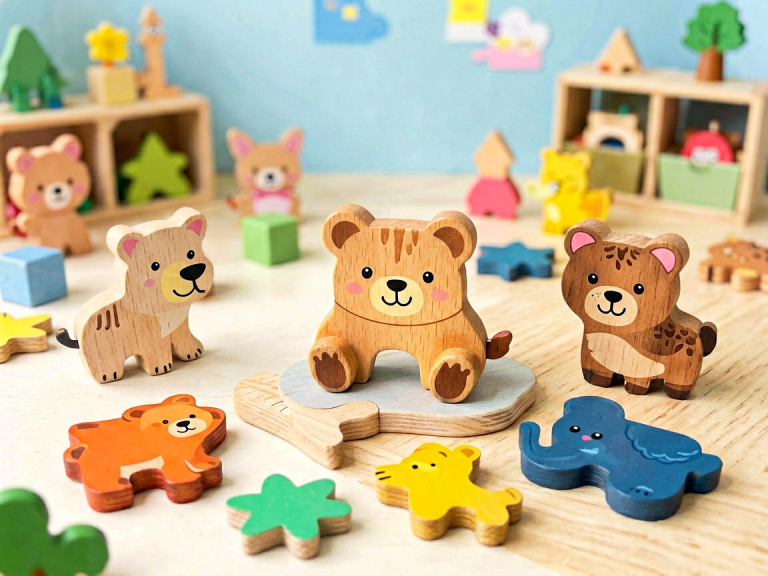
The single most important concept in any toy guide for creativity development is the distinction between open‑ended and closed‑ended toys. Open‑ended toys have no fixed purpose—they become whatever the child imagines. A set of wooden blocks can be a castle, a spaceship, a bridge, or a simple stack to knock down. A pile of scarves can be a cape, a tent roof, or a flowing river in a story. These toys empower children to take the lead, make decisions, and revise their plans as they play. In contrast, closed‑ended toys like puzzles with a single correct solution or battery‑operated robots that only do one thing limit creative exploration. While closed‑ended toys have their place (e.g., for learning specific skills), they should be balanced with ample open‑ended options. For maximum creative benefit, ensure that at least 60–70% of the playthings in a child’s environment are open‑ended.
Building Blocks and Construction Sets
Construction toys are a classic choice for creativity because they combine spatial reasoning, engineering thinking, and artistic expression. Simple wooden blocks (unpainted or in natural colours) allow toddlers to experiment with balance and symmetry. As children grow, more complex systems like LEGO bricks, magnetic tiles, or interlocking gears introduce mechanical concepts while still leaving room for original designs. The magic happens when the child moves beyond the instructions—when a LEGO set becomes a bridge between two chairs, or when magnetic tiles transform into a futuristic habitat. To maximize creativity, avoid buying only theme‑specific sets (e.g., a licensed castle set with predetermined pieces). Instead, invest in basic sets of bricks and tiles that can be combined freely. Encourage children to build something “that has never existed before,” and celebrate their unique creations rather than comparing them to a picture.
Art and Craft Supplies: The Ultimate Creative Sandbox
No toy guide for creativity development would be complete without a strong emphasis on art and craft materials. Unlike many toys that come with a predefined use, a blank sheet of paper, a lump of clay, or a box of crayons offers a universe of possibilities. Stock up on basic supplies such as washable markers, watercolour paints, modelling clay, scissors (age-appropriate), glue, tape, and recycled materials (cardboard tubes, egg cartons, fabric scraps). These items encourage process‑oriented play—the child focuses on the act of creating rather than the finished product. Resist the urge to give instructions like “draw a duck.” Instead, ask open questions: “What do you see in these colours today?” or “Can you build a creature from these boxes?” The goal is to help the child feel ownership of their creative process. Additionally, rotating materials periodically (e.g., introducing chalk one week and wool the next) keeps the experience fresh and sparks new ideas.
Role‑Playing and Pretend Play
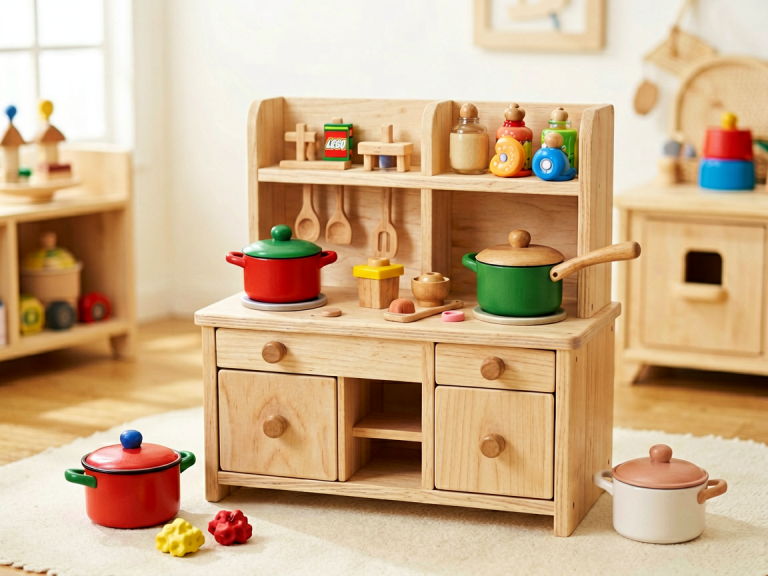
Dress‑up clothes, puppets, play kitchens, and miniature worlds all support dramatic play, which is one of the most profound forms of creative development. When children pretend, they are essentially writing and acting out their own stories. They try on identities, solve imaginary problems (like a puppet who lost its way home), and negotiate social rules. The best toys for this category are simple props that can be used in multiple scenarios. A plain fabric cape can make a child a superhero, a wizard, or a knight. A small cardboard box can become a car, a boat, or a time machine. Avoid overly detailed costumes that tell a child exactly what to be (e.g., a licensed Disney princess dress with a fixed character). Instead, offer a collection of neutral items—hats, scarves, empty containers, fabric pieces—that invite the child to invent the story. For older children, adding a notebook and markers to their pretend play area allows them to draw maps, write menus, or design tickets, merging storytelling with visual creativity.
Puzzles, Strategy Games, and Brain Teasers
While puzzles are often considered more logical than creative, they actually foster an important aspect of creative thinking: problem‑solving through multiple attempts. Jigsaw puzzles teach pattern recognition and patience, but creative development is better served by puzzles that have more than one solution or that encourage improvisation. For instance, tangram sets allow children to create endless shapes from seven simple pieces. Strategy board games (like “Blokus” or “Rush Hour”) require players to think ahead and try different approaches. Even simple matching games can be turned into creative exercises if you challenge the child to invent new rules or combine cards into a story. The key is to present these toys not as tests with right/wrong answers, but as invitations to explore different possibilities. Ask questions like, “Can you find another way to solve this?” or “What happens if you start with a different piece?” This shifts the focus from a single correct answer to creative problem‑solving.
Nature and Outdoor Toys
Creativity flourishes in natural environments, where materials are irregular, unpredictable, and multi‑sensory. Outdoor “toys” such as mud, sticks, leaves, stones, and water offer infinite creative potential. A pile of dirt and a small shovel can become a landscape; a branch can be a wand, a fishing rod, or a conductor’s baton. Purpose‑made outdoor toys like sandboxes, water tables, and gardening kits also support creativity when used with an open‑ended mindset. For example, instead of a plastic boat that only floats, provide a collection of natural and recycled objects (corks, leaves, bottle caps) so the child can design their own floating vessel. Nature scavenger hunts, where children collect items based on texture or colour, turn the outdoors into a living toy box. Even a simple magnifying glass can spark creative observation—what does the bark of a tree look like up close? What patterns are in the clouds? Encourage children to bring their indoor open‑ended toys outside, too: a set of blocks can be used to build a fort among the bushes, and art supplies can be used for leaf‑rubbing or rock painting.
Technology and Coding Toys: Balancing Screen Time with Creativity
Technology is not the enemy of creativity, but it must be used thoughtfully. The best tech toys for creative development are those that empower children to create, rather than passively consume. Coding toys such as programmable robots (e.g., Bee‑Bot, Sphero) or coding apps like Scratch allow children to design their own algorithms and see immediate, tangible results. Building a sequence of commands to make a robot navigate a maze is a creative act—requires planning, testing, and revising. Similarly, digital drawing tablets or animation apps turn a screen into a canvas. When evaluating a tech toy, ask: Does it let the child design something new? Does it offer multiple pathways and outcomes? Does it encourage experimentation without punishing mistakes? Avoid apps or games that are purely rote repetition or that have only one “right” answer. Set time limits and combine digital play with physical manipulation—for example, after designing a character on a tablet, the child can create it with modelling clay or draw it on paper. This bridges the digital and physical worlds and deepens creative understanding.
Age‑by‑Age Guidance for Choosing Creative Toys
Creativity development looks different at each stage, and toy selection should match the child’s current abilities and interests.
For infants and toddlers (0–2 years), focus on sensory exploration: soft blocks with different textures, rattles that produce varied sounds, and safe household objects (measuring cups, wooden spoons) that can be banged, stacked, and dropped. At this age, the child is learning cause and effect and basic motor skills, which are the foundations of creative problem‑solving. Simple nesting cups that can be stacked or filled with water are excellent open‑ended toys.
For preschoolers (3–5 years), imagination explodes. Provide a “play toolbox” with basic building blocks, art materials, and dress‑up items. This is the ideal time for pretend play—a play kitchen, a simple puppet theatre, or a doctor’s kit with generic tools. Avoid overly detailed toys that dictate the plot; instead, supply loose parts that can be combined. Remember that at this stage, process is far more important than product—a painting that looks like a scribble is still a masterpiece of creative expression.
For early elementary children (6–8 years), introduce more complex construction sets, simple board games that require strategy, and craft kits that allow for customization (e.g., making their own slime, designing a cardboard city). This is also a great time for beginner coding toys and nature‑based kits like bug catchers or rock‑polishing sets. Children begin to understand rules and can modify them—encourage them to invent new games using existing pieces.
For older children (9–12 years), creativity becomes more sophisticated. Offer advanced building sets (e.g., mechanical LEGO kits, magnetic construction systems), complex strategy games (like chess or “Catan”), and art supplies beyond basic crayons (charcoal, pastels, watercolour sets). Encourage long‑term projects: building a birdhouse, writing and illustrating a comic book, or designing a board game from scratch. Technology can play a larger role here—introduce simple robotics, stop‑motion animation tools, or music‑mixing apps. The goal is to help children see that creativity can be applied to virtually any field, from science to storytelling.
The Role of Parents and Caregivers in Creative Play
Finally, no toy guide is complete without addressing the human element. The best toys in the world will not foster creativity if the adult’s attitude is controlling or dismissive. Parents and caregivers can support creative development by:
- Creating a “yes” space. Designate an area where the child can make a mess, leave projects unfinished, and rearrange things without fear of punishment. This freedom is essential for experimentation.
- Asking open‑ended questions. Instead of “What did you make?” try “Tell me about your creation—what does it do?” or “What would happen if you added something here?”
- Participating without directing. Join the play as a collaborator, not a leader. Let the child take the creative reins while you follow their cues.
- Valuing process over product. Resist the urge to critique the final result. A lopsided block tower that the child is proud of is a success; a drawing that took effort is a triumph. Praise effort, persistence, and originality.
- Limiting structured activities. Too many scheduled lessons (soccer, piano, tutoring) can crowd out free, unstructured play, which is where creativity blossoms naturally. Ensure the child has ample unscheduled time to explore their toys on their own terms.
Final Thoughts: Building a Creative Future, One Toy at a Time
Creativity is not a luxury—it is a survival skill for a rapidly changing world. By choosing toys that prioritize imagination over instruction, we give children the tools they need to think divergently, solve novel problems, and express themselves authentically. This toy guide for creativity development is not about a perfect shopping list; it is about a mindset. When you next step into a toy store or scroll through an online catalogue, pause and ask: Will this toy invite my child to create, or will it simply entertain? Does it have more than one use? Can it be adapted as my child grows? By selecting open‑ended, stimulating, and age‑appropriate toys—and by stepping back as a supportive observer—you can transform playtime into a lifelong adventure in creativity. The most powerful toy is not the one with the most features, but the one that leaves the most room for a child’s own brilliant ideas.