Fine Motor Toys by Age: From Grasping to Precision
Safety and scope: The age bands below are broad activity categories, not developmental deadlines or evidence that a particular brand is suitable. Always follow the exact product’s age label. Supervision does not remove small-part restrictions. Toys are not treatments, and difficulty with an activity does not establish a diagnosis. For a more flexible approach, see our ability-led play progression guide. The US small-parts test uses a specified cylinder and considers detached components; a household tube is not a substitute.
Starting with Fine Motor Toys by Age
Fine motor skills—the coordinated movements of small muscles in the hands, fingers, and wrists—are foundational to a child’s ability to perform everyday tasks such as writing, buttoning a shirt, using utensils, and tying shoelaces. These skills do not develop overnight; they evolve through a predictable sequence from reflexive grasping to precise, controlled manipulations. The right toys, chosen according to a child’s developmental stage, can transform play into powerful practice. This guide provides a comprehensive, age‑by‑age overview of fine motor development toys, explaining why each type is beneficial and offering concrete examples. Whether you are a parent, educator, or caregiver, understanding these milestones will help you select toys that challenge without frustrating, and that nurture dexterity, hand‑eye coordination, and cognitive growth.
0–12 Months: Reflexive Grasp to Intentional Reach
During the first year, infants progress from involuntary palmar grasps to purposeful reaching and transferring objects between hands. Play at this stage should stimulate sensory exploration and early hand control.
Why These Toys Matter: Newborns’ hands are often clenched; soft rattles and textured toys encourage opening and closing. As they gain strength, toys that require shaking, batting, or squeezing build wrist and finger muscles. Between 6 and 12 months, the pincer grasp (using thumb and index finger) emerges—a critical milestone for later self‑feeding and writing.
Recommended Toys:
- Soft grasping rings and rattles – Lightweight, easy to hold, and often textured or sound‑making. Examples: Manhattan Toy Winkel, Oball rattle.
- Activity gyms with dangling toys – Encourages batting and reaching while lying on the back.
- Teething toys with varied surfaces – Promote mouthing (a form of tactile exploration) and grip strength.
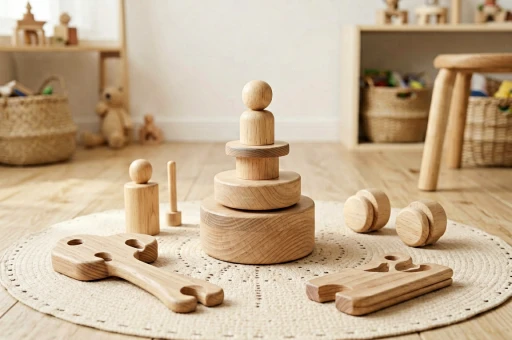
- Stacking cups or rings – Large, simple cups that nest or stack help develop hand‑eye coordination. Babies 8–12 months can begin pushing cups together.
- Crinkle toys and fabric books – The sound and texture invite grasping and turning pages.
- Balls with ridges or nubs – Rolling and squeezing a small ball (around 4–5 inches) encourages two‑handed play.
Safety Note: Always ensure toys are free of small parts, made of non‑toxic materials, and large enough to prevent choking.
1–2 Years: Pincer Grasp Refinement and Tool Use
Toddlers this age are mastering the pincer grasp and beginning to use simple tools. Their hands become more deliberate as they explore cause‑and‑effect and imitate daily routines.
Why These Toys Matter: The ability to pick up small objects (like cereal pieces) is now refined into picking up crayons, turning knobs, and squeezing toys. Toys that require inserting, pulling apart, or pushing together strengthen finger isolation and bilateral coordination (using both hands together).
Recommended Toys:
- Shape sorters – Classic shape sorters (e.g., Melissa & Doug Shapes Puzzle) demand that toddlers align a shape with a hole and push it through, requiring precision and spatial awareness.
- Large pegboards with oversized pegs – Inserting pegs into holes reinforces the pincer grasp. Look for pegs with knobs for easier handling.
- Pop‑up toys – Pressing buttons, flipping switches, or sliding levers to make characters pop up builds finger strength and cause‑and‑effect understanding.
- Simple puzzles with large knobs – Wooden puzzles with chunky pieces (e.g., animals, vehicles) require grasping the knob and placing pieces into corresponding cutouts.
- Nesting cups or stacking blocks – Toddlers love to build towers and knock them down, but the act of stacking also requires careful alignment and wrist control.
- Crayons, egg‑shaped or triangular – Encourage scribbling; the triangular shape promotes a proper tripod grip (thumb and first two fingers).
- Pull‑apart toys – Toys that snap together (like Duplo bricks) or interlocking rings that can be pulled apart strengthen the intrinsic hand muscles.
Play Tips: Offer verbal guidance (“Push the square in!”) and model actions. Do not expect perfection—exploration is the goal.
2–3 Years: Precision and Hand Dominance
Between two and three, children’s fine motor control improves dramatically. They begin to show hand preference, can manipulate small objects with greater accuracy, and attempt more complex actions like snipping with scissors and stringing beads.
Why These Toys Matter: This period is crucial for developing the “digital opposition” (thumb‑to‑finger coordination) needed for writing. Activities that require twisting, squeezing, and threading challenge bilateral coordination and steadiness.
Recommended Toys:
- Cutting activities – Follow the exact product’s age label and supervision instructions. Blunt tips do not make scissors unable to cut skin. For a child not ready for tools, offer suitable materials to shape by hand instead.
- Posting and fitting activities – Choose age-labeled large-piece puzzles or posting toys. Do not offer loose small beads to children under three, or rely on a one-inch measurement as proof of safety.
- Play‑doh and clay – Rolling, pinching, and cutting play‑doh with plastic knives or cookie cutters. Squeezing and shaping strengthens the small muscles of the hand.
- Sticker books – Peeling stickers from a sheet and placing them on paper requires two‑handed coordination and precise finger movement.
- Simple jigsaw puzzles (4–12 pieces) – Puzzles with knobs or chunky pieces help with visual‑motor integration.
- Matching games – Choose age-appropriate large-piece matching activities. Avoid loose magnets and stop using any magnetic toy with damaged or accessible magnetic components.
- Transferring activities – Use suitable large pieces and appropriate tools, not loose small fillers for children who may mouth or swallow them. This is play practice, not a treatment for pencil grip.
- Crayon rocks or short sidewalk chalk – Unusual shapes encourage a variety of grasps, from fist to tripod.
Developmental note: Children use different grasps while learning. Choose intact age-appropriate drawing materials, remove broken fragments, and do not break crayons into small pieces for a child who may mouth them. Do not force a particular grip.

3–4 Years: Controlled Manipulation and Tool Mastery
Preschoolers at this stage can perform tasks requiring sustained concentration: cutting along curves, tracing lines, and using multiple tools in sequence. Their fine motor skills are now closely linked to early literacy and math readiness.
Why These Toys Matter: Children begin to draw shapes, write letters (often inconsistently), and dress themselves with minimal help. Toys that demand finger dexterity, pressure control, and sequential actions solidify these abilities.
Recommended Toys:
- Counting and sorting items – Small manipulatives (e.g., bears, buttons, or plastic animals) that can be sorted by color or size using tweezers or fingers. This builds the “pincer strength” needed for writing.
- Lacing cards with more complex patterns – Cards that require following a path or creating a design (e.g., threading a shoelace around a cardboard shoe).
- Stencils and tracing boards – Holding a stencil steady while tracing inside it improves hand‑eye coordination and pencil control.
- Simple origami or paper folding – Folding paper in half, then again, then making a simple airplane or boat—this requires precise finger folds and bilateral hand use.
- Wooden bead sequencing sets – Beads in multiple shapes and colors that children string according to a pattern card (e.g., red‑blue‑red). This builds working memory, patterning, and fine motor endurance.
- Helping with preparation – Offer suitable non-cutting tasks such as washing produce with an adult. Keep sharp kitchen tools out of reach; a toy-selection article does not establish readiness to use knives or peelers.
- Mosaic or peg‑board patterns – Placing small pegs into a board to form pictures (e.g., Quercetti mosaics) refines the tip‑to‑tip grip.
- Clothespin activities – Attaching clothespins to the edge of a paper plate or a cardboard box strengthens the thumb‑finger opposition.
Literacy Connection: At this age, introduce “pre‑writing” toys like tactile tracing cards (sandpaper letters or numbers) and wipe‑clean workbooks with thick lines.
4–5 Years: Precision, Speed, and Complex Sequences
Children in their pre‑kindergarten year demonstrate refined motor control: they can cut out simple shapes, draw recognizable figures (e.g., a person with head, body, legs, arms), and begin to write letters and numbers with more consistency.
Why These Toys Matter: The transition to formal schooling requires sustained fine motor endurance—being able to color for 10 minutes, write a few words, and manipulate small fasteners (zippers, buttons, snaps). Toys that challenge speed, accuracy, and multi‑step planning are key.
Recommended Toys:
- Scissors with more advanced cutting – Cutting along curved lines, fringing paper to make “grass,” or cutting out simple shapes (triangles, circles).
- Beading sets with smaller beads – Beads around 6–8 mm with a thin cord. Stringing them in patterns requires palm‑to‑finger transfer and precise eye‑hand coordination.
- Lacing and sewing cards – Using a blunt needle and yarn to “sew” around a pre‑punched card to make a picture (e.g., a shoe, a leaf). This builds the motor planning for later handwriting.
- Construction toys with small connectors – Examples: LEGO Classic bricks, K’NEX, or Magna‑Tiles. Connecting small pieces requires aligning tabs with slots and applying force with the fingers.
- Writing tools with grips – Pencils with ergonomic grips (e.g., The Pencil Grip) and short, triangular crayons that encourage the tripod hold. Traceable letters in sand or shaving cream reinforce movement patterns.
- Stamps and stamp pads – Holding a handle or a small wood block stamp, pressing it onto a pad, and then stamping paper requires controlled pressure.
- Weaving or finger knitting – Simple lap looms or finger‑knitting kits help children practice crossing the midline and coordinating both hands.
- Puzzles with 20–50 pieces – Jigsaw puzzles demand fine motor precision (fitting tabs into slots) and patience.
Classroom Readiness: Toys that simulate real‑life tasks—like dressing frames (button, zipper, lace) or play money and cash registers—address self‑care and fine motor integration.
5–6 Years and Beyond: Mastery and Creativity
By age five or six, fine motor skills become increasingly automatic, allowing children to concentrate on the quality of their output—neat handwriting, detailed drawings, and dexterous crafts. They can use tools like tweezers, rulers, staplers, and even simple sewing needles.
Why These Toys Matter: At this stage, fine motor development supports academic demands (writing paragraphs, using a keyboard) and creative expression (modeling clay sculptures, building intricate structures). Toys should encourage creativity, problem‑solving, and endurance.
Recommended Toys:
- Advanced construction sets – Smaller LEGO pieces, motorized gears, or connector sets (e.g., ZOOB, Plus‑Plus). These require precise alignment and force.
- Origami kits with diagrams – Folding paper into complex shapes (crane, frog) requires careful finger coordination and following step‑by‑step instructions.
- Cross‑stitch or embroidery kits – Using a needle and thread on a pre‑printed cloth (e.g., a simple animal pattern) develops bilateral hand use and precision.
- Sculpting tools and clay – Detailed modeling (e.g., making a flower or animal) with tools like rolling pins, clay knives, and impression stamps.
- Perler beads (fuse beads) – Placing tiny plastic beads on a pegboard one by one builds immense concentration and pincer control.
- Handwriting practice books with raised lines – Tools that provide tactile feedback, such as raised line paper or gel writing boards.
- Science kits requiring assembly – Building a simple circuit, putting together a model volcano, or assembling a wooden birdhouse demands sequenced fine motor actions.
- Typing programs for children – Learning to type on a keyboard (using age‑appropriate apps like Dance Mat Typing) can complement handwriting skills.
Encouragement over Perfection: Children vary in their fine motor development. The goal is not to turn all play into work but to offer a rich variety of experiences that naturally strengthen hand muscles, coordination, and patience.

Fine Motor Toys by Age in Practice
Fine motor development is a gradual, fascinating journey from the reflexive clench of a newborn to the confident pencil stroke of a kindergartener. The toys we choose for each stage can either support or hinder that progression. Toys that are too easy fail to challenge; toys that are too difficult lead to frustration. By understanding the typical milestones—grasping, pincer, tool use, precision, and creative mastery—we can select age‑appropriate tools that make practice engaging and fun. Remember that every child moves at their own pace; offer a mix of guided activities and free exploration. Most importantly, celebrate the small victories: a bead successfully threaded, a shape sorted, a letter drawn for the first time. These are the building blocks of independence, confidence, and lifelong learning.
Start with the complete guide: Unlocking Dexterity: The Best Toys for Fine Motor Development in Early Childhood.
For a closer look at this stage, see our small movements, big skills.
For a closer look at this stage, see our toys build problem solving.
Frequently Asked Questions
Which fine motor toys suit each age best?
One to two: posting and stacking; two to three: threading and stickers; three to four: lacing, tweezers, and beginner scissors; five plus: small construction, tracing, and crafts. Each stage builds on the last grip.
How do I know a fine motor toy is the right difficulty?
The child should succeed most attempts with visible effort. Constant failure shuts practice down; instant success builds nothing.
Can fine motor play replace handwriting practice?
Before school, yes, it is the preparation. Hand strength, pinch control, and tool handling from play make later handwriting instruction far easier.