The Power of Play: Essential Beginner Toys for Unleashing Creativity
In a world increasingly dominated by screens, structured schedules, and pre-packaged entertainment, the simple act of creating something from nothing has become a precious—and sometimes endangered—childhood experience. Yet creativity is not a talent reserved for artists and inventors; it is a fundamental human capacity that can be nurtured, developed, and most importantly, sparked through the right kinds of play. For beginners—whether toddlers first exploring their hands, preschoolers discovering cause and effect, or even adults looking to reconnect with their imaginative side—the toys we choose matter enormously. The best beginner toys for creativity are not flashy, expensive, or technologically advanced. They are humble, open-ended, and endlessly adaptable. They invite exploration without instruction, encourage failure without frustration, and celebrate the process rather than the product. This article explores why certain toys are particularly effective at cultivating creativity in beginners, and offers a comprehensive guide to selecting and using these tools of imagination.
What Makes a Toy Truly Creative?
To understand which toys best serve creative development, we must first define what we mean by “creative” in the context of play. A creative toy is not one that simply looks artistic or comes with a paintbrush. Rather, it possesses several key characteristics that set it apart from conventional, single-purpose playthings.
First and foremost, creative toys are open-ended. Unlike a jigsaw puzzle that has one correct solution or a battery-operated car that only drives forward, open-ended toys have no fixed outcome. A set of wooden blocks can become a castle, a spaceship, a mountain range, or a dinosaur nest—all within the same afternoon. This lack of predetermined purpose forces the child to imagine possibilities, to experiment, and to make decisions. Every play session becomes a unique act of creation.
Second, creative toys encourage manipulation and transformation. They invite the child to change their form, combine them with other objects, or repurpose them in unexpected ways. Modeling clay can be rolled flat, pinched into peaks, or pressed with a fork to create texture. A cardboard box can be cut, painted, taped, and worn as armor. The toy itself is not the end; it is the raw material for endless transformations.
Third, these toys promote process over product. In our achievement-oriented culture, we often fixate on the final result: a perfect drawing, a symmetrical tower. But creative development happens in the messy middle—in the scribbles that become a story, in the tower that collapses and is rebuilt differently. The best beginner toys do not judge. They do not light up or play a congratulatory tune when used correctly. They simply offer themselves as raw material for exploration.
Finally, creative toys are sensory and tactile. They engage multiple senses—touch, sight, smell, sometimes sound. The weight of a wooden block in the hand, the smoothness of a silk scarf, the cool squish of dough—these sensory experiences ground the child in the physical world and stimulate neural connections that digital screens cannot replicate. For beginners, especially very young children, sensory input is the foundation of cognitive development.
Top Beginner Toys for Sparking Imagination
With these criteria in mind, we can identify several categories of toys that have stood the test of time—and of child development research—as powerful catalysts for creativity. Each category offers unique benefits and can be adapted for different ages and interests.
Construction and Building Toys
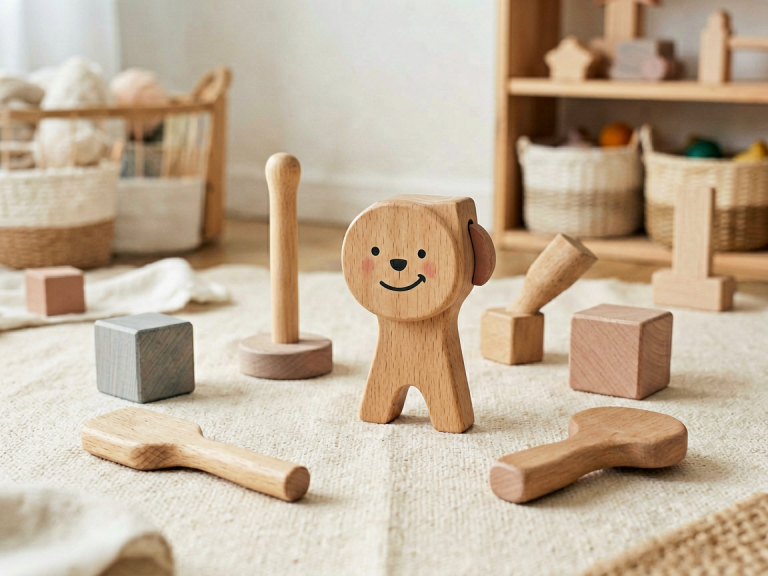
The humble block—whether made of wood, plastic, cardboard, or magnetic materials—is arguably the single most important creative toy in existence. Construction toys teach spatial reasoning, balance, geometry, and planning, but their greatest gift is their infinite flexibility. A set of simple unit blocks, such as those found in many Montessori or Waldorf classrooms, can be used by a one-year-old to practice stacking and knocking down, and by a six-year-old to build complex architectural models with arches and cantilevers.
For slightly older beginners (ages 3 and up), magnetic building tiles have become a modern classic. Their satisfying click when they snap together, combined with their transparency and bright colors, make them irresistibly inviting. Unlike traditional blocks, magnetic tiles allow children to build structures that are stable in ways that would be impossible with simple stacking—floating roofs, vertical walls, even geodesic domes. The key is that the tiles themselves do not suggest any particular creation; they are simply a medium for the child’s vision.
Another excellent construction toy is the classic interlocking brick system, such as LEGO. However, for beginners, it is crucial to choose sets that are not overly prescriptive. A large bucket of basic bricks in assorted colors is far more creative than a themed set with instructions for a specific spaceship or castle. The themed set teaches following directions, which is a valuable skill, but it is the open bucket that teaches invention.
Malleable Materials: Dough, Clay, and Sand
There is something almost magical about a material that can be squeezed, rolled, poked, and reshaped at will. Playdough is often a child’s first encounter with this kind of tactile transformation. For the very youngest beginners (12 months and up), simple dough can be used for grasping, squishing, and making imprints with fingers or simple tools. As children grow, they learn to roll spheres, flatten disks, and eventually form recognizable objects like snakes, bowls, or animals.
For older beginners (ages 4 and up), air-dry clay or non-toxic modeling compounds offer a more permanent medium. A child can sculpt a figure, let it dry, and then paint it—introducing a multi-step creative process that involves planning, execution, and revision. The resistance of the clay, the way it holds fingerprints, and the patience required to build up layers all contribute to fine motor development and creative thinking.
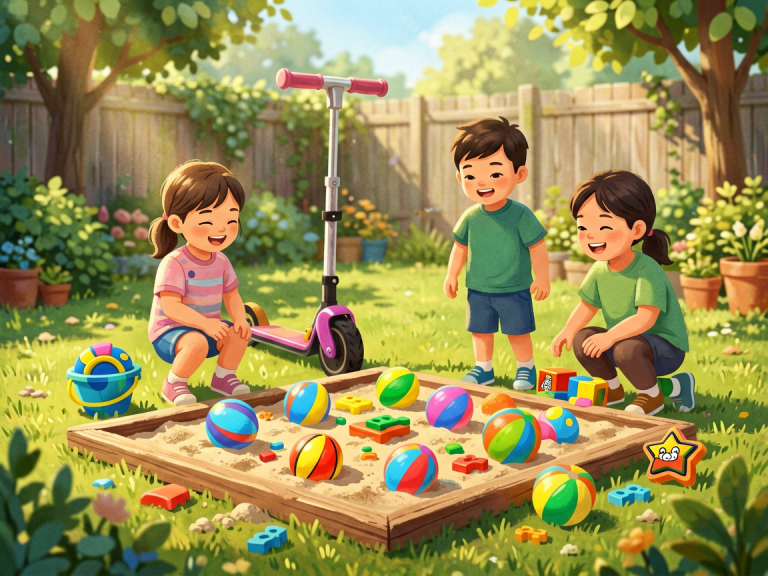
Sand, whether kinetic sand (which holds its shape) or traditional beach sand, is another endlessly creative medium. Kinetic sand, with its unique texture that feels both dry and moist, is particularly popular for indoor play. Children can build castles, carve tunnels, make “sand cakes,” or simply run their fingers through it for sensory pleasure. The impermanence of sand structures—they will be knocked down or smoothed over—teaches a valuable lesson about process and letting go.
Art Supplies for the Pre-Literate and Beyond
While crayons and paper are often the default creative toy, true creative development requires a broader range of art materials. For beginners, the most important thing is accessibility—tools that are easy to hold, do not require special skills, and allow for large, expressive movements. Chunky crayons that break easily? Actually, broken crayons are wonderful because they can be used on their sides for broad strokes or on their tips for fine lines. Finger paints, washable markers, and tempera paint blocks are all excellent for young children.
But the most creative art supply may be the simplest: plain paper in large sheets. Without lines, without coloring-book outlines, the child is free to create their own shapes, patterns, and narratives. A roll of brown kraft paper spread across a table or taped to the floor becomes an invitation to a whole-body drawing experience. Add a few drops of watercolor on a wet surface and watch the colors bleed into each other—a lesson in chemistry and beauty that requires no instruction.
For beginners who are a bit older (ages 5 and up), introducing recycled materials can revolutionize their creative play. Cardboard tubes, egg cartons, bottle caps, fabric scraps, and empty boxes can be combined with glue, tape, and string to create sculptures, masks, vehicles, or completely imaginary creatures. This kind of “junk art” not only fosters creativity but also teaches resourcefulness and environmental awareness.
Role-Play and Props
Imagination does not always require building or drawing; sometimes it requires pretending. Role-play toys are some of the most powerful creative tools because they allow children to step into different identities, practice social interactions, and construct entire worlds from their own experiences. For beginners, simple props are far more effective than elaborate costumes or themed sets.
A collection of scarves, hats, and fabric pieces can become princess gowns, superhero capes, or pirate bandanas. A cardboard box can become a car, a boat, a cave, or a television. Puppets—even just socks with buttons for eyes—give a child a voice for characters they might not yet feel comfortable expressing themselves. A play kitchen with empty food containers, pots, and utensils invites an endless cycle of cooking, serving, and cleaning that mimics real life while allowing total control.
For toddlers and preschoolers, the most important role-play toys are those that reflect their own daily experiences—a doctor’s kit, a telephone, a baby doll with blankets and bottles. These toys allow children to process and understand the world around them by reenacting it. But the magic happens when they begin to combine these props with one another, transforming a doctor’s visit into an intergalactic medical mission or a tea party into a royal feast.
Why Open-Ended Play Matters for Development
The benefits of creative play extend far beyond artistic ability. Neuroscientific research has shown that when children engage in open-ended, imaginative play, they are building crucial executive function skills: planning, flexibility, self-regulation, and problem-solving. For example, a child building a block tower that keeps falling must diagnose the problem (the base is too narrow), adjust the plan (widen the base), and persist despite frustration (try again). This is not just play; it is the foundation of resilience and critical thinking.
Creative toys also foster language development. When a child narrates a story while playing with dolls or describes the castle they are building, they are practicing vocabulary, sentence structure, and narrative sequencing. They are learning to communicate their ideas and to listen to others when playing cooperatively. For beginners who may still be developing verbal skills, the act of creating and then explaining their creation is a powerful cognitive exercise.
Furthermore, open-ended toys promote a growth mindset. Because there is no single “right” way to play, the child is free to fail without shame. A painting that looked nothing like the intended flower is still a beautiful abstract expression. A block tower that collapsed is a learning opportunity, not a mistake. This freedom encourages risk-taking and experimentation—the very heart of creativity.
How to Choose the Right Creative Toy for a Beginner
With so many options available, selecting the right toy can feel overwhelming. A few guiding principles can help parents, teachers, and caregivers make thoughtful choices.
First, follow the child’s interests. A child who loves dinosaurs will engage more deeply with a set of dinosaur-shaped blocks or a box of clay to sculpt them than with generic art supplies. The key is to find materials that align with their passions while remaining open-ended. A dinosaur coloring book is less creative than a bag of dinosaur figurines and a pile of natural materials to build a habitat.
Second, prioritize quality over quantity. A small collection of well-made, durable toys that can be used in multiple ways is far better than a closet full of plastic gadgets that do one thing and then break. Wooden blocks, silk scarves, and a good set of washable markers will last for years and can be passed down to siblings. Be wary of toys that claim to teach creativity but come with detailed instructions or electronic sounds and lights—they often do the opposite.
Third, consider the environment. Creative play thrives when the child has a dedicated space that is safe, accessible, and inviting. A low shelf with a few bins of open-ended toys allows the child to choose their own materials. A table with a wipe-clean surface, a floor mat for messy projects, and a place to display finished (or unfinished) creations all signal that creativity is valued.
Finally, remember that the toy is only part of the equation. The presence of a supportive adult who asks open-ended questions (“What happens if you put this block here?” or “Tell me about your painting”) can elevate any toy into a profound learning experience. But equally important is the freedom to play alone, without interruption, for extended periods. Creativity requires time, boredom, and the space to get lost in one’s own world.
Conclusion: The Lasting Gift of Creative Play
In a culture that often rushes children toward measurable outcomes—reading scores, math benchmarks, athletic achievements—the quiet, unmeasurable benefits of creative play can be overlooked. Yet the beginner toys described here are not just diversions; they are the tools with which children build their own minds. A pile of blocks, a lump of clay, a box of scarves, and a stack of paper may seem humble, but they are the foundation of innovation, empathy, and adaptability.
For beginners of any age—the toddler making her first handprint, the preschooler building his first fort, the adult taking her first pottery class—these toys offer a doorway into a world of possibility. They say, “There is no wrong way to use me. There is no finished product you must achieve. There is only the joy of making, breaking, and remaking.” And that joy is the very essence of creativity. So the next time you are looking for a gift or a new activity, bypass the flashing screens and the pre-programmed characters. Choose something simple. Choose something that waits. Choose a toy that asks only one thing: “What will you imagine today?”