The Ultimate Toy Plan Guide: Curating Play for Growth, Joy, and Sanity
—
Introduction
Every parent, caregiver, or educator has faced the same scene: a living room carpet buried under a avalanche of plastic dinosaurs, half-broken action figures, forgotten puzzles missing pieces, and a child who claims they have “nothing to play with.” The truth is, toys are not just objects—they are the tools of childhood. They shape cognitive development, social skills, creativity, and even emotional regulation. Yet without a deliberate strategy, toy accumulation can become a source of clutter, waste, and boredom.
A well-crafted toy plan guide is not about restricting joy. It is about aligning your child’s toys with their developmental needs, your family’s values, your budget, and your living space. This guide will walk you through a comprehensive framework to audit, acquire, rotate, and retire toys in a way that maximizes play value and minimizes stress. Whether you are a new parent overwhelmed by the baby registry, a seasoned parent drowning in matchbox cars, or an educator designing a classroom play area, this plan will give you clarity and purpose.
—
Why You Need a Toy Plan: The Hidden Costs of Toy Chaos
Before diving into the “how,” it is essential to understand the “why.” Many households suffer from what I call “toy entropy”—the natural tendency for toys to multiply, scatter, and lose their educational and recreational value. Here are three compelling reasons to adopt a structured toy plan:
- Cognitive Overload
A cluttered play area overwhelms a child’s developing brain. When a room is filled with dozens of brightly colored, noise-making, single-purpose toys, children often flit from one to another without deep engagement. Research in developmental psychology shows that fewer, more intentional toys promote longer attention spans, creative problem-solving, and imaginative play. A plan reduces choice paralysis.
- Emotional Regulation
Surprising as it sounds, toys can become a source of anxiety. A broken toy, a missing piece, or a toy that no longer matches the child’s age can lead to frustration. A systematic rotation system teaches children to value what they have, learn patience, and even practice gratitude as they rediscover toys that were “resting.”
- Financial and Environmental Waste
The toy industry is a multi-billion-dollar machine built on novelty. Without a plan, parents buy toys impulsively—for holidays, birthdays, or simply because the child cried in the checkout line. Many of these toys end up in landfills within months. A toy plan forces you to think before you buy, prioritize quality over quantity, and choose sustainable materials.
—
Step 1: Audit and Categorize Your Current Collection
The first step in any toy plan is to take stock of what you already own. This is not a purge—it is an inventory. Set aside an hour with a black trash bag, three cardboard boxes labeled “Keep,” “Donate/Sell,” and “Trash,” and a notebook.
- Sort by Category: Divide toys into broad categories: building/construction, pretend play, puzzles/games, art/craft, vehicles, dolls/figures, sensory, outdoor, electronic/digital, and books/puzzles. Write down the number of items in each.
- Assess Condition: For each toy, ask: Is it complete? Is it safe (no sharp edges, peeling paint, or broken parts)? Does it still spark joy in your child? If a toy is broken beyond repair, it goes to trash. If it is intact but your child has outgrown it, the donate/sell box is its future.
- Identify Gaps: While auditing, note what is missing. For instance, you might see fifteen cars but zero open-ended materials like blocks or art supplies. This observation will guide future purchases.
A thorough audit often reveals that you already have more than enough toys to support meaningful play. The goal is not to own the “perfect” toy, but to curate a collection that works.
—
Step 2: Build a Developmental Timeline
Every toy plan must be rooted in the child’s age and stage of development. Here is a rough guide to what matters at different ages:
- 0–12 Months: Sensory exploration, cause-and-effect, grasping, mouthing. Prioritize rattles, soft blocks, teethers, black-and-white contrast cards, and toys that produce different sounds. Avoid anything with small parts.
- 1–3 Years: Gross motor skills, language explosion, imitation. Push-and-pull toys, simple puzzles, shape sorters, stacking rings, pretend food, and musical instruments. This is the golden age of “open-ended” play—blocks, scarves, cardboard boxes.
- 4–6 Years: Imaginative play, fine motor control, early numeracy and literacy. LEGO Duplo, dress-up sets, simple board games, craft kits, doctor kits, and sand/water tables. Children start to engage in cooperative play.
- 7–9 Years: Complex rules, strategy, creativity. Advanced LEGO, science kits, coding toys, complex board games, construction sets, and sports equipment. They also enjoy collecting specific items (e.g., trading cards).
- 10+ Years: Hobbies, tinkering, digital integration. Model-building, robotics, art supplies, beginner musical instruments, and strategy games. Screen-based toys should be managed carefully but not banned outright.
Write down your child’s current developmental stage and the next one. Use this timeline as a filter: Does a toy align with where they are now? Will it still be relevant six months from now? If not, demote it to “future” or donate it.
—
Step 3: The Golden Rule of Toy Acquisition – Open-Ended Over Single-Purpose
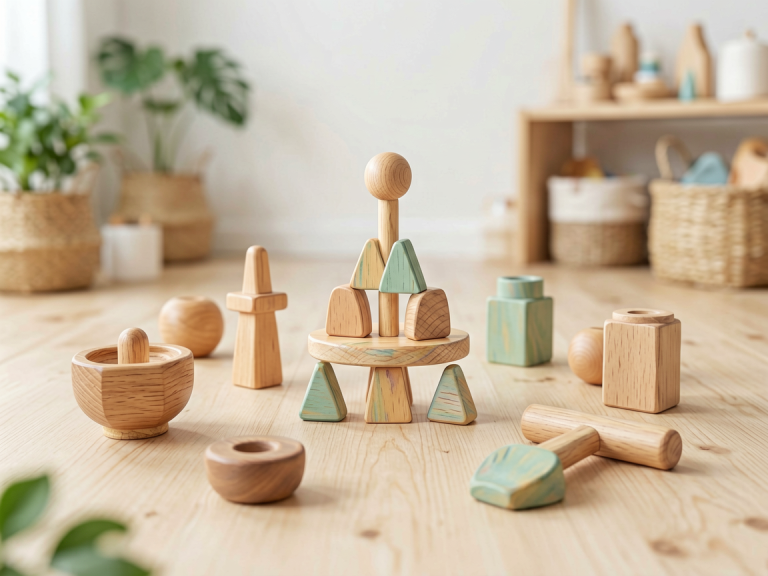
When you decide to add a new toy to your curated collection, apply the “open-ended test.” Open-ended toys are those that can be used in multiple ways, with no fixed outcome. Examples include: wooden blocks, magnetic tiles, play dough, dress-up clothes, crayons and paper, simple dolls, and cardboard boxes. Single-purpose toys—a plastic drill that only makes a specific sound, a talking doll that only says three phrases—tend to lose appeal quickly.
Why does this matter? Open-ended toys grow with the child. A set of wooden blocks can be a tower for a toddler, a castle for a preschooler, and a math learning tool for a kindergartener. They also encourage creativity and problem-solving. Meanwhile, single-purpose toys often become “one-trick ponies” that are abandoned once the novelty wears off.
Exceptions exist: specialty toys like puzzles, board games, and sports equipment have specific purposes but offer long-term value through repetition and skill progression. The key is to ensure that *most* of the toy collection is flexible.
—
Step 4: Implement a Rotation System
The most powerful tool in any toy plan guide is rotation. Simply put, you do not display all toys at once. Instead, you divide the collection into several “sets” and rotate them every two to four weeks. Here is a practical method:
- Observe and Select: Based on your audit and developmental timeline, pick 8–12 items (or fewer for babies) that are currently most suitable. Place them in a visible, accessible storage bin or shelf. The rest go into a sealed container in a closet, attic, or under the bed.
- Cycle with Purpose: After two weeks, swap one or two toys for new ones from the “resting” bin. Do not change everything at once—children need stability. Also, rotate seasonally: bring out water toys in summer, board games in winter.
- The “Toy Library” Mindset: Treat the resting toys like a library. Your child knows they exist but cannot access them. When the rotating batch comes out, the toy feels new again. This dramatically reduces the urge to buy new things.
Rotation also helps with tidiness. With fewer toys out, cleanup is faster, and children are more likely to engage deeply with each item.
—
Step 5: Design a Toy-Friendly Space (Even in Small Homes)
Storage is the backbone of execution. A toy plan is useless if toys are piled in a corner. Here are space strategies:
- Low, Open Shelving: Use cube organizers or low bookshelves so children can see and reach toys independently. Avoid deep toy boxes where items get lost.
- Visual Bins: Label bins with pictures (for non-readers) or words. One bin for “blocks,” one for “animals,” one for “art.” This teaches organization.
- The Gift Wrapping Station: Having a designated “waiting area” for new toys—a shelf or bin for gifts that come in birthdays and holidays—prevents immediate chaos. You can decide later whether to add them to the rotation or pass them on.
- Donation Box: Keep a small bin in the closet labeled “Outgrown.” Each time your child picks up a toy they no longer play with, they can toss it in. Monthly, donate or sell.
—
Step 6: Teach Children to Be Curators, Not Consumers
A toy plan is not something you impose on children—it is something you build with them. Involve your child in the process age-appropriately:
- Saying Goodbye: Help them choose five toys to donate to a children’s hospital or a younger cousin. Explain that this makes space for new adventures.
- Choosing Rotations: Let them pick which toys go into the next rotation. This gives them ownership over their play.
- Wish List vs. Impulse Buy: Before any new toy purchase, have your child put it on a “wish list” on the refrigerator. Wait at least one week. Many wants fade; the ones that remain are genuine.
- Toy Journal: Older children can keep a simple notebook where they rate their toys (1–5 stars) and write one reason why they like or dislike each. This promotes critical thinking about consumption.
By fostering these habits early, you are teaching lifelong skills: intentionality, gratitude, and environmental awareness.
—
Conclusion: A Living, Breathing Plan
No toy plan is static. As your child grows, your family’s schedule changes, and new interests emerge, you will revisit and revise. The beauty of a systematic toy plan is that it reduces decision fatigue—you no longer have to wonder whether a toy is “worth it” or how to handle the next birthday avalanche. You have a framework.
Start small. This week, do the audit. Next week, set up a rotation system. In one month, you will notice a calmer play environment, a happier child, and a cleaner home. And when someone asks, “What should I buy for their birthday?” you can smile and say, “Let me check the plan.”
Remember: The goal is not a perfect, minimalistic nursery. The goal is a world where every toy has a purpose, every play session has depth, and every child has the space to imagine. That is the true power of a toy plan guide.