The Ultimate STEM Toy Plan Guide: Building a Future-Ready Playroom
In an era where technology and science shape nearly every aspect of our daily lives, parents and educators are increasingly turning to STEM toys as powerful tools for early childhood development. STEM—an acronym for Science, Technology, Engineering, and Mathematics—represents more than just academic disciplines; it embodies a way of thinking that emphasizes curiosity, problem-solving, creativity, and logical reasoning. However, with thousands of products flooding the market, from robotic kits to chemistry sets, the task of selecting the right STEM toys can feel overwhelming. Without a clear plan, you risk accumulating clutter rather than cultivating skills. This comprehensive guide will walk you through a systematic approach to curating a STEM toy collection that is purposeful, age-appropriate, budget-conscious, and genuinely educational. Whether you are a parent, a teacher, or a gift-giver, this plan will help you transform playtime into a launchpad for lifelong learning.
Why You Need a STEM Toy Plan
Many well-intentioned adults buy STEM toys on impulse, drawn by colorful packaging or glowing online reviews. Unfortunately, without a coherent strategy, these toys often end up forgotten in a closet. A deliberate STEM toy plan ensures that every purchase serves a specific developmental purpose. First, it aligns toy selection with your child’s current interests and cognitive stage, preventing frustration from overly complex kits or boredom from overly simple ones. Second, a plan helps you balance different STEM domains—ensuring that your child is exposed to coding, engineering, chemistry, physics, and mathematics in a well-rounded manner. Third, it encourages long-term engagement by mapping out a progression of skills: starting with tactile building blocks, moving to simple circuits, and eventually programming robots. Finally, a plan saves money by avoiding redundant purchases and focusing on high-quality, versatile toys that grow with your child. In short, a STEM toy plan is not about restriction—it is about intentionality.
Age-Based Blueprint: Matching Toys to Developmental Stages
Early Explorers (Ages 2–4)
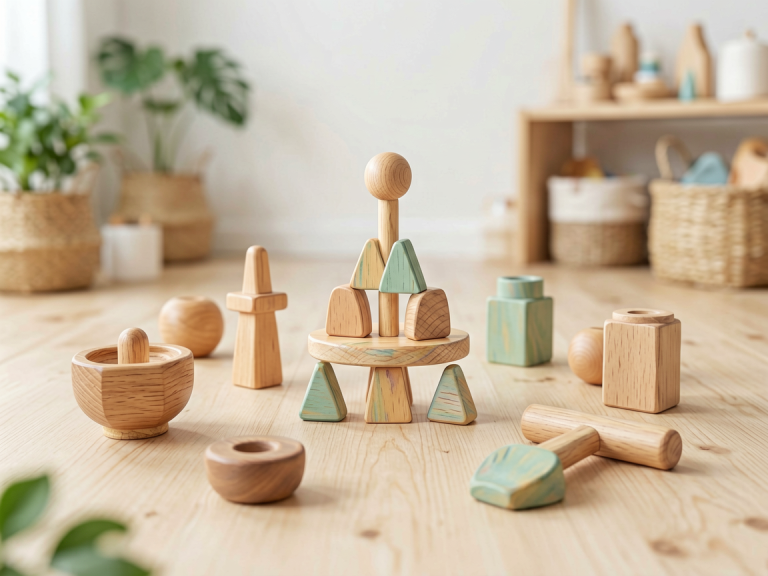
At this stage, children are developing fine motor skills, sensory awareness, and basic cause-and-effect reasoning. STEM toys should emphasize hands-on exploration without requiring complex instructions. Look for large, colorful building blocks (wooden or magnetic), shape sorters, simple puzzles, and stacking toys that introduce basic geometry and gravity. Water tables and sandboxes with measuring cups and funnels offer early lessons in volume and physics. For technology exposure, consider simple light-up toys or musical instruments that respond to touch—these teach cause and effect. Avoid small parts that pose choking hazards. The goal here is not to teach formulas but to ignite wonder and build foundational spatial awareness.
Curious Builders (Ages 5–7)
Children in this age group begin to understand sequences, patterns, and basic problem-solving. They can follow simple instructions and enjoy creating structures. Introduce construction sets like LEGO Classic, magnetic tiles, or K’NEX. These toys encourage engineering thinking—planning, balancing, and iterating. Simple coding toys such as Fisher-Price’s Code-a-Pillar or Osmo’s coding games teach directional logic and sequencing without screens. Simple chemistry sets (with non-toxic ingredients) for making slime or volcanoes provide early science experiments. Mathematics can be reinforced through counting games, balance scales, or pattern blocks. At this stage, it is critical to engage with the child during play, asking open-ended questions like “What happens if you add one more block?” or “Why do you think the tower fell?”
Analytical Thinkers (Ages 8–10)
By ages eight to ten, children can handle more abstract concepts and longer projects. This is the sweet spot for robotics kits (like LEGO Boost or Sphero), circuit-building sets (Snap Circuits or littleBits), and advanced construction sets (Meccano or Erector). These toys integrate engineering, electronics, and programming. Coding can advance to platforms like Scratch or Python-based robots. Science kits focusing on magnetism, optics, or hydroponics allow for hypothesis testing. Mathematics toys like logic puzzles, Tangrams, or Rubik’s cubes develop spatial reasoning. At this stage, encourage documentation: have the child draw their designs, record predictions, and reflect on failures. This cultivates the scientific method and resilience.
Aspiring Innovators (Ages 11+)
Pre-teens and teenagers are ready for sophisticated tools that mimic real-world STEM applications. Consider 3D printers, drone building kits, Arduino or Raspberry Pi microcomputers, advanced chemistry sets with actual lab equipment, or physics experiment kits. These require patience, reading comprehension, and systematic troubleshooting. Encourage participation in online communities or local maker spaces. At this level, the toy becomes a gateway to potential career interests. Pairing these toys with project-based challenges—like building a weather station or designing a simple video game—maintains motivation. The focus shifts from guided play to independent exploration and innovation.
Selecting for Cognitive Diversity: Balancing Science, Technology, Engineering, and Mathematics
A common mistake is overemphasizing one domain—often technology—at the expense of others. A truly effective STEM toy plan intentionally covers all four areas, but more importantly, it recognizes the interdisciplinary nature of modern STEM. For example, a robotics kit integrates engineering (building the structure), technology (programming the microcontroller), science (understanding sensors and physics), and mathematics (calculating angles and distances). However, it is still wise to have dedicated toys for each.
Science toys include microscopes, telescopes, crystal-growing kits, and biology dissection kits. They foster observation, hypothesis formation, and data recording. Technology toys span coding games, digital cameras, and robotics. They develop algorithmic thinking and digital literacy. Engineering toys include bridges, domino runs, marble runs, and gear sets. They teach structural integrity, force distribution, and iterative design. Mathematics toys include abacuses, geometric puzzles, fraction blocks, and board games like Prime Climb or Math Dice. They build number sense and logical deduction.
When selecting, ask: Does this toy require the child to ask questions, test ideas, or build something? Does it have multiple correct answers? Does it encourage open-ended play rather than a single outcome? The best STEM toys are those that allow for failure and revision.
Budgeting and Longevity: Getting the Most Value
STEM toys can be expensive, but a smart plan maximizes return on investment. Start by categorizing toys into three tiers: foundational (building blocks, basic puzzles—low cost, high versatility), specialized (robotics kits, chemistry sets—higher cost but focused learning), and consumable (circuit board components, 3D printer filament—ongoing cost). Prioritize foundational toys first; they are the most versatile and appropriate across multiple ages. For specialized toys, consider borrowing from libraries or joining toy subscription services (like KiwiCo or Mel Science) before committing to a large purchase.
Another strategy is to choose “open-ended” toys—sets that can be reconfigured in countless ways. Magnetic tiles, LEGO bricks, and marble runs fit this category. They grow with the child because complexity comes from the builder’s imagination, not from the toy itself. Additionally, look for toys with expansion packs or upgrade paths. For example, a basic Snap Circuits set can be enhanced with additional modules. This extends the toy’s lifespan and maintains novelty.
Practical Implementation: Creating a STEM-Friendly Environment
A STEM toy plan is incomplete without an environment that supports exploration. Designate a shelf or a bin system organized by domain (Science, Tech, Engineering, Math). Rotate toys every few weeks to maintain interest—putting away half the collection and reintroducing it later can rekindle excitement. Include a “tinker station” with basic tools like safety scissors, tape, paper, and markers, because many STEM activities require prototyping materials beyond the toy itself.
Set aside regular “curiosity time” each week when screens are off and the focus is on independent or collaborative play. Join local STEM clubs, science fairs, or online challenges to provide social context and motivation. Finally, model a growth mindset yourself: when a toy breaks or a project fails, discuss what went wrong and how to try again. Your attitude toward mistakes will influence your child’s resilience more than any toy ever could.
Conclusion: From Play to Passion
A well-planned STEM toy collection does more than entertain—it plants the seeds of critical thinking, creativity, and perseverance. By understanding your child’s developmental stage, balancing diverse STEM domains, budgeting wisely, and cultivating a supportive environment, you can transform a pile of plastic boxes into a launchpad for discovery. Remember that the ultimate goal is not to raise a scientist or engineer, but to nurture a curious, confident, and capable individual who approaches problems with enthusiasm and logic. So take a deep breath, follow this guide, and watch as your child’s playtime evolves into a journey of lifelong learning. The future belongs to those who can create, analyze, and adapt—and it all begins with the right toy, chosen with purpose.
Sources and further reading
For additional evidence-based guidance, consult these authoritative resources: