The Art of Solo Play: How to Use Toys to Foster Independent Play in Children
In today’s world of constant parental involvement and screen-based entertainment, independent play has become something of a lost art. Many parents worry that their children cannot entertain themselves for more than a few minutes without demanding attention. Yet independent play is not only a gift to busy parents—it is a crucial developmental milestone that builds creativity, problem-solving skills, emotional resilience, and self-regulation. One of the most effective tools for encouraging this skill is, quite simply, toys. But not all toys are created equal, and simply scattering a pile of plastic gadgets on the floor will not automatically produce hours of engaged solo play. This article explores how to thoughtfully use toys as catalysts for independent play, offering practical strategies for parents and caregivers who want to nurture their child’s ability to play alone with focus and joy.
Explore Independent & Solo Play
This guide is the main starting point for this topic. Use these focused guides to explore specific ages, needs, risks, and practical choices.
Understanding Independent Play: Why It Matters
Before diving into the “how,” it is important to understand what independent play truly is. Independent play does not mean leaving a child completely unattended; rather, it refers to a child’s ability to engage in self-directed, intrinsically motivated activity without requiring an adult’s continuous involvement. This might look like a toddler stacking blocks alone for ten minutes, a preschooler narrating a story with animal figurines, or a school-age child building an elaborate LEGO structure while humming to themselves.
Research in child development consistently highlights the benefits of independent play. It strengthens executive functions such as attention control, working memory, and cognitive flexibility. It provides a safe space for children to experiment with ideas, make mistakes, and learn to tolerate frustration. Emotionally, independent play helps children develop a sense of agency—they learn that they can create their own worlds and solve their own problems. Socially, it lays the groundwork for future cooperation because children who can play alone are often better able to respect others’ space and engage in parallel play before moving to collaborative play.
However, independent play is a skill that must be cultivated. Children are naturally social beings, and they often default to seeking adult attention because they have not yet learned the satisfaction of self-directed exploration. This is where toys play a pivotal role.
Choosing the Right Toys: The Foundation of Independent Play
Not every toy is conducive to independent play. In fact, many modern toys actively work against it. The first step in using toys for independent play is to make thoughtful selections based on your child’s developmental stage and interests.
Opt for Open-Ended Toys
Open-ended toys are the gold standard for independent play. These are toys that have no single prescribed purpose—they can be used in countless ways. Examples include wooden blocks, magnetic tiles, play silks, modeling clay, loose parts (such as pebbles, shells, or wooden rings), and simple dolls or animal figurines. Because these toys do not “do” anything on their own, children must bring their imagination to life. A set of plain wooden blocks can become a castle, a spaceship, a farm, or a tower. The child is the director of the play, which fosters sustained engagement.
In contrast, battery-operated toys that light up, make sounds, or perform actions often encourage passive observation rather than active creation. A talking robot that moves on its own may fascinate a child for a few minutes, but it quickly becomes a one-way interaction. The child watches the toy perform, rather than using it to perform their own narrative. For independent play, choose toys that are “dumb” in the best sense—they wait for the child to give them meaning.
Match Toys to Developmental Abilities
A toy that is too advanced will frustrate a child and cause them to give up; a toy that is too simple will bore them. When selecting toys for independent play, observe what your child is currently interested in and capable of. For a toddler (ages 1–3), simple puzzles, shape sorters, stacking rings, and large nesting cups allow for repetitive practice of fine motor skills and cause-and-effect learning. At this age, independent play sessions may be as short as five minutes, and that is perfectly normal.
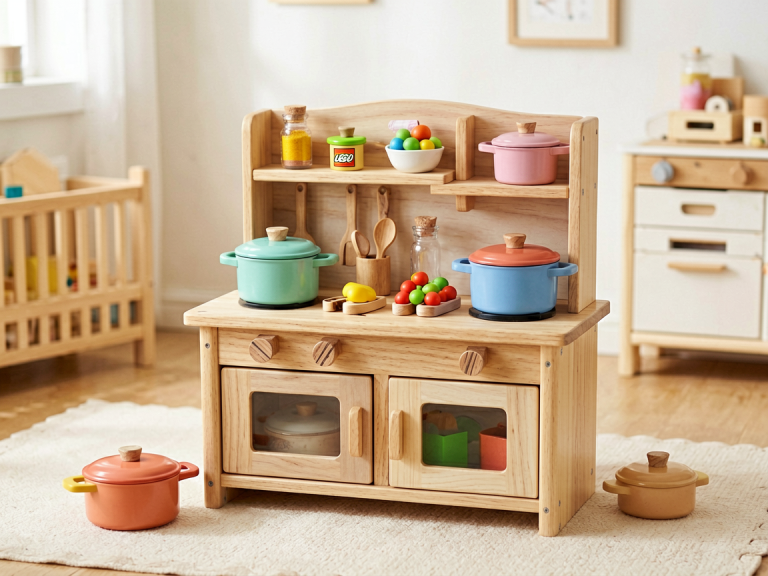
For preschoolers (ages 3–5), imaginative play peaks. Toy kitchens, dress-up clothes, train sets, and building blocks become powerful tools. Introduce small-world play sets—a farm, a castle, a garage with cars—but resist the urge to coach the play. Let the child decide what the farmer does or where the cars go. For school-age children (ages 6+), construction toys like LEGO, marble runs, craft kits, and strategy games (even ones playable solo) can hold their attention for extended periods.
Rotate Toys to Maintain Novelty
Even the best open-ended toy will lose its allure if it is always available. One of the most effective strategies for encouraging independent play is toy rotation. Store a portion of your child’s toys out of sight and rotate them every week or two. When a toy reappears, it feels fresh and exciting again. This reduces overwhelm (too many choices can paralyze a child) and reignites their curiosity. A child who ignored their wooden train set for weeks may suddenly spend an hour reconfiguring the tracks once it returns after a hiatus.
Setting Up the Environment: The Stage for Solo Play
The play environment is just as important as the toys themselves. Children are highly sensitive to their physical surroundings, and a well-designed play area can dramatically increase the likelihood of independent play.
Create a Defined Play Space
Designate a specific area for independent play—perhaps a corner of the living room, a playroom, or even a section of the child’s bedroom. This space should be safe, comfortable, and free from major distractions (especially screens). A soft rug, a small table or mat, and accessible low shelves for toys allow the child to see their options and choose freely. When the play area is clearly defined, it sends a psychological signal: “This is where you can explore on your own.”
Remove Parental Presence as the Center of Attention
If you are always hovering nearby, your child will naturally look to you for validation. To encourage independent play, position yourself so that you are present but not the focal point. Sit nearby with a book or your own quiet activity. The goal is to model calm, focused engagement while giving your child the space to become absorbed. Avoid interrupting or praising excessively—constant comments like “Good job!” can actually disrupt a child’s flow. Instead, let them discover the joy of self-reward.
Use Visual Cues and Simple Organization
Toddlers and preschoolers benefit from seeing toys displayed in an orderly way. Use open bins or trays for different categories (e.g., “blocks,” “animals,” “cars”). This helps children make decisions independently. You can also set up small “invitations to play”—a deliberately arranged scene that suggests a starting point. For example, place a few wooden blocks in a circle with a tiny doll sitting in the middle. Do not tell the child what to do; simply let the arrangement spark their curiosity.
Practical Strategies for Encouraging Independent Play
Even with the right toys and environment, some children resist independent play. They may whine, cling to your leg, or repeatedly ask for help. This is normal, especially for younger children who are still learning to self-regulate. The following strategies can help bridge the gap.
Start Small and Build Stamina
Do not expect a child who has never played alone for more than two minutes to suddenly manage half an hour. Begin with very short periods—perhaps just three to five minutes. Set a timer and say, “I’m going to sit here and read for five minutes. You can play with your blocks. When the timer rings, we will talk about what you built.” Gradually increase the duration as the child becomes more comfortable. Celebrate the effort, not the outcome.
Offer a “Play Invitation” and Then Step Back
Sometimes children need a gentle nudge to begin. You can initiate play together for a minute or two—build a small tower, start a story with the animals, or roll a car down a ramp—and then gradually disengage. Say something like, “I wonder what the bear wants to do next. I’ll be right here while you decide.” This gives the child a starting point without making them dependent on your continued involvement.
Respect Their Choices
Part of independent play is the freedom to decide. If your child wants to line up their cars in a row instead of racing them, let them. If they want to put the doll in the refrigerator instead of the bed, that is their narrative. Avoid the urge to correct or instruct. When children feel that their play is truly their own, they are more likely to invest in it deeply.
Embrace Boredom as a Friend
In our culture of constant entertainment, boredom is often seen as a problem to be solved. But boredom is actually a powerful catalyst for independent play. When a child says, “I’m bored,” resist the impulse to give them a screen or a new activity. Instead, calmly say, “It’s okay to be bored. That’s when your brain thinks of the best ideas.” Leave them with access to their toys and let the creative process unfold. Often, a few minutes of apparent idleness lead to a burst of inspired play.
Adapting for Different Ages and Temperaments
Every child is unique, and strategies that work for one may not work for another. Nonetheless, some general age-based guidelines can be helpful.
Infants and Young Toddlers (6–18 Months)
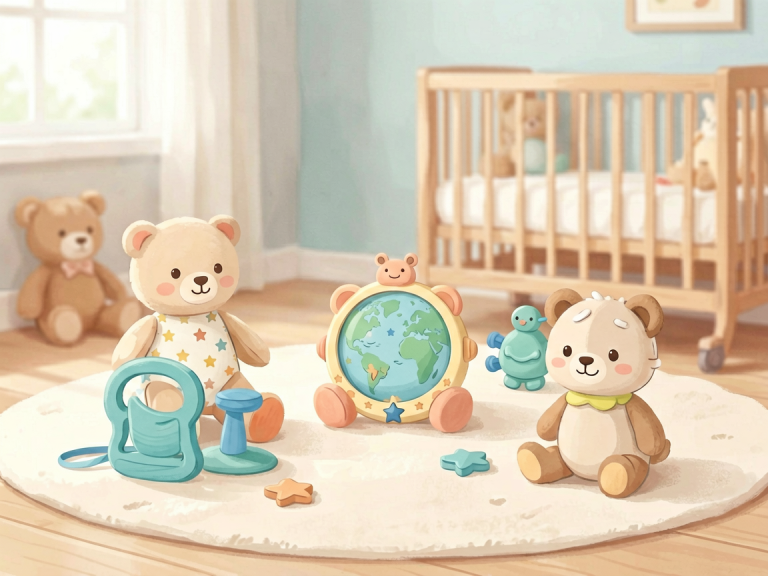
At this stage, independent play means exploring objects with the senses. Provide safe, textured toys such as teething rings, soft blocks, and rattles. Place the baby on a mat with two or three toys within reach and sit nearby. Sing softly or do your own quiet activity. Even one minute of self-directed exploration is a victory.
Toddlers (18–36 Months)
Toddlers are beginning to engage in symbolic play but are still easily distracted. Offer simple puzzles, nesting cups, and first figurines. Use toy rotation frequently. If your toddler struggles to play alone, try “parallel play” where you sit beside them doing your own activity, such as knitting or writing. Your calm presence provides security while modeling focused behavior.
Preschoolers (3–5 Years)
This is the golden age of imaginative play. Provide dress-up clothes, a play kitchen, small-world sets, and art supplies. You can also introduce “story starters” by leaving a picture book open to a particular scene with a few related toys nearby. Let the child create their own narrative. Avoid asking too many questions during play; save the conversation for after they have finished.
School-Age Children (6+ Years)
Older children benefit from complex building sets, craft projects, board games they can play solo (many modern games have solitaire rules), and even guided independent play like “design a marble run that uses at least ten pieces.” At this age, you can also encourage journaling or sketching as a form of play. The key is to respect their growing need for autonomy while still providing the materials and space.
Troubleshooting Common Challenges
Even with the best intentions, parents may encounter bumps along the way. Here are a few common issues and how to address them.
“My child only wants to play with me.” This is often a sign that the child has not yet developed the internal motivation for solo play. Start with very short intervals, and make sure you are not unintentionally rewarding demands for attention. If the child calls for you repeatedly, respond calmly but briefly: “I see you’re working on something interesting. I’ll be here when you need me.” Then return to your own activity.
“My child destroys everything.” Some children enjoy dramatic, high-energy play that involves knocking down towers or scattering toys. This is still a form of exploration! Provide toys that invite crashing, such as large cardboard blocks or soft balls. Redirect only if the play becomes unsafe.
“There are no toys that hold my child’s interest.” Reexamine the toy collection. Are there too many passive toys? Are the toys developmentally appropriate? Try a complete reset: put away all toys for a week, then reintroduce them one at a time. You may discover that less truly is more.
Conclusion: A Lifelong Gift
Learning to play independently is not about keeping children busy so that adults can have time to themselves—though that is certainly a welcome side effect. It is about giving children the tools to become autonomous, creative, and resilient individuals. Toys, when chosen and used thoughtfully, become the vehicles for this growth. They are not just objects on a shelf; they are invitations to imagine, to experiment, to fail safely, and to triumph in solitude.
As a parent or caregiver, your role is not to orchestrate the play but to create the conditions for it to flourish. Choose open-ended toys. Arrange a calm, inviting space. Step back and trust the process. And then watch with quiet wonder as your child builds, narrates, and explores a world entirely of their own making. That is the true magic of independent play.
Sources and further reading
For additional evidence-based guidance, consult these authoritative resources: