Unlocking Words Through Play: The Best Toys for Language Development
Language development is one of the most profound milestones in a child’s early years. It is the bridge between thought and expression, between feeling and connection. While many factors contribute to how a child learns to speak, understand, and communicate, the role of play—and specifically, the toys that fill playtime—cannot be overstated. The best toys for language development are not necessarily the loudest, the most expensive, or the ones with the most flashing lights. Instead, they are the ones that invite conversation, encourage storytelling, and create opportunities for back-and-forth interaction. In this article, we will explore the most effective categories of toys that foster linguistic growth, from infancy through the preschool years, and explain why each type works so well.
Why Toys Matter for Language Development
Before diving into specific toys, it is important to understand the mechanism by which toys influence language. Language acquisition is not a passive process; it requires exposure, repetition, and meaningful interaction. When a child plays with a toy, she is not merely manipulating objects—she is experimenting with sounds, labels, sequences, and social cues. A well-chosen toy acts as a catalyst for dialogue between parent and child, or among peers. It provides a shared focus of attention, which is a foundational element of early communication. Moreover, toys that require turn-taking, imitation, or imaginative play naturally elicit language because the child must narrate, negotiate, or describe her actions. Research in developmental psychology consistently shows that children who engage in more interactive play with responsive caregivers develop richer vocabularies and stronger narrative skills. Therefore, selecting the right toy is an investment in a child’s linguistic future.
Interactive Books and Soft Picture Books
No list of language-building toys would be complete without mentioning books, but not just any books. The best books for language development are those that invite participation. Lift-the-flap books, touch-and-feel books, and books with repetitive rhymes or rhythmic text are particularly powerful. For infants and toddlers, soft fabric books with crinkly pages or embedded mirrors capture attention and encourage babbling. As the child grows, books with simple, repetitive phrases—such as *Brown Bear, Brown Bear, What Do You See?*—allow the child to anticipate and eventually “read along” even before she knows the words. The parent can pause before the last word of a familiar phrase, prompting the child to fill it in. This back-and-forth builds vocabulary, phonetic awareness, and the concept of narrative structure. Furthermore, the physical act of turning pages and pointing to pictures develops fine motor skills and reinforces the connection between object and label. To maximize language benefits, choose books with diverse scenes that spark questions: “Where is the dog?” “What color is the ball?” These simple inquiries become the seeds of complex conversations.
Puppets and Stuffed Animals That “Talk”
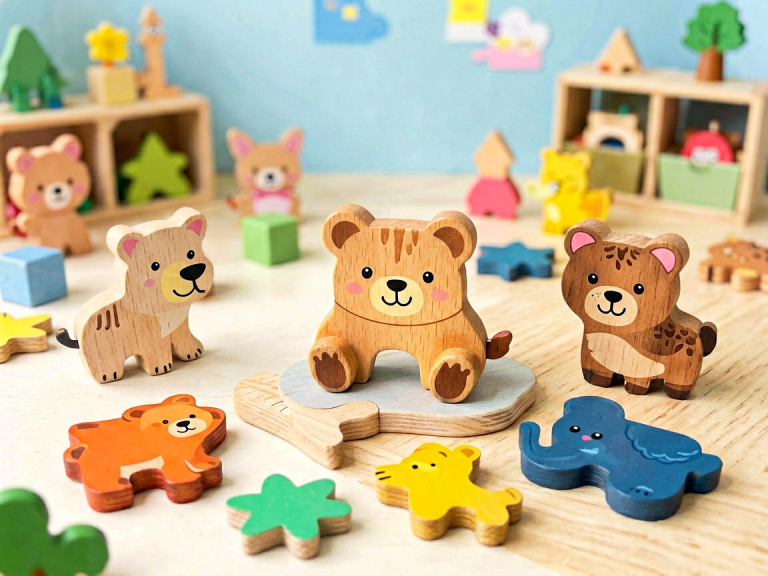
Puppets and plush toys that can be animated by an adult or older sibling are extraordinary tools for language development. When a parent makes a puppet “talk” in a different voice, the child is drawn into a dialogue that feels magical and personal. Puppets reduce the pressure on the child to respond perfectly; they can simply listen, laugh, or gesture. Over time, the child begins to talk back to the puppet, first with single words and later with full sentences. Hand puppets, finger puppets, and even simple sock puppets encourage role-playing, which is a high-level language skill because it requires the child to adopt a character’s perspective and use language appropriate to that role. For example, a puppet pretending to be a doctor might say, “Open wide, please,” and the child responds, “Thank you, doctor.” This kind of scripted play reinforces social language patterns, new vocabulary (medical terms, feelings, greetings), and the turn-taking structure of conversation. Stuffed animals that have their own “backstory” also promote narrative thinking: What is the bear’s name? Where does it live? Why is it sad? Such questions propel the child to create stories, thereby strengthening both expressive language and comprehension.
Building Blocks and Construction Sets
At first glance, blocks may seem purely spatial or motoric, but they are actually rich in linguistic potential. When a child builds a tower, she often narrates her actions: “Put red block on top. Now yellow. Uh-oh, it fell!” This self-talk is a critical stage in language development, as it helps children internalize grammar and sequence. With adult interaction, blocks become even more powerful. A parent can say, “Let’s build a house. What does a house need? A door? A window?” The child must respond with words or gestures, and the adult then models the correct vocabulary. As the child grows, construction sets with small people, animals, or vehicles expand the possibilities for storytelling. The child might create a farm with the blocks and then act out the farmer’s day, using language to describe actions and relationships. Magnetic building tiles are especially effective because they allow for easy creation of structures that can be discussed: “This is the castle. The princess lives here. The dragon is coming!” The open-ended nature of blocks means that no two play sessions are the same, and each session offers fresh opportunities for vocabulary expansion, question-asking, and narrative development.
Role-Play Sets and Pretend Play Kits
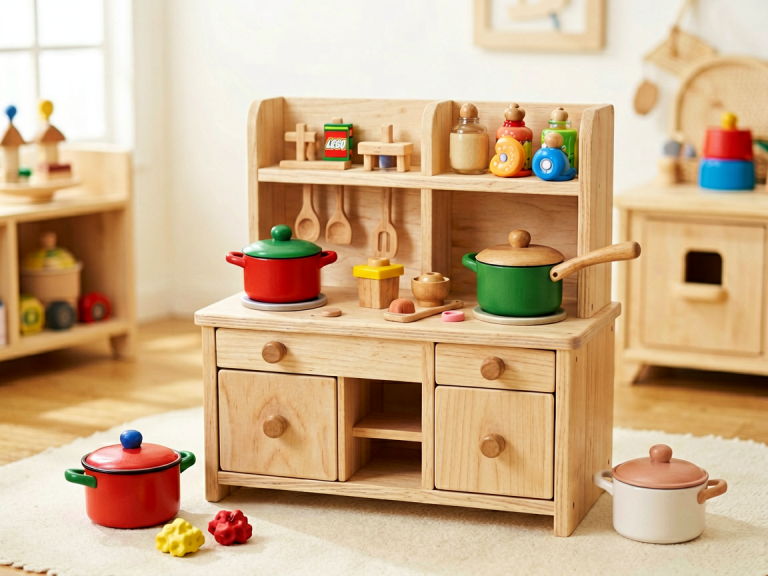
Perhaps no category of toys is more directly linked to language growth than pretend play sets. A toy kitchen, a doctor’s kit, a cash register with play money, or a dress-up trunk filled with costumes—these invite children to step into another world and, in doing so, adopt a new language register. When a child plays “restaurant,” she must say, “What would you like to order?” and the parent playing the customer replies, “I’d like a pizza, please.” This exchange teaches conversational scripts, polite forms, and the vocabulary of menus and food. A construction worker’s helmet and tool set lead to language like “I need a hammer” and “Watch out, heavy load!” Through role-play, children practice the syntax of commands, questions, and exclamations in a safe, joyful context. Moreover, pretend play often involves negotiating roles and rules: “You be the baby, I’ll be the mommy.” This negotiation itself is a complex linguistic and social task. To optimize language benefits, choose sets that have multiple components and realistic props, as these inspire more detailed and sustained scenarios. Avoid over-scripted kits that dictate exactly what to say; the magic is in the child’s own imagination.
Musical Instruments and Sound-Making Toys
Music and language share deep neural connections, and toys that produce sounds—especially those that require the child to initiate a sound—are excellent for early speech development. Simple percussion instruments like maracas, drums, and xylophones allow a child to explore cause and effect: “I shake, and it makes a sound.” As the adult joins in, she can sing songs with repetitive lyrics, encouraging the child to fill in words or mimic rhythms. For instance, singing “Old MacDonald” and pausing before the animal sound—“And on that farm he had a… cow! With a moo moo here”—prompts the child to vocalize. Electronic toys that play nursery rhymes or record and play back the child’s own voice are also useful, as they provide immediate auditory feedback, which reinforces the connection between the child’s vocalizations and the sounds she hears. However, caution is needed: toys that simply play pre-recorded phrases without requiring a response are less effective than those that invite active participation. A toy microphone that amplifies the child’s voice, for example, can be a delight that encourages babbling, shouting, and eventually, using real words.
Memory and Matching Games with Pictures and Words
Card games, lotto boards, and simple puzzles that involve matching pictures to pictures, or pictures to words, are excellent for building vocabulary and phonological awareness. For toddlers, a set of cards with common objects (apple, cat, ball) can be used in a classic memory game: the child turns over two cards and names them. Even if she doesn’t yet say the word, the adult names it repeatedly, reinforcing the label. For older preschoolers, matching games that pair a picture with the written word serve as a gentle introduction to print awareness. These games also involve turn-taking, which teaches the pragmatics of conversation—waiting for one’s turn to speak and listen. A variation is the “I spy” type of game, where one player describes a card and the other finds it. This builds receptive language (understanding descriptions) and expressive language (describing objects by color, shape, or function). Choose games with clear, high-quality images and sturdy pieces that can survive enthusiastic little hands.
Electronic Learning Toys with Voice Interaction (Used Wisely)
In the modern era, electronic toys are ubiquitous, and some can indeed support language development—but only when used as tools for interaction rather than pacifiers. The most beneficial electronic toys are those that respond to the child’s input in a conversational way. For example, a talking tablet app that asks, “What color is the apple?” and then gives feedback after the child touches the correct color can reinforce vocabulary recognition. Some toys use voice-recognition to ask the child to repeat a word, and then celebrate the attempt. However, these should never replace human interaction. The American Academy of Pediatrics recommends limiting screen time for young children and prioritizing live, back-and-forth conversation. The best approach is to use electronic toys together with an adult, turning the toy’s prompts into a shared activity: “The toy said ‘Find the blue circle’—can you show me the blue circle? Great! Now let’s say it together.” In this way, the electronic device becomes a prop for joint attention, not a substitute for a person.
How to Choose the Right Toy for Your Child’s Stage
Language development occurs in predictable stages, and the best toys align with a child’s current abilities while gently stretching them. For infants (0–12 months), focus on toys that produce interesting sounds, have contrasting patterns, and encourage vocalization: rattles, soft books with mirrors, and simple musical toys. The goal is to elicit cooing, babbling, and early imitation. For toddlers (12–24 months), toys that promote naming and simple turn-taking are key: animal figures, cars, and simple puzzles. At this stage, a child may say only a few words but understands many; pointing and labeling are the primary activities. For preschoolers (2–5 years), the emphasis shifts to narrative, question-asking, and conversational scripts. Dramatic play kits, complex building sets, and cooperative board games are ideal. Always observe your child’s interests: a child who loves dinosaurs will learn more dinosaur names through a dinosaur figurine set than through a generic animal set. Personal interest fuels motivation, and motivation fuels language.
The Role of the Adult: The Most Important “Toy”
No toy, no matter how cleverly designed, can replace the responsive, attuned adult. The best toy for language development is ultimately an engaged parent, grandparent, or caregiver who follows the child’s lead, expands on her utterances, and creates a safe space for verbal experimentation. When you sit on the floor with your child and a set of blocks, and you say, “Oh, you put the red block on top! Now it’s a tower. Should we add a blue one? What happens if we put it here?” you are doing the most powerful language-teaching work there is. Toys are the tools; you are the master builder. So as you fill your child’s playroom with puppets, books, and pretend-play sets, remember to also fill it with your presence, your patient questions, and your joyful participation. In that combination, language blossoms.
In conclusion, the best toys for language development are those that invite conversation, encourage storytelling, and allow for open-ended exploration. From soft picture books that spark first words to elaborate role-play sets that inspire entire worlds, the right toy can transform a child’s linguistic journey. Choose toys that grow with your child, that require two or more participants, and that celebrate the sounds of language. Then, step into the story with them. The words will follow.