Unlocking Potential: How to Use Toys for Play-Based Learning
Play is the language of childhood. When a child builds a tower with blocks, pretends to cook in a miniature kitchen, or races a toy car down a ramp, they are not merely passing time—they are actively constructing knowledge, testing hypotheses, and developing critical life skills. Play-based learning harnesses this natural inclination and transforms everyday toys into powerful educational tools. But how can parents, educators, and caregivers intentionally use toys to foster deep, meaningful learning without turning play into a chore? This article explores practical strategies, theoretical foundations, and concrete examples for using toys as vehicles for cognitive, social, emotional, and physical development.
The Science Behind Play-Based Learning
To understand how to use toys effectively, we must first recognize why play is so potent. Research in developmental psychology and neuroscience reveals that play stimulates the brain’s prefrontal cortex, the region responsible for executive functions such as planning, impulse control, and flexible thinking. When a child engages in open-ended play with toys, they enter a state of “flow”—a mental zone where challenge meets skill, promoting sustained attention and intrinsic motivation. Unlike rote memorization or passive instruction, play-based learning activates multiple neural pathways simultaneously. For example, a child sorting colored beads into different containers practices fine motor skills, pattern recognition, color classification, and early math concepts all at once. The key is to select toys that invite exploration rather than prescribe a single right answer, and to allow the child to take the lead while the adult serves as a thoughtful facilitator.
Choosing the Right Toys: Quality Over Quantity
Not all toys are created equal in a play-based learning context. The most effective toys share certain characteristics: they are open-ended, durable, age-appropriate, and aligned with the child’s current interests and developmental stage. Avoid toys that do all the work—those that light up, sing, and move on their own often reduce a child to a passive spectator. Instead, prioritize “loose parts” such as wooden blocks, building bricks, magnetic tiles, art supplies, play dough, and simple figurines. These toys can be used in countless ways, encouraging divergent thinking. For example, a set of wooden blocks can become a castle, a spaceship, a balance scale, or a counting tool depending on the child’s imagination. Additionally, consider toys that support specific domains of development: puzzles for spatial reasoning, pretend play sets for social-emotional skills, and balls or climbing structures for gross motor development. The golden rule is to rotate toys regularly to maintain novelty and prevent overstimulation. A curated selection of ten high-quality open-ended toys is far more valuable than a closet full of battery-operated gadgets.
Age-Specific Strategies for Play-Based Learning
Infants and Toddlers (0–2 Years): Sensory Exploration and Cause-and-Effect
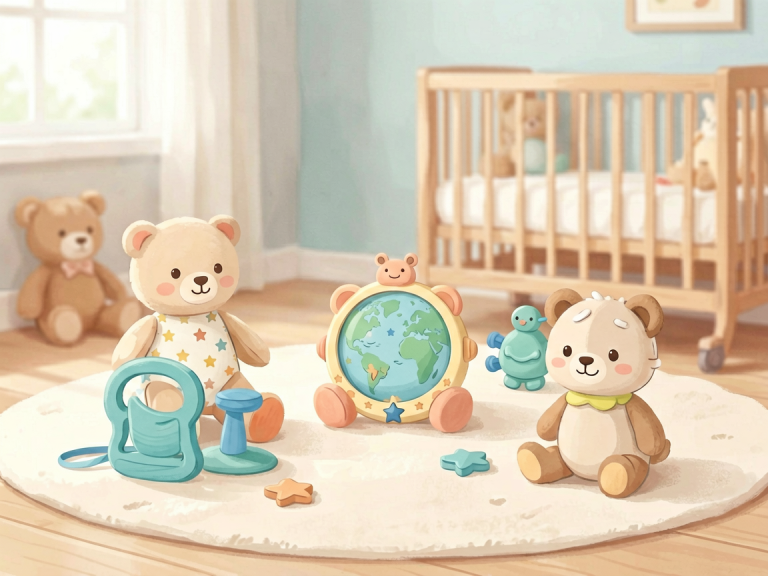
For the youngest learners, toys are tools for discovering the world through the senses. Soft rattles, textured balls, stacking rings, and nesting cups support sensorimotor development. At this stage, the adult’s role is to provide safe, stimulating objects and to narrate the play. For instance, when a baby shakes a rattle, say, “You made a sound! The rattle goes shake shake shake.” This simple labeling builds vocabulary and reinforces the concept of cause and effect. Tummy time with a mirror or a colorful mat encourages visual tracking and upper body strength. As toddlers become mobile, push toys and shape sorters help develop spatial awareness and problem-solving. The goal is not to “teach” but to respond to the child’s cues. If a toddler repeatedly drops a toy from the high chair, they are exploring gravity—a precursor to physics. Instead of scolding, offer different items to drop and observe together.
Preschoolers (3–5 Years): Imaginative Play and Early Academic Foundations
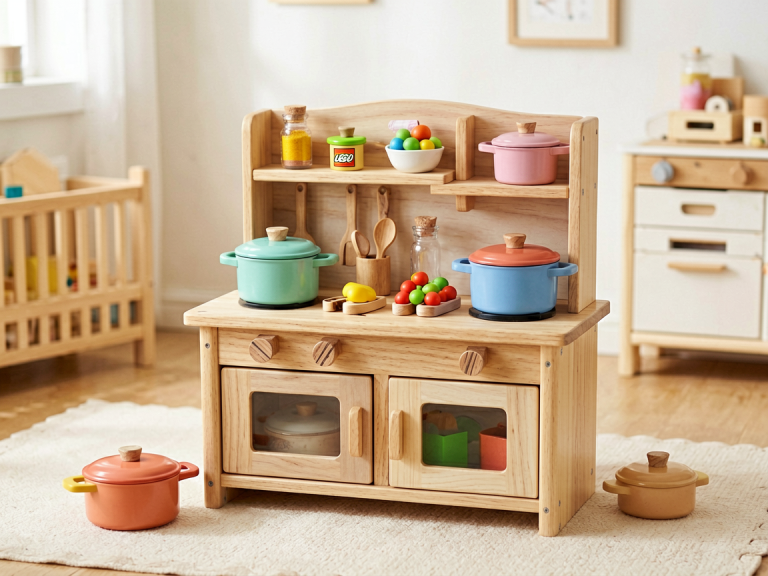
The preschool years are the golden age of pretend play. Toys such as dollhouses, kitchen sets, dress-up clothes, and animal figurines allow children to act out real-life scenarios, which builds empathy, narrative skills, and self-regulation. A child who plays “doctor” with a toy stethoscope is learning to take turns, express emotions, and understand cause-and-effect (e.g., “If the patient is sick, give them medicine”). To maximize learning, introduce props that extend the theme. For example, add a notepad and pencil to the doctor’s kit so the child can “write a prescription”—a playful introduction to literacy. Construction toys like LEGO Duplo or wooden train sets foster early math concepts such as symmetry, counting, and measurement. Ask open-ended questions during play: “What will happen if we add one more block to the tower?” or “How can we make the train bridge taller?” This turns a simple activity into a problem-solving exercise. Remember that preschoolers thrive on repetition—playing the same scenario many times deepens understanding.
School-Age Children (6–12 Years): Complex Systems and Collaborative Games
As children grow, toys can support more sophisticated learning. Board games like chess, Settlers of Catan, or cooperative games teach strategy, logical reasoning, and social skills such as negotiation and sportsmanship. Science kits, coding robots (e.g., Sphero or LEGO Mindstorms), and construction sets like K’NEX introduce engineering principles and computational thinking. For example, building a marble run requires planning, testing, and adjusting angles—an authentic lesson in physics and iterative design. Older children also benefit from collectible card games or trading card games that involve math, reading, and memory. Additionally, role-playing games such as Dungeons & Dragons (with simplified rules) encourage creative writing, empathy, and complex problem-solving in a collaborative context. The adult’s role shifts to that of a co-player and mentor. Play alongside your child, ask “What if…?” questions, and allow them to make mistakes. If a marble run doesn’t work, resist fixing it immediately; instead, guide them to diagnose the problem: “The marble keeps falling here. Why do you think that happens?”
Integrating Toys into Everyday Routines
Play-based learning does not require separate “lessons”; it can be woven into daily life. Use toys during transitions, such as a “five-minute timer” with a sand hourglass for winding down. Incorporate math into cleanup: “Let’s count how many blocks we need to put away—14! Can you find 14?” Turn bath time into a science experiment with waterproof toys that sink or float. Car rides can become oral storytelling sessions using toy figurines. Even mealtime can involve play: use small toy animals to practice counting or sorting fruits and vegetables. The key is to follow the child’s curiosity. If your child is fascinated by dinosaurs, invest in a dinosaur excavation kit, books, and figurines. Then create a “dinosaur habitat” in the sandbox and discuss herbivores versus carnivores. This child-led approach ensures that learning is meaningful and memorable.
The Role of the Adult: Facilitator, Not Director
One of the biggest misconceptions about play-based learning is that adults should step back entirely. In reality, adults play a crucial role, but it is a subtle one. Effective facilitation means observing first. Notice what captures the child’s attention. Then, without taking over, offer gentle extensions. For example, if a child is stacking cups and seems frustrated when they fall, you might say, “I wonder how we could make the bottom wider.” This provokes thought without giving a solution. Another technique is to model curiosity yourself. “I wonder if this toy car goes faster on the rug or the tile?” Then let the child experiment. Finally, ensure that the play environment is organized and inviting. Toys should be accessible on low shelves, rotated monthly, and stored in clear bins so children can choose independently. Avoid interrupting deep play with unnecessary praise or corrections. A child absorbed in building a complicated structure does not need applause; they need time.
Common Pitfalls to Avoid
While the concept seems simple, many well-intentioned adults inadvertently undermine play-based learning. The first pitfall is over-structuring. If every moment of play is directed toward a learning outcome—such as insisting that stacking blocks must always be counted—the joy evaporates. Allow for pure, aimless exploration. The second pitfall is relying on digital toys. Screens, even educational apps, often operate in a two-dimensional, passive manner that limits sensory and social engagement. Prioritize real-world, tactile toys whenever possible. The third pitfall is introducing too many toys at once. A child surrounded by dozens of options may feel overwhelmed and unable to focus. A clutter-free space promotes deeper engagement. Finally, do not compare your child’s play to others. Play-based learning is highly individual; some children will build elaborate narratives, while others will repeat a single action for weeks. Both are valuable.
Measuring Outcomes: What Does “Learning” Look Like?
Play-based learning often defies traditional assessment. Instead of a test, look for signs of process: Does your child persist when a toy is challenging? Do they try multiple approaches? Can they explain their reasoning? Do they collaborate or negotiate with others? Are they able to transfer a skill from one context to another? For instance, if your child learns to balance blocks, they might later apply that understanding to carrying a tray of drinks. Document these moments through photos, notes, or conversations. Celebrate effort rather than product. A lopsided tower that took ten tries to build is a triumph of resilience. Over time, you will notice that play-based learning cultivates not just academic readiness but also a lifelong love of discovery.
Conclusion: Let the Toys Do the Teaching
Toys are not mere distractions; they are the tools through which children make sense of their world. By thoughtfully selecting open-ended toys, observing and responding to a child’s interests, and embracing the messy, unpredictable nature of play, adults can create rich learning environments that honor childhood. The most important thing is to trust the process. A child who is deeply engaged with a toy is already learning—perhaps more than any worksheet could teach. So put down the agenda, get on the floor, and follow their lead. The tower will fall, the tea party will be chaotic, and the marble run will fail a dozen times. But in that process, a child is building a brain, a heart, and a sense of wonder that will last a lifetime.