The Best Toy Path for 3-Year-Olds: Nurturing Development Through Play
Introduction: Why the Right Toy Path Matters
The age of three is a magical window in early childhood development. It is a time when toddlers transform from passive observers into active explorers, from babbling infants into conversational partners, and from solitary players into social beings eager to interact with the world around them. The toys we choose for three-year-olds are not mere distractions; they are the tools through which children construct their understanding of reality, develop motor skills, practice language, and learn the foundations of logic and creativity. Yet, with an overwhelming market of flashing electronic gadgets, plastic figures, and themed playsets, parents and caregivers often struggle to identify the "best toy path" — a curated, developmentally appropriate sequence of playthings that supports a child’s holistic growth without overstimulating or under-challenging them.
This article provides a comprehensive, evidence-based guide to selecting the best toy path for three-year-olds. Drawing on insights from child development research, occupational therapy, and early childhood education, we will explore the key domains of development — physical, cognitive, social-emotional, and language — and recommend specific toy categories that align with each. The goal is not to prescribe a rigid shopping list but to offer a framework that empowers adults to make informed choices, rotate toys intelligently, and observe the unique path each child takes. By the end, you will understand how to build a toy environment that respects the three-year-old’s natural curiosity while fostering skills that will serve them for years to come.
The Developmental Landscape at Age Three
Before diving into toy recommendations, it is essential to appreciate what a three-year-old is capable of and what they are striving to master. At this age, children typically:
- Gross motor skills: Run, jump, climb, kick a ball, and navigate stairs with alternating feet. They gain confidence in their physical abilities and seek challenges like balancing on low beams or pedaling a tricycle.
- Fine motor skills: Use spoons and forks, draw circles and lines, string large beads, and manipulate simple puzzles. Their pincer grip is more refined, allowing for activities like buttoning or turning pages.
- Cognitive development: Engage in pretend play (e.g., feeding a doll, driving a toy car), sort objects by color or size, count up to 10 or more with rote memorization, and understand cause and effect (e.g., pressing a button makes a noise). They are beginning to grasp symbolic thinking — the foundation of later math and reading.
- Language: Speak in three- to five-word sentences, ask “why” questions repeatedly, use pronouns appropriately, and enjoy rhyming and silly sounds. Vocabulary expands rapidly, often reaching 300–1000 words.
- Social-emotional: Show empathy (e.g., hugging a crying friend), experience a range of emotions, exhibit some impulse control, and engage in parallel play that gradually shifts toward cooperative play. They may also test boundaries and assert independence with phrases like “I do it myself.”
The ideal toy path must accommodate all these dimensions while respecting that three-year-olds thrive on repetition, sensory feedback, and a sense of mastery. Toys that are too simple bore them; toys that are too complex frustrate them. The sweet spot lies in what developmental psychologist Lev Vygotsky called the "zone of proximal development" — tasks that a child can accomplish with a little help or scaffolding.
The Core Principles of a Best Toy Path
Selecting toys for a three-year-old is not about accumulating the largest collection. Rather, it is about curating a strategic set of playthings that evolve with the child. The following principles underpin the best toy path:
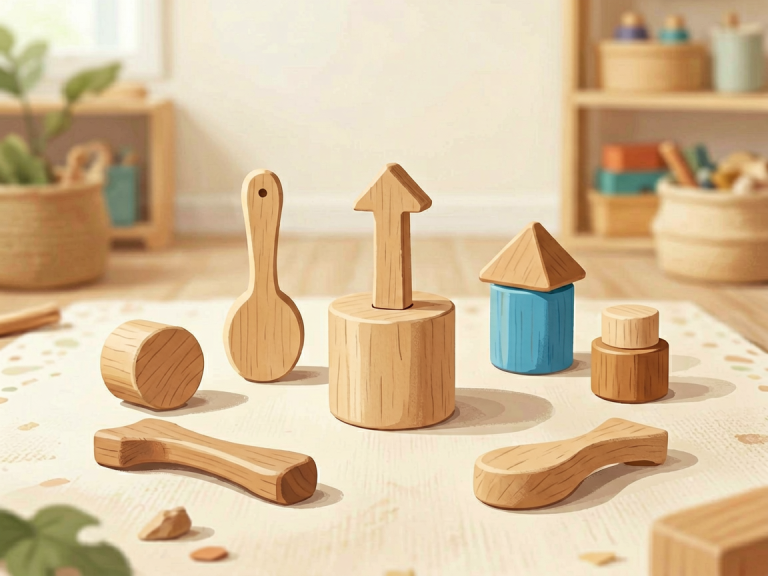
- Open-endedness: Toys that can be used in multiple ways (e.g., blocks, play silks, wooden rings) encourage creativity and problem-solving. A single open-ended toy can serve as a tower, a road, a fence, or a spaceship.
- Sensory variety: Three-year-olds learn through their senses. A mix of textures, sounds, weights, and visual stimuli supports neural development. Look for toys made of wood, fabric, metal, and natural materials rather than plastic alone.
- Safety and durability: At age three, children still mouth objects occasionally, and they test toys by throwing, dropping, and pulling. Avoid small parts that pose choking hazards, sharp edges, and toxic paints. Opt for sturdy construction that can survive enthusiastic play.
- Progression in challenge: The best toy path includes “next-step” toys that gently increase difficulty. For example, after mastering a 6-piece puzzle, introduce a 12-piece puzzle. After basic stacking rings, try interlocking blocks that require alignment.
- Minimal electronic features: While some electronic toys can be educational (e.g., simple music players), passive screen-based toys often reduce imaginative play. Prioritize toys that require active manipulation and child-led interaction.
With these principles in mind, let us explore the specific categories that constitute a robust toy path for three-year-olds.
Physical Development Toys: Building Strength and Coordination
Gross Motor Playthings
Three-year-olds have a seemingly endless supply of energy, and they need opportunities to move their whole bodies. The best toy path for gross motor skills includes items that encourage running, balancing, climbing, and propelling.
- Ride-on toys and tricycles: A sturdy, low-to-the-ground tricycle (or balance bike) helps children develop leg strength, coordination, and spatial awareness. Look for models with wide wheels and a low center of gravity for stability.
- Climbing structures: A small wooden climbing triangle or a foam block set allows safe climbing, crawling, and balancing. These are excellent for building core strength and risk assessment.
- Balls of various sizes: A soft foam ball for throwing, a slightly larger rubber ball for rolling, and a lightweight beach ball for volleying. Ball play improves hand-eye coordination and social turn-taking.
- Jumping and hopping tools: A small trampoline with a handle (supervised), a hopscotch mat, or simply a line of pillows to jump over. These activities enhance vestibular sense and gross motor planning.
Fine Motor Playthings
Fine motor skills are crucial for later writing, self-care, and manipulation of small objects. The best toys in this category provide repetitive, satisfying motions that strengthen the small muscles of the hands and fingers.
- Lacing and threading toys: Wooden animal-shaped beads with thick strings, or lacing cards with holes. These require concentration and bilateral coordination (using both hands together).
- Simple pegboards: A board with large pegs that children push into holes. Variations include color-matching pegboards or those that create patterns.
- Play dough and clay: Non-toxic, soft play dough with tools like rolling pins, plastic knives, and stampers. Squeezing, pinching, and rolling builds hand strength and creativity.
- Puzzles with knobs: Wooden puzzles with large knobs on each piece (e.g., animal shapes) help children practice grasp and spatial reasoning. Progress to interlocking puzzles with 8–12 pieces.
- Scissors and paper: Child-safe scissors with blunt tips, paired with construction paper, allow practice in cutting along lines. This is a high-interest activity that strengthens the hand muscles needed for writing.
Cognitive and Problem-Solving Toys: Sparking Curiosity
Construction and Building Sets
Three-year-olds are natural engineers. They love to stack, knock down, and rebuild. Construction toys teach spatial reasoning, cause and effect, and early math concepts like symmetry and balance.
- Wooden unit blocks: A classic set of rectangular, square, and triangular blocks in various sizes. Unlike interlocking bricks, these require balancing and gravity awareness. Add ramps and arches for added complexity.
- Magnetic tiles: Translucent, magnetic squares, triangles, and rectangles that snap together easily. They allow children to build 2D and 3D structures, and the magnetic connection is forgiving for small hands.
- Large interlocking bricks: Oversized LEGO Duplo blocks or similar brands. These are easier to connect than standard LEGO and are ideal for creating houses, towers, and vehicles.
Sorting, Matching, and Patterning
Cognitive skills like classification, sequencing, and patterning are foundational for mathematics and reading. Toys that encourage sorting by color, size, or shape are highly beneficial.
- Color and shape sorting boxes: A box with holes of different shapes and corresponding blocks. Children learn to match the block to the hole, developing visual discrimination.
- Counting bears or animal counters: Small plastic or wooden animals in distinct colors. These can be sorted into cups, arranged in patterns, or used for simple addition/subtraction games.
- Simple memory games: A set of paired cards with pictures (animals, fruits) that children flip and match. Start with 6–8 pairs and gradually increase. This strengthens working memory and attention.
- Lacing beads for patterns: Beads in two or three colors can be threaded in sequences (e.g., red, blue, red, blue). This introduces pattern recognition in a tactile way.
Pretend Play and Social-Emotional Toys: Cultivating Imagination
Role-Playing Sets
At age three, imaginative play becomes a primary vehicle for processing experiences and developing social skills. The best toy path includes props that allow children to imitate real-life roles.
- Play kitchen and accessories: A child-sized kitchen with pots, pans, wooden food, and utensils. Cooking “pretend” meals encourages sequencing (first cut, then cook, then serve), vocabulary expansion, and social cooperation.
- Doctor’s kit: A simple doctor set with a stethoscope, thermometer, bandages, and a toy syringe. Children love to treat stuffed animals or willing adults, practicing empathy and caregiving.
- Tool bench: A wooden tool set with a hammer, screwdriver, and blocks with bolts. This satisfies the desire to “fix” things and teaches fine motor work with cause-and-effect actions.
- Dress-up clothes: Costumes like hats, scarves, capes, and simple character outfits (vet, firefighter, princess). Dress-up allows children to experiment with identities and emotions.
Dolls, Stuffed Animals, and Figurines
Representational toys are central to socio-emotional development. Children project feelings onto dolls and use them to rehearse conversations and scenarios.
- Soft baby dolls with accessories: A doll that can be fed, dressed, and put to bed. Babies are especially compelling at age three because children themselves were recently babies. Caring for the doll nurtures nurturing behavior.
- Animal figurines: A set of realistic or semi-realistic animals (farm animals, wild animals, dinosaurs). These can be used in small-world play (e.g., building a farm with blocks), which promotes storytelling and categorization.
- Puppets: Simple hand puppets (e.g., a dog, a cat, a monster) encourage dialogue and emotional expression. A child can speak through the puppet, which helps them practice language in a safe, playful context.
Language and Literacy Toys: The Seeds of Communication
Books and Storytelling Aids
Three-year-olds are story lovers. The best toy path includes books that invite participation and repetition, as well as props that extend narratives.
- Board books with interactive elements: Look for books with flaps to lift, textures to feel, or buttons that produce sounds. Titles like *Dear Zoo* or *The Very Hungry Caterpillar* are classics.
- Picture books with simple plots: Stories that repeat phrases (e.g., *Brown Bear, Brown Bear*) or follow a clear sequence help children predict and retell. Reading together builds vocabulary and comprehension.
- Storytelling puppets or felt boards: A felt board with cut-out characters allows children to retell a familiar story or invent their own. This supports narrative skills and sequencing.
Alphabet and Word Play
While formal reading instruction is not necessary at three, exposure to letters and sounds in playful ways lays the groundwork.
- Wooden alphabet puzzles: A puzzle board with each letter cut out, often with a picture underneath (A for apple). This helps children associate letter shapes with sounds and objects.
- Magnetic letters: Large, colorful magnetic letters that can be placed on a fridge or a magnetic board. Children can sort by color, arrange their name, or match letters to pictures.
- Rhyming games: Simple rhyming card sets or a bingo game with pictures that rhyme (cat, hat, bat). Rhyming boosts phonological awareness, a key pre-reading skill.
Sensory and Calming Toys: Supporting Self-Regulation
Sensory Bins and Exploration
Three-year-olds still need sensory input to regulate their nervous systems. Sensory play is not just fun; it is therapeutic.
- Sensory bins: A shallow tub filled with dry rice, beans, sand, or water beads. Add scoops, funnels, small cups, and figurines. This open-ended activity can occupy a child for 30 minutes, promoting focus and exploration.
- Kinetic sand or moon sand: Sand that holds its shape when molded. It is less messy than traditional sand and provides a unique tactile experience. Add molds and plastic shovels.
- Water play table: A low table with containers, cups, water wheels, and floating toys. Water play is excellent for science learning (sinking vs. floating) and calming.
Calm-Down Tools
Some toys help children manage big emotions. While not a substitute for adult support, they can be part of a tool kit.
- Wobble cushions or balance seats: These provide sensory input while a child sits, helping with focus. They are useful for children who need to move while listening.
- Weighted lap pad or stuffed animal: A gentle weight can be soothing for some children. Always use under supervision and ensure the item is not too heavy.
- Bubble wand and liquid: Blowing bubbles requires deep breathing, which is calming. It also teaches cause and effect and offers visual delight.
How to Sequence the Toy Path: Rotation and Observation
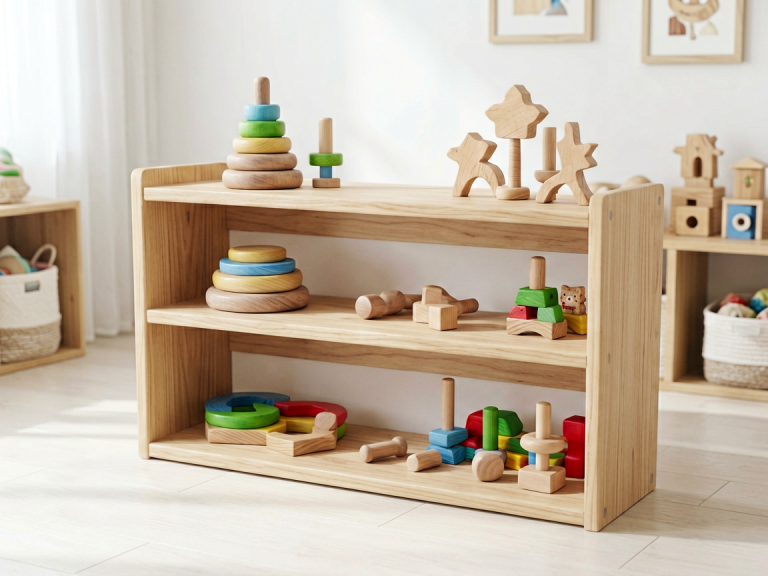
A curated toy path is not static. The best approach is to rotate toys every two to three weeks, keeping out only a limited number at a time. This prevents overwhelm and renews interest. Observe your child closely: Which toys do they return to repeatedly? Which do they ignore or find frustrating? Use that feedback to adjust.
A sample rotation cycle might be:
- Week 1–2: Blocks, two puzzles, a set of animal figurines, and play dough.
- Week 3–4: Magnetic tiles, a doctor’s kit, lacing beads, and a sensory bin.
- Week 5–6: Tricycle (outdoor), memory game, books with flaps, and a puppet.
During each rotation, incorporate at least one new toy that challenges the child slightly beyond their current skill level. For example, after mastering a 6-piece puzzle, offer a 12-piece puzzle with similar imagery.
Common Pitfalls to Avoid
Even well-intentioned toy choices can derail the best path. Here are mistakes to avoid:
- Overloading with electronic toys: Many electronic toys do the playing for the child. A toy that lights up and talks on its own limits the child’s role to passive pressing. Choose toys that require active input.
- Neglecting open-ended play: Overly structured toys (for example, a specific set of pieces that only make one model) can stifle creativity. Balance them with blocks and loose parts.
- Ignoring safety: Always check for small parts, strings longer than 12 inches, and batteries that are not secured. Age labels are guidelines, but your child’s specific habits matter more.
- Buying too many toys at once: Quality over quantity. A handful of well-chosen toys is more beneficial than a room full of clutter.
Conclusion: The Journey, Not the Destination
The best toy path for a three-year-old is not a fixed checklist; it is a mindful, evolving journey that honors the child’s pace and interests. By prioritizing open-ended, developmentally appropriate toys across physical, cognitive, social-emotional, and language domains, you create an environment where play becomes the engine of growth. The tricycle teaches perseverance; the blocks teach geometry; the doll teaches empathy; the puppet teaches voice. Each toy is a stepping stone, and the path they create together leads to a child who is confident, curious, and ready for the next stage of discovery.
As you select toys for the three-year-old in your life, remember: the best toy is one that invites the child to *do* something, not just watch something. It is the toy that sparks a question, prompts a laugh, or inspires a new story. Follow the child’s lead, trust the developmental science, and enjoy the beautiful complexity of play.