Unlocking Imagination: How to Use Toys for Creative Play
In an age of screens, structured schedules, and pressure to achieve measurable milestones, the simple act of playing with toys has never been more vital—or more misunderstood. For many parents and educators, toys are seen as tools for entertainment or, at best, for developing fine motor skills or early literacy. But the true magic of toys lies not in what they are, but in what they can become. Creative play is the gateway to cognitive flexibility, emotional resilience, social intelligence, and problem-solving. This article explores how to use toys not as prescribed playthings, but as catalysts for unbounded imagination. Whether you have a box of wooden blocks, a handful of action figures, or a collection of recycled containers, the principles of creative play can transform any object into a world of possibilities.
The Philosophy of Creative Play
Before diving into practical strategies, it is essential to understand what creative play actually means. Creative play is not synonymous with “educational toys” or “structured activities.” It is a state of open-ended exploration where children are the architects of their own experience. The toy serves as a prop, a prompt, or a raw material, but the narrative, the rules, and the purpose are fluid. In creative play, a cardboard box may become a spaceship, a castle, a time machine, or a pirate ship—all within five minutes. This kind of play fosters divergent thinking, the ability to generate multiple solutions to a single problem. It also builds executive function skills such as self-regulation, planning, and cognitive flexibility. The key is to resist the urge to direct or correct. Instead, adults should embrace the role of observer, facilitator, and sometimes co-player, without imposing their own agenda.
Choosing the Right Toys: Simplicity Over Sophistication
The toy industry bombards us with flashy, battery-operated, single-purpose gadgets that promise to make children smarter, faster, and more creative. Paradoxically, these very toys often stifle imagination. The most effective tools for creative play are the simplest. Think of wooden blocks, stacking cups, dollhouses with minimal furniture, sets of magnetic tiles, play silks, and collections of natural objects like pinecones, stones, and shells. These are known as “open-ended” toys—they have no predetermined outcome. A set of wooden blocks can become a tower, a bridge, a fence, a balancing scale, or a stage for animal figurines. Similarly, a handful of toy animals can star in a rescue mission, a zoo escape, a peaceful picnic, or a dramatic jungle storm. When selecting toys, prioritize those that invite multiple uses, that encourage manipulation, and that do not dictate a single story. Avoid toys that light up and sing on their own; these turn children into passive spectators rather than active creators.
Open-Ended Play: The Power of Loose Parts
One of the most powerful concepts in creative play is the theory of “loose parts.” Coined by architect Simon Nicholson in the 1970s, this theory suggests that children’s creativity is directly proportional to the number and variety of variables they can manipulate. Loose parts are any materials that can be moved, combined, redesigned, and reused in countless ways. In the context of toys, loose parts might include: fabric scraps, ribbons, bottle caps, cardboard tubes, buttons, pebbles, sticks, and even old keys. When a child has access to a bin of loose parts alongside more conventional toys, the potential for creative play explodes. For example, a simple plastic dinosaur becomes far more interesting when it can wear a cape made from a scrap of silk, stand on a cardboard platform, and be surrounded by a “lava” of orange yarn. Encourage children to sort, stack, balance, and connect loose parts. Do not offer instructions; let them experiment. The mess is part of the process. The only rule should be safety—avoid small choking hazards for very young children.
Role-Playing and Storytelling: Toys as Characters
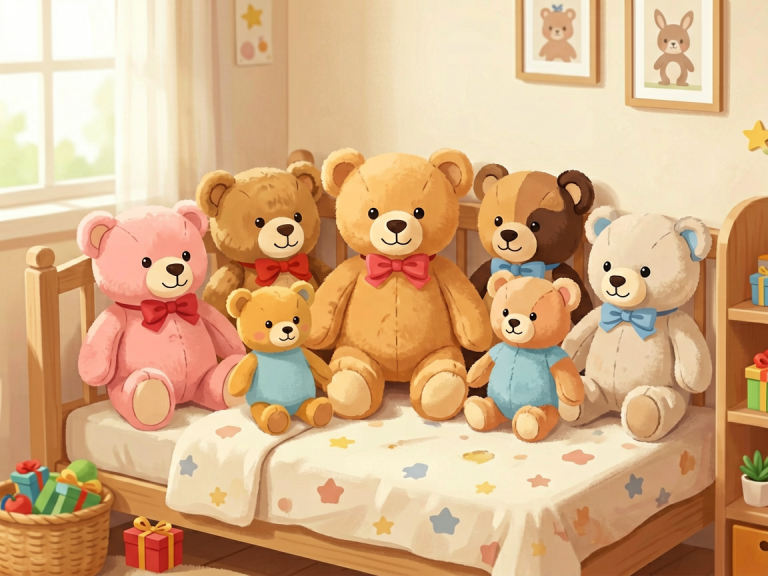
Toys are natural actors. A child who picks up a stuffed bear is not merely holding a plush object; she is holding a character with a personality, a history, and a voice. To harness this for creative play, adults can introduce simple narrative prompts without dictating the plot. For instance, instead of saying, “Let’s pretend the bear is going to the doctor,” say, “I wonder where Bear wants to go today.” This subtle shift empowers the child to own the story. You can also use toys to explore real-life experiences. After a visit to the zoo, bring out toy animals and let the child reenact what they saw, adding fantastical twists. Role-playing with toys develops empathy, as children try on different perspectives. It also builds language skills, as they narrate dialogue and describe scenes. For older children, encourage them to create elaborate settings using blankets, pillows, and household items. A toy knight defending a castle made of sofa cushions is engaging in complex story construction that rivals any written essay in cognitive demands.
Building and Construction: Toys That Transform Space
Construction toys like LEGO, Duplo, Tinkertoys, and magnetic blocks are often marketed for engineering skills, but their true gift is creativity. The child who builds a tower is not just stacking; she is making decisions about balance, symmetry, and aesthetics. To deepen creative play with building toys, challenge children to build “things that don’t exist”—a machine that collects dreams, a house for a cloud, a vehicle that travels through books. Alternatively, combine building toys with other open-ended materials. A LEGO castle can be inhabited by tiny clay figures. A marble run can be integrated with a cardboard maze. The goal is to blur boundaries between toy categories. Encourage children to modify their creations—adding a roof made of paper, a flag made of a toothpick and cloth. This kind of play teaches iteration, resilience (when towers fall), and spatial reasoning. Most importantly, it shows that there is no single “right” way to build.
Incorporating Nature and Everyday Objects
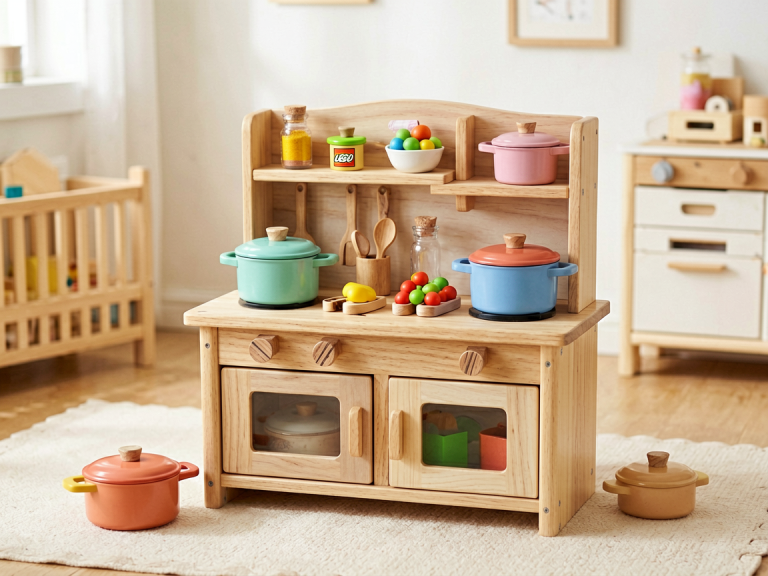
The most creative play often happens outside the toy box entirely. A stick on the ground is a magic wand, a sword, a fishing rod, a conductor’s baton. A pile of leaves is a treasure heap, a bed for fairies, a hiding spot for a toy hedgehog. Mud can be molded into food, bricks, or sculptures. To foster this, make it a habit to bring natural objects indoors (in moderation) or take toys outdoors. A set of wooden animals gains new life in a patch of moss. A toy truck becomes a construction vehicle digging in sand. Even household objects like pots, spoons, and empty egg cartons can join the play. The key is to model an attitude of “What could this be?” rather than “This is for this purpose.” When a child sees you turn a paper towel roll into a telescope, they learn that creativity is not limited to specific toys. This mindset is the ultimate gift: the understanding that the world itself is a playground of possibilities.
The Role of Parents and Educators: Facilitate, Don’t Dominate
Perhaps the hardest lesson for adults is knowing when to step back. Creative play flourishes in an environment of trust and freedom. This does not mean complete chaos—reasonable limits on time, space, and safety are important. But within those limits, children need autonomy. Avoid asking too many leading questions like, “Is that a fire truck?” Instead, describe what you see: “I notice you have arranged the blocks in a circle.” This validates their process without prescribing meaning. If a child asks for help, offer suggestions that expand rather than solve. For example, if a child is frustrated because a tower keeps falling, ask, “What could you add to the base to make it stronger?” rather than grabbing the blocks and building it yourself. Also, be willing to play alongside without directing. Join in as a equal partner: “I’m going to be a baby dragon who is learning to fly. What do you think I should practice on?” This kind of co-play models creativity and deepens the child’s engagement.
Conclusion: The Endless Journey of Imagination
Using toys for creative play is not a technique to be mastered; it is an ongoing commitment to honoring a child’s inner world. The same toy can produce different stories on different days, and that is exactly the point. As children grow, their play evolves, but the foundation of creativity remains the same: the belief that they are capable of transforming the ordinary into the extraordinary. The most expensive, high-tech toy on the market cannot compete with a cardboard box and a willing imagination. So clear a space on the floor, empty a drawer of odds and ends, and sit down beside a child. Ask no questions. Give no instructions. Let the magic happen. In that humble moment, you are not just playing with toys—you are nurturing a mind that will one day imagine solutions to problems we cannot yet see. And that is the most creative play of all.