Building Brains and Bright Futures: A Learning Toy Path for 5-Year-Olds
—
Introduction: Why a Learning Toy Path Matters
At the age of five, children stand at a remarkable crossroads. They have outgrown the sensory-exploration stage of toddlerhood but have not yet entered the structured world of formal schooling. Their brains are developing at an astonishing rate—synapses are being pruned, language skills are exploding, and social awareness is deepening. The right toys can do far more than entertain; they can scaffold cognitive, emotional, and physical development. However, not all toys are created equal, and the order in which children encounter them matters. A thoughtfully designed *learning toy path* for 5-year-olds provides a sequence of play experiences that build on one another, moving from open-ended exploration to more structured problem-solving, while always preserving the joy of discovery. This article outlines a progressive, research-informed pathway that parents, educators, and caregivers can use to curate a rich play environment for their five-year-old.
—
Understanding the 5-Year-Old Mind: Developmental Milestones
Before selecting toys, it is essential to understand the cognitive and social capabilities of a typical five-year-old. At this age, children are moving from preoperational thought toward more logical concrete operations—though they still rely heavily on concrete examples rather than abstract ideas. Key milestones include:
- Language: Vocabulary expands to roughly 2,000–2,500 words; they can tell longer stories and use past, present, and future tenses.
- Cognitive: Counting to 20 or beyond, recognizing some letters and numbers, beginning to understand cause and effect.
- Fine motor: Improved dexterity allows for cutting with scissors, drawing recognizable shapes, and manipulating small objects.
- Social-emotional: Increasing ability to take turns, share, and engage in cooperative play; they develop a stronger sense of fairness and may enjoy simple rules.
A learning toy path must honor these milestones. Toys that are too simple will bore a five-year-old; toys that are too complex will frustrate them. The path should start where they are and gently stretch their abilities.
—
Phase 1: The Foundation – Open-Ended and Imaginative Toys
The first step on the learning toy path is to lay a foundation of creativity and self-directed play. Open-ended toys—those that can be used in multiple ways without a fixed outcome—are ideal for this phase. They encourage children to generate their own narratives, solve problems on the fly, and develop flexible thinking.
Examples:
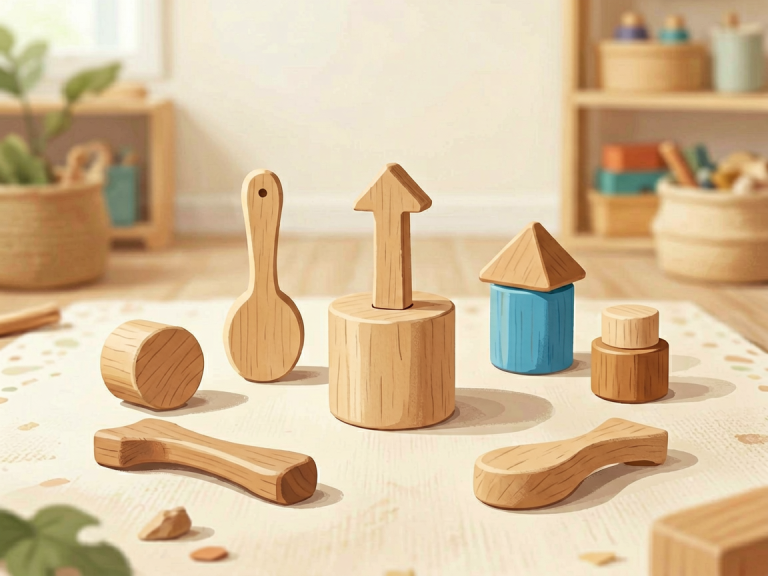
- Wooden building blocks (unit blocks or magnetic tiles): These allow children to construct towers, bridges, castles, or abstract shapes. Building requires spatial reasoning, balance, and an understanding of geometry. A five-year-old can experiment with symmetry and simple structural engineering.
- Dress-up costumes and play food: Pretend play is a powerhouse for language development and social understanding. When a child pretends to be a doctor, chef, or astronaut, they practice vocabulary, perspective-taking, and sequencing (e.g., what does a doctor do first?).
- Sensory bins with rice, sand, or water: Though often associated with younger children, five-year-olds benefit from sensory play when it is thematically enriched—for example, a dinosaur excavation or a miniature farm. This supports fine motor control and scientific observation.
The key at this stage is to resist the urge to direct the play. Let the child lead. The parent’s role is to provide a rich environment and then step back. This phase should last as long as the child shows interest, often for several weeks or months.
—
Phase 2: Introducing Structure – Puzzles, Games, and Early Logic
Once a child has built confidence in open-ended play, they are ready to tackle activities with more predetermined goals. This phase introduces structure without sacrificing fun. Toys that require following steps, matching patterns, or solving simple problems help develop executive functions like attention, working memory, and self-regulation.
Examples:
- Floor puzzles (24 to 48 pieces): Puzzles teach pattern recognition, patience, and the concept of part-whole relationships. Start with puzzles that have clear, colorful images (e.g., a map of the world or a jungle scene) and gradually increase piece count.
- Simple board games: Games like *Candy Land*, *Chutes and Ladders*, or the cooperative *Hoot Owl Hoot!* introduce turn-taking, counting spaces, and the ability to handle both winning and losing. These games also foster social skills like sharing dice and waiting.
- Matching and memory games: Classic memory card games (find the pair) strengthen visual memory and concentration. For a five-year-old, start with 12–20 cards and play in short sessions.
- Pattern blocks and lacing beads: These combine fine motor practice with early mathematical thinking. A child can copy a pattern from a card or create their own, learning about sequences and symmetry.
Notice that these toys still involve hands-on manipulation—they are not screen-based. The goal is to build a bridge between free play and more guided activities, setting the stage for academic readiness.
—
Phase 3: Academic Readiness – Letters, Numbers, and Simple Science
By this point, children are often eager to “do school” like older siblings or friends. Toys that introduce letters, phonics, counting, and basic scientific concepts can be seamlessly integrated into play. The critical rule is that these toys must feel like play, not drills. If a child resists, put them away and return later.
Examples:
- Alphabet puzzles and magnetic letters: Use them for letter recognition, forming simple three-letter words (cat, dog, sun). Combine with a small whiteboard for tracing practice.
- Counting bears and ten-frames: These manipulatives make abstract numbers concrete. A child can sort bears by color, count them, or practice simple addition (e.g., “I have three red bears and two blue bears—how many altogether?”).
- Science kits for early exploration: A simple magnifying glass, a set of magnets, or a bug-catching container can spark questions about the natural world. Ask open-ended questions like, “What do you think will happen if we hold the magnet near this paper clip?”
- Storytelling dice or sequence cards: These encourage children to create narratives based on pictures. This supports reading comprehension and oral language—both precursors to reading success.
It is important to integrate academic toys alongside the open-ended and structured toys from earlier phases. No one phase replaces another; rather, they layer together. A child might spend twenty minutes building with blocks, then move to a letter-matching game, then return to blocks.
—
Phase 4: Social and Emotional Growth – Cooperative and Role-Play Toys
Five-year-olds are increasingly interested in playing with peers, but they still need adult support to navigate conflicts and emotions. Toys that specifically target social-emotional learning should be woven into the path. These toys teach empathy, negotiation, and emotional vocabulary.
Examples:
- Feelings flashcards or emotion dolls: Use these to help a child identify and name emotions (happy, sad, frustrated, excited). Act out scenarios: “How would you feel if someone took your toy? What could you say?”
- Cooperative games: Unlike competitive games, cooperative ones require all players to work together toward a common goal. *Race to the Treasure* or *The Sneaky, Snacky Squirrel Game* promote teamwork and reduce the sting of losing.
- Puppets and small-world play sets: A puppet theater or a dollhouse offers a safe space to act out social situations—a birthday party, a visit to the doctor, a quarrel between friends. The child projects their own experiences onto the characters, processing their feelings.
- Cooking or baking toys (play dough, toy kitchen): Cooking is a rich social activity. Children can “make a meal” for a friend or family member, practicing generosity and role-taking.
In this phase, the adult’s role is to model social language: “I see you’re sharing the spatula. That’s kind!” or “It looks like your puppet is sad. What could we do to help?” These interactions build emotional intelligence that will serve the child for life.
—
Phase 5: Technology as a Tool – Smart Integration of Digital Learning
No modern learning toy path can ignore technology entirely, but it must be used thoughtfully. For five-year-olds, screens should be a small part of a predominantly hands-on, active play diet. When used, technology should be interactive, educational, and time-limited.
Examples:
- Educational apps that focus on letter tracing (e.g., *LetterSchool*), early math (e.g., *Todo Math*), or creative storytelling (e.g., *Toontastic*). Look for apps that are ad-free and designed by early childhood experts.
- Programmable robots for kids (like *Botley* or *Code-a-Pillar*): These screen-free coding toys introduce sequencing and cause-and-effect without requiring a tablet. A child can press buttons to make the robot go forward, turn, or follow a path.
- Interactive storybooks that read aloud while highlighting text: These can support early literacy, but they should be used alongside physical books, not as a replacement.
Set clear boundaries: 20–30 minutes of screen time per day, always with parental co-viewing. Encourage discussion afterward: “What did you learn in the app? Can you show me with your blocks?”
—
Creating a Balanced Toy Rotation: Practical Tips for the Path
A learning toy path works best when toys are not dumped all at once. Overwhelming a child with too many options can lead to shallow play. Instead, create a rotation system:
- Observe your child’s current interests. If they are obsessed with dinosaurs, lean into that theme (dinosaur puzzles, dinosaur sensory bin, dinosaur counting game).
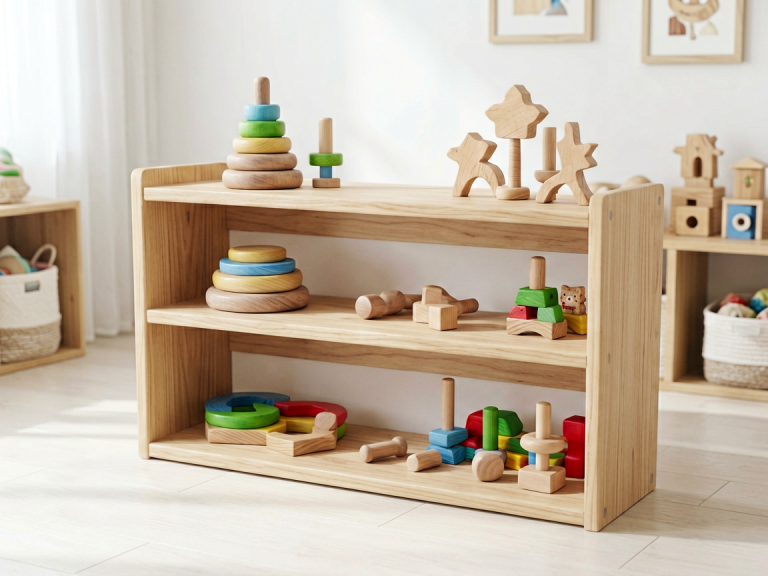
- Keep 5–7 toys available at a time. Rotate them every two weeks. Store the rest out of sight to maintain novelty.
- Include at least one toy from each phase: one open-ended toy (blocks), one structured game (a puzzle), one academic toy (letter magnets), one social toy (puppets), and one physical toy (a balance bike or ball).
- Follow the child’s lead. If a toy is ignored, put it away and try again later. Forced play kills intrinsic motivation.
—
Conclusion: The Path Is Not a Straight Line
The learning toy path for a five-year-old is not a rigid checklist but a flexible guide. Some children will race through Phase 1 and linger in Phase 3; others will revisit open-ended play for months. The beauty of this path is that it respects each child’s unique developmental rhythm while ensuring that all essential domains—cognitive, social, emotional, physical—are nurtured. By choosing toys that build sequentially, parents and educators can create a rich tapestry of play that not only prepares children for kindergarten but also fosters a lifelong love of learning. Remember: the best toy is the one that sparks curiosity, invites collaboration, and leaves room for imagination. And that, ultimately, is the most valuable path of all.