The Art of Growing Through Play: A Thoughtful Toy Progression for 5-Year-Olds
Introduction
At the age of five, a child stands at a remarkable crossroads. The baby years have faded, the toddler struggles are behind, and now a small person—full of questions, ideas, and boundless energy—emerges. Five-year-olds are not simply older preschoolers; they are budding explorers of logic, language, and social nuance. Their play is no longer just about sensory satisfaction or gross motor thrills. It becomes a laboratory for testing hypotheses, negotiating friendships, and constructing personal narratives. The toys we choose for them, therefore, must do more than entertain. They must scaffold a child’s progression through increasingly complex cognitive, physical, and emotional landscapes.
This essay examines the ideal toy progression for five-year-olds, breaking down categories of development and offering specific toy types that support each domain. The goal is not to prescribe a rigid shopping list, but to provide a framework that parents, educators, and caregivers can adapt to a child’s unique tempo and interests.
—
1. Cognitive Leaps: From Concrete to Abstract Thinking
Five-year-olds are on the cusp of a major cognitive shift. According to Jean Piaget, they are still in the preoperational stage, but they begin to move from purely concrete reasoning toward early symbolic and logical thought. Toys that encourage pattern recognition, sequencing, and simple problem-solving are ideal for this transition.
Puzzles and Logic Games
Jigsaw puzzles with 24 to 48 pieces are excellent. They require a child to hold a mental image of the whole while manipulating parts—a skill that underpins later mathematical reasoning. More important than the number of pieces is the variety of images: maps, scenes from stories, or even simple diagrams of the solar system can spark curiosity. Beyond jigsaws, consider logic puzzle sets that involve matching shapes or colors under constraints, such as “place the red block where the blue block cannot go.” These games build working memory and flexible thinking.
Board Games with Simple Rules
Classic board games like *Candy Land* or *Chutes and Ladders* are often criticized as being purely luck-based, but they serve a deeper purpose. They teach turn-taking, following a sequence of steps, and emotional regulation when the spinner lands on a chute. More advanced options include *Hoot Owl Hoot!* (a cooperative game that teaches planning) or *Robot Turtles* (a screen-free coding game). The key is that the rules are simple enough to remember yet structured enough to require strategic thought.
Math and Letter Manipulatives
Toys like magnetic numbers, letter tiles, or simple abacuses allow five-year-olds to explore numeracy and literacy through touch. They can sort, count, and form simple words without the pressure of worksheets. A set of foam letters that float in the bath might be just the thing for a child who resists formal learning. The progression here is from recognition to simple addition (e.g., “two blocks plus one block equals three blocks”) and from letter sounds to short, phonetic words like “cat” or “dog.”
—
2. Physical Mastery: Fine and Gross Motor Refinement
Five-year-olds are becoming more coordinated, but they still need deliberate practice to refine both large and small muscle groups. Toys that challenge balance, dexterity, and visual-motor integration are essential.
Ride-On Toys and Balance Bikes
A child who has mastered a tricycle may be ready for a two-wheeled balance bike. These bikes lack pedals, forcing the child to use their feet to propel and steer, developing core strength and balance without the fear of falling. Once they transition to a pedal bike (usually around age 6–7), the foundation is solid. For indoor play, a small scooter or a rocking balance board provides similar benefits.
Construction Sets with Smaller Pieces
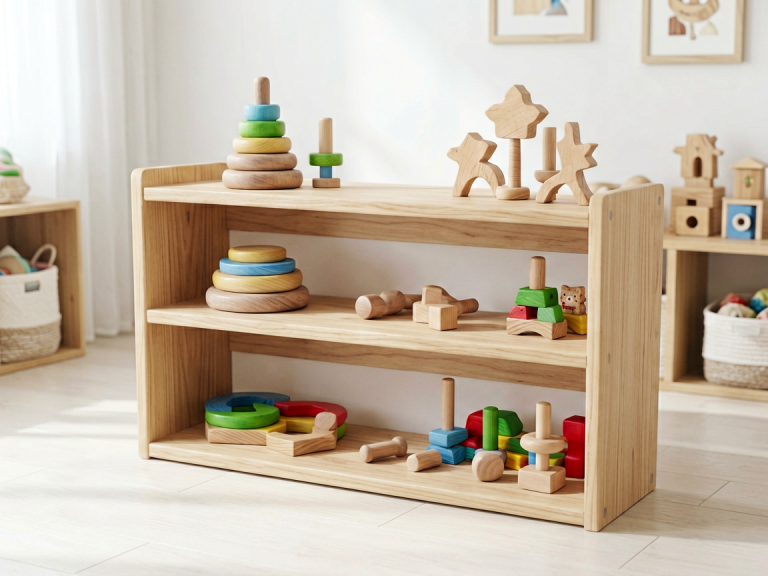
Building blocks have been a staple for years, but at age five, children can handle more complexity. LEGO Classic sets (the basic brick boxes, not themed kits with intricate instructions) allow for open-ended creation. The act of pressing bricks together strengthens finger muscles, while planning a structure requires spatial reasoning. Alternatively, magnetic tiles like Magna-Tiles offer a different challenge: the pieces snap together with magnets, requiring precise alignment. Both types encourage children to build upward, sideways, and even in three-dimensional shapes, improving hand-eye coordination.
Art and Craft Supplies
Scissors, glue, clay, and markers are not just for fun—they are tools for fine motor development. Safety scissors that cut paper but not hair are perfect for cutting along lines. Modeling clay or Play-Doh strengthens hand muscles as children roll, pinch, and shape. Stringing beads onto a shoelace or creating simple weaving patterns with a cardboard loom also enhances the pincer grip needed for writing. The progression here is from random scribbling to purposefully drawing shapes, letters, and simple people.
—
3. Social and Emotional Growth: Playing with Others and with Feelings
Five-year-olds are increasingly aware of other people’s perspectives, but they still struggle with sharing, taking turns, and managing disappointment. Toys that facilitate cooperative play and emotional expression are invaluable.
Dress-Up and Pretend Play Sets
A costume trunk filled with hats, capes, aprons, and play accessories (such as a doctor’s kit or a toy cash register) allows children to step into different roles. Pretend play is a safe arena for exploring emotions: a child can be a grumpy shopkeeper or a gentle veterinarian. Through this, they learn to read facial expressions, negotiate scripts (“You be the patient, I’ll be the doctor”), and practice empathy. The progression is from simple imitation (pretending to cook) to complex narratives (pretending to run a whole restaurant with a menu and customers).
Cooperative Board Games
Unlike competitive games, cooperative games require all players to work together toward a common goal. *The Sneaky, Snacky Squirrel Game* (where players collect acorns without making the squirrel sneeze) teaches patience and teamwork. Another example is *Race to the Treasure!*, where players must build a path to reach a treasure before a monster. These games reduce the sting of losing—everyone wins or loses together—and help children learn to support each other.
Emotion Flashcards and Story Dice
While not toys in the traditional sense, sets of cards showing different facial expressions or story dice with pictures of animals, objects, and actions can spark conversations about feelings. A child can roll the dice and create a story about a sad puppy who meets a happy friend. This encourages verbalization of emotions and narrative sequencing. The progression is from naming emotions (“happy,” “sad”) to explaining causes and solutions (“The puppy is sad because it lost its bone, but then the friend found it”).
—
4. Creative and Imaginative Expansion: Open-Ended Play
Perhaps the most important category for five-year-olds is open-ended toys—those that have no predetermined outcome. These toys foster creativity, resilience, and divergent thinking.
Loose Parts and Natural Materials
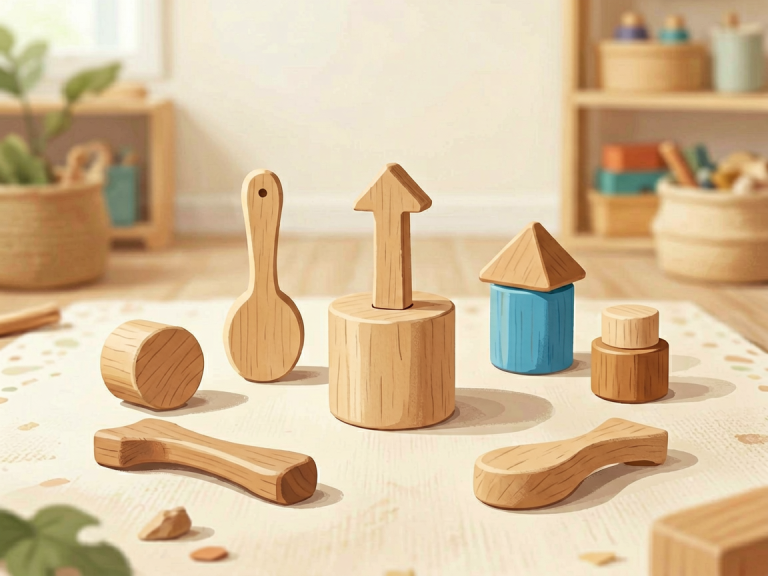
A collection of pinecones, pebbles, fabric scraps, bottle caps, and wooden rings might seem like junk, but to a five-year-old, they are treasures. Loose parts invite endless combinations: a pinecone can be a tree, a monster’s nose, or a crown. Children learn to repurpose and adapt, skills that are far more valuable than any single-use toy. The progression is from simple sorting (by color or size) to constructing elaborate scenes (a fairy house made of bark and moss) or even inventing counting games with pebbles.
Art Materials with No Instructions
While coloring books have their place, a five-year-old’s creativity is best served by blank paper, watercolors, and a variety of brushes. Or perhaps a roll of butcher paper spread on the floor and a box of crayons. The absence of a template forces the child to invent their own image. A progression might be: first, they draw circles and lines; then, they add details like eyes and arms; later, they create entire landscapes with multiple characters. The process, not the product, is the point.
Simple Musical Instruments
A xylophone, a small drum, or a set of rhythm sticks allows for exploration of sound. Five-year-olds can start to play simple patterns (e.g., loud-soft-loud) and even create their own songs. This not only stimulates auditory development but also gives them a non-verbal outlet for emotion. The progression is from random banging to intentional rhythm, and eventually to following a simple musical score (like color-coded notes).
—
5. Digital and Tech Toys: A Cautious Inclusion
In the modern world, digital toys are unavoidable, but they must be chosen with extreme care for a five-year-old. Screen-based play should be limited and always active, not passive.
Simple Coding Toys Without Screens
*Code-a-Pillar* or *Botley* the Coding Robot are excellent examples: they use physical buttons or cards to program a sequence of movements. The child pushes buttons in order (forward, turn left, forward, etc.) to make the toy reach a target. This teaches sequencing, cause and effect, and basic programming logic without a glowing screen. The progression is from simple two-step commands to multi-step routines.
Child-Friendly Audio Players
Devices like the *Yoto Player* or *Toniebox* allow children to insert physical cards or figures to play stories, music, or podcasts. There is no screen, no video, no ads. The child controls the audio experience, learning to choose what to listen to and for how long. This fosters auditory attention, vocabulary growth, and a love of narrative. The progression is from short, repetitive songs to longer, chapter-based stories.
—
Conclusion: The Ever-Changing Toy Box
The toy progression for a five-year-old is not a linear path but a rich, overlapping tapestry. A single morning might see a child building a LEGO tower, then dressing up as a dragon to guard it, then drawing a map of the dragon’s cave. The best toys are those that can serve multiple functions and grow with the child.
As caregivers, we must resist the urge to buy the most advertised or the most “educational” toy. Instead, we should observe the child’s current fascinations—are they obsessed with dinosaurs? Do they love helping in the kitchen?—and choose toys that extend those interests. The toy progression is ultimately about trust: trust in the child’s natural drive to learn, and trust in the power of play to shape a curious, capable, and compassionate human being.
After all, a five-year-old does not need a toy that will teach them everything. They need a toy that will teach them to teach themselves. And that is the most profound progression of all.