Beyond Blocks: How Advanced Spatial Reasoning Toys Shape Cognitive Development
Introduction
For decades, parents and educators have intuitively known that playing with building blocks, puzzles, and shape sorters helps children develop critical thinking skills. But in the 21st century, the landscape of play has transformed dramatically. The emergence of advanced toys specifically engineered to enhance spatial reasoning—from modular robotics kits to immersive augmented reality puzzles—represents a quantum leap in cognitive training tools. Spatial reasoning, the ability to mentally manipulate and navigate objects in two- and three-dimensional space, is increasingly recognized as a cornerstone of success in STEM fields, architecture, engineering, and even artistic disciplines. This article explores the science behind spatial reasoning, the evolution of spatial toys from simple blocks to sophisticated digital-physical hybrids, and the profound implications these advanced tools have for learners of all ages. By examining the design principles, research evidence, and future trajectories of these toys, we uncover how they are not merely playthings but powerful instruments for shaping the human mind.
The Science of Spatial Reasoning: Why It Matters
Defining Spatial Reasoning and Its Components
Spatial reasoning is not a single ability but a constellation of cognitive skills. Researchers typically categorize it into several subdomains: spatial visualization (the ability to imagine how an object looks when rotated or transformed), spatial orientation (understanding one’s own position relative to objects in space), mental rotation (turning objects in the mind’s eye), and spatial perception (determining spatial relationships despite distracting information). These skills are underpinned by neural networks in the parietal and prefrontal cortices, areas that undergo significant development during childhood and adolescence. Crucially, spatial reasoning is highly malleable; targeted training can produce substantial gains, a phenomenon known as “spatial plasticity.”
The Link Between Spatial Skills and Academic Achievement
Decades of longitudinal studies have established a robust correlation between early spatial ability and later success in mathematics and science. For instance, a landmark 2013 meta-analysis by Uttal et al. found that spatial training significantly improved mathematical performance, with effect sizes comparable to those of direct math instruction. Children who excel at mental rotation and spatial visualization are more likely to pursue degrees in physics, engineering, and computer science. Moreover, spatial reasoning is a known predictor of creativity in design fields and even of surgical skill in medicine. In an era where STEM literacy is paramount, cultivating spatial thinking from an early age is an educational imperative.
The Evolution of Spatial Toys: From Wooden Blocks to High-Tech Marvels
Traditional Analog Toys and Their Limitations
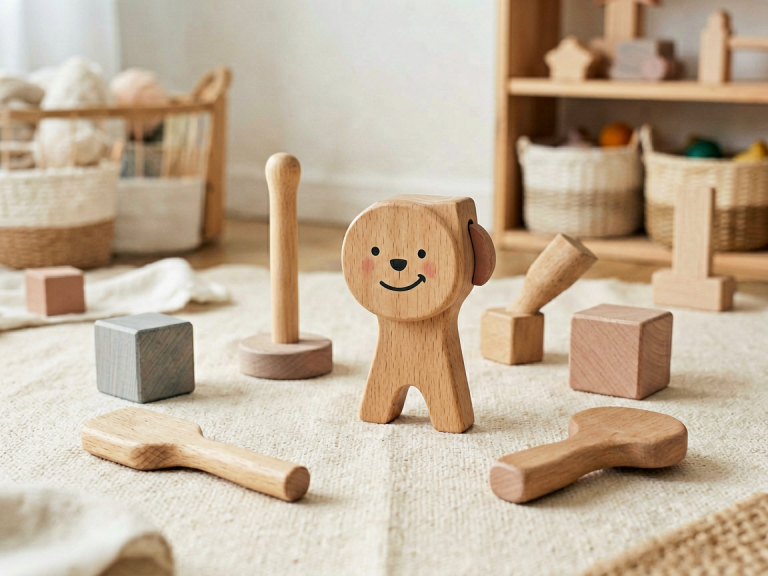
The classic wooden block set, along with jigsaw puzzles and tangrams, have been staples of childhood play for centuries. These analog tools offer undeniable benefits: they encourage open-ended exploration, fine motor control, and basic spatial concepts like stacking, balancing, and pattern recognition. However, their limitations become apparent as children advance. Traditional blocks lack the feedback mechanisms, adaptive difficulty, and complexity needed to challenge developing spatial abilities beyond a certain threshold. A child who has mastered building a tower of 20 cubes may not be pushed to think about symmetry, rotation, or dynamic spatial transformations. Furthermore, these toys rarely provide explicit instruction or data on a child’s progress, leaving parents and teachers in the dark about specific strengths or weaknesses.
The Digital Revolution and the Rise of Smart Toys
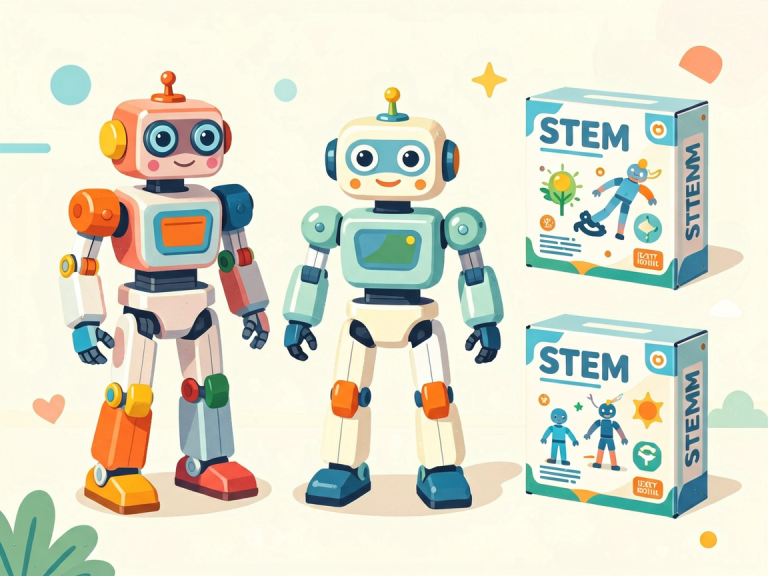
The integration of sensors, microprocessors, and wireless connectivity into physical toys began in earnest in the early 2000s. Early examples included programmable robotic kits like Lego Mindstorms, which allowed children to build and code machines that moved in space. More recently, the convergence of augmented reality (AR) and physical manipulation has produced toys that blend the tactile satisfaction of building with digital overlay. For instance, the toy “Osmo” uses a tablet camera to recognize physical blocks placed on a play mat, then projects interactive challenges onto the screen that require spatial reasoning to solve. Another breakthrough is the use of modular electronics, such as littleBits, which snap together magnetically to create circuits that power lights, motors, and sensors—all while teaching spatial circuitry layout. These toys offer instant feedback, progressive difficulty, and data tracking that can pinpoint exactly where a child’s spatial reasoning needs reinforcement.
Advanced Toys for Spatial Reasoning: Categories and Exemplars
Modular Robotics: Learning Spatial Relationships Through Motion
Modular robotic kits like “Sphero BOLT,” “Makeblock mBot,” and “Cubelets” represent a sophisticated category of spatial toys. These kits consist of interlocking components—motors, sensors, microcontrollers, and structural pieces—that children assemble to create functional robots. The act of building a robot requires sequential spatial thinking: deciding which modules go where, understanding how the orientation of a sensor affects the robot’s behavior, and troubleshooting misalignments. For example, a child building a line-following robot must position the infrared sensor precisely above the track, an exercise in spatial perception and planning. Once the robot is constructed, coding its movements introduces dynamic spatial reasoning, as children use angles, distances, and coordinate systems to navigate mazes or perform tasks. Advanced kits even incorporate gyroscopes and accelerometers, allowing users to design robots that maintain balance or respond to tilt—challenges that push mental rotation and spatial visualization to new heights.
Augmented Reality Puzzles: Merging Physical and Digital Spaces
AR puzzles such as “Merge Cube,” “Quiver,” and “Octagon Studio’s AR flashcards” overlay digital 3D models onto physical objects. The Merge Cube, for instance, is a foam cube with printed markers that a smartphone or tablet’s camera can track. When viewed through the app, the cube appears to transform into a globe, a solar system, a human skull, or a geometric shape, all of which can be rotated and examined by turning the physical cube in the user’s hand. This direct mapping between physical manipulation and digital representation powerfully reinforces spatial visualization. Researchers at Stanford University have found that using AR spatial tools improves mental rotation scores significantly more than static 2D diagrams or even 3D computer models viewed on a screen, because the kinesthetic feedback of holding and turning the object aligns with the visual transformation. Advanced AR toys now incorporate multi-player challenges, where two children must coordinate their physical movements to solve a spatial problem displayed on a shared screen, fostering collaborative spatial reasoning.
3D Printing and Design Kits: Iterative Spatial Creation
Toys like “The XYZprinting da Vinci Mini” (a consumer 3D printer adapted for children) and “Morphi” (a 3D modeling app combined with a physical building kit) enable users to design objects in virtual space and then bring them into the real world. The design process itself is a rigorous spatial reasoning exercise: users must conceive how a 2D sketch will translate into a 3D object, consider overhangs and support structures, and anticipate how different parts fit together. When the object is printed, the child can physically inspect it, compare it to the digital model, and identify discrepancies—a feedback loop that refines spatial intuition. These toys go beyond passive manipulation; they engage the user in active spatial problem-solving, where mistakes are tangible and improvements are immediate. Some kits, like “Tinkercad” paired with a classroom 3D printer, have been shown to improve students’ spatial visualization test scores by an average of 15–20% over a single semester.
Immersive Virtual Reality (VR) Games for Spatial Training
Fully immersive VR headsets like the Oculus Quest 2 and HTC Vive have given rise to a new genre of spatial reasoning games. “Tilt Brush” allows users to paint in 3D space, creating sculptures of light that must be viewed from all angles. “Fujii” is a VR gardening game that requires players to navigate three-dimensional landscapes, plant seeds with precise spatial placement, and solve environmental puzzles involving water flow and light angles. Most notably, “SpaceEngine” lets users explore procedurally generated galaxies, navigating through star systems and planets—an enormous mental mapping exercise. Research from the University of California, Santa Barbara, demonstrated that just ten hours of playing a VR spatial game improved mental rotation performance by 40% in adult participants, with gains persisting for at least six months. The key advantage of VR is its ability to provide first-person spatial experiences that are viscerally convincing, activating the same neural circuits used in real-world navigation.
Cognitive Benefits Across the Lifespan
Early Childhood: Building the Foundation
For children aged 3 to 6, advanced spatial toys need not be technologically complex. Simple augmented reality blocks that show animals when stacked correctly, or light-up magnetic tiles that change color based on orientation, can significantly boost early spatial skills. Studies at the University of Chicago have shown that children who play with magnetic tile sets that enforce symmetry patterns develop better mental rotation abilities than those who play with standard blocks. The key is that these toys provide immediate, salient feedback: a child knows instantly whether a block is placed correctly because the lights flash or the animal appears. This reinforcement accelerates learning by making spatial concepts concrete and memorable.
School-Age Children: Bridging Play and Curriculum
In elementary and middle school, advanced toys can be integrated into STEM curricula. For example, using “Sphero RVR” to program a robot to navigate a scale model of a city teaches concepts like azimuth, distance measurement, and path optimization. Teachers can assign open-ended challenges: “Design a robot that can pick up a block from one location and place it in a designated zone without crossing any lines.” These tasks require students to mentally simulate the robot’s path, anticipate obstacles, and adjust their code accordingly—all forms of spatial reasoning. Moreover, collaborative robotics competitions (like FIRST LEGO League) have been shown to improve not just spatial skills but also teamwork and systematic thinking. A 2021 study in the Journal of Educational Psychology reported that students who participated in a year-long robotics program improved their spatial visualization scores by 28% compared to a control group that received only traditional math instruction.
Adults and Older Learners: Neuroplasticity and Lifelong Learning
Contrary to the outdated notion that spatial skills peak in childhood, research reveals that adult brains remain plastic. Advanced spatial toys designed for older learners—such as modular synthesizer kits, architectural modeling software (e.g., “SketchUp Make” with physical 3D prints), or VR flight simulators—provide cognitive stimulation that can offset age-related decline. A 2019 study at the University of Bern found that adults aged 60–75 who spent 30 minutes daily for eight weeks solving spatial puzzles on a VR system showed significant improvements in both spatial orientation and working memory, with effects lasting more than a year. For professionals, tools like “Anatomy 4D” (an AR app for medical students) allow them to physically manipulate a holographic heart, rotating and slicing it mentally to understand its structure—a far cry from static textbook diagrams. The market for adult spatial reasoning toys is growing rapidly, driven by awareness that these skills support everything from furniture assembly to driving safety to data visualization in analytics careers.
Designing the Future of Spatial Learning Toys
Principles for Effective Toy Design
What makes an advanced toy truly effective for spatial reasoning? Research suggests several key design principles. First, embodied interaction—the toy must require physical manipulation, not just screen-tapping. The act of rotating a physical object with one’s hands creates stronger neural associations than swiping a finger across a touchscreen. Second, progressive difficulty—the toy should adapt to the user’s skill level, offering increasingly complex spatial challenges without overwhelming them. Machine learning algorithms can now analyze a child’s building patterns and dynamically generate new puzzles that target their weak spots. Third, cross-modal feedback—combining visual, auditory, and haptic (touch) feedback reinforces spatial learning. A robot that vibrates when it bumps into a wall, or a block that emits a musical note when placed in correct orientation, engages multiple senses. Fourth, social interaction—many spatial problems are best solved collaboratively. Toys that require two or more children to combine their blocks or discuss strategies foster verbal spatial reasoning, which is a strong predictor of overall spatial ability.
The Role of Artificial Intelligence and Personalization
The next generation of spatial reasoning toys will leverage AI to become personal tutors. Imagine a building kit where each block contains a tiny sensor that communicates with a central app. The app tracks every placement: how long the child hesitates, which orientations they try first, where they make errors. Over time, the AI builds a detailed spatial skill profile and designs customized challenges. If a child struggles with symmetry, the app might present a series of symmetrical building tasks; if they excel at rotation, the AI moves to more complex transformations like scaling and shearing. Some prototypes already exist, such as the “Tangible AI” platform from MIT Media Lab, which uses a robotic arm to physically rearrange puzzle pieces in response to a user’s performance, ensuring that no two play sessions are identical.
Ethical Considerations and Accessibility
As spatial toys become more advanced, we must consider equity. High-end VR headsets and modular robotics kits remain expensive, potentially widening the gap between affluent and under-resourced schools. Open-source designs, low-cost alternatives using smartphones as the processing unit, and library-based toy lending programs can help democratize access. Additionally, designers must ensure that toys are inclusive for children with disabilities—for example, haptic feedback for visually impaired users or larger, manipulable pieces for those with fine motor challenges. The goal should be universal spatial literacy, not just an elite cognitive advantage.
Conclusion
The journey from simple wooden blocks to advanced spatial reasoning toys reflects a deepening understanding of how the human mind learns to navigate and manipulate space. We now know that spatial skills are not fixed; they can be trained and refined throughout life using the right tools. The toys described in this article—modular robotics, AR puzzles, 3D design kits, and immersive VR experiences—represent the cutting edge of cognitive enhancement. They are not mere novelties but essential instruments for preparing the next generation for a world that increasingly demands three-dimensional thinking. As these toys become more personalized, affordable, and integrated into formal education, they hold the promise of unlocking spatial potential in every child and adult, transforming how we design, build, and understand the world around us. The future of learning is not just digital or physical—it is spatial. And it starts with a toy.
Sources and further reading
For additional evidence-based guidance, consult these authoritative resources: