Toy Guide for Social Skills Development: Building Connection Through Play
In an increasingly digital world, the ability to interact face-to-face, read social cues, and collaborate with others has never been more critical. While many parents focus on academic enrichment or motor skill development, social skills—the foundation of empathy, cooperation, and emotional intelligence—often receive less deliberate attention. Yet the most powerful tool for nurturing these skills is already present in most homes: toys. Play is a child’s natural language, and the right toys can transform solitary amusement into rich opportunities for social learning. This comprehensive guide explores how carefully selected toys can foster turn-taking, conflict resolution, verbal communication, and perspective-taking. From classic board games to open-ended building sets, each category offers unique pathways for children to practice the nuanced art of getting along with others. Whether you are a parent, educator, or therapist, this guide will help you choose and use toys that build not just skills, but meaningful human connections.
Cooperative Board Games: Learning to Win Together
Traditional board games often crown a single winner, which can spark frustration for children still developing emotional regulation. Cooperative board games, by contrast, require all players to work toward a common goal—defeating a dragon, escaping an island, or completing a puzzle. This structure naturally encourages communication, compromise, and shared decision-making. For example, games like *Peaceable Kingdom’s Hoot Owl Hoot* ask players to collectively move owls to their nest before sunrise. Children must discuss whose turn it is, how to best allocate moves, and how to encourage teammates who feel discouraged. Through repeated play, children internalize the idea that success is not about beating others, but about achieving together. These games reduce the pressure of competition, allowing shy or anxious children to participate without fear of losing face. Moreover, they teach a valuable life lesson: sometimes the best outcome is one where everyone walks away satisfied. Parents can enhance the social benefit by pausing after each round to ask questions like, “How did you decide to help your friend there?” or “What could we have done differently as a team?” This metacognitive reflection turns gameplay into a deliberate social skills lesson.
Role-Playing and Pretend Play Toys: Stepping into Another’s Shoes
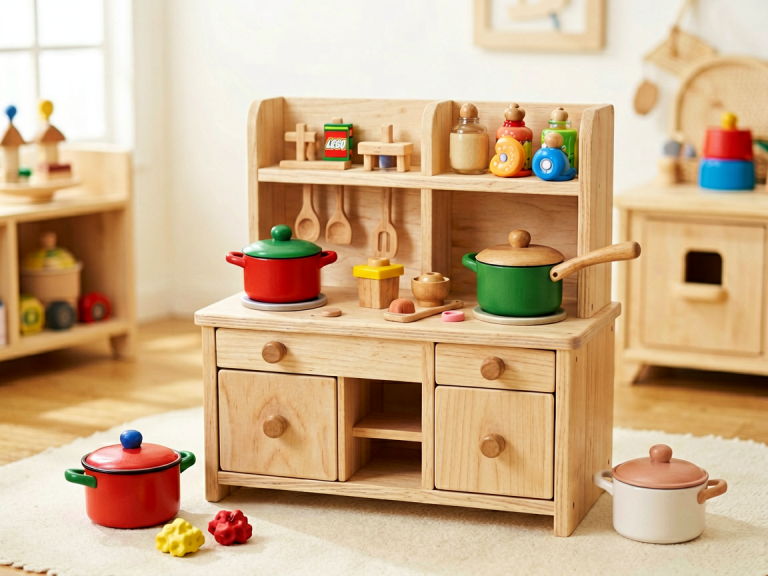
Dress-up trunks, puppets, play kitchens, and doctor’s kits are far more than sources of amusement—they are laboratories for empathy. When a child pretends to be a veterinarian, a chef, or a firefighter, they must imagine another person’s perspective, needs, and feelings. A three-year-old who takes on the role of a patient during a pretend checkup learns to describe discomfort, wait for “treatment,” and thank the “doctor.” Meanwhile, the child playing the doctor practices listening, diagnosing, and offering reassurance. Role-playing toys with multiple characters, such as dollhouses or community sets (e.g., a school bus, a grocery store), encourage children to create narratives that involve conflict and resolution. For instance, two children might argue over who gets to be the shopkeeper. Working through that disagreement within the safe context of play teaches negotiation, flexibility, and compromise. Puppets are particularly powerful because they allow children to project their own anxieties or social struggles onto a character, making it easier to practice difficult conversations. A puppet can “ask” to join a game, or “apologize” for knocking over a block tower, giving children a low-stakes rehearsal for real-world interactions. To maximize the social development potential, adults can introduce open-ended prompts: “Your friend’s puppet looks sad. What do you think happened? How can your puppet help?”
Building and Construction Sets: The Art of Collaborative Creation
Construction toys like LEGO, wooden blocks, Magna-Tiles, and magnetic rods are often viewed as solitary activities, but they become powerful social tools when used in group settings. When two or more children build together, they must coordinate ideas, distribute tasks, and resolve spatial disagreements. One child may want to build a castle while the other envisions a spaceship. Negotiating a shared design requires listening, persuasion, and sometimes accepting a compromise. Construction sets also teach the rhythm of turn-taking: decisions about where to place a block must be made sequentially, and impulsive moves can collapse the structure. This provides immediate, concrete feedback about the consequences of ignoring others’ input. More advanced sets, such as architectural models or robotics kits, can engage older children in collaborative problem-solving. They learn to divide roles—one child gathers materials, another reads instructions, a third tests structural stability—mimicking real-world teamwork. Adults can scaffold the experience by establishing rules like “everyone’s idea gets a try” or “we add one piece per person in a circle.” These micro-routines build patience and respect for diverse perspectives. Importantly, building toys that lack a predetermined outcome (like plain wooden blocks) foster creativity over compliance, allowing children to invent their own social rules for collaboration.
Emotion and Communication-Focused Toys: Naming the Unspoken
Many children struggle to articulate their feelings or recognize emotions in others. Specialized toys designed for emotional intelligence can bridge this gap. Emotion flashcards, feeling dice, social story books, and conversation-starting card games (e.g., *The Empathy Game* or *Feelings in a Jar*) explicitly teach children to identify and express states like frustration, joy, embarrassment, or jealousy. For example, a “feelings wheel” toy might have a spinner that lands on “surprise,” prompting each child to share a time they felt surprised. This structured sharing builds vocabulary and normalizes emotional expression. Furthermore, toys that incorporate facial expressions—such as puppets with interchangeable mouths or plush dolls with magnetic emotion faces—help children connect physical cues to internal states. A child can change a doll’s mouth from a smile to a frown and then narrate what might have caused the shift. This practice sharpens their ability to read subtle social signals in real interactions. Communication-focused toys also include items like walkie-talkies or pretend telephones, which encourage children to take turns speaking and listening, maintain topics, and ask clarifying questions. For children on the autism spectrum or those with social anxiety, these toys provide a predictable script that reduces the cognitive load of real-time social exchange. Over time, they internalize the rhythms of conversation and become more confident in unstructured settings.
Physical and Active Play Toys: Group Dynamics in Motion
Active toys that require multiple participants—such as parachutes, jump ropes, catch-and-throw sets, or obstacle course components—introduce social skills through physical collaboration. A group using a play parachute, for instance, must move in synchrony to make the ball bounce; if one child pulls too hard or lets go, the ball falls. This immediate cause-and-effect teaches children to monitor each other’s movements and adjust their own behavior for the group’s benefit. Similarly, games like “Duck, Duck, Goose” or “Red Light, Green Light” practice impulse control, following rules, and handling the disappointment of being tagged. While these games have been around for generations, they remain effective because they embed social learning in joyful movement. More structured active toys, such as a double-sided easel for team drawing or a tandem tricycle, require partners to communicate non-verbally and coordinate timing. Parents can extend the lesson by introducing team challenges: “Can you and your friend carry this balance beam together without dropping it?” Such tasks build trust and mutual reliance. Physical play also releases oxytocin and reduces cortisol, creating a positive emotional context that makes children more receptive to social feedback. The key is to choose toys that require interaction rather than parallel play—items that cannot be used properly alone.
Age-by-Age Recommendations: Tailoring Toy Choices to Developmental Stages
Social skills develop incrementally, and toy selection should align with a child’s cognitive and emotional maturity. For toddlers (ages 1–3), focus on toys that encourage parallel play and basic turn-taking, such as stacking rings, shape sorters, and simple push-pull toys that two children can use sequentially. At this stage, imitation is key: providing duplicate toys reduces conflict and allows children to observe each other. Preschoolers (ages 3–5) thrive with open-ended materials like dress-up clothes, play kitchens, and toddler-friendly board games with very simple rules. They begin to understand sharing and fairness, but still need adult mediation. Cooperative games that last 5–10 minutes work well. For early elementary children (ages 5–8), introduce more complex board games with specific roles (e.g., *Outfoxed!*), construction sets that require group planning, and emotion card decks. This group benefits from toys that allow for rich storytelling and perspective-taking. Finally, for preteens (ages 8–12), sophisticated strategy games (e.g., *Catan Junior*, *Forbidden Island*), team sports equipment, and collaborative arts and crafts kits (e.g., mural-making supplies) foster advanced skills like negotiation, strategic compromise, and giving constructive feedback. Always consider the child’s temperament: a highly sensitive child might need quieter collaborative toys, while a more assertive child may benefit from toys that require listening before acting.
The Adult’s Role: Facilitating, Not Directing
Even the best social-skills toy will fail to teach if an adult simply hands it over and walks away. The adult’s role is to gently facilitate without dominating. This means observing play, intervening only when conflict escalates beyond the children’s ability to resolve, and occasionally asking reflective questions. For example, if two children are fighting over a toy vet kit, a parent can say, “I see you both want the stethoscope. Can you think of a way to use it together, or a plan for sharing time?” This models problem-solving without imposing a solution. Adults can also model social skills through their own play: taking turns, apologizing when they make a mistake, and using kind language. Narrating these behaviors out loud (“I’m going to wait for you to finish before I take my turn”) helps children internalize them. Additionally, adults should create an environment that reduces competition. Avoid praising the “winner” or comparing children’s performance. Instead, celebrate moments of cooperation: “I loved how you helped your friend rebuild that tower after it fell.” Over time, the adult can fade out of the play, trusting the child to transfer these skills to peer interactions. Remember that social learning is messy—arguments, tears, and hurt feelings are part of the process. A good toy guide prepares adults to see these moments not as failures, but as stepping stones toward greater emotional intelligence.
Conclusion: Play as a Pathway to Connection
Social skills are not innate; they are learned through practice, failure, and reflection. Toys, when chosen with intention, become the perfect arena for this learning. Cooperative board games teach teamwork over triumph. Role-play sets unlock empathy by letting children wear another’s shoes. Building structures with others instills patience and perspective. Emotion-focused toys give language to feelings, while active group games build trust and nonverbal coordination. And across all of these, the thoughtful presence of an adult—who knows when to step in and when to step back—turns play into transformation. As you browse the aisles of toy stores or scroll through online listings, ask not only “Will my child enjoy this?” but “Will this toy help my child connect with someone else?” The answer, when you choose wisely, is a resounding yes. In a world that often prizes individual achievement, the greatest gift we can give our children is the ability to build bridges, share joy, and navigate the beautiful complexity of human relationships—one toy, one game, one shared laugh at a time.
Sources and further reading
For additional evidence-based guidance, consult these authoritative resources: