Building Blocks of the Mind: How Toys That Build Early Math Shape Young Learners
Introduction
In the quiet hum of a preschool classroom, a child stacks wooden blocks, counts them under her breath, then announces triumphantly, “I have five!” Her peer, building a tower nearby, pauses to compare heights. Neither of them knows they are doing mathematics—they are simply playing. Yet, in that moment, they are engaging with number sense, spatial reasoning, measurement, and pattern recognition. These are not abstract lessons; they are lived experiences made possible by thoughtfully designed toys. The role of toys in early childhood development has long been celebrated, but their specific power to build early math skills is both profound and often underestimated.
Early math—encompassing counting, shapes, sizes, comparisons, patterns, and basic operations—forms the foundation for later academic success. Research shows that early mathematical knowledge is a stronger predictor of future achievement than early literacy skills. Yet many parents and educators shy away from “math” as if it were a dry, formal subject. The secret is that the best math education happens through play. Toys that build early math are not flashcards or worksheets; they are objects that invite exploration, trial and error, and joyful discovery. This article explores several categories of such toys, explaining how each nurtures specific mathematical concepts and why they matter.
—
1. Building Blocks and Construction Sets: The Geometry of Play
Spatial Reasoning and Geometry
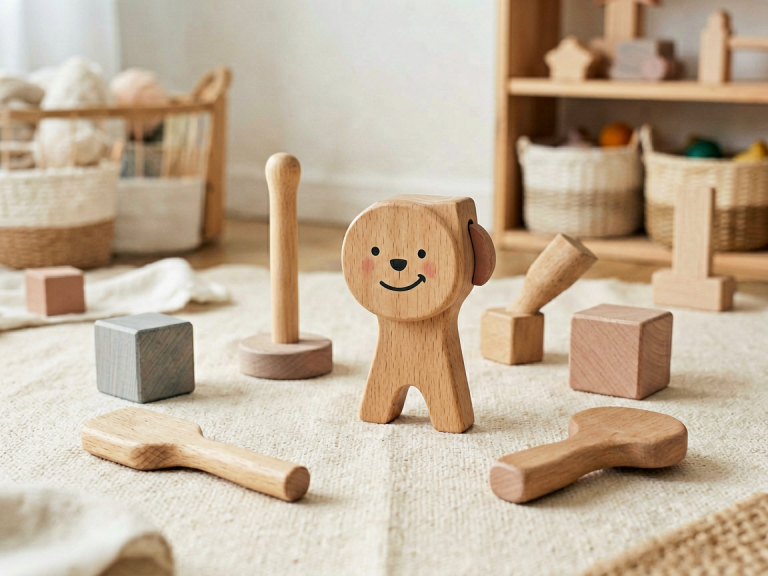
The simplest wooden block is a marvel of mathematical potential. When a toddler stacks two blocks, she experiences the concept of balance and stability. When she tries to build a bridge, she experiments with symmetry and weight distribution. Building blocks—whether classic unit blocks, LEGO Duplo, or magnetic tiles—teach spatial awareness, which is a strong predictor of later math achievement. A child learns that a square block can rotate but still fit into a square hole; that a tall tower may fall if its base is too narrow; that three triangles can form a trapezoid if arranged correctly.
These playful encounters build intuitive geometry. The National Association for the Education of Young Children (NAEYC) notes that young children develop geometric thinking through manipulating, comparing, and describing shapes. Blocks allow them to see how shapes compose and decompose. A child who builds a rectangular “house” and then adds a triangular “roof” is unconsciously learning about composite shapes—a concept that will later appear in fractions and area calculations.
Measurement and Comparison
Blocks also invite measurement. “My tower is taller than yours,” a child declares, and she has just engaged in comparative measurement. When children line up blocks end-to-end to see which train is longer, they practice non-standard units of measurement. Magnetic tiles, with their transparent edges and magnets, add the dimension of angle. A child who connects two squares at a 90-degree angle discovers a right angle; one who builds a hexagon from six triangles sees how angles sum.
Patterns and Sequences
Construction sets encourage pattern creation. A child might alternate red and blue blocks, creating an ABAB pattern. More advanced builders can create ABB or ABC patterns. Recognizing and extending patterns is a core early math skill that underpins algebraic thinking. The physical act of laying out blocks in a pattern makes the abstract concept tangible.
—
2. Counting and Sorting Toys: Numbers in Action
One-to-One Correspondence and Cardinality
Small manipulatives—like counting bears, colored buttons, or wooden fruit—are quintessential math toys. A child who hands out one bear to each doll is practicing one-to-one correspondence, the idea that each object gets a single count. When she then says, “I have four bears,” she is using cardinality: the last number she says tells the total. This is a critical milestone. Toys that also include numeral cards or dice reinforce the link between symbol and quantity.
Sorting and Classification
Sorting toys—such as shape sorters, color-coordinated trays, or sets of animals—teach classification, a foundational skill for set theory and data analysis. A child sorting buttons by size learns about categories and attributes. When she sorts by both color and shape (e.g., “all red circles”), she is creating a Venn diagram in her mind. These early classification experiences prepare children for understanding graphs, Venn diagrams, and even the concept of subsets.
Number Operations
Counting toys can also introduce addition and subtraction in a concrete way. “If you have three bears and I give you two more, how many do you have?” The child can physically combine the bears and count. The abacus, an ancient but powerful toy, makes this even more explicit. Moving beads along wires visually demonstrates addition (beads move toward each other) and subtraction (beads move apart). The tactile feedback reinforces the concept that numbers can be decomposed and recomposed.
—
3. Puzzles and Tangrams: Problem-Solving with Shapes
Visual-Spatial Skills and Logical Thinking
Puzzles—from simple jigsaws to geometric tangrams—are exceptional tools for early math. A child fitting a piece into a puzzle must recognize the shape, orientation, and relationship to the surrounding empty space. This develops visual-spatial working memory. Tangrams, in particular, require a child to see how seven simple shapes (five triangles, one square, one parallelogram) can combine to form countless other figures. This is a powerful lesson in area equivalence and geometric transformation.
Fractions and Symmetry
Puzzles with distinct sections (e.g., a circle divided into halves, thirds, or quarters) introduce fractions long before formal instruction. A child who fits two quarter pieces into a half-circle is experimenting with equivalence. Symmetry puzzles, such as mirror-image or “fraction puzzle boards,” help children understand that some shapes can be folded in half to match exactly. These experiences build a strong foundation for later work with ratios, symmetry, and even probability.
Trial and Error and Persistence
Mathematicians often speak of the value of productive struggle. Puzzles demand that children try, fail, and adjust. A child attempting to solve a tangram bird may rotate a triangle six times before it fits; in doing so, she learns about angles and orientation. This process mirrors the iterative nature of mathematical problem-solving.
—
4. Pattern Blocks and Mosaics: Algebraic Thinking Before Algebra
Repeating Patterns
Pattern blocks—colorful geometric shapes like hexagons, triangles, squares, and rhombuses—are designed specifically for pattern creation. A child can create a repeating border: triangle, square, triangle, square. More complex patterns involve growth sequences, such as one triangle, two triangles, three triangles… This introduces the idea of functions and sequences. When the child notices that each new row adds one more triangle, she is recognizing a linear pattern—an idea that will blossom into algebra.
Symmetry and Tessellation
Mosaic tiles or pegs on a board encourage children to create symmetrical designs. Many pattern block sets include mirrors so children can explore reflection. Tessellation—filling a space with repeating shapes without gaps—is a rich mathematical concept. A child covering a hexagon with six triangles sees how area can be partitioned. Tessellation toys like Froebel gifts or modern magnetic pattern blocks are essentially hands-on lessons in geometry and measurement.
Proportional Reasoning
Some pattern block sets have size relationships: for example, two triangles make a rhombus, three triangles make a trapezoid, and six triangles make a hexagon. Children who play freely with these blocks learn that shapes can be equivalent in area even if they look different. This is the seed of proportional reasoning, which is crucial for fractions, ratios, and scaling.
—
5. Board Games and Dice Games: Math in Social Context
Counting and Number Recognition
Simple board games—like Candy Land, Chutes and Ladders, or homemade dice games—are stealth math lessons. Players count spaces, recognize numbers on dice or cards, and move along a numbered path. Rolling a die and moving that many spaces reinforces counting and one-to-one correspondence. Games that require adding two dice together introduce addition in a low-pressure, social setting.
Strategic Thinking and Probability
More advanced games like “Race to 100” (where players roll two dice and add, racing to reach 100) teach place value and addition strategies. Games involving probability, such as a spinner with numbered sections, help children develop informal notions of chance. “Which number is most likely?” they wonder. Over time, they build intuition about distributions and likelihoods.
Turn-Taking and Mathematical Language
Board games also foster mathematical language: “I need a six to win,” “You are two spaces ahead,” “If I roll a three, I land on the ladder.” This language—comparative, positional, and numerical—enriches a child’s math vocabulary. Social interaction during games also encourages children to explain their reasoning, which deepens understanding.
—
6. Measuring and Balancing Toys: Understanding Magnitude
Weight and Balance
A simple balance scale with weights, or even a homemade hanger with cups, teaches the concept of equality. A child places a block on one side and tries to find another block that makes the scale even. This is a physical representation of an equation—the idea that two quantities can be equal even if they look different. Balancing blocks, like the classic “Equilibrium” game, requires children to intuitively grasp center of mass and symmetry.
Length and Height
Measuring tapes, rulers, and height charts invite children to compare lengths. Toys like stacking rings (where the child must place rings in order of size) teach seriation: arranging objects along a dimension. Sequencing objects from smallest to largest is a logical skill that underpins number line understanding.
Time and Calendar
While less common, toys like sand timers, stopwatches, and toy clocks build early sense of time. A child who uses a timer to see how long it takes to build a tower is practicing informal duration measurement. Calendar puzzles where children move a marker each day help them grasp the cyclical nature of time.
—
Conclusion: Play as the Engine of Mathematical Thinking
Toys that build early math are not merely educational—they are essential. Through blocks, puzzles, counting bears, dice, and pattern tiles, children construct mental models of number, space, pattern, and measurement. They learn that math is not a set of abstract rules but a language for describing the world. The key is that these toys must be open-ended, inviting exploration rather than prescribing a single correct answer. A child who stacks blocks, fails, and rebuilds is learning resilience and problem-solving. A child who sorts buttons by color and size is developing classification logic.
Parents and educators need not turn playtime into a math lesson. Instead, they can simply provide the right tools and let curiosity do the rest. Studies show that children who engage in rich, playful math experiences in early childhood perform better on standardized tests later—but more importantly, they develop a positive disposition toward mathematics. They see it as a game, not a chore.
The next time you see a child lining up toy cars from shortest to longest or carefully counting out pretend cookies for a tea party, recognize it for what it is: a profound act of mathematical discovery. And know that the humble toy in her hands is, in fact, a building block of the mind—one that will support not just her math skills, but her creativity, logic, and confidence for years to come.
*(Word count: approximately 1,280 words)*