From Sparks to Breakthroughs: The Journey from Beginner to Advanced Science Kits
Introduction
Science is not merely a subject taught in classrooms; it is a way of thinking, exploring, and understanding the world. For decades, science kits have served as the gateway through which young minds take their first steps into the thrilling realm of discovery. From simple plastic volcanoes that fizz with baking soda to sophisticated molecular biology sets that extract DNA, science kits have evolved dramatically. They now cater to a spectrum of learners, from curious toddlers who want to know why a ball falls down, to high school students preparing for Olympiads. This article explores the full continuum of science kits—from beginner to advanced—highlighting their unique features, educational value, and how they nurture different stages of scientific literacy. By understanding this progression, parents, educators, and learners can choose the right kit that transforms passive observation into active inquiry.
Beginner Science Kits: Sparking Curiosity
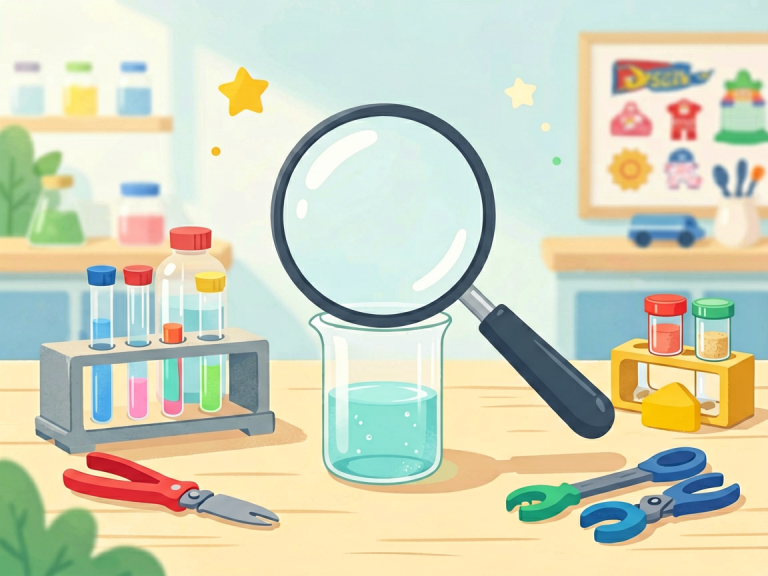
The journey begins with beginner science kits designed for children aged 3 to 7. At this stage, the primary goal is not to teach complex theories but to ignite wonder. These kits often feature colorful, oversized components, simple instructions with pictures, and activities that yield immediate, satisfying results. A classic example is the “volcano eruption” kit—mixing baking soda and vinegar to create a fizzy lava flow. While the chemical reaction is basic, it provides a tangible cause-and-effect experience. Another common set includes a magnifying glass, a compass, and a kaleidoscope, encouraging children to observe nature closely.
The pedagogical strength of beginner kits lies in their emphasis on sensory exploration. They engage multiple senses—sight, sound, touch, and even smell—which is crucial for early brain development. For instance, a “grow your own crystals” kit allows a child to watch salt crystals form over days, teaching patience and observation. The instructions are typically simple enough for a parent to read aloud, turning the activity into a bonding experience. Importantly, these kits avoid frustration: they require no precise measurements or complex assembly. Instead, they celebrate the joy of “getting it right” through trial and error.
However, beginner kits are not just about fun. They subtly introduce the scientific method: making a hypothesis (“if I add more vinegar, will it explode bigger?”), testing it, and drawing conclusions. This foundation is invaluable. A well-designed beginner kit also builds vocabulary—words like “absorb,” “dissolve,” and “rotate” become part of a child’s lexicon before they enter formal schooling. For parents skeptical about screen time, such kits offer a healthy, hands-on alternative. Indeed, the best beginner kits are those that make a child ask “Why?” and then provide a playful answer.
Intermediate Science Kits: Building a Foundation
As children grow—typically ages 8 to 12—their cognitive abilities allow for more systematic thinking. Intermediate science kits bridge the gap between play and formal education. These kits still use engaging themes (robots, weather stations, or chemistry labs) but demand more careful following of multi-step instructions. They introduce basic scientific instruments: a hand-held microscope, a simple balance scale, or a pH test strip. Content-wise, they cover topics like electricity (building a simple circuit with a battery and bulb), magnetism (exploring magnetic fields with iron filings), and biology (growing bean seeds in a transparent soil chamber).
What sets intermediate kits apart is the introduction of controlled variables. For example, a “water filtration” kit might challenge the user to test different materials—sand, gravel, charcoal—to see which combination cleans muddy water most effectively. The user is guided to record observations in a journal, and the kit often includes questions like: “Why do you think the charcoal helped more than the sand?” This nurtures analytical thinking. Furthermore, many intermediate kits now incorporate digital elements, such as a companion app that shows data visualizations or offers video instructions. A popular example is snap-together electronic kits that allow children to build radios, alarms, or even small motors.
Safety becomes a more explicit consideration at this level. Kits include safety goggles, and instructions warn about handling chemicals (like citric acid) or sharp tools. The educational value is substantial: children learn to read scientific diagrams, follow logical sequences, and troubleshoot when a circuit doesn’t light up. They also begin to grasp that science is not always straightforward—sometimes experiments fail, and that is part of learning. Social learning can be enhanced if the kit is used in groups, encouraging collaboration and discussion. By the end of an intermediate kit, a child should feel capable of designing a simple experiment on their own, moving from consumer to creator.
Advanced Science Kits: Cultivating Future Scientists
For teenagers and motivated adults—typically ages 13 and up—advanced science kits offer a taste of authentic research. These kits are not simplified versions of professional equipment; they are often the real equipment repackaged for educational use. Examples include polymerase chain reaction (PCR) machines for DNA amplification, spectrophotometers for analyzing light absorption, and programmable Arduino-based robotics platforms. The topics dive deep into disciplines like microbiology, organic chemistry, physics (quantum mechanics experiments), and astrophysics (building a spectrometer to analyze starlight).
One standout category is the molecular biology kit, which allows a user to extract their own DNA from a cheek swab, run gel electrophoresis to visualize fragments, and even perform CRISPR-like gene editing simulations (using pre-engineered plasmids). The level of precision required is high: volumes must be measured in microliters, temperatures maintained within a degree, and sterile technique practiced to avoid contamination. These kits often include a full lab manual that reads like a mini textbook, complete with citations and discussion questions. Users are expected to write lab reports, analyze results, and identify sources of error.
The value of advanced kits extends beyond specific knowledge. They teach the scientific process in its entirety—from formulating a hypothesis to designing controls, analyzing data statistically, and communicating findings. Many advanced kits are also modular, allowing users to expand and customize. For instance, a robotics kit can be upgraded with sensors and actuators, enabling the construction of a self-balancing robot or a line-following vehicle. This flexibility mirrors real-world engineering.
It is important to note the cost and commitment. Advanced kits can be expensive (ranging from $100 to over $1000), and they often require a dedicated workspace, additional supplies, and a significant time investment. However, for a serious young scientist, they can be transformative. They open doors to science fairs, research internships, and even college admissions. Moreover, they demystify high-level science, showing that the tools used in Nobel Prize-winning laboratories are not mystical but accessible.
Choosing the Right Kit: Matching Level to Learner
Selecting a science kit is not a one-size-fits-all decision. A child who is bored with a beginner kit might be overwhelmed by an advanced one, while a teenager who has never tried a chemistry set might benefit from starting at an intermediate level. Several factors should guide the choice: age, reading ability, attention span, and existing interest.
For beginners, prioritize kits that are durable, highly visual, and involve immediate results. Look for those with large, chunky pieces and a parent guide. For intermediate users, choose kits that align with school curriculum topics—if the child is learning about circuits in school, an electronics kit reinforces the concepts. Check reviews for clarity of instructions; some kits have poorly translated manuals that cause frustration. For advanced learners, consider kits that offer certifications or tie into online courses (like those from Genomikon or LittleBits).
Another consideration is the “open-endedness” of the kit. Some kits provide a single project; others allow multiple builds. Open-ended kits (like those based on microcontrollers) have a longer lifespan because users can invent new challenges. Additionally, look for kits that encourage mistakes—such as those that include extra components for failures—because that is where deep learning happens.
Conclusion
Science kits have evolved far beyond the simple chemistry sets of the past. Today, they form a continuum that accommodates every stage of a learner’s journey, from the wide-eyed preschooler watching a seed sprout to the determined teenager extracting their own genetic blueprint. Beginner kits cultivate curiosity and a love for observation; intermediate kits build foundational skills and methodical thinking; advanced kits provide a rigorous, authentic experience that prepares students for STEM careers.
In a world increasingly shaped by technology and science, these kits are more than toys—they are tools for empowerment. They teach resilience (when an experiment fails), creativity (when a new solution is needed), and logical reasoning. Whether you are a parent looking for a birthday gift, a teacher seeking classroom resources, or an adult lifelong learner, there is a science kit waiting to take you from a beginner’s spark to an advanced breakthrough. The key is to choose the one that matches your current curiosity and let the journey unfold. After all, every great scientist started with a simple question and a willingness to explore.