Toy Progression for Problem Solving: How Play Shapes the Mind from Infancy to Adolescence
Introduction
From the moment a child grasps a rattle to the day they debug a line of code on a programmable robot, the toys they interact with serve as far more than mere entertainment. They are the silent architects of cognitive growth, particularly in the domain of problem solving. The concept of “toy progression” refers to the deliberate or natural sequencing of playthings that challenge a child’s developing abilities in increasingly complex ways. This progression mirrors the stages of cognitive development described by theorists such as Jean Piaget and Lev Vygotsky, and it provides a structured pathway for children to acquire critical thinking, creativity, and resilience. In this article, we will explore how a well-designed toy progression—from sensory objects to open-ended construction kits, from simple puzzles to sophisticated coding games—systematically builds the neural infrastructure needed for effective problem solving. By understanding this progression, parents, educators, and toy designers can better support children in becoming flexible, persistent, and innovative thinkers.
The Foundations: Sensory and Manipulative Toys
The journey of problem solving begins long before a child can speak in full sentences. During infancy and toddlerhood, the brain is rapidly forming connections through sensory exploration and motor control. Toys at this stage—such as textured balls, stacking rings, shape sorters, and simple nesting cups—are not merely for amusement; they are the first exercises in cause and effect, classification, and trial-and-error.
A shape sorter, for example, presents a fundamental problem: “Which hole does this triangle fit into?” The child must visually compare the shape of the block to the shape of the opening, rotate the object in space, and apply force. Failure is common, but the toy’s design encourages repeated attempts. This process teaches the child that a problem can be approached from multiple angles (literal rotation of the block) and that persistence pays off. Sensory toys that produce different sounds or textures when manipulated also introduce the concept of feedback: a specific action yields a predictable result. This early association between action and outcome is the bedrock of all later problem-solving strategies.
Manipulative toys like large interlocking beads or simple pegboards further refine fine motor skills and hand-eye coordination, but they also introduce elementary planning. To string a bead, a child must coordinate two hands, align the string with the hole, and push it through. While adults take such tasks for granted, for a toddler each step is a micro-problem that must be solved sequentially. Thus, the foundation of problem solving is laid not in abstract reasoning but in concrete, physical interaction with the environment.
Building Blocks: Construction and Assembly Toys
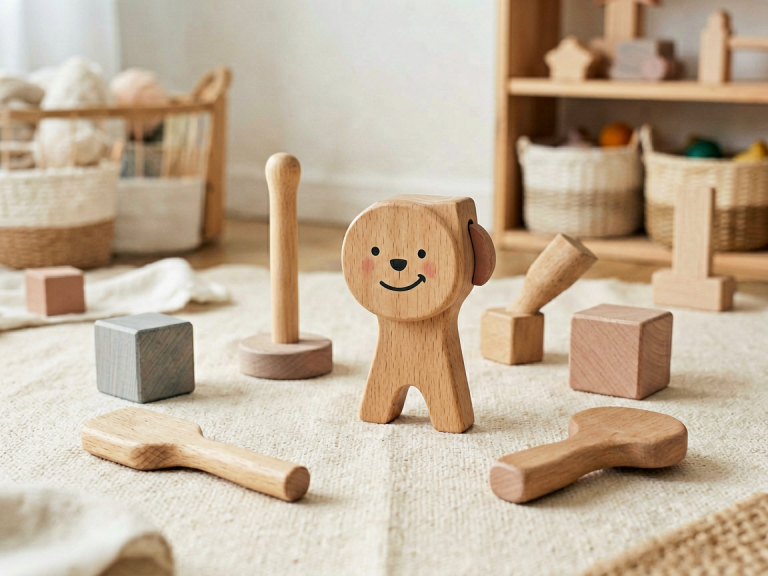
As children enter the preschool years, their cognitive capacity expands to include symbolic thinking and more complex spatial reasoning. This is the golden age of construction toys: wooden blocks, LEGO Duplo, magnetic tiles, and simple interlocking bricks. These toys mark a significant leap in the toy progression because they introduce the concept of *synthesis*—combining individual pieces to create a whole that did not exist before.
Construction play inherently demands planning and revision. A child building a tower must consider balance, weight distribution, and symmetry. When the tower falls, the child confronts a real-world problem: why did it collapse? Was the base too narrow? Were the blocks misaligned? This reflective process is identical to the scientific method: observe, hypothesize, test, and refine. Moreover, open-ended construction sets (as opposed to those with a single intended model) foster divergent thinking. The same set of blocks can become a castle, a spaceship, or a bridge, depending on the child’s goals. Each transformation requires a new set of problem-solving strategies, from structural engineering to aesthetic design.
A specific example is the use of magnetic tiles. These allow children to build three-dimensional shapes that can be easily adjusted. When a child tries to create a cube but ends up with an unstable prism, they must analyze the error, perhaps realizing that the magnets must connect at right angles. This kind of spatial problem solving is predictive of later success in STEM fields. Moreover, construction toys often involve collaboration: two children building together must negotiate, share ideas, and resolve conflicts—social problem solving that is equally valuable.
Logic and Strategy: Puzzle and Board Games
Around the age of five to seven, children become capable of more abstract thought, including understanding rules, sequences, and consequences. This is the ideal time to introduce puzzles with increasing piece counts, logic games, and strategy-based board games. Puzzle solving, whether jigsaw or logical (like Sudoku for kids), trains the brain in pattern recognition, working memory, and systematic elimination. A child working on a 48-piece jigsaw learns to sort pieces by color and edge, to visualize the final image, and to test hypotheses about where a piece might fit. Each failed attempt is not a defeat but data; the child updates their mental map.
Board games such as “Candy Land,” “Chutes and Ladders,” and later “Checkers,” “Chess,” or “Settlers of Catan” introduce rule-based problem solving. Here, the problem is not just the immediate move but the long-term strategy. A child playing Checkers must anticipate an opponent’s moves, weigh trade-offs (e.g., sacrificing a piece for a better position), and adapt when their plan fails. These games cultivate flexibility—a core component of expert problem solving. They also teach emotional regulation, as losing gracefully is itself a problem: how to cope with frustration and try again.
Logic games like “Rush Hour” or “Gravity Maze” are particularly powerful. They present a specific goal (e.g., move a car out of a traffic jam) with constraints (only certain moves allowed). The child must work backward from the goal, a skill known as means-end analysis. Research shows that regular engagement with such games improves fluid intelligence and the ability to decompose complex problems into manageable steps. Unlike digital puzzles, physical logic games offer tactile feedback and the satisfaction of physically moving pieces, which can be more engaging for some children.
Coding and Robotics: The Digital Frontier
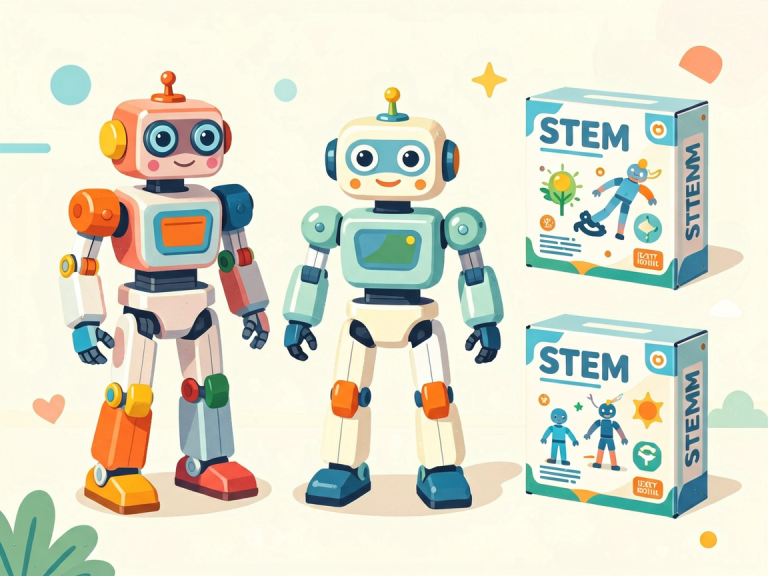
In the modern era, the pinnacle of toy progression for problem solving is embodied in coding and robotics kits. Toy robots like “Sphero,” “LEGO Mindstorms,” “Botley,” or “Kano” computer kits allow children as young as four to program sequences of actions. The problem becomes: “How do I make my robot move from point A to point B, avoiding obstacles?” This is a literal application of computational thinking—breaking down a task into step-by-step instructions, debugging errors, and iterating.
The progression here is crucial. Early coding toys use physical blocks or icon-based commands that eliminate the barrier of syntax. For example, “Cubetto” uses a wooden robot and a set of colored blocks that represent forward, left, right, and function calls. A child places these blocks in a sequence to guide Cubetto through a maze. If the robot goes off course, the child must mentally trace the sequence to find the error. This is exactly the process of debugging, but in a tangible, hands-on form. As children mature, they can graduate to more advanced tools like Scratch Jr., Python-based robots, or even Minecraft modding. Each step requires more abstract reasoning, logical nesting, and conditional thinking.
What sets coding toys apart is their immediate feedback loop. A child writes a program, presses a button, and sees the result in seconds. Success is visible and satisfying; failure is equally visible but not punishing—it simply means the code needs adjustment. This environment fosters a growth mindset: the belief that ability can be developed through effort. Moreover, coding problems are often open-ended—there are many ways to solve the same challenge—encouraging creativity and multiple solution paths.
The Role of Guided Play and Parental Involvement
While toy progression provides a natural scaffold for problem-solving development, the role of an adult or more knowledgeable peer cannot be overstated. Vygotsky’s zone of proximal development suggests that children learn best when challenges are just beyond their current ability, and a guide can provide the right nudge. A parent who asks “What do you think will happen if you put that block here?” or “Can you find another way to make your robot turn?” is subtly teaching metacognition—the ability to think about one’s own thinking.
However, the key is to avoid overdirecting. The best toy progression allows for autonomy and frustration within safe limits. When a child encounters a problem, adults should resist the urge to solve it for them. Instead, asking prompting questions or modeling a thinking-aloud strategy (“Hmm, I wonder why the tower keeps falling… maybe the bottom blocks aren’t big enough”) helps the child internalize a problem-solving framework. Over time, the child learns to ask themselves these questions.
Additionally, the variety of toys matters. A child who exclusively plays with construction blocks might excel in spatial reasoning but lack logical sequencing skills. A child who only plays board games might be strong in strategy but weak in creative ideation. A balanced toy progression exposes the child to multiple problem-solving modalities: physical, logical, creative, and social. This diversity builds cognitive flexibility—the ability to switch between different approaches when one fails.
Conclusion
Toy progression is not a luxury of affluent childhoods but a fundamental tool for cognitive development. From the first rattle to the last line of code, each toy serves as a stepping stone in the construction of problem-solving abilities. The sequence is not arbitrary: sensory toys build cause-and-effect understanding; construction toys foster spatial reasoning and synthesis; puzzles and games train logic, strategy, and emotional regulation; and coding toys prepare children for the computational world they will inherit. Yet the magic lies not in the toys themselves but in the interplay between challenge, feedback, and the child’s innate curiosity. By understanding and curating this progression, we can give children the gift of resilience, creativity, and the confidence to tackle any problem—playful or serious—that life presents. In the end, the best toy is not the one that entertains the longest, but the one that teaches a child to ask “What if?” and to never stop searching for the answer.
Start with the complete guide: Building Minds: The Best Beginner Toys for Problem Solving.