The Best Beginner Building Toys: Unlocking Creativity and Learning for Young Minds
Building toys have been a cornerstone of childhood development for generations, offering more than just entertainment. They serve as gateways to problem-solving, spatial awareness, fine motor skills, and even early engineering concepts. For beginners—whether toddlers taking their first steps into construction or older children exploring structured play—choosing the right building toy can make all the difference. The market is flooded with options, from simple wooden blocks to high-tech magnetic kits, but not all are created equal for those just starting out. This article dives deep into the best beginner building toys, evaluating them based on safety, ease of use, educational value, and the sheer joy they bring. Whether you are a parent, a teacher, or a gift-giver, this guide will help you select the perfect foundation for a lifelong love of building and creativity.
Introduction: Why Beginner Building Toys Matter
Before we explore specific products, it is crucial to understand what makes a building toy “beginner-friendly.” Young children, typically aged 18 months to 6 years, have developing fine motor skills, limited attention spans, and a natural tendency to explore through touch and trial. The best beginner toys are those that require minimal instruction, offer immediate gratification (like snapping two pieces together), and allow for open-ended play. They should also be durable, non-toxic, and free from small parts that pose choking hazards. Moreover, they should gradually introduce concepts like symmetry, balance, and basic geometry without overwhelming the child. A good beginner building toy does not force the child to follow a rigid blueprint; instead, it invites them to experiment, fail, and try again. In the following sections, we will examine seven categories of building toys that excel in these areas, each with its unique strengths.
The Timeless Classic: Wooden Building Blocks
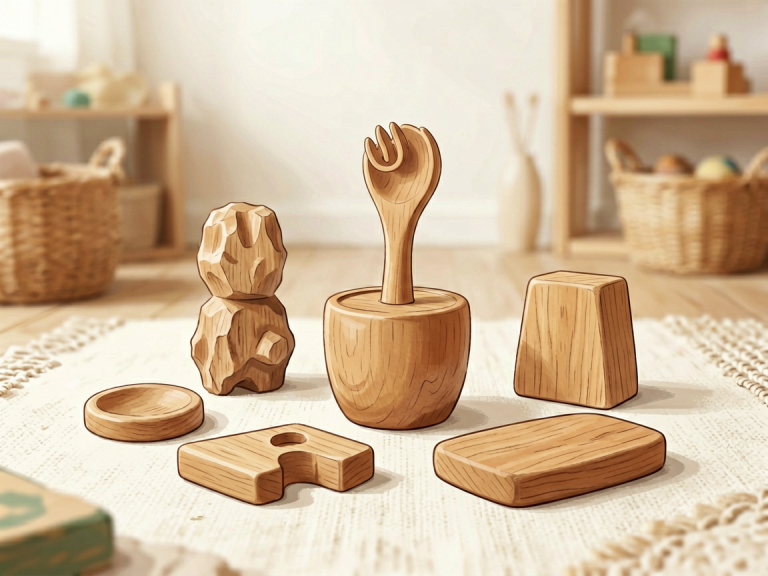
No discussion of beginner building toys is complete without honoring the original: wooden building blocks. These simple, unpainted or lightly colored cubes, cylinders, and arches have stood the test of time for a reason. For children as young as 12 months, grasping a wooden block and stacking it onto another provides a profound lesson in physics and cause-and-effect. Unlike plastic blocks that snap together, wooden blocks rely entirely on gravity and precision, teaching young builders about weight distribution and stability. Sets like the Melissa & Doug Standard Unit Blocks offer a wide variety of shapes, including rectangles, triangles, and half-circles, allowing for infinite combinations. The natural wood texture is pleasant to touch, and the lack of flashing lights or sounds encourages focused, quiet play. Moreover, wooden blocks are virtually indestructible—they can be dropped, chewed (within reason), and tossed without breaking. For a beginner, the simplicity is liberating: there is no right or wrong way to play. A toddler might simply enjoy knocking down a tower, while a three-year-old might attempt a bridge with a gap. This open-endedness fosters creativity and confidence. Parents should look for sets that are free from splinters and coated with non-toxic finishes. A recommended starter set contains 60 to 100 pieces, enough variety without being overwhelming. Wooden blocks also integrate seamlessly with other toys, such as animal figures or cars, making them a versatile cornerstone of any playroom.
Large Interlocking Bricks: LEGO DUPLO and Compatibles
When people think of building toys, LEGO often comes to mind. However, traditional LEGO bricks are too small for beginners—the classic 2×4 brick can be a choking hazard for children under three, and its tiny size frustrates little fingers. Enter LEGO DUPLO: a line of bricks that are twice the size of standard LEGO, designed specifically for preschoolers. DUPLO bricks are large, easy to grasp, and snap together with satisfying clicks. They are also remarkably durable—children can stomp on them, throw them, or even run over them with toy cars without damage. The beginner DUPLO sets, such as the “My First Number Train” or the “Creative Animals” set, come with a few simple instructions for building recognizable objects like a dog, a house, or a car. But the true magic lies in free building. DUPLO bricks are compatible with each other across all sets, so you can mix and match to create anything imaginable. For parents on a budget, compatible brands like Mega Bloks (now Mega Construx) First Builders offer similar large bricks at a lower price point. Mega Bloks are slightly softer and have a different clutch power (the force required to connect them), but they work well for small hands. One advantage of Mega Bloks is that they often come in bulk tubs with hundreds of pieces, providing endless variety. Both DUPLO and its competitors encourage color recognition, counting, and pattern-making. As the child grows, they can transition to standard LEGO, but for a beginner aged 1.5 to 4 years, DUPLO is the gold standard for interlocking brick play.
Magnetic Building Kits: Magformers and Magna-Tiles
In the past decade, magnetic building toys have surged in popularity, and for good reason. They offer a completely different building experience: instead of stacking or snapping, children use magnets embedded in plastic shapes to connect pieces effortlessly. This makes them ideal for beginners because they require very little force—just bring two pieces close, and they snap together with an audible click. Kits like Magformers and Magna-Tiles consist of squares, triangles, rectangles, and other polygons. The pieces are hollow and translucent, often in bright colors, making them visually appealing. A two-year-old can attach two squares to make a rectangle, while a four-year-old can build a 3D cube, a pyramid, or even a castle. The magnets are hidden safely inside the plastic, so there is no risk of swallowing them. One of the greatest strengths of magnetic tiles is that they allow children to build structures that defy gravity, like arches that stand without a pillar beneath. This introduces concepts like tension and compression in a playful way. Additionally, magnetic tiles are highly geometric; playing with them helps children understand shapes, symmetry, and angles. Many teachers use them in early STEM education. For a beginner, a starter set of 32 to 60 pieces is sufficient. Look for sets with strong magnets that do not repel easily, and ensure the plastic is shatterproof. Some brands, like Picasso Tiles, offer more affordable options without sacrificing quality. The only downside is that magnetic tiles are less forgiving than blocks—if a structure collapses, pieces may scatter, but this also teaches resilience. Overall, these kits are a brilliant choice for children aged 2 and up who are ready to explore 2D and 3D construction.
Flexible Snap-Together Pieces: Plus-Plus and Brain Flakes
Not all beginner building toys require precise alignment. Some children prefer a more forgiving medium—one that bends, twists, and connects in multiple directions. Two excellent examples are Plus-Plus and Brain Flakes. Plus-Plus consists of small, mushroom-shaped pieces (each about 2 cm tall) that can be snapped together end-to-end or stacked. They are made of flexible plastic and come in dozens of colors. Beginners can create flat mosaics, 3D shapes, or even simple figures like a worm or a flower. The pieces are large enough to avoid choking hazards for children over 3, and the connection is firm yet easy to separate. Plus-Plus encourages pattern recognition and fine motor precision. Brain Flakes, on the other hand, are tiny interlocking discs. You might think they are too small for beginners, but the manufacturer recommends them for ages 3 and up. In practice, many parents introduce them even earlier with supervision. Each disc has eight slots that snap onto other discs from any angle, allowing for incredibly flexible constructions—balls, towers, animals, and more. The pieces are colorful and lightweight. The key advantage of Brain Flakes is that they teach a different kind of structural thinking: you can build branches and curves, not just rigid shapes. Both toys are affordable, with large sets costing around $20–$30. They are also portable—great for car rides or restaurant waits. However, they are not ideal for children who still put objects in their mouths, as the small pieces could be swallowed. For a beginner who has outgrown the mouthing stage (around age 3–4), these toys offer endless creative possibilities.
Classic Construction Sets: Gears and Connectors
A different genre of building toys combines gears, sticks, and connectors to create mechanical models. These are excellent for beginners who show an interest in how things work—why a wheel turns or how a flag can spin. One standout is the Learning Resources Gears! Gears! Gears! Building Set. It includes colorful plastic gears of various sizes, along with cranks, axles, and base plates. Children can snap a gear onto a peg, attach another gear next to it, and then turn the crank to see both gears spin—a simple yet profound lesson in simple machines. The recommended age is 3 years and up, and the pieces are large and easy to handle. The set comes with activity cards for guided builds, but free exploration is equally valuable. Another option is the “Straws and Connectors” sets, such as those by PlayBuild or Strawbees. These consist of bendable plastic straws and flexible connectors that allow children to build 3D frames, houses, bridges, and even moving parts. The straws can be cut to different lengths, and the connectors have multiple holes to attach straws from various angles. For a beginner, a pre-cut set with instruction cards is best. These toys develop spatial reasoning and an understanding of structural rigidity (triangles are stronger than squares). They also encourage collaborative play—two children can work together to build a large dome. The downside is that some connectors can be stiff for very small hands, so this is better suited for children aged 4 and up. But for that age group, it is one of the most educational building toys available.
Nesting and Stacking Toys: Simple Yet Brilliant
For the youngest beginners—infants and toddlers aged 6 months to 2 years—traditional building toys like blocks or DUPLO may still be too advanced. This is where nesting and stacking toys shine. Think of the classic Fisher-Price Rock-a-Stack, where rings of decreasing size are placed onto a cone. This toy teaches size ordering, hand-eye coordination, and cause-and-effect. Similarly, nesting cups (like the Green Toys Stacking Cups) can be stacked into a tower or nested inside each other. These toys are safe, lightweight, and often dishwasher-safe. While they are not “building” in the traditional sense, they lay the groundwork for future construction play. A child learns that larger objects must go at the bottom, and that a stack can be knocked down with a swipe. Many stacking toys also incorporate numbers, letters, or shapes, adding a cognitive layer. For a beginner at the earliest stage, these are indispensable. As the child grows, they can move to more complex stacking toys like the B. toys Bristle Blocks, which have soft, bristle-like connectors that stick together in any orientation. Bristle blocks are very forgiving—they stick even if placed at an angle—and they are safe for teething. They come in basic shapes and are easy to clean. All of these toys help a child develop the foundational skills needed for later building with blocks or bricks.
Wooden Trains and Tracks: Building with Motion
A unique category of beginner building toys involves creating pathways for trains or cars. Wooden train sets, such as those by Brio, Thomas & Friends, or Melissa & Doug, consist of wooden rails that connect via simple grooves or pegs. Children as young as 2 can snap track pieces together to form a circle, a figure-eight, or a winding road. The trains themselves are magnetic—they connect to each other without small parts. Building a track teaches planning, sequencing, and spatial awareness. Unlike static block towers, a train track is a functional structure: when completed, the child can push a train around it, providing immediate feedback and motivation. Wooden train sets also encourage storytelling—a train might be delivering cargo, picking up passengers, or racing to a destination. For beginners, a starter set with a few straight pieces, curves, and a single engine is enough. As the child’s skills grow, you can add bridges, tunnels, switches, and more complex layouts. One of the greatest benefits of wooden trains is that they integrate with other building toys—you can place a DUPLO house next to the track, or use wooden blocks as tunnels. This cross-play stimulates creativity. Additionally, wooden trains are durable and often passed down through generations. They are an investment, but a worthwhile one. For a beginner, the tactile feel of smooth wood and the satisfying click of magnetic couplers is a wonderful introduction to constructive play.
Conclusion: Choosing the Right Toy for Your Beginner
Selecting the best beginner building toy depends on the child’s age, developmental stage, and personal interests. For infants, start with stacking and nesting toys. For toddlers, wooden blocks and LEGO DUPLO are unbeatable. For preschoolers eager to explore geometry and magnetism, magnetic tiles are a fantastic choice. For children who love mechanical movement, gears and train tracks offer a perfect blend of building and function. And for those who thrive on flexibility and creativity, Plus-Plus or Brain Flakes provide a unique challenge.
No matter which toy you choose, remember that the adult’s role is not to instruct but to facilitate. Let the child explore at their own pace, celebrate their successes (even a wobbly two-block tower), and encourage them to try again after a collapse. Building toys are not just about the final structure; they are about the process—the trial and error, the joy of discovery, and the quiet focus that comes from hands-on creation. In a world saturated with screens and passive entertainment, building toys offer a tangible, engaging, and deeply rewarding experience. Invest in a quality set, and watch your beginner builder blossom into a confident architect, engineer, and dreamer. The skills they develop today—patience, problem-solving, and perseverance—will lay a foundation for lifelong learning. Happy building!