Navigating the Best Toy Path for 2-Year-Olds: A Developmental Guide
Selecting the right toys for a two-year-old can feel like navigating a maze of flashing lights, tiny pieces, and conflicting parenting advice. At this age, children are undergoing extraordinary cognitive, physical, and social-emotional changes. The "best toy path" is not a single destination but a thoughtful journey that aligns with how a toddler learns, explores, and grows. This article provides a comprehensive, developmentally grounded guide to choosing toys that truly support a two-year-old’s budding independence, creativity, and problem-solving skills. By understanding what matters most during this critical window, parents and caregivers can avoid the noise of overpriced or overstimulating products and instead invest in toys that foster long-term development.
Understanding the Two-Year-Old Brain: Why Toy Choice Matters
Before diving into specific toy categories, it is essential to appreciate what is happening inside a two-year-old’s mind. At this stage, toddlers are transitioning from the sensorimotor period (where learning happens through senses and movement) into the preoperational stage, characterized by the emergence of symbolic thinking, language explosion, and pretend play. Their attention spans remain short but are expanding; they crave autonomy but still need reassurance; they are learning cause and effect but may test limits with glee.
The best toys for this age group are those that meet the child where they are developmentally. They should offer open-ended possibilities rather than prescribed outcomes, encourage problem-solving without causing frustration, and support fine and gross motor skill development in a safe, engaging way. A toy that attempts to "teach" in a rigid manner often backfires because two-year-olds learn best through play, repetition, and discovery. The toy path should therefore prioritize process over product, exploration over instruction, and joy over performance.
The Four Pillars of a Two-Year-Old’s Toy Path
To simplify the decision-making process, I divide the ideal toy path into four interconnected pillars: Physical Development, Cognitive Exploration, Language and Social Play, and Creative Expression. Each pillar addresses a key area of growth, and the most effective toys often serve multiple pillars simultaneously.
1. Physical Development: Building Strong Bodies and Skills
Gross motor skills are taking off dramatically at age two. Toddlers are learning to run, climb, jump, and balance. Toys that encourage large muscle movement are not only fun but crucial for building core strength, coordination, and spatial awareness.
Examples of excellent physical development toys:
- Push and pull toys: A sturdy wooden wagon or a pull-along animal with a string helps with balance and walking coordination. Look for ones that are stable and have a low center of gravity to prevent tipping.
- Ride-on toys: Small, foot-powered ride-ons that do not have pedals (e.g., a balance bike or a simple scooter board) allow toddlers to propel themselves using their legs, strengthening leg muscles and improving balance.
- Climbing structures: Soft foam blocks, a small indoor slide, or a low wooden climbing triangle (like the Pikler triangle) provide safe opportunities for climbing, sliding, and testing physical limits. Supervision is key.
- Balls of various sizes and textures: Rolling, throwing, and chasing a ball develops hand-eye coordination, depth perception, and social turn-taking.
Fine motor skills also need attention. At two, children are refining their pincer grasp and learning to manipulate small objects with more precision. However, safety is paramount—avoid anything that could be a choking hazard (smaller than a toilet paper roll).
Fine motor favorites:
- Shape sorters and peg puzzles: Simple wooden puzzles with large knobs (not tiny pegs) teach shape recognition and hand control. Choose puzzles with three to six pieces at most.
- Stacking cups or rings: These classic toys allow success through trial and error, and they also introduce concepts of size, order, and nesting.
- Large wooden beads for lacing: With a thick string and chunky beads, a two-year-old can practice threading, which strengthens finger muscles and concentration.
- Play dough (with supervision): Squeezing, rolling, and pinching play dough builds hand strength and creativity. Use a non-toxic, homemade version to avoid chemical concerns.
2. Cognitive Exploration: Sparking Curiosity and Problem-Solving
Two-year-olds are natural scientists. They want to know what happens if they drop a toy, push a button, or mix colors. The best cognitive toys invite experimentation, cause-and-effect reasoning, and simple problem-solving without overwhelming a child with complexity.
Category highlights for cognitive development:
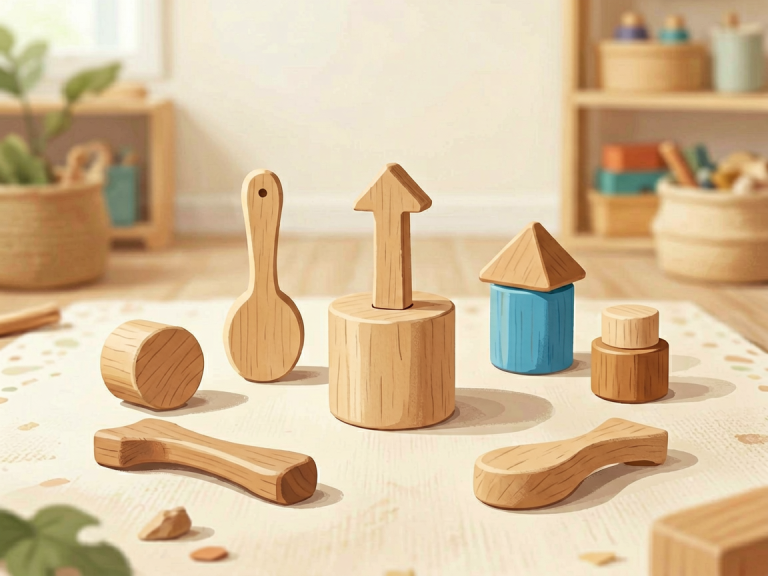
- Simple construction sets: Large wooden blocks or Duplo-style bricks (not Lego, which are too small) allow a toddler to build towers, knock them down, and experiment with balance. Open-ended block play stimulates spatial reasoning and early math concepts.
- Cause-and-effect toys: A jack-in-the-box, a simple pop-up toy where pressing a button makes an animal appear, or a ball ramp set where a ball rolls down a track—these toys teach children that their actions produce predictable results, fostering a sense of agency.
- Sorting and matching games: Two-year-olds begin to categorize objects by color, shape, or size. Simple color-matching boards with large discs or a "feed the monster" game where you "feed" a shape into a matching slot are both engaging and educational.
- Simple puzzles with themes: Puzzles featuring familiar objects (animals, vehicles, or family members) help with visual discrimination and memory. Rotate puzzles weekly to maintain interest without causing boredom.
Importantly, avoid electronic toys that do the thinking for the child. A toy that lights up and talks when a button is pressed might be momentarily entertaining, but it offers no opportunity for the child to experiment, discover, or create. The child becomes a passive spectator, not an active learner.
3. Language and Social Play: Nurturing Communication and Empathy
Language explodes between 24 and 36 months. A two-year-old may go from a vocabulary of 50 words to several hundred in just a few months. They also begin to engage in parallel play (playing alongside other children) and the earliest forms of cooperative play. Toys that encourage imitation, naming, and turn-taking are powerful tools.
Language-promoting toys:
- Picture books with simple, repetitive text: Board books with clear illustrations, one or two words per page, and a recognizable theme (e.g., “Brown Bear, Brown Bear”) support vocabulary building and a love of reading. Read aloud daily and let the child turn the pages.
- Toy phones (non-electronic or with a simple dial): A classic wooden phone encourages a toddler to "call" a family member, practicing conversation skills and role-playing. Avoid phones with loud, repetitive sounds; let the child’s imagination drive the dialogue.
- Simple animal or people figurines: A small set of farm animals or family dolls (without tiny accessories) allows a child to act out familiar scenes: feeding the cow, putting the baby to sleep, or saying goodbye. These narratives build language and emotional understanding.
- Interactive puppets or hand puppets: Using a puppet to talk to the child invites back-and-forth dialogue, helps with emotion recognition, and reduces the pressure of direct conversation.
For social development, consider toys that encourage cooperation with peers or adults. One of the most effective is a simple board game designed for toddlers, such as "Roll and Play" or "Hoot Owl Hoot" (a cooperative game where everyone works together). These games teach turn-taking, following simple rules, and coping with losing—all critical social-emotional skills.
4. Creative Expression: Fueling Imagination and Emotional Outlets
Two-year-olds are bursting with creativity, but they lack the fine motor control to produce detailed drawings or complex crafts. The best creative toys for this age emphasize process over product—the joy of making marks, mixing materials, and exploring textures is far more valuable than creating a "finished" piece.
Top creative play choices:
- Washable, large crayons and finger paints: Use chunky, triangular-shaped crayons that are easy to grip. Finger painting on a large sheet of paper (or even in the bathtub) provides a sensory-rich experience. Never give a two-year-old sharp pencils or small markers.
- Simple instruments: A handheld drum, a shaker egg, or a xylophone with large bars allow a toddler to experiment with rhythm and sound. Music also supports language rhythm and memory.
- Dress-up clothes: A basket containing a few simple items—a cowboy hat, a doctor’s coat (a parent’s old white shirt cut to size), a sparkly scarf—can spark hours of pretend play. Avoid costumes with many small parts or fragile accessories.
- Play scenes: A wooden dollhouse with large, chunky furniture (or even a simple box turned into a "house") invites storytelling. A set of plastic animals and a green mat for a "farm" scene works similarly.
The key with creative toys is to provide a basic framework without overprescribing. A blank piece of paper is better than a coloring book with pre-drawn outlines; a pile of blocks is better than a kit that only builds one specific model.
Safety and Practical Considerations: The Foundation of the Toy Path
No discussion of toys for two-year-olds is complete without addressing safety. The U.S. Consumer Product Safety Commission reports that thousands of children are treated in emergency rooms each year for toy-related injuries, many of which involve choking or falls. Therefore, every toy choice must be filtered through a safety lens:
- No small parts: Anything smaller than a 1.25-inch diameter (about the size of a toilet paper tube opening) is a choking hazard. Test all toys with a choking tube if you are unsure.
- Avoid sharp edges, loose strings, and toxic materials: Look for the ASTM or CE safety certification. Avoid toys with long strings or cords longer than 12 inches, which can pose a strangulation risk.
- Sturdy construction: Two-year-olds are not gentle. Toys that break easily can create sharp edges or release small parts. Choose well-made wooden or BPA-free plastic toys.
- Age-appropriate complexity: A toy that is too advanced will frustrate the child; one that is too simple will bore them. Always check the manufacturer’s age suggestion, but use your judgment—every child develops at their own pace.
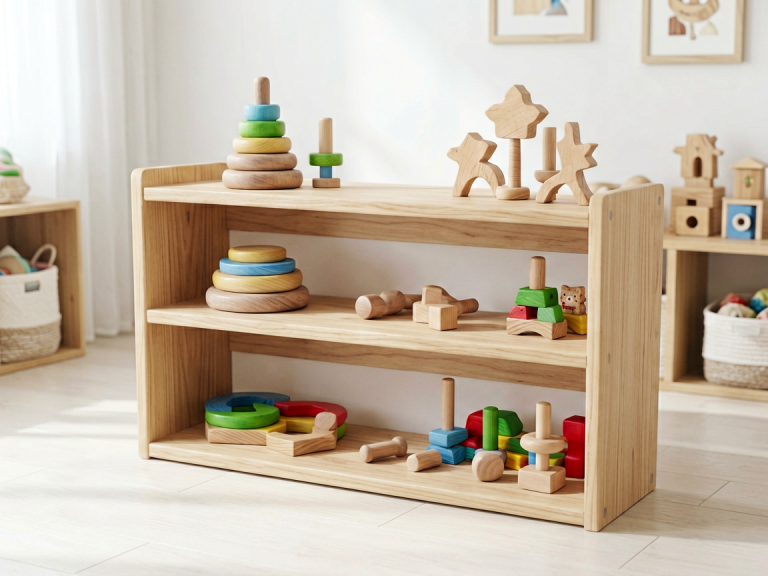
In addition to safety, consider rotation and simplicity. A two-year-old does not need a toy room overflowing with options. In fact, too many choices can overwhelm them and reduce the quality of play. The best toy path involves selecting a manageable number of high-quality, open-ended toys and rotating them every few weeks. This keeps the child interested without creating clutter.
Building Your Own Toy Path: A Practical Checklist
To help you apply these principles, here is a practical checklist for creating a toy path for a two-year-old:
- Start with the basics: One set of large blocks, one shape sorter, one set of chunky crayons, one ride-on toy, one simple puzzle, and a few books.
- Observe your child: Notice what they are currently curious about. If they are enamored with animals, add farm or zoo figurines. If they love pouring and filling, add a water table or sand toys (supervised).
- Avoid the “educational” hype: Many toys marketed as “brain-building” are actually passive. Favor open-ended toys that require the child to be active.
- Include toys that can be used with others: Cooperative games, dress-up items, and simple balls encourage social interaction.
- Plan for outdoor play: Balls, a sandbox, a small push trike, and bubbles all support physical and sensory development in the fresh air.
Conclusion: Trust the Process, Not the Packaging
The best toy path for a two-year-old is not a shopping list but a mindset. It prioritizes quality over quantity, open-endedness over scripted play, and developmentally appropriate challenge over premature achievement. When you choose a toy, ask yourself: Does this toy ask my child to think, move, imagine, or interact? If the answer is yes, you have probably found a winner. If the toy is designed to entertain the child passively—flashing lights, pre-recorded phrases, or a single button that produces a result—it is likely a poor investment.
Remember that the most powerful “toy” you can give a two-year-old is your attention, time, and presence. A cardboard box and a loving parent can provide more learning and joy than any expensive, high-tech gadget. By following the developmental path outlined here—focusing on physical, cognitive, language, and creative play—you will set your toddler up for a lifetime of confident, curious, and joyful learning. The journey of play is the destination itself.