The Power of Play: How Unstructured Fun Transforms Children into Lifelong Learners
Introduction: More Than Just Fun and Games
For decades, the traditional model of education has placed a heavy emphasis on direct instruction, memorization, and standardized testing. Children are often asked to sit still, listen carefully, and repeat information back in a predetermined format. Yet, increasingly, researchers, educators, and child development experts are championing a radically different approach: learning through play. This is not a new idea—thinkers from Friedrich Froebel, the father of kindergarten, to Maria Montessori and Jean Piaget have long argued that play is the work of childhood. But in our modern, hyper‑structured world, we have forgotten its profound power. This article explores why learning through play is not merely a pleasant diversion but a fundamental, evidence‑based strategy for cognitive, social, emotional, and physical development. By re‑examining what “learning” means and how “playing” works, we can unlock a richer, more natural path to knowledge that prepares children not just for tests, but for life itself.
The Science Behind Play: Why It Works
Brain Development and Neural Connectivity
Play is the brain’s favorite way to learn. Neuroscientific research has shown that during play, the brain releases a cocktail of chemicals including dopamine, endorphins, and oxytocin. Dopamine reinforces learning by creating a sense of reward and pleasure, encouraging children to repeat the activity and explore further. Endorphins reduce stress and pain, making the learning experience positive and safe. Oxytocin, the “bonding hormone,” is released during social play, strengthening relationships and building trust. Together, these chemicals promote what scientists call a “plastic” brain—one that is flexible, receptive, and able to form new neural connections quickly. In contrast, stress and fear (often present in high‑pressure academic environments) release cortisol, which inhibits neuroplasticity and can even damage the hippocampus, the brain’s memory center. Play, therefore, is not a break from learning; it is the optimal condition for it.
The Role of Executive Functions
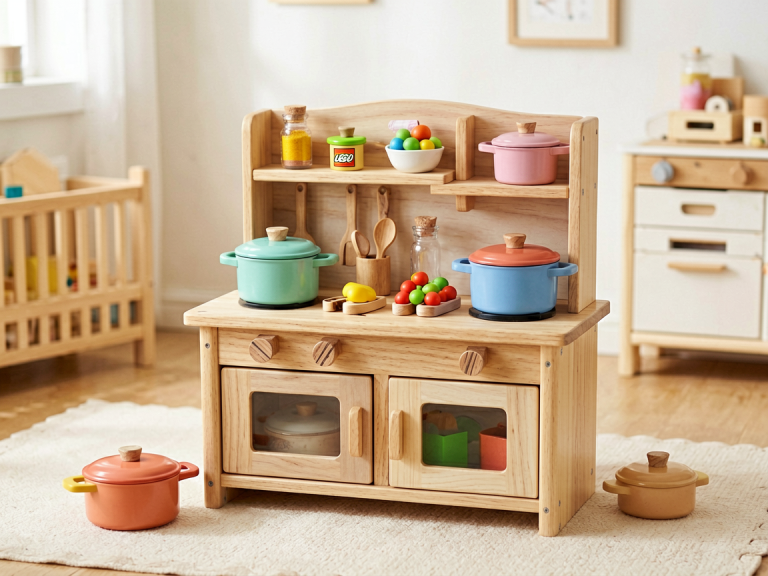
Executive functions—skills like impulse control, working memory, and cognitive flexibility—are critical for success in school and life. They are the brain’s air‑traffic control system. Play, especially unstructured imaginative play, is a powerful trainer for these skills. When children engage in pretend play—say, running a “restaurant” with blocks and toy food—they must hold multiple roles in mind (customer, chef, waiter), remember rules they invented, inhibit the urge to simply grab a toy, and flexibly adapt when the “customer” changes their order. Similarly, physical play like tag or obstacle courses requires split‑second decision‑making and self‑regulation. Studies have found that children who engage in more complex, sustained play show marked improvement in executive function tests compared to those who spend more time in passive, adult‑directed activities.
Learning Through Failure in a Safe Environment
One of play’s greatest gifts is that it provides a low‑stakes arena for failure. In a structured classroom, a wrong answer can feel embarrassing and final. In play, a mistake—a block tower that falls, a game that doesn’t work out as planned—is simply part of the process. Children try, fail, adjust, and try again without fear of judgment. This iterative cycle mirrors the scientific method and the creative process. They learn that failure is not a dead end but a stepping stone to a better solution. This resilience and growth mindset are among the most valuable outcomes of play‑based learning, equipping children to tackle challenges throughout their lives.
Types of Play and Their Specific Learning Outcomes
Physical Play: Building Bodies and Brains
Physical play—running, jumping, climbing, throwing, catching—is often undervalued in academic settings, but it is essential for cognitive and emotional development. Gross motor skills refine the connections between the brain and the body, which in turn supports fine motor skills needed for writing. The vestibular system (our sense of balance and spatial orientation) is stimulated during swinging, spinning, and rolling, directly influencing a child’s ability to sit still and focus. Moreover, physical play releases pent‑up energy, reduces anxiety, and improves mood. Outdoor play, in particular, exposes children to natural light and vitamin D, which regulate sleep and immune function, and to rich sensory experiences that cannot be replicated indoors. When children climb a tree or balance on a beam, they are learning physics concepts (center of gravity, momentum), risk assessment, and body awareness—all without a single textbook.
Constructive Play: Engineering and Problem‑Solving
Building with blocks, Legos, sand, or recycled materials is a form of constructive play that directly teaches mathematics, logic, and creativity. Children naturally experiment with geometry (which shapes stack well?), balance (how many blocks before the tower falls?), and estimation (how many more do I need to reach the top?). They also encounter real‑world problems: “My bridge keeps collapsing—maybe I need a wider base,” or “I want a door, but the blocks keep falling—I’ll try making an arch.” This kind of spontaneous engineering cultivates what educators call “spatial reasoning,” a skill strongly correlated with later success in STEM fields. Furthermore, constructive play is often collaborative, requiring negotiation, sharing of ideas, and division of labor—social skills that are just as important as the mathematical ones.
Imaginative and Pretend Play: The Foundation of Literacy and Empathy
When children engage in pretend play, they are not just having fun—they are constructing narratives, experimenting with language, and stepping into someone else’s shoes. A child who pretends to be a doctor talks differently, uses new vocabulary (“stethoscope,” “prescription”), and considers the patient’s feelings. This role‑taking builds theory of mind—the ability to understand that others have thoughts, feelings, and perspectives different from one’s own. This is a cornerstone of empathy and social intelligence. Moreover, the stories children invent during play mirror the structure of written narratives: setting, characters, conflict, and resolution. They learn sequencing (“First we go to the store, then we make dinner, then the monster comes!”), cause and effect (“If I don’t give the teddy bear his medicine, he won’t get better”), and symbolic thinking (a stick becomes a sword, a box becomes a car). Symbolic thinking is a direct precursor to reading and writing, where abstract marks on a page represent sounds and ideas. Play, then, is the grammar of literacy.
Games with Rules: Sportsmanship, Fairness, and Strategic Thinking
Board games, card games, and organized sports introduce children to the concept of rules that are agreed upon and apply to everyone. They learn fairness, turn‑taking, and how to win or lose gracefully. Games also demand strategic thinking: “If I move my pawn here, what might my opponent do next?” This forward planning is a form of executive function and critical thinking. While some adults worry that competitive games create pressure, research shows that when the emphasis is on participation and fun rather than on winning at all costs, games build social bonds and resilience. Losing a game in a supportive environment teaches children that disappointment is manageable, and that they can try again. This is far more effective than lecturing about “good sportsmanship.”
Implementing Play‑Based Learning at Home and in Schools
Creating a Play‑Rich Environment
The environment is the third teacher. To foster learning through play, adults must provide spaces and materials that invite exploration. This does not require expensive toys. In fact, the best playthings are often open‑ended: blocks, fabric scraps, cardboard boxes, sand, water, art supplies, and natural objects like sticks and stones. These materials do not dictate a specific use, so children’s imaginations are free to assign meaning. At home, parents can designate a “yes” space—a safe area where children can experiment without constant “don’t touch that” or “be careful.” In classrooms, teachers can set up interest centers: a dramatic play corner, a construction zone, a sensory table, a reading nook with props for storytelling. The key is that children have choice and agency; they can decide what to play and how to play it, with minimal adult interference.
The Adult’s Role: Observer, Facilitator, and Sometimes Participant
Adults often struggle with play‑based learning because they feel they should be “teaching.” But the most effective role is that of an observer who is truly present and curious. Instead of directing, ask open‑ended questions: “What do you think will happen if you add more water?” or “How does that character feel right now?” This scaffolds the child’s thinking without taking over. When appropriate, adults can join in the play, but always as a partner, not a leader. Let the child be the boss of the game. The adult’s job is to ensure safety, provide resources when needed, and extend learning by introducing new vocabulary or challenges in a natural way. For example, if a child is building a train track that keeps falling apart, an adult might say, “I wonder if a different shape of connector would work? What if we try this semicircular one?” This maintains the child’s ownership of the problem while offering a gentle nudge.
Balancing Structured and Unstructured Play
Not all play needs to be completely child‑directed. Some structured play, such as guided discovery activities or cooperative games with clear rules, can be highly beneficial. The key is that the child’s intrinsic motivation remains the driving force. For instance, a teacher might set up a “math play” station where children use measuring cups and scales to mix pretend potions, or a “literacy play” area with menus and shopping lists for a toy grocery store. These are still play because children choose to engage and the activity is meaningful to them. The balance between free unstructured play and lightly structured play depends on the child’s age and temperament, but experts generally recommend that young children spend the majority of their day in self‑directed, unstructured play. As children get older, more complex games and projects can be introduced, but the principle of choice and joy should remain central.
Addressing Common Concerns and Misconceptions
“But What About Academics? Won’t They Fall Behind?”
This is perhaps the most frequent worry, especially among parents in competitive educational systems. The evidence, however, points in the opposite direction. Longitudinal studies, such as the famous HighScope Perry Preschool Study, have shown that children in play‑based early childhood programs outperform their peers in direct‑instruction programs on measures of academic achievement, social skills, and even long‑term economic success. Furthermore, countries like Finland, which extensively use play‑based learning in early years and delay formal academic instruction until age seven, consistently rank among the top in global education assessments. Play does not replace academic content; it provides the foundation upon which all learning is built. A child who has played with blocks and water understands addition and volume intuitively. A child who has pretended to be a shopkeeper understands the purpose of counting. When formal instruction later introduces symbols and algorithms, these children already have a rich mental model to attach them to.
“My Child Just Wants to Run Around. When Will They Learn to Focus?”
Physical play is not the opposite of focus; it is a prerequisite for it. The human body is not designed for long periods of static attention, especially not a child’s growing body. Movement stimulates the brain’s prefrontal cortex, which governs attention and self‑control. Many children, especially those with high energy levels or neurodivergent profiles (such as ADHD), need frequent opportunities for vigorous play in order to settle into quieter activities. In fact, a child who is “running around” is often processing sensory input, building muscle tone, and regulating their nervous system. The job of the adult is not to stop the running, but to provide safe spaces for it and then offer calm, engaging activities afterward when the child is ready. A child who has had ample active play will have an easier time sitting down to a puzzle, a book, or a writing task than one who has been forced to sit still all day.
“Isn’t Play Just for Fun? Learning Should Be Hard Work.”
The belief that learning must be serious, effortful, and even unpleasant is deeply ingrained. But the most powerful learning in human history—language acquisition, for instance—happens effortlessly through play and social interaction. No one sits a toddler down for formal grammar lessons. They learn to speak because they are immersed in a playful, interactive, loving environment where communication is meaningful and rewarding. Similarly, when learning feels like play, children are more engaged, remember more, and develop a love for learning that carries them through the inevitable challenges of formal education. “Hard work” is not the same as “drudgery.” A child working hard to build an elaborate castle out of cardboard and tape is deeply engaged, problem‑solving, and learning. The effort is real, but it is fueled by intrinsic motivation, not external pressure.
Conclusion: Reclaiming Childhood, One Play Session at a Time
Learning through play is not a luxury or a frill. It is a developmentally appropriate, scientifically supported approach that respects how children naturally learn. It recognizes that the whole child—body, mind, and heart—must be engaged for true learning to occur. In a world that often pressures children to grow up too fast, to perform, and to compete, play offers a sanctuary where curiosity, creativity, and joy are the guiding lights. As parents, educators, and caregivers, our challenge is to step back, trust the process, and create environments where play can flourish. This means reducing screen time, providing open‑ended materials, spending time outdoors, and—most importantly—protecting unstructured time from the encroachment of schedules and academic demands. The children who are given the gift of play are not just better learners; they are healthier, happier, and more resilient human beings. They are the ones who grow up to ask “why” and “what if,” who solve problems with creativity, and who collaborate with empathy. In short, they are the ones who will thrive in a complex, rapidly changing world. And it all begins with something as simple as a child, a cardboard box, and an open invitation to play.