Building Minds: The Best Beginner Toys for Problem Solving
Introduction
In an age where screens dominate children’s attention, the value of hands-on, cognitive-building toys has never been greater. Problem solving is not just a skill for mathematicians or engineers—it is a fundamental life ability that helps children navigate challenges, think critically, and develop resilience. For beginners—whether toddlers, preschoolers, or early elementary learners—the right toy can transform playtime into a rich learning experience. This article explores why problem-solving toys matter, highlights the most effective beginner toys, and offers guidance on selecting the perfect one for your child. By the end, you will understand how these simple playthings can lay the groundwork for a lifelong love of learning and logical thinking.
Why Problem-Solving Toys Matter
Problem-solving toys are more than just entertainment. They engage children’s brains in active, goal-oriented play. Unlike passive entertainment, these toys require a child to observe, hypothesize, test, and adjust their strategies. This process strengthens neural connections related to executive function, spatial reasoning, and memory.
Research in developmental psychology shows that children who regularly engage with open-ended problem-solving toys develop better self-regulation and patience. They learn that failure is not an end but a step toward success. For beginners, especially those aged two to six, the toys must be simple enough to avoid frustration but challenging enough to spark curiosity. The key is to match the toy’s complexity with the child’s current abilities, then gradually increase the difficulty as skills grow.
Types of Beginner Toys for Problem Solving
1. Building Blocks and Construction Sets
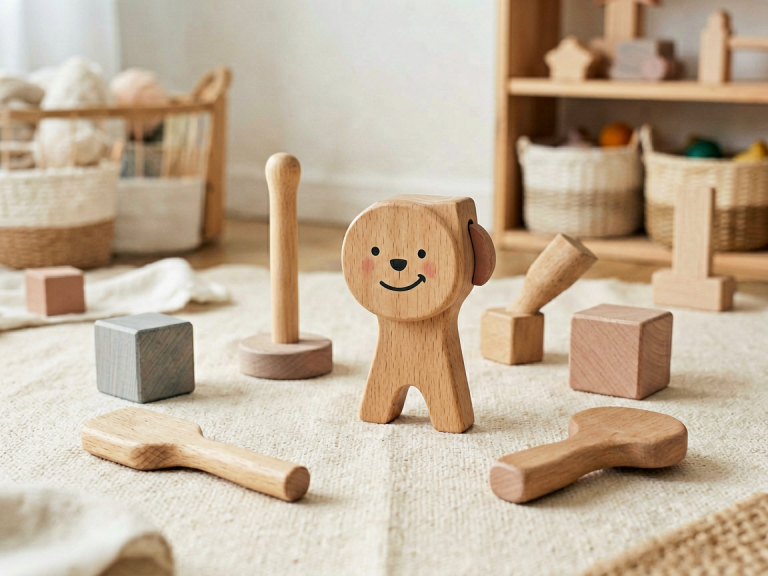
Building blocks are perhaps the most classic problem-solving toys. From simple wooden cubes to interlocking plastic bricks, they teach children about balance, symmetry, and cause and effect. A toddler stacking blocks quickly learns that a tower falls if the base is too narrow. A preschooler using LEGO Duplo must follow a visual pattern or create a stable structure—both require planning and troubleshooting.
Construction sets like magnetic tiles add another dimension. Children must figure out how magnets connect and how to build three-dimensional shapes, encouraging spatial awareness and geometric thinking. These toys are excellent for beginners because they offer immediate feedback: the blocks either stand or fall, the magnets either click or repel. This instant result helps young minds form mental models of physical laws.
2. Simple Puzzles
Puzzles are quintessential problem-solving tools. For beginners, start with large-piece jigsaw puzzles (two to six pieces) or shape sorters. A child must recognize that a star-shaped piece fits only into the star-shaped hole—a lesson in matching, classification, and logical deduction. As children progress, floor puzzles with ten to twenty pieces require them to compare colors, edges, and patterns, honing their visual discrimination and working memory.
More advanced beginner puzzles include sequencing puzzles (e.g., arranging cards in the order of a story) or pattern blocks that must be arranged to replicate a given design. These activities train the brain to break a challenge into smaller, manageable steps—the very essence of problem solving.
3. Logic and Matching Games
Board games designed for young children can be powerful problem-solving tools. Games like “Color Catch” or “First Orchard” require players to match colors, roll dice, and make decisions about which piece to move. Even simple memory card games force a child to recall where a matching image was hidden, exercising short-term memory and strategic thinking.
More structured logic games, such as “SmartMax” or “Gravity Maze” (for ages four and up), involve arranging pieces to create a path for a marble. The child must visualize the route, test it, and correct errors. These toys teach systematic trial-and-error—a fundamental problem-solving approach.
4. Pattern and Sequencing Toys
Toys that focus on patterns—like lacing beads, pegboards, or wooden pattern boards—help children recognize repetition, predict what comes next, and create sequences. For example, a child might be given a card showing red-blue-red-blue and must place the beads in the same order. This task builds early mathematical thinking and logical reasoning.
Another excellent option is “Code-a-Pillar” or similar coding toys for beginners. These toys use segments that children assemble in a sequence to make the caterpillar move left, right, or forward. The child must plan the order of commands, test the route, and debug if the caterpillar doesn’t reach the target. This is an introduction to algorithmic thinking—a high-level problem-solving skill—but presented in a playful, age-appropriate way.
5. Open-Ended Creative Kits
Not all problem solving is logical—some is creative. Toys like modeling clay, building straws, or magnetic drawing boards encourage children to invent their own challenges. For instance, a child might try to build a bridge from clay and toothpicks that can hold a small toy. This requires planning, testing, and redesign. Open-ended toys foster divergent thinking—the ability to generate multiple solutions to a single problem.
Similarly, simple tool kits with plastic screws, bolts, and wrenches let children figure out how to assemble a pretend drill or a car. They learn about mechanical connections, torque, and the satisfaction of making something functional.
How to Choose the Right Toy for a Beginner
Selecting the right problem-solving toy depends on the child’s age, interest, and current skill level. Here are practical guidelines:
- Ages 1–3: Focus on sensory and cause-and-effect toys. Shape sorters, large stacking rings, and soft blocks are ideal. They should be safe (no small parts) and offer immediate, obvious feedback.
- Ages 3–5: Introduce puzzles with 4–12 pieces, pattern boards, and simple board games. Look for toys that require matching, sorting, or following a sequence. Magnetic tiles and Duplo blocks are excellent at this stage.
- Ages 5–7: Move to more complex logic games, early coding toys, and construction sets with instructions. Gravity Maze, simple mazes, and pattern block cards challenge spatial skills. Also consider cooperative board games that require group problem solving.
- Observe the child: If a toy is too easy, the child will lose interest. If too hard, frustration may set in. The “sweet spot” is where the child needs to think but can succeed with effort. Do not hesitate to scaffold—play alongside the child at first, then gradually step back.
The Role of Parents and Educators
Even the best toy is only as effective as the guidance around it. Adults should encourage a problem-solving mindset by asking open-ended questions: “What do you think will happen if you move this piece?” “Why did your tower fall?” “Can you find another way to make it work?” These questions teach children to reflect on their actions and consider alternatives.
It is also important to celebrate the process, not just the outcome. Praise effort, persistence, and creative attempts—even if the final result is not perfect. This builds a growth mindset, which is crucial for future problem solving.
Conclusion
Beginner toys for problem solving are not mere distractions; they are the foundation of critical thinking, creativity, and resilience. From the humble building block to the innovative coding caterpillar, these toys equip children with the mental tools to approach challenges with confidence. By thoughtfully selecting age-appropriate toys and engaging in supportive play, parents and educators can nurture a generation of curious, capable problem solvers. The next time you see a child struggling to fit a puzzle piece or balance a block, remember: they are not just playing—they are building their future.
*(Word count: 1,093)*
Explore Problem Solving & Critical Thinking
This guide is the main starting point for this topic. Use these focused guides to explore specific ages, needs, risks, and practical choices.
- The Best Toy Path for Problem Solving: Cultivating Critical Thinkers Through Play
- Toy Progression for Problem Solving: How Play Shapes the Mind from Infancy to Adolescence
- The Power of Play: Toys That Build Logical Thinking
- Unlocking Young Minds: The Best Toys for Problem-Solving Development
- From Blocks to Algorithms: The Toy Progression for Critical Thinking
- The Logical Ladder: A Toy Progression for Building Critical Thinking from Tots to Teens
- The Best Toy Path for Critical Thinking: From Blocks to Board Games, a Developmental Journey