Advanced Toys for Problem Solving: Shaping the Next Generation of Innovators
Introduction
In an era defined by rapid technological change and complex global challenges, the ability to solve problems creatively and systematically has never been more critical. While traditional education often emphasizes rote memorization and standardized testing, a quieter revolution is taking place in the realm of play. Advanced toys—those designed with sophisticated mechanisms, programmable logic, or open-ended challenges—are emerging as powerful tools for cultivating problem-solving skills in children and even adults. Far from being mere distractions, these toys engage users in iterative thinking, hypothesis testing, and collaborative reasoning. This article explores the landscape of advanced toys for problem solving, examining their categories, cognitive benefits, and the profound implications they hold for learning and development.
The Evolution of Play: From Simple Pastimes to Sophisticated Tools
Play has always been a natural vehicle for learning. From building blocks that teach spatial reasoning to board games that introduce strategic planning, early toys laid the groundwork for cognitive development. However, the advent of digital technology and advanced materials has transformed play into an even more potent educational experience. Modern advanced toys integrate sensors, motors, artificial intelligence, and connectivity, allowing children to interact with dynamic systems that respond to their actions. This shift mirrors the evolution of problem-solving itself: from static, single-answer puzzles to fluid, multi-layered challenges that mimic real-world complexity. The toys of today are not just entertaining; they are miniature laboratories where users can experiment, fail, and iterate—all within a safe and engaging environment.
Defining “Advanced Toys” for Problem Solving
To clarify the scope of this discussion, it is essential to define what constitutes an “advanced toy” in the context of problem solving. These are not simple remote-controlled cars or plush dolls. Instead, they possess one or more of the following characteristics:
- Programmability: The ability to modify behavior through code or logic blocks.
- Feedback Systems: Sensors and outputs (lights, sounds, motion) that respond to user input.
- Open-Endedness: Multiple pathways to achieve a goal, encouraging divergent thinking.
- Complexity Scaling: Challenges that grow in difficulty as the user’s skills improve.
- Collaborative Potential: Designed for group use to foster communication and shared problem solving.
Examples include robotics kits, modular electronics, advanced construction sets, strategy board games with dynamic rules, and even certain video games that emphasize logic and deduction. These toys blur the line between play and education, making learning an intrinsic part of the fun.
Categories of Advanced Problem-Solving Toys
1. Robotics and Coding Kits
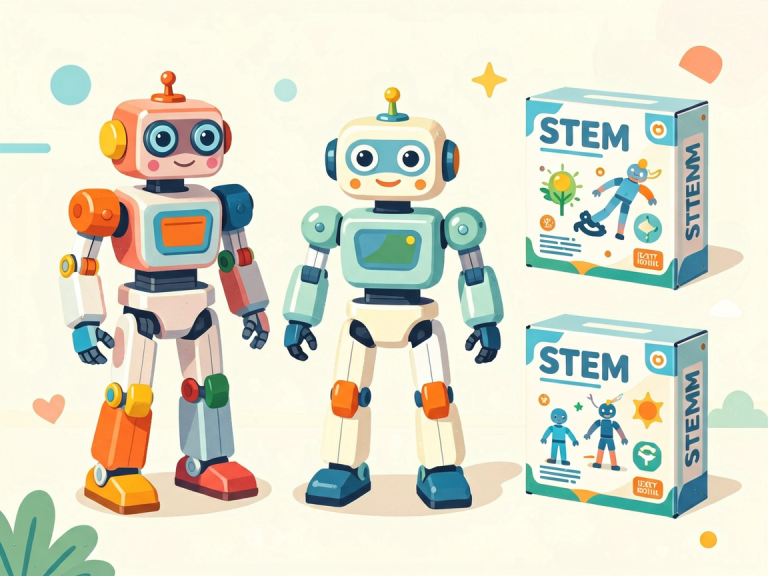
Robotics kits like LEGO Mindstorms, VEX Robotics, and Sphero Bolt are quintessential advanced toys for problem solving. They require users to assemble physical structures and then write code to control motion, sensing, and decision-making. A child building a robot that must navigate a maze, for instance, must break down the problem into smaller steps: designing the chassis, programming sensors to detect walls, and implementing a turn algorithm. This process mirrors the engineering design cycle—ask, imagine, plan, create, test, improve—and teaches debugging skills that are transferable to any technical field. More sophisticated kits now incorporate Python or JavaScript, bridging the gap between toy and professional tool.
2. Logic Puzzles and Strategy Games
While traditional puzzles like Rubik’s Cubes have long been associated with problem solving, advanced versions take the concept further. Games like “Rush Hour” (a sliding puzzle with increasing difficulty), “Gravity Maze” (a marble-run logic game), and “Code Breaker” (a deduction game) require players to think ahead, consider constraints, and use process of elimination. Modern strategy board games such as “Catan” or “Ticket to Ride” involve resource management, negotiation, and spatial reasoning. Even digital puzzle games like “The Witness” or “Portal” challenge players to understand non-linear cause-and-effect relationships. These toys hone working memory, pattern recognition, and the ability to hold multiple variables in mind simultaneously.
3. Open-Ended Construction Sets
Construction toys have evolved far beyond basic Lego bricks. Advanced sets like the “K’NEX Intro to Structures” or “Magnetic Tiles” allow for building complex mechanical systems with gears, pulleys, and levers. More exceptional are those that incorporate programmable elements, such as the “Makey Makey” invention kit, which turns everyday objects into touchpads, or “littleBits,” which let children snap together electronic modules to create circuits. These toys encourage trial-and-error learning: a child trying to build a working drawbridge must understand torque, balance, and electrical connections. The open-ended nature means there is no single correct solution, fostering creativity and resilience as children learn to adapt when their initial design fails.
4. Virtual Reality and Augmented Reality Experiences
Immersive technologies are now being harnessed for problem-solving play. VR platforms like “Oculus Quest” offer apps such as “Tilt Brush” (3D drawing) or “Space Pirate Trainer” (strategic defense) that demand spatial awareness and quick decision-making. AR toys like “Merge Cube” allow children to hold and manipulate holographic objects, solving puzzles that require understanding of physics or geometry. For example, an AR puzzle might involve stacking virtual boxes to create a stable tower while real-world furniture must be considered. These technologies provide a unique blend of physical and digital interaction, making abstract concepts tangible and engaging.
Cognitive and Developmental Benefits
Enhancing Critical Thinking and Analytical Skills
When children engage with advanced problem-solving toys, they are constantly asking “What if?” and “Why?” For instance, a child programming a robot to follow a line must analyze the sensor readings, identify why the robot veers off course, and hypothesize a fix. This iterative process sharpens critical thinking—the ability to evaluate evidence, identify patterns, and make logical deductions. Unlike passive entertainment, these toys demand active cognitive engagement, which strengthens the neural pathways associated with reasoning.
Fostering Creativity and Innovation
Creativity is not just about artistic expression; it is the ability to generate novel solutions to problems. Advanced toys that offer multiple solutions encourage divergent thinking. A construction set, for instance, can be used to build a bridge, a crane, or a completely original invention. The absence of a step-by-step manual forces children to imagine possibilities and take creative risks. Studies have shown that open-ended play with such toys increases fluency in idea generation and the ability to see connections between seemingly unrelated concepts.
Building Resilience and Perseverance
One of the most valuable lessons from advanced toys is that failure is not final. A robot that doesn’t move or a puzzle that seems impossible teaches children to persist. They learn to diagnose errors, try alternative approaches, and celebrate small victories. This builds a growth mindset—the belief that abilities can be developed through effort. In a world where instant gratification is common, the delayed reward of solving a complex problem reinforces patience and determination. These emotional skills are just as important as cognitive ones for long-term success.
Practical Applications in Education and Home
Schools and parents are increasingly incorporating advanced toys into learning environments. STEM curricula now often include robotics competitions, coding clubs, and makerspaces equipped with 3D printers and electronic kits. For example, the FIRST LEGO League challenges teams to solve real-world problems using robots, teaching not only technical skills but also teamwork and communication. At home, parents can set up “problem-solving stations” with a rotating selection of puzzles, coding apps, and building materials. The key is to allow children to struggle productively—without immediately providing answers—while offering guidance when frustration peaks. Even adults can benefit from these toys; complex strategy games and coding kits are used in corporate training to enhance innovation and collaboration.
Challenges and Considerations
Despite their benefits, advanced toys are not without challenges. Cost can be a barrier—many high-quality robotics kits and AR systems are expensive, potentially widening the digital divide. Additionally, not all children are naturally drawn to structured problem solving; some may prefer imaginative play or physical activity. Over-reliance on such toys without balanced play can also lead to screen fatigue or frustration if the difficulty level is mismatched. Parents and educators should therefore choose toys that align with the child’s interests and development stage, and ensure that play remains joyful rather than pressure-filled. Another consideration is that some toys require adult facilitation to maximize learning—a parent or teacher who can pose questions like “What do you think will happen if…?” can transform a play session into a deep learning experience.
The Future of Advanced Toys
The trajectory of advanced toys points toward even greater integration with artificial intelligence and machine learning. Imagine a toy that adapts its challenges in real time based on the user’s performance, providing just the right level of difficulty to maintain flow. Already, adaptive games like “DragonBox” teach algebra through puzzles that progressively introduce abstract concepts. In the future, collaborative toys might connect children across the globe to solve global challenges, such as designing a sustainable city or simulating a Mars mission. The boundaries between toys, tools, and tutors will continue to blur, making problem solving an ever more engaging and accessible part of everyday life.
Conclusion
Advanced toys for problem solving represent a paradigm shift in how we approach learning and development. They transform play from a passive pastime into an active, iterative process that builds critical thinking, creativity, and resilience. By offering challenges that are both engaging and educational, these toys prepare children—and indeed learners of all ages—for a world that demands innovative solutions. As technology evolves, so too will the ways in which we play and learn. The most important takeaway is that the best toy is not the one with the most features, but the one that inspires a curious mind to ask, “How can I solve this?” In that question lies the seed of all future discovery.