Beyond Play: How Toys That Build Creativity Shape the Innovators of Tomorrow
Introduction
In a world increasingly shaped by artificial intelligence, automation, and rapid technological change, the ability to think creatively has never been more valuable. Creativity is not a mysterious gift reserved for artists and inventors; it is a cognitive muscle that can be exercised and strengthened—and the gym equipment often comes in brightly colored plastic, wooden blocks, and magnetic tiles. Toys that build creativity are far more than simple distractions; they are the silent architects of flexible thinking, problem-solving, and innovation. When a child spends an afternoon stacking, connecting, dismantling, and reimagining, they are not merely playing—they are constructing the neural pathways that will later enable them to design a sustainable city, write a compelling novel, or invent a life-saving medical device. Understanding what makes a toy genuinely creative—and how these objects shape young minds—is essential for parents, educators, and anyone invested in cultivating the next generation of thinkers.
The Anatomy of an Open-Ended Toy
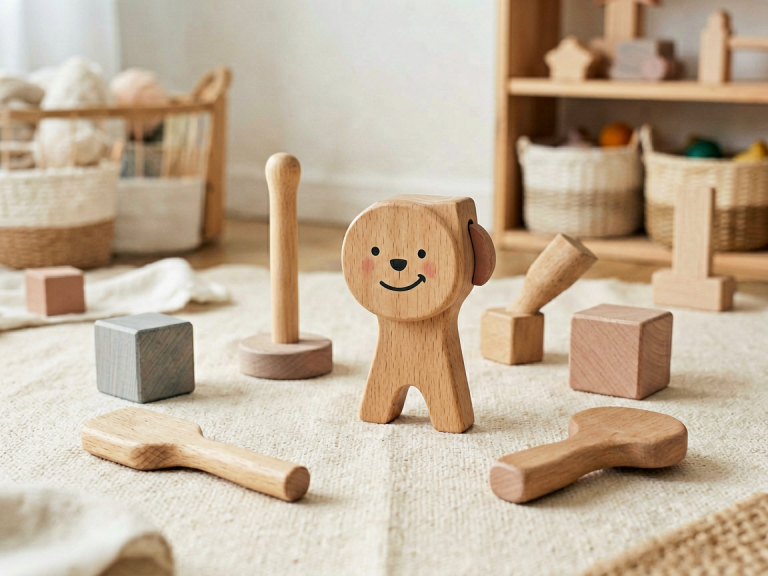
At the core of any toy that builds creativity is a single, non-negotiable feature: open-endedness. Unlike a battery-powered robot that performs a fixed set of actions, or a puzzle that has one correct solution, open-ended toys provide no prescribed outcome. A set of plain wooden blocks does not come with an instruction manual for "the right way" to build a tower. A bucket of interlocking plastic discs does not tell a child that they must create a castle rather than a spaceship. This absence of constraint is precisely what ignites the creative engine.
When children face a toy with infinite possibilities, they must engage in what developmental psychologists call "divergent thinking"—the ability to generate multiple solutions to a single problem. For example, a simple set of magnetic tiles can become a bridge, a hat, a quantum physics model, or a house for imaginary ants. Each transformation requires the child to envision a new purpose, test its feasibility, and adjust their approach when the real world—gravity, balance, the shape of the tiles—pushes back. This looping process of imagining, building, failing, and reimagining is the very heart of creative thought.
Open-ended toys also cultivate a tolerance for ambiguity. In a standardized test, there is always a correct answer. In real life, especially in creative fields, problems often have no clear solution. Toys that allow—and even encourage—multiple interpretations teach children that uncertainty is not a dead end but a starting point. The child who builds a wobbly tower that keeps collapsing learns that failure is data, not a verdict. They try a wider base, then a narrower one, then a spiral design. Each attempt is a hypothesis tested against reality. Over time, this builds a mindset that sees obstacles as invitations to innovate rather than reasons to give up.
Classic Construction Toys: The Foundational Pillars of Creativity
Perhaps the most iconic toys that build creativity are construction sets. LEGO bricks, wooden unit blocks, K’Nex, and Magnetic Tiles have stood the test of time precisely because they offer endless combinability. A LEGO brick is a marvel of engineering—a perfectly standardized unit that can be joined in countless ways. Yet what makes it creative is not the brick itself but the blank canvas it provides. A child who builds a car one day can disassemble it and build a dragon the next. The same brick that was a wheel becomes a scale, then a window, then an eye.
Research in developmental psychology supports what parents have observed for generations: children who frequently play with construction toys outperform their peers in spatial reasoning, mathematical thinking, and creative problem-solving. A 2018 study published in *Thinking Skills and Creativity* found that preschoolers who engaged in unstructured block play scored significantly higher on measures of divergent thinking than those who played with more prescriptive toys. The reason is straightforward: construction toys require children to hold a mental image in their head while simultaneously manipulating physical objects to match that image. This exercise strengthens the brain’s ability to visualize, plan, and revise—skills that are foundational for everything from architecture to engineering to storytelling.
Moreover, construction toys encourage what educators call "iterative prototyping." A child might build a bridge that collapses under the weight of a toy car. Rather than giving up, they examine the failure point, hypothesize why it broke, and try a new design with a different support structure. This cycle of build-test-fail-redesign mirrors the process used in professional design studios and engineering labs. The only difference is the stakes: in play, there is no penalty for failure, which makes experimentation joyful rather than stressful. This psychological safety is crucial for cultivating the kind of bold, risk-taking mindset that leads to breakthrough ideas.
The Role of Loose Parts and Natural Materials
While plastic and wood construction sets are powerful, some of the most effective toys that build creativity are not toys at all—they are "loose parts." This concept, popularized by architect Simon Nicholson in the 1970s, argues that the most creative environments are those rich with materials that can be moved, combined, redesigned, taken apart, and put back together. Think of a pile of pinecones, fabric scraps, cardboard tubes, bottle caps, stones, and string. These everyday objects have no predetermined function, so a child must invent one. A cardboard tube might be a telescope, a rolling pin, a rampart for a fortress, or a microphone for announcing a royal decree.
Loose parts are a radical departure from the modern toy industry's obsession with specificity—where a plastic kitchen playset only allows for "cooking" and a train set only allows for "choo-choo." By contrast, a box of mixed natural materials and recycled household items places the creative burden entirely on the child. There is no "right" way to use a pinecone. This ambiguity is precisely what makes them such potent catalysts for creativity. Children who play with loose parts develop flexibility in thinking because they must constantly assign new meanings to the same objects. A stone that is a "mountain" today might become a "pizza" tomorrow, requiring the child to shift their mental framework without resistance.
These materials also engage multiple senses—texture, weight, smell, sound—which deepens cognitive engagement. When a child wraps a piece of yarn around a stick and calls it a "magic wand," they are not just pretending; they are constructing a symbolic system where one thing stands for another. This is the same cognitive leap required for reading (where squiggles on a page stand for sounds and ideas) and for mathematics (where numerals stand for quantities). Toys that build creativity through loose parts, therefore, lay the groundwork for abstract thinking, language development, and scientific reasoning.
Digital Creativity Toys: Coding, Robots, and Virtual Worlds
In the 21st century, creativity toys have expanded beyond the physical realm. Digital and hybrid toys—such as programmable robots (Sphero, Ozobot), coding apps (Scratch, Tynker), and open-ended sandbox games (Minecraft in Creative Mode)—offer a new frontier for building imaginative thinking. The key distinction between a creative digital toy and a passive one (like a video game that only requires pressing buttons to follow a linear story) is again openness. A toy like Minecraft provides a block-based universe with no prescribed mission; players build entire cities, recreate historical monuments, or engineer complex redstone circuits. The game is essentially a digital box of LEGO bricks with infinite supply.
Coding toys are especially powerful because they teach computational creativity—the ability to design a sequence of instructions that produces a desired outcome. When a child programs a robot to navigate a maze, they must break a big problem (get the robot to the finish line) into small steps (move forward, turn left, detect obstacles), test their code, debug errors, and try again. This is creative problem-solving in its most structured form. Studies by the MIT Media Lab have shown that children who learn to code through playful, creative tools develop stronger metacognitive skills—they become better at planning, monitoring their own thinking, and generating original solutions.
However, there is a cautionary note. Not all digital toys are equal. Many apps that claim to be "educational" are actually drill-and-practice exercises disguised as games. True creativity-building digital toys share the same DNA as their physical counterparts: they are open-ended, they allow for failure without punishment, and they give the child agency over the experience. A good rule of thumb is to ask: Can the child create something that did not exist before they started? If the answer is yes, then the toy is likely building creativity, whether it runs on batteries or on imagination alone.
The Social Dimension: Collaborative Creativity
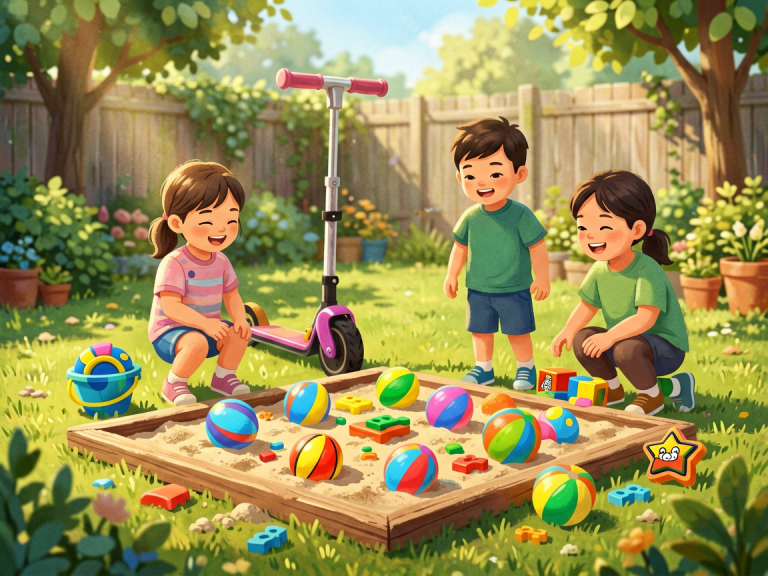
Toys that build creativity are not always solitary. Many of the most powerful creative experiences happen when children play together. A set of large foam blocks in a preschool classroom becomes a shared space where four children must negotiate, plan, delegate, and compromise. One child wants a castle, another a rocket ship; the tension between these visions forces them to communicate, find common ground, or invent a hybrid—a "castle-rocket" that can fly to the moon and have drawbridges. This collaborative creativity mirrors the dynamics of real-world innovation teams, where the best ideas often emerge at the intersection of different perspectives.
Board games that involve storytelling, such as *Story Cubes* or *Dixit*, also foster collective imagination. In *Story Cubes*, players roll dice with pictures and must weave a coherent narrative that includes all the images. This requires quick thinking, flexibility, and listening skills—each player must build upon the previous contribution, not override it. These social creativity toys teach children that creativity is not a solo performance but a dialogic process, where ideas are refined through feedback, iteration, and shared ownership. The ability to stay open to another person’s suggestion, to pivot from your own plan, and to synthesize diverse inputs is a hallmark of creative leadership.
Conclusion: Choosing Toys That Grow with the Child
In a consumer market flooded with flashy, licensed, single-use toys, the most valuable investments are often the simplest. A set of plain wooden blocks bought for a two-year-old can still be used by a ten-year-old to build complex architectural models. A box of loose parts collected from nature and recycling bins costs nothing but yields infinite creative returns. Magnetic tiles that start as simple towers in toddlerhood become elaborate geometric sculptures in middle childhood and may later inspire a student’s interest in engineering or design.
The true measure of a toy that builds creativity is not how many features it has, but how many ways it can be used. It is the toy that asks questions instead of giving answers. It is the toy that celebrates the process, not the product. And it is the toy that, years later, when the child has grown into an adult solving the world’s most complex problems, will be remembered not as a thing they played with, but as the thing that taught them how to think.
When we choose toys for children—whether in a store, a classroom, or our own homes—we are making a choice about what kind of mind we want to cultivate. A world that prizes creativity, resilience, and innovation begins with a child who is handed a box of blocks and told, "See what you can make." That simple invitation, repeated thousands of times, is the most powerful gift a toy can give.