Building Young Minds: A Comprehensive STEM Toy Plan for Parents
Introduction
In an era where technology, engineering, and scientific literacy shape every aspect of our lives, parents increasingly recognize that playtime can be a powerful engine for learning. STEM—Science, Technology, Engineering, and Mathematics—is no longer a buzzword reserved for classrooms; it is a mindset that can be cultivated at home through carefully chosen toys. However, walking into a toy store or scrolling through endless online listings can be overwhelming. With flashy packaging and bold claims, how can a parent separate genuine educational value from mere gimmicks? This article provides a structured, actionable STEM toy plan for parents—a roadmap that balances fun, developmental milestones, and real-world skills. By following the guidelines below, you will learn how to select toys that inspire curiosity, encourage problem-solving, and lay a foundation for lifelong learning, all while respecting your budget and your child’s unique interests.
—
Why a STEM Toy Plan Matters
Before diving into specific recommendations, it is essential to understand why a deliberate plan is superior to random purchases. Children learn best when they encounter concepts repeatedly and in various contexts. A scattered collection of toys may spark initial interest, but without a coherent progression, children can become frustrated or bored. A STEM toy plan ensures that each toy builds upon the previous one, reinforcing skills such as spatial reasoning, logic, and fine motor control. Moreover, a plan helps parents align toy choices with their child’s current developmental stage, preventing both premature exposure to overly complex materials and the stagnation that comes from toys that are too simple. Finally, a well-thought-out plan saves money—by focusing on versatile, open-ended toys rather than single-purpose gadgets, parents can create a rich learning environment without constant new purchases.
—
Core Principles of a Successful STEM Toy Strategy
To craft a plan that works for your family, keep these four principles in mind:
1. Open-Ended Over Single-Outcome Toys
The best STEM toys are those that can be used in multiple ways. Building blocks, magnetic tiles, and modular construction kits allow a child to design a tower today, a bridge tomorrow, and a spaceship next week. In contrast, a toy that only does one thing (e.g., a pre-programmed robot that follows a fixed path) offers limited opportunities for creative thinking.
2. Process Over Product
Resist the urge to judge a toy’s success by the final creation. A child who spends an hour trying to attach two gears that don’t quite fit is learning persistence, mechanical reasoning, and frustration tolerance. Celebrate the process of experimentation, not just the finished model.
3. Age-Appropriate Challenge
A toy that is too easy leads to boredom; one that is too hard leads to discouragement. Look for toys that have a “low floor” (easy to start) and a “high ceiling” (complex enough to grow with the child). Many STEM kits include multiple difficulty levels or expansion packs.
4. Integration with Everyday Life
The best toys don’t stay in the toy box. Encourage your child to connect what they build with real-world phenomena. A marble run can be a lesson in gravity and momentum; a simple pulley system can explain how construction cranes work.
—
Age-Based STEM Toy Recommendations (Ages 3–12)
A successful plan recognizes that a toddler’s needs differ vastly from those of a middle-schooler. Below is a stage-by-stage guide with specific toy categories and examples.
Ages 3–5: Foundations of Curiosity
At this stage, the goal is to develop fine motor skills, cause-and-effect understanding, and basic classification. Avoid small parts that pose choking hazards. Excellent choices include:
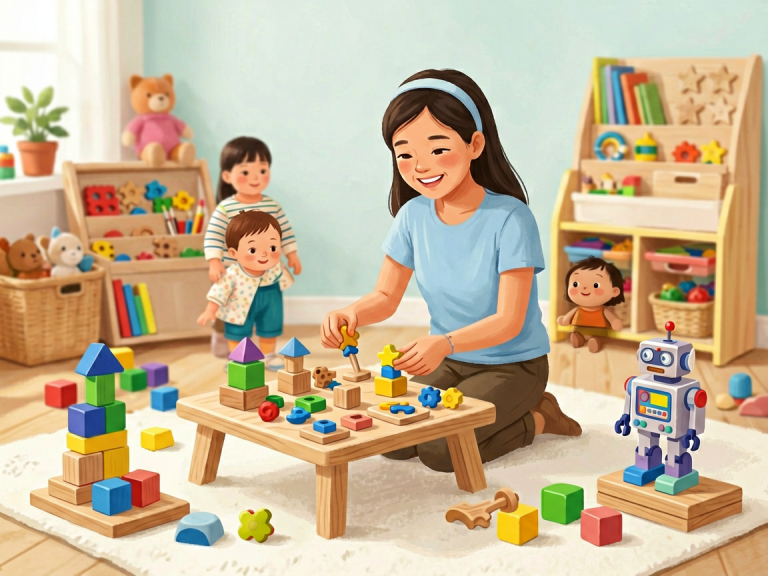
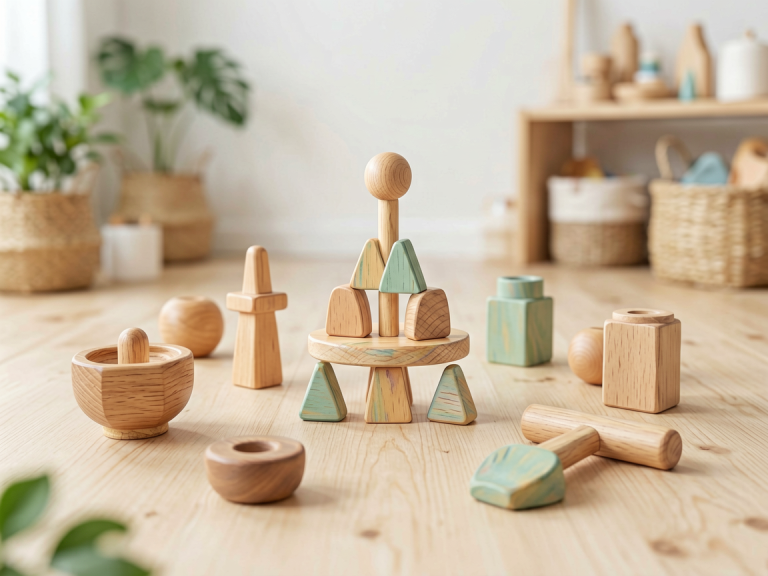
- Wooden building blocks – Classic unit blocks or colorful stacking blocks.
- Magnetic tiles – Magna-Tiles or similar translucent shapes that snap together.
- Simple puzzles – Chunky wooden puzzles with knobs, focusing on shapes and colors.
- Water and sand play sets – Buckets, funnels, and scoops teach volume and flow.
- Coding toys without screens – Like the Fisher-Price Code-a-Pillar or Botley the Robot (simplified version).
Ages 6–8: Building Logic and Mechanical Understanding
Children in this age range can follow simple instructions and enjoy creating moving objects. They are also ready for basic programming concepts.
- Construction sets with moving parts – LEGO Classic or LEGO Technic starter sets; K’NEX; Engino.
- Simple machines kits – Pulleys, gears, levers (e.g., Thames & Kosmos Simple Machines).
- Beginner robotics – Sphero Mini, Dash by Wonder Workshop.
- Coding board games – Robot Turtles, or coding card games like Code Master.
- Chemistry or physics kits – Lab-in-a-bag crystal growing or magnetic science kits.
Ages 9–12: Deepening Systems Thinking
Pre-teens can handle multi-step projects, abstract reasoning, and even some basic electronics.
- Advanced building kits – LEGO Mindstorms or Robot Inventor; Meccano; Arduino starter kits.
- Electronics and circuits – Snap Circuits, littleBits, or breadboard kits with LEDs and resistors.
- 3D printing pens – For spatial design and prototyping (supervision required).
- Coding platforms – Scratch programming combined with hardware like Micro:bit or Circuit Playground Express.
- Engineering challenges – K’NEX roller coasters, bridge-building kits, or hydraulic arm models.
—
Creating a Year-Long STEM Toy Plan on a Budget
A structured plan doesn’t mean buying everything at once. Here is a sample year-long approach that spreads out costs and maintains novelty:
| Month | Theme | Recommended Toy (approx. cost) | Associated Activity |
|——-|——-|——————————-|———————-|
| Jan | Structures & Balance | Magnetic Tiles ($40) | Build a tower that can hold a book; test different shapes |
| Feb | Motion & Gears | LEGO Technic starter ($30) | Build a car that rolls down a ramp; change gear sizes |
| Mar | Electricity & Circuits | Snap Circuits Jr. ($25) | Light a bulb; create a fan that spins |
| Apr | Coding without Screens | Robot Turtles board game ($20) | Program a turtle to reach a jewel using logic cards |
| May | Water & Fluid Dynamics | Water play table or simple pumps ($30) | Build a water channel to move a ping-pong ball |
| Jun | Outdoor Engineering | Sand and gravel construction set ($20) | Build a dam, a bridge, and a water wheel |
| Jul | Robotics | Sphero Mini ($40) | Drive the robot through an obstacle course; code simple paths |
| Aug | Chemistry & Reactions | Kitchen science kit ($15) | Make a baking soda volcano; create slime |
| Sep | 3D Design | 3D printing pen ($50) | Draw a 3D shape; create a custom keychain |
| Oct | Logic & Puzzle | Code Master puzzle game ($20) | Solve progressive levels of programming puzzles |
| Nov | Simple Machines | Pulley and lever kit ($25) | Lift a heavy object using a homemade crane |
| Dec | Creativity & Open Build | Mixed building blocks + random household items | Create a marble run using tubes, blocks, and cardboard |
This plan totals approximately $315, but many items can be reused across years or shared among siblings. Additionally, parents can seek secondhand options on online marketplaces or borrow from local toy libraries.
—
How to Maximize Learning with STEM Toys
Purchasing the right toys is only half the battle. To truly activate learning, parents should adopt the following practices:
- Play Along, but Don’t Take Over
Sit beside your child, ask open-ended questions (“What do you think will happen if we add another gear?”), and let them lead. Resist the urge to correct mistakes immediately; let them discover the solution.
- Encourage Documentation
Provide a notebook where your child can draw their designs, write down observations, or photograph their creations. This builds scientific recording habits.
- Connect to Real-World Careers
When your child builds a bridge, mention that civil engineers design real bridges. When they code a robot, talk about computer programmers. This contextualization makes the activity feel meaningful.
- Create Challenge Prompts
Instead of leaving a child alone with a toy, issue a weekly challenge: “Can you build a bridge that supports five toy cars?” or “Code the robot to draw a square.” Challenges keep engagement high.
- Rotate Toys to Avoid Boredom
Keep a “toy library” in a closet. Every few weeks, swap out three or four items. This reignites interest and forces children to revisit old skills with fresh eyes.
—
Evaluating and Adjusting Your Plan
No plan is perfect from the start. After a month, assess how your child interacts with each toy. Ask yourself: Is my child still curious? Is the toy too difficult? Is it being used in creative ways, or just sitting on a shelf? If a toy isn’t working, don’t force it—try trading with another parent or donating it. Likewise, if a certain category (e.g., robotics) sparks intense passion, consider deepening that path by investing in more advanced kits. Flexibility is key. A STEM toy plan should evolve alongside your child’s growing abilities and interests.
—
Conclusion
A well-designed STEM toy plan is not about buying the most expensive or trendy products. It is about curating a set of tools that invite exploration, tolerate failure, and celebrate the joy of discovery. By following the principles of open-ended play, age-appropriate challenge, and budget-conscious scheduling, parents can create a home environment where science, technology, engineering, and mathematics become as natural as breathing. Remember: every block stacked, every circuit connected, and every code debugged is a step toward raising a confident, curious, and capable thinker. Start small, stay consistent, and watch your child’s mind unfold.