Screen-Free Toys That Grow With Your Child
Some toys are played with for a week and forgotten; a few are played with for years. The difference is rarely the price tag. Toys that grow with a child share one trait: they have no single finished state, so a two-year-old and a five-year-old can use the same object in completely different ways. This page is a short buying path for screen-free toys with that kind of shelf life.
The Test: One Toy, Many Ages
Before buying, ask one question: how many different things can a child do with this? A toy that sings when a button is pressed has one trick. A set of wooden blocks can be a tower at two, a road at three, a castle at five, and a marble-run frame at seven. Open-ended play like this is exactly what long-term unstructured play research keeps pointing toward.
Six Categories That Age Well
Building sets. Blocks, Duplo, and magnetic tiles scale from stacking to engineering. They also pair well with any other toy, which multiplies their life span.
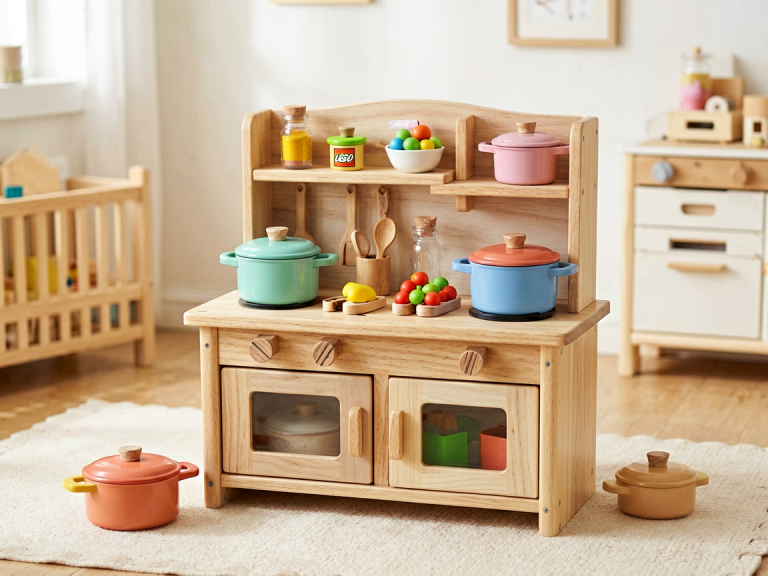
Pretend-play props. Play kitchens, animal figures, and dress-up clothes change script as the child grows. The two-year-old stirs a pot; the five-year-old runs a restaurant.
Art and making supplies. Paper, crayons, tape, and play dough never expire. Skills grow from scribbles to plans without any new purchase.
Puzzles and games. Start with chunky knob puzzles and move up piece counts; a good puzzle rack serves years of progression.
Physical play gear. Balls, a low balance beam, or a small climbing wedge support gross motor growth that always needs an outlet.
Nature kits. A bucket, a magnifier, and a bug box turn any outdoor hour into science. Free, and endlessly renewable.
How This Fits Learning Through Play
Toys that grow with a child are, in effect, long-term learning environments. Building becomes early engineering, pretend play becomes narrative and vocabulary, and art becomes fine motor control. Our overview of learning through play explains how those translations work, and our pick of the best toys for learning through play applies it to specific products.
Keeping the Collection Lean
Long-lived toys work best in small numbers. Rotating a handful of open-ended sets, rather than displaying everything at once, keeps each one feeling fresh; the same principle behind a calm playroom applies whether toys cost ten dollars or a hundred. Buy fewer, better, and let time do the rest.