The Power of Play: How Toys That Build Fine Motor Skills Shape Early Development
—
Introduction
In an age dominated by flashing screens and passive entertainment, the humble toy remains one of the most powerful tools for childhood development. Among the myriad categories of playthings, those designed to strengthen fine motor skills hold a special place. These dexterity-building toys—from simple stacking rings to intricate lacing boards—do far more than keep toddlers occupied. They lay the neurological and muscular foundation for tasks as diverse as handwriting, buttoning a shirt, using scissors, and even typing on a keyboard.
Fine motor skills refer to the coordinated movement of small muscles—primarily in the hands, fingers, and wrists—often in tandem with the eyes. These abilities are not innate; they require repeated, deliberate practice during the critical early years of life. Toys that specifically target these skills provide a fun, low-pressure environment for that practice. This article explores the science behind fine motor development, categorizes the most effective toys, and offers guidance for parents and educators seeking to maximize the benefits of play.
—
Understanding Fine Motor Skills
Fine motor skills are distinct from gross motor skills, which involve large muscle groups used for actions like running and jumping. Fine motor control requires precision, timing, and hand-eye coordination. It progresses through predictable stages: a newborn’s reflexive grasp gives way to the voluntary palmar grip around three months; by nine months, infants develop the pincer grasp, using thumb and forefinger to pick up small objects.
Between ages one and three, children refine their ability to manipulate objects intentionally. They learn to stack blocks, turn pages, and scribble. From three to five, skills become more complex: cutting with scissors, drawing shapes, and fastening buttons. By six or seven, most children can write letters legibly and tie shoelaces.
Delays in fine motor development can have cascading effects. A child who struggles with finger strength may avoid drawing, which in turn hampers pre-writing skills. Similarly, difficulty manipulating small objects can affect self-care tasks like feeding or dressing, leading to frustration and diminished confidence. Toys that build fine motor skills intervene precisely at these vulnerable junctures, offering structured yet playful practice.
—
Why Fine Motor Toys Matter More Than Ever
Modern lifestyles pose unique challenges to fine motor development. Infants spend more time in car seats, bouncers, and strollers than in free floor play. Toddlers are often handed touchscreens that require only a swipe or tap—gestures that rely on gross arm movements rather than precise finger articulation. As a result, occupational therapists report a rising number of children who enter preschool without adequate hand strength or dexterity.
Research consistently demonstrates that hands-on, manipulative play promotes neural pathway formation. When a child pinches a clothespin or threads a bead, the brain’s motor cortex, cerebellum, and sensory integration areas activate simultaneously. Each successful repetition reinforces synaptic connections, improving both speed and accuracy. Toys provide the repetition and variety that structured drills cannot, because play is inherently motivating—children will practice a task hundreds of times if it feels like a game.
Moreover, fine motor toys often overlap with cognitive and social-emotional learning. A puzzle, for instance, requires problem-solving and patience. A set of building blocks encourages spatial reasoning and, when used with others, cooperation and turn-taking. Thus, investing in fine motor toys is an investment in holistic development.
—
Categories of Toys That Enhance Fine Motor Skills
Not all toys are created equal. The most effective ones share common features: they demand controlled grip, bilateral coordination (using both hands together), and graded force (applying just the right amount of pressure). Below are key categories, each with specific examples and developmental rationale.
1. Manipulative and Grasping Toys
Toys that target the pincer grasp and finger strength are foundational. Wrist rattles and soft block sets for infants encourage reaching and grasping. For older babies, stacking cups and shape sorters require picking up objects, rotating them, and inserting them into precise openings. Pegboards with large pegs strengthen the thumb-forefinger opposition. Lacing beads or lacing cards—where a child threads a string through holes—demand bilateral coordination and sustained attention.
Discovery toys with knobs, such as wooden puzzles where each piece has a small peg, are excellent for refining the tripod grasp (thumb, index, and middle finger) that later holds a pencil. Pop beads that snap together and apart require varying force levels, teaching the child to modulate pressure.
2. Stacking, Nesting, and Building Toys
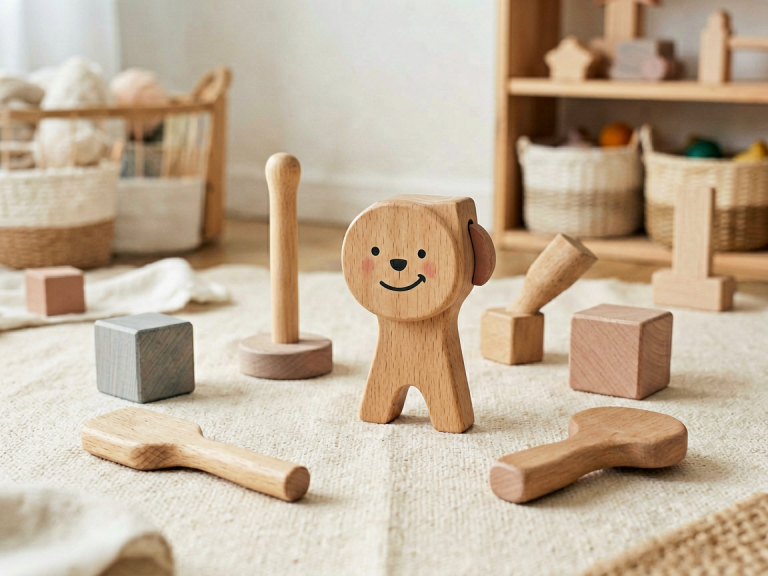
Classic wooden unit blocks—plain, unpainted cubes and rectangles—allow children to practice steady hand placement and balance. The act of aligning a block on top of another without toppling it requires visual-spatial judgment and precise motor control. Magnetic tiles (like Magna-Tiles or Picasso Tiles) add the challenge of aligning magnetic edges; they also allow for creative vertical structures.
Interlocking building systems like Duplo (larger version of Lego) are perfect for developing finger strength. Children must push pieces together with enough force and pull them apart with controlled resistance. As kids progress to smaller Lego bricks (around age 4–5), they practice even finer pincer and palmar grips.
Nesting dolls and stacking rings on a cone require size discrimination and sequential placing—excellent for fine motor planning.
3. Art and Craft Toys
Art supplies are perhaps the most natural fine motor tools. Crayons broken in half force a child to use a tripod grip rather than a fist. Thick sidewalk chalk supports whole-hand grasping but also encourages shoulder and wrist control for large circular strokes. Finger paints and play dough provide sensory feedback that strengthens intrinsic hand muscles.
Safety scissors designed for children (blunt tips, spring-assisted) allow early cutting practice. Cutting along a straight line—or later, curved lines—develops hand separation and bilateral coordination (one hand holds paper, the other cuts). Hole punchers and staplers (child-sized) further build strength. Beading kits with larger wooden beads and elastic cord are fantastic for threading and patterning.
Sticker books where children peel small stickers from a sheet and place them precisely onto scenes improve finger isolation and control. Similarly, tweezer or tongs games—where kids use plastic tweezers to pick up pom-poms or small toys and transfer them to a container—directly strengthen the muscles used in handwriting.
4. Sensory and Tactile Toys
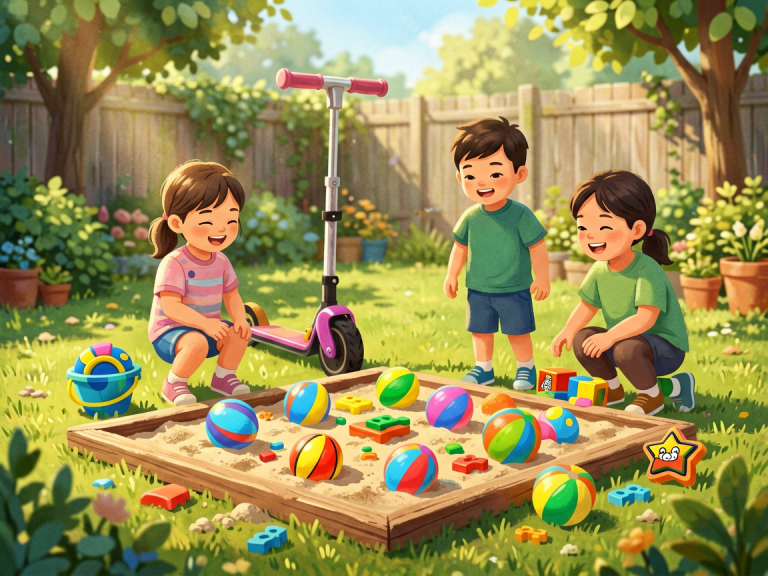
Toys that engage multiple senses often enhance motor learning. Sand tables and sensory bins filled with rice, beans, or kinetic sand invite scooping, pouring, pinching, and sifting. Water play with cups, funnels, and squeeze bottles works on grip strength and hand-eye coordination.
Textured balls or massage rings provide tactile stimulation that helps with body awareness and motor planning. Putty with varying resistances (soft to hard) can be pulled, stretched, pinched, and rolled—excellent for hand therapy.
Buttoning frames and zipper boards, often found in Montessori settings, are toy-like tools that teach practical life skills while requiring exact finger movements. Dressing dolls with buttons, snaps, and laces serve the same purpose in a pretend-play context.
5. Musical and Cause-and-Effect Toys
Musical instruments like maracas, tambourines, xylophones, and drums require grip, wrist rotation, and coordinated hitting. Simple keyboards with large keys or toy pianos encourage individual finger pressing. Rainsticks and shakers that need to be turned over promote wrist rotation.
Pop-up toys where a child presses, slides, or twists a button to make a character emerge teach cause and effect while demanding specific fine motor actions. Wind-up toys that need a turning key strengthen the wrist and finger coordination.
—
How to Choose the Right Toys
Selecting toys that build fine motor skills involves matching the toy’s demands to the child’s current abilities. A toy that is too easy offers no growth; one that is too hard leads to frustration.
- For infants (0–12 months): Focus on toys that encourage reaching, grasping, and transferring between hands. Soft blocks, rattles, teethers with different textures, and fabric crinkle books.
- For toddlers (12–36 months): Introduce stacking toys, shape sorters, large pegs, crayons, and play dough. Look for toys with thick handles and pieces too large to swallow.
- For preschoolers (3–5 years): Offer scissors, lacing beads, puzzles with 10–50 pieces, interlocking blocks, and beginner board games that require moving small tokens. Encourage drawing and early writing with short, chunky crayons.
- For school-age (5+): Smaller Legos, intricate craft kits, model building, knitting or sewing sets, and games like Operation or Pick-Up Sticks. Typing on a keyboard also refines fine motor control.
Always prioritize open-ended toys—those that can be used in multiple ways—over single-purpose gadgets. A set of wooden blocks can be stacked, sorted, knocked down, or used as pretend food. This versatility encourages creativity and repeated use.
—
The Role of Parents and Caregivers
Toys are tools, but they are most effective when paired with engaged adult interaction. A parent who sits alongside a toddler, naming colors while stacking rings, provides language modeling that reinforces cognitive connections. Praising effort rather than outcome ("I see you are working hard to put that bead on the string!") builds perseverance.
Resist the urge to "fix" mistakes. If a child struggles to thread a lace, offer a verbal hint ("Try turning the bead a little") rather than doing it for them. The struggle itself is where learning happens. Carefully observe to know when frustration becomes counterproductive, then gently scaffold by simplifying the task (e.g., using a larger bead).
Limit screen time, especially before age two. The American Academy of Pediatrics recommends no screen time except video calling for infants under 18 months. Real-world, hands-on manipulation cannot be replicated by any tablet app. Even "educational" apps that claim to teach fine motor skills are inferior because they lack tactile feedback and three-dimensional spatial challenges.
—
Conclusion
Toys that build fine motor skills are not mere entertainment—they are the gym equipment for a child’s growing hands and brain. From the first reflexive grasp to the confident strokes of a pencil, these playthings provide the repeated, varied practice that transforms clumsy fumbling into precise control. In a world that increasingly encourages passive consumption, choosing active, manipulative toys is a deliberate act of nurturing competence and confidence.
Parents, educators, and toy manufacturers share a responsibility to prioritize quality over novelty. A simple set of wooden blocks, a box of beads, or a lump of play dough can outperform the flashiest electronic gadget. The best toy is one that requires a child to do something with their hands—to pinch, pull, twist, stack, and create. In that doing, they build not only fine motor skills but also the foundational habits of concentration, problem-solving, and self-reliance that will serve them for a lifetime.
So next time you pick a gift for a young child, look beyond the colorful packaging. Ask: *Does this toy invite my child’s fingers to work? Does it challenge their grip, their coordination, their patience?* If the answer is yes, you have chosen wisely. You have given the gift of growth.
Start with the complete guide: Unlocking Dexterity: The Best Toys for Fine Motor Development in Early Childhood.