play based learning guide for parents
The Power of Play: A Comprehensive Guide for Parents on Play-Based Learning
Introduction: Why Play Matters More Than You Think
In a world increasingly obsessed with early academic achievement, many parents feel pressured to enroll their toddlers in phonics classes, buy flashcards, and push for early reading. Yet a growing body of research—from neuroscience to developmental psychology—confirms what children have always known: play is the most natural, powerful, and effective way to learn. Play-based learning is not about giving up on education; it is about embracing the child’s authentic drive to explore, experiment, and make sense of the world. This guide will walk you through what play-based learning really means, why it works, and how you can create a rich, playful learning environment at home—without turning your living room into a classroom.
—
What Is Play-Based Learning? (And What It Is Not)
Play-based learning is an educational approach that uses structured and unstructured play as the primary vehicle for cognitive, social, emotional, and physical development. In a play-based setting, children are active participants, not passive recipients of information. They ask questions, solve problems, negotiate roles, and build meaning through hands-on experiences.
Key characteristics:
- Child-led: The child chooses the activity, direction, and pace, while the adult acts as a facilitator, observer, and co-player.
- Intrinsically motivating: The child engages because it is fun, not because of external rewards or pressure.
- Process-oriented: The value lies in the journey—mixing paint colors, building a wobbly tower, pretending to be a doctor—not in a final product.
- Integrated learning: Math, literacy, science, social skills, and creativity happen naturally within a single play session. For example, a child setting up a pretend grocery store practices counting (math), reading labels (literacy), negotiating with a friend (social skills), and balancing items (fine motor control).
What it is NOT:
- Unsupervised free-for-all chaos (though some messy play is normal)
- A total rejection of academic skills (playful learning builds a strong foundation for later academics)
- A one-size-fits-all curriculum (each child’s play reflects their unique interests and developmental stage)
—
Why Play-Based Learning Works: The Science Behind the Fun
Neuroscience shows that play stimulates the brain’s executive functions—working memory, cognitive flexibility, and self-control—more effectively than direct instruction. When a child builds a fort with sofa cushions, they are planning, problem-solving, and adjusting their design in real time. That is executive function in action.
Brain development:
- Synaptic pruning: Playful, varied experiences strengthen neural connections that are essential for complex thinking. A child who engages in dramatic play (pretending to be a firefighter, a chef, a space explorer) activates language areas, emotional regulation centers, and higher-order reasoning circuits simultaneously.
- Stress reduction: Play lowers cortisol levels and increases dopamine, making the brain more receptive to learning. A relaxed, joyful child learns faster and retains more than one who is anxious or pressured.
Social and emotional benefits:
- Empathy and perspective-taking: Role-play forces children to imagine what it feels like to be someone else. This is the foundation of emotional intelligence.
- Conflict resolution: When two children both want to be the “driver” in a pretend car, they must negotiate, compromise, or invent new rules. These skills cannot be taught by a worksheet.
- Resilience: In play, failure is safe. A block tower collapses—try again. A paper boat sinks—redesign. Children learn that mistakes are stepping stones, not dead ends.
Academic readiness:
A longitudinal study by the LEGO Foundation and various universities found that children who experienced high-quality play-based preschools outperformed their peers in reading and math by age 8. Why? Because play builds the underlying cognitive structures—pattern recognition, cause-and-effect reasoning, symbolic thinking—that formal academic skills depend on.
—
How to Create a Play-Based Learning Environment at Home
You do not need expensive toys or a dedicated classroom. In fact, the most powerful play materials are often the simplest. Here is a practical, room-by-room guide.
The Living Room: The Open-Ended Zone
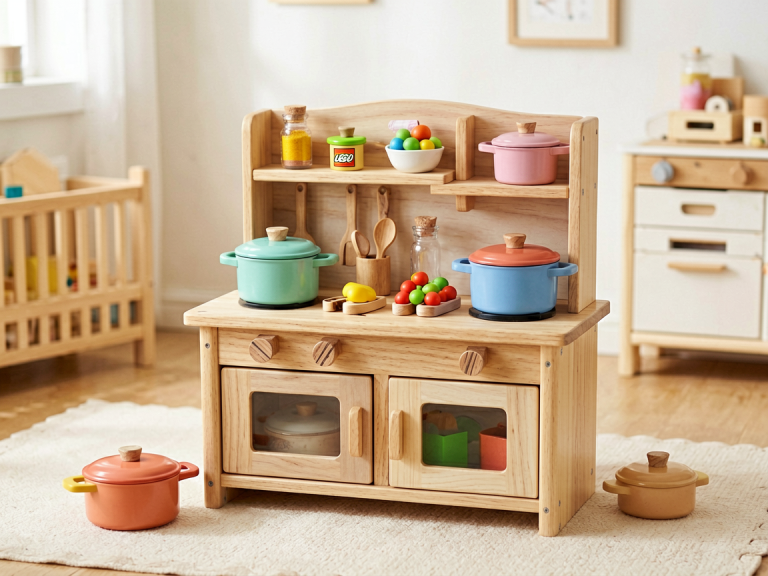
- Rotate toys: Keep only a few categories out at a time—blocks, dress-up clothes, art supplies, a small play kitchen. Rotate them every two weeks to renew interest.
- Include “loose parts”: Collect pinecones, bottle caps, fabric scraps, cardboard tubes, pebbles, and corks. These open-ended materials can become anything: bridges, crowns, counting stones, or ingredients for a magic potion.
- Create a “yes space”: Eliminate breakables and dangerous items from one corner. Let your child know that in this corner, they can build, knock down, jump, and paint without worrying about breaking rules.
The Kitchen: Sensory Learning Laboratory
- Measure and pour: Let your child help with cooking—scooping flour, measuring water, peeling soft fruits. They absorb fractions, volume, and fine motor skills without knowing it.
- Baking soda and vinegar: A simple tray with baking soda, vinegar tinted with food coloring, and droppers offers endless fascination with chemical reactions.
- Sorting and categorizing: While unpacking groceries, ask your child to sort items by color, size, or food group. “All the round fruits go here—can you find the red ones?”
The Bedroom: Quiet Play and Story Worlds
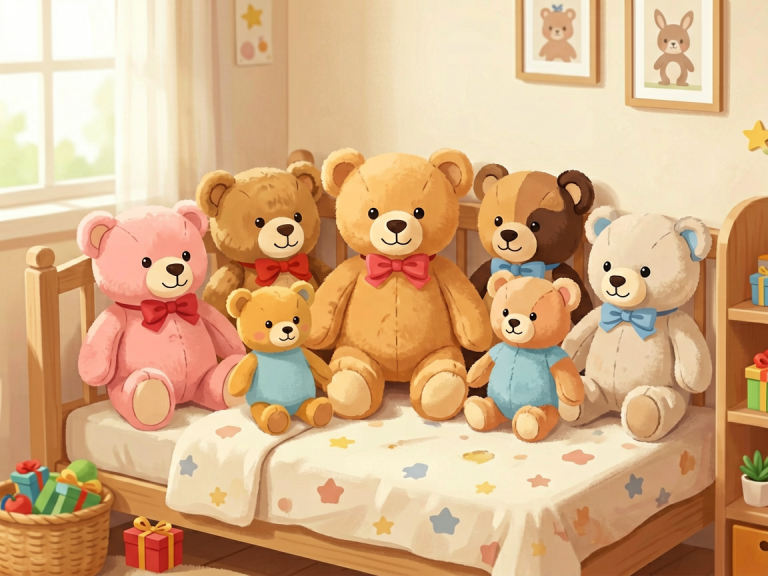
- A basket of books: Include both fiction and nonfiction. Put them at child’s eye level and let them “read” aloud to their stuffed animals.
- Shadow puppets and flashlights: Turn off the lights and use hands or cutouts to tell stories on the wall. This builds narrative skills and imagination.
- A small tent or blanket fort: A dedicated “cozy corner” gives children a space to retreat, regulate emotions, or engage in solitary pretend play.
Outdoors: The Ultimate Classroom
- Nature scavenger hunts: Create a list of things to find (a leaf with three points, a smooth stone, something that makes a sound). This teaches observation and classification.
- Mud kitchens: A few old pots, water, and dirt can keep a child absorbed for hours, building creativity and scientific thinking.
- Climbing, running, balancing: Physical play strengthens core muscles, coordination, and spatial awareness—all essential for later handwriting and sports.
—
Age-Specific Strategies: From Toddler to School-Age
Ages 1–3: Sensory and Exploratory Play
At this stage, children learn through their senses and through repetition. They want to dump, fill, stack, and mouth objects.
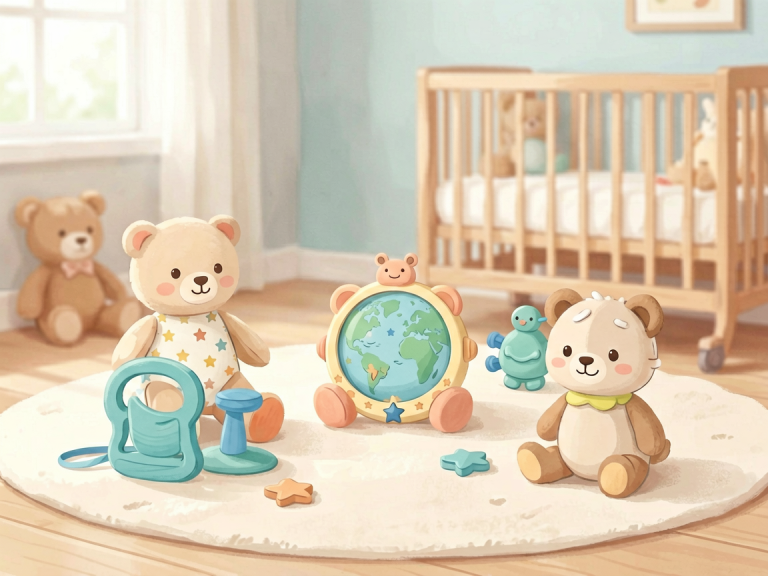
- What to offer: Large wooden blocks, push-pull toys, nesting cups, texture books, water play, and simple puzzles with knobs.
- Your role: Be a calm observer and gentle guide. Narrate what they are doing (“You put the red block on top—it wobbles!”) without directing them. Safety-proof every space; toddlers will explore everything.
Ages 3–5: Symbolic and Dramatic Play
Preschoolers love make-believe. Their play becomes more complex, with narratives and rules.
- What to offer: Dress-up costumes (no need to buy expensive sets—old scarves, hats, and bags work), a toy doctor kit, puppets, play dough with tools, and simple board games (matching, turn-taking).
- Your role: Join in when invited—but let your child lead. Ask open-ended questions: “I wonder what happens next?” or “What does the patient need now?” Avoid correcting their “wrong” ideas. If they say a cow says “moo” and a dog says “bow-wow,” that is their schema; they will refine it over time.
Ages 5–8: Rule-Based and Construction Play
School-age children begin to enjoy games with rules, complex building, and projects that require planning.
- What to offer: LEGO or similar building sets, craft supplies (glue, scissors, recycled materials), strategy board games (checkers, memory), simple science kits, and writing/drawing materials for creating “books.”
- Your role: Help them set up projects and then step back. Support them in handling frustration—when a LEGO structure keeps falling, resist the urge to fix it. Instead, ask: “What part do you think is weak? What could you change?” Encourage them to read instructions or diagrams to build more complex models.
—
Common Pitfalls and How to Avoid Them
Pitfall 1: Over-scheduling play time
Too many structured activities—music class, soccer, art camp, playdates—can actually undermine self-directed play. Children need unscheduled, uninterrupted blocks of time (at least 45–60 minutes) to dive deep into their own worlds.
Pitfall 2: Intervening too quickly
When a child struggles—with a puzzle piece that does not fit or a friend who will not share—parents often jump in to solve the problem. Let them struggle safely. That struggle is where learning happens.
Pitfall 3: Mistaking “academic” toys for play
Electronic toys that flash colors and say “A is for apple” are often passive devices that steal the child’s role as an active learner. The best toys are those that do 90% of the work and the child does 90% of the work—like a cardboard box, a set of blocks, or a jar of buttons.
Pitfall 4: Feeling guilty about mess
Play is messy. Paint spills, rice scatters, pillows get rearranged. Designate one area of your home where mess is welcomed, and involve your child in clean-up as part of the play. A clean-up song or a timer can turn tidying into a game.
—
The Parent’s New Mindset: From Teacher to Play Partner
Ultimately, the most important shift for parents is internal. You do not need to be a curriculum designer or a Pinterest-perfect activity planner. You need to be present, curious, and joyful.
- Observe before you act: Watch what your child chooses. That interest—in trains, caterpillars, or princesses—is their personal learning gateway.
- Ask, don’t tell: Instead of saying “That’s a triangle,” ask “What shape is that building’s roof?” Instead of “Count these,” ask “How many cups do we need for the tea party?”
- Embrace boredom: Boredom is not a problem to solve; it is a gift. It forces a child to dig into their own imagination. If your child says “I’m bored,” resist the urge to offer a screen or a scheduled activity. Let them sit with it. Soon, they will invent something.
A final note: Play-based learning is not about ignoring the demands of the modern world. Children will still learn to read, write, and do arithmetic—but they will do it on a foundation of curiosity, resilience, and joy. And that foundation lasts a lifetime.
So take a deep breath. Put down the flashcards. Pick up a cardboard box. Sit on the floor. And play.
—
*Word count: approximately 1,380 words (including headings)*