Navigating the Best Toy Path for 5-Year-Olds: A Developmental Guide to Playful Learning
Introduction: Why a “Toy Path” Matters for a Five-Year-Old
The age of five is a magical crossroads in early childhood. Children at this stage have left behind the simplicity of toddlerhood and are sprinting toward the cognitive, social, and physical challenges of kindergarten and beyond. Their curiosity is boundless, their language is blossoming, and their imaginative worlds are richer than ever. For parents, caregivers, and educators, selecting toys is no longer just about keeping a child entertained; it is about intentionally charting a “toy path” that nurtures specific developmental milestones. A well-chosen toy path for a 5-year-old should balance structured learning with open-ended creativity, encourage both independent play and social cooperation, and challenge fine and gross motor skills without causing frustration. This article explores the key developmental domains of a five-year-old, identifies the most effective categories of toys, and outlines a coherent path that leads from simple exploration to more complex skill-building. By understanding the “why” behind each toy choice, adults can transform playtime into a powerful engine for growth.
Understanding the 5-Year-Old Mind: Cognitive and Emotional Milestones
Before selecting any toy, it is essential to appreciate what is happening inside a five-year-old’s brain. At this age, children are moving from preoperational thinking toward more logical, concrete reasoning—though they still rely heavily on imagination. They can follow multi-step instructions, understand basic cause and effect, and engage in pretend play with complex storylines. Emotionally, they are learning to manage impulses, take turns, and express feelings with words rather than tantrums. Socially, peer relationships become increasingly important, and cooperative play (building a fort together, acting out a shared scenario) replaces the parallel play of earlier years. Therefore, the best toys for a 5-year-old are those that support these emerging abilities: toys that require planning, encourage narrative thinking, promote turn-taking, and offer a safe space for practicing emotional regulation. A simple set of wooden blocks, for instance, does far more than occupy hands—it teaches geometry, patience, and collaboration when used with a friend.
Category 1: Open-Ended Construction and Manipulative Toys
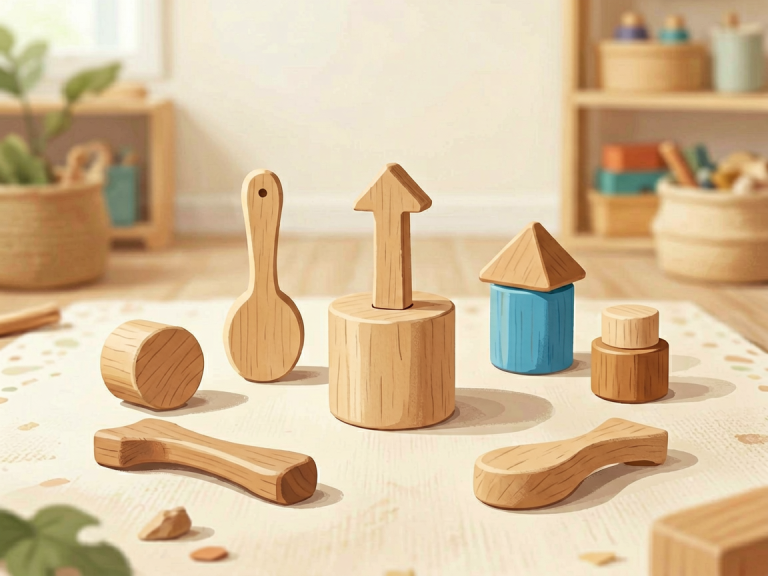
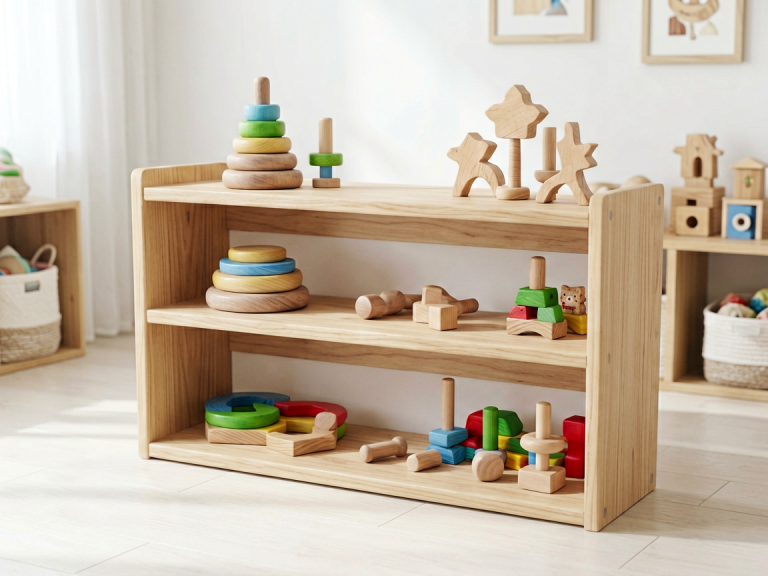
One of the most powerful categories on the best toy path for 5-year-olds is open-ended construction. Unlike single-purpose toys (a talking robot that only does one thing), construction toys invite endless possibilities. Magnetic tiles, wooden unit blocks, LEGO Duplo or standard LEGO (with supervision for smaller pieces), and interlocking plastic gears allow children to build towers, bridges, spaceships, or entire cities. Why are these essential? Because they strengthen spatial reasoning, problem-solving, and fine motor control. A five-year-old who tries to balance a block on a curved surface learns physics intuitively. Moreover, construction play naturally lends itself to social scenarios: two children can negotiate roles, share resources, and co-create a structure, which builds communication and conflict-resolution skills. For a child who prefers more structured challenges, pegboards with patterns or simple engineering kits (like a marble run) offer a perfect bridge between creativity and logic. The key is to avoid overpriced electronic construction sets that limit creativity; the best path stays rooted in manual, tactile exploration.
Category 2: Pretend Play and Role-Playing Sets
Imagination is the engine of early childhood learning, and pretend-play toys fuel that engine. For a 5-year-old, dress-up costumes (doctor, firefighter, chef, astronaut), play kitchens, tool benches, cash registers, and puppet theaters are invaluable. These toys do not just entertain—they help children process real-world experiences, practice language, and explore social roles. When a child pretends to be a veterinarian caring for a stuffed animal, they are practicing empathy, sequencing (first check the animal, then give medicine, then comfort it), and narrative language. Role-playing also allows children to act out scenarios that might be anxiety-provoking, like a visit to the doctor, thereby building emotional resilience. To maximize the developmental benefit, choose role-play sets that are realistic enough to spark imagination but not so detailed that they prescribe a single story. A simple wooden doctor’s kit with a stethoscope, syringe, and bandages leaves more room for creativity than an electronic toy that beeps and flashes. Adding a few open-ended props (a scarf that becomes a cape, a cardboard box that becomes a spaceship) further enriches the play.
Category 3: Games with Rules—Board Games and Card Games
By age five, most children can understand and follow simple rules, making board games and card games a fantastic addition to the toy path. Games like *Candy Land*, *Chutes and Ladders*, *Hi Ho! Cherry-O*, or *Spot It!* teach turn-taking, patience, counting, color recognition, and the ability to handle winning and losing gracefully. More cooperative games (like *Hoot Owl Hoot!* or *Peaceable Kingdom’s* series) are especially valuable because they require children to work together toward a common goal, reducing the sting of defeat and emphasizing teamwork. Card games such as *Go Fish* or *Memory* strengthen memory and matching skills. The social-emotional benefits of game play cannot be overstated: a child learns to wait for their turn, to congratulate a winner, to cope with disappointment without meltdowns—skills that are critical for kindergarten and life. For best results, start with games that have very short playtimes (10–15 minutes) and gradually introduce more complex game mechanics as attention spans grow.
Category 4: Creative Arts and Fine Motor Skill Builders
A well-rounded toy path must include outlets for creative expression. At five, children’s fine motor control has improved enough to handle scissors, glue, crayons, markers, and simple sewing kits (with supervision). Art supplies like washable paints, play dough, clay, craft paper, and stamp sets allow children to create two- and three-dimensional representations of their ideas. Beyond the obvious benefit of hand-eye coordination, art promotes emotional expression—a child who is angry might paint a storm, while a happy child might create a rainbow. Additionally, threading beads, lacing cards, and using tweezers to pick up small objects (like in a “busy bag”) directly strengthen the small muscles needed for writing. For a 5-year-old who is learning to form letters, a set of letter stamps or a magnetic drawing board can make practice feel like play. The best toy path does not separate “learning” from “playing”; instead, it integrates literacy and numeracy into creative activities. For example, a simple set of alphabet beads can be used for both fine motor stringing and spelling simple words.
Category 5: Physical Play and Gross Motor Equipment
Finally, no toy path is complete without opportunities for large muscle movement. Five-year-olds have abundant energy and need to run, jump, climb, balance, and throw. Outdoor toys like tricycles, scooters, jump ropes, balls of various sizes, and a small climbing dome or slide are excellent. Indoors, a balance board, a small trampoline with a safety handle, or a set of beanbags for tossing into targets can keep gross motor skills sharp. Why does this matter for the overall “toy path”? Physical activity boosts brain function—increased blood flow improves attention, memory, and mood. Furthermore, mastering a physical skill (like catching a ball or riding a bike) builds self-confidence and perseverance. For a 5-year-old, look for toys that challenge balance and coordination without being dangerous. A Hula-Hoop, for instance, is simple yet develops core strength and rhythm. Structured games like *Simon Says* or follow-the-leader also incorporate movement and listening skills.
Charting the Best Path: A Sample Weekly Toy Rotation
To put theory into practice, here is a suggested weekly toy path that balances all the above categories. Keep in mind that children do not need unlimited toys—they need thoughtful variety and the freedom to choose.
- Monday (Construction Focus): Magnetic tiles + picture cards with simple building challenges (e.g., “build a bridge wide enough for a toy car”).
- Tuesday (Pretend Play): Doctor’s kit + stuffed animals. Encourage the child to give a full checkup and write a “prescription” (scribbled notes for literacy practice).
- Wednesday (Game Day): A cooperative board game like *Hoot Owl Hoot!* Play with a sibling or parent. Discuss feelings about winning and losing.
- Thursday (Creative Arts): Play dough + cookie cutters + googly eyes. Let the child create a “monster family” and tell a story about each one.
- Friday (Physical Play): Obstacle course using pillows, a balance beam (tape on the floor), and a beanbag toss. Time the child and let them try to beat their own record.
- Weekend (Free Choice): Allow the child to pick any toy from the past week, or introduce a new open-ended item like a large cardboard box. Often, the simplest toy creates the richest play.
This rotation ensures that all developmental areas—cognitive, social, emotional, fine motor, and gross motor—are addressed throughout the week. It also prevents boredom by changing the context, while still providing the deep engagement that comes from repeated exposure to the same types of toys.
Conclusion: The Toy Path Is a Journey, Not a Destination
The best toy path for 5-year-olds is not a rigid checklist but a flexible guide that respects the child’s unique interests and pace. It prioritizes open-endedness over electronic bells and whistles, social interaction over solitary screen time, and skill-building over passive consumption. By selecting toys that match developmental milestones and rotating them intentionally, adults can create a rich play environment that prepares children for kindergarten and instills a lifelong love of learning. Remember: the most powerful toy in a child’s life is not found in a store—it is the attentive adult who plays alongside them, asks questions, and celebrates their discoveries. With the right toy path, every day becomes an adventure in growth.