Building Imaginations: How Toys Support Creativity Development in Children
—
Introduction
Creativity is not a luxury; it is a fundamental human capacity that drives innovation, problem-solving, and emotional expression. For children, the seeds of creativity are planted through play—specifically, through the thoughtful use of toys. Toys are far more than simple distractions; they are the tools with which children build mental models, experiment with possibilities, and learn to think outside the box. Understanding how toys support creativity development is essential for parents, educators, and toy designers who wish to nurture the next generation of original thinkers. This article explores the multifaceted relationship between toys and creativity, examining the psychological mechanisms, the types of toys that most effectively foster divergent thinking, and the practical implications for play environments.
—
The Open-Ended Play Paradigm: Why Structure Can Stifle Creativity
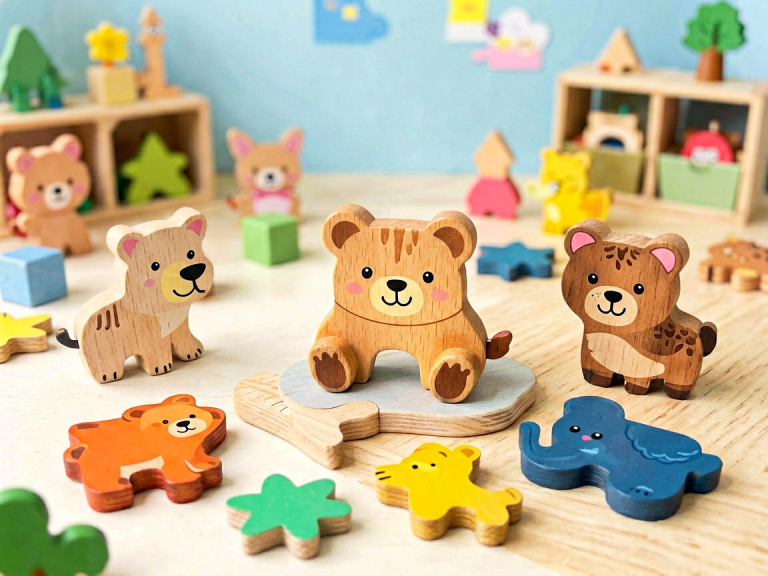
At the heart of creativity lies the ability to generate novel and useful ideas. Toys that are open-ended—those with no predetermined outcome or single correct way to use them—are the most powerful catalysts for this kind of thinking. A set of wooden blocks, for example, can become a castle, a spaceship, a bridge, or a dragon’s lair, depending on the child’s imagination. This lack of fixed purpose invites what psychologists call *divergent thinking*: the capacity to generate multiple solutions to a single problem. When a child stacks blocks in an unstable tower and watches it tumble, they are not simply making a mess; they are testing hypotheses about balance, gravity, and structural integrity. Each failure is a creative opportunity to redesign.
Conversely, toys that are overly prescriptive—such as electronic devices that beep when the “correct” button is pressed—tend to channel children toward convergent thinking, where only one answer is acceptable. While convergent thinking has its place, an over-reliance on it can inhibit the free exploration essential for creative development. Therefore, the most creativity-friendly toys are those that say, “What will you do with me?” rather than “Do this one thing.”
—
Construction Toys: Engineering the Imagination
Construction toys deserve a special spotlight because they combine spatial reasoning, logical planning, and artistic expression. Classic examples include interlocking blocks (LEGO, Mega Bloks), magnetic tiles, and modular systems like K’NEX or Tinkertoys. These toys require children to visualize a final product, break it down into components, and then assemble those components in a sequence that often requires iterative revision.
Research in developmental psychology shows that construction play activates the prefrontal cortex, the brain region associated with executive functions like planning and cognitive flexibility. When a child tries to build a bridge that can hold a toy car, they must adjust their design in real time, trying different supports and angles. This process of trial and error is essentially the scientific method in miniature: hypothesize, test, observe, revise. Moreover, construction toys allow for *transformational* creativity—the ability to change an object into something entirely different. A LEGO car can be quickly dismantled and turned into a robot, teaching children that materials are malleable and that ideas can be reshaped.
The social dimension of construction play also boosts creativity. When two or more children collaborate on a build, they must negotiate, share ideas, and combine their visions. This collaborative creativity is a skill that will serve them well in adulthood, whether in team-based work environments or community projects.
—
Imaginative and Role-Playing Toys: Worlds Without Limits
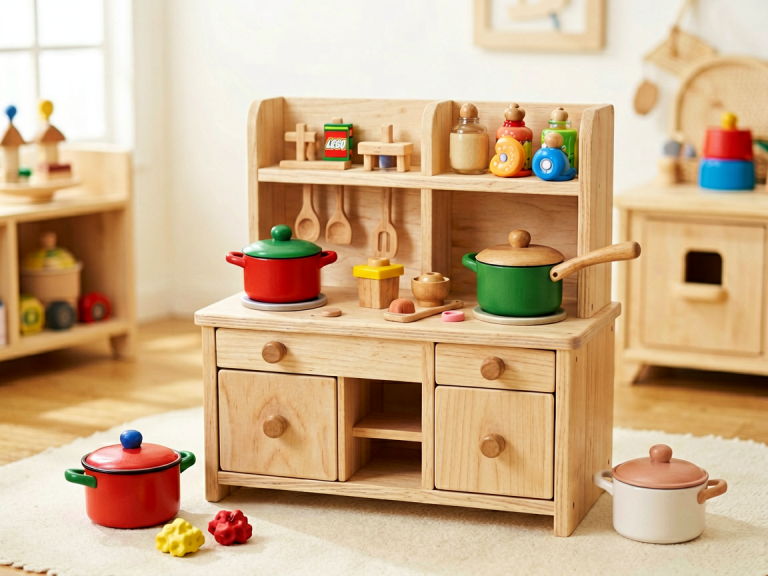
Dolls, action figures, puppet theatres, kitchen sets, doctor kits, and costumes are the tools of dramatic play. Through role-playing, children step into the shoes of others—a firefighter, a parent, a superhero, or a veterinarian—and in doing so, they practice empathy, narrative construction, and abstract thinking.
Why is role-play so crucial for creativity? Because it requires children to invent entire scenarios from scratch. A child holding a toy stethoscope does not just listen to a stuffed animal’s heart; they imagine a story: “Mr. Bear has a cold, and he needs medicine. I will give him a shot, and then he will feel better.” This narrative weaving demands the integration of memory (remembering a visit to the doctor), emotion (caring for the bear), and invention (creating the dialogue and sequence).
Furthermore, role-playing toys help children navigate the boundary between reality and fantasy—a skill that underpins creative thinking. They learn that it is permissible to pretend, to bend the rules of the physical world. A cardboard box can be a rocket ship; a stick can be a magic wand. This symbolic play is a precursor to the abstract thinking that adults use when they metaphorically “think outside the box.”
Importantly, unstructured role-play is more creativity-enhancing than scripted play. Toys that dictate a specific story—such as a doll that says pre-recorded phrases—limit the child’s narrative freedom. The best role-playing toys are simple, silent, and rich with potential: a set of felt animals, a few scarves, a collection of empty containers.
—
Art and Craft Supplies: The Raw Materials of Visual Creativity
Creativity is often most visible in the arts, and toys that provide art materials—crayons, clay, finger paints, collage kits, beads, yarn—are direct invitations to create. Unlike construction toys, which often have a structural logic, art supplies allow for pure, unrestricted expression. A child mixing blue and yellow paint to make green is discovering color theory by doing. A child rolling a lump of clay into a snake and then squashing it flat is exploring texture and form.
What makes art toys particularly powerful is their capacity to tolerate *mistakes*. In drawing, a line that goes “wrong” can be incorporated into a new shape—a cloud, a monster, a mountain. This flexibility teaches children that there is no single right answer, only different possibilities. Over time, children become comfortable with ambiguity, a trait strongly correlated with creative achievement.
Additionally, open-ended art materials encourage *process-oriented* play rather than product-oriented play. A child who spends an hour cutting, gluing, and layering scraps of paper is not necessarily aiming for a recognizable picture; they are experimenting with composition, balance, and texture. That experimentation is creativity in its rawest form.
Modern craft kits that promise a specific final product (e.g., “make a unicorn mosaic”) can still support creativity, but only if the child is allowed to deviate from the instructions. The most creativity-friendly art toys are those that offer a palette of possibilities rather than a paint-by-number template.
—
Puzzles and Problem-Solving Toys: The Logic of Creativity
It might seem paradoxical to link puzzles—which often have a single correct solution—with creativity. But the relationship is nuanced. Puzzles like tangrams, Rubik’s cubes, and logic-based board games (e.g., Rush Hour, Gravity Maze) develop *spatial creativity* and *systematic thinking*. When a child attempts to fit a set of geometric shapes into a frame, they must mentally rotate the pieces, try multiple configurations, and learn from each failure. This process of mental manipulation is a form of creative problem-solving.
Moreover, many puzzles allow for multiple pathways to a solution. A child solving a maze might discover a new route that is not the intended one; a child assembling a large jigsaw puzzle may group pieces by color or shape in a novel way. These strategies are creative because they involve rethinking conventional approaches.
The key is that puzzles should challenge without frustrating. When a puzzle is too easy, it offers no opportunity for creative growth; when it is too hard, it can shut down exploration. The “Goldilocks” zone—where the challenge is just above the child’s current skill level—encourages persistence, adaptive thinking, and the joy of discovery.
—
Digital Toys and Coding Kits: Creativity in the Virtual Realm
In the 21st century, toys have crossed into the digital domain with incredible speed. Programmable robots (like Sphero or LEGO Mindstorms), coding apps (Scratch, Tynker), and open-ended digital games (Minecraft’s Creative mode) are powerful tools for fostering computational creativity. These toys allow children to create their own digital worlds, design algorithms, and see immediate feedback.
Coding a character to dance, for instance, involves sequential logic, pattern recognition, and debugging—all of which are creative acts. Unlike passive screen time (e.g., watching a video), active digital play requires the child to be the author, not just the audience. The most effective digital toys are those that give children control over rules, characters, and environments, rather than locking them into a linear story.
However, it is important to balance digital play with physical play. Screens can narrow sensory experiences and reduce the rich tactile feedback that clay or wooden blocks provide. The ideal approach is to see digital toys as one tool in a broader creative toolkit.
—
Social Interaction Through Toys: Collective Creativity
Creativity is often portrayed as a solitary act, but many of the most creative innovations in history have been collaborative. Toys that require social interaction—like board games, cooperative building sets, or large-scale art projects—teach children to combine their ideas. When a group of children decides to build a fort using pillows and chairs, they must communicate, compromise, and build upon each other’s suggestions. This is the essence of *team creativity*.
Even simple toys like a ball can spark creative social play. Children invent games, negotiate rules, and improvise when the game breaks down. The unpredictability of other players forces children to think on their feet, adapt, and propose novel solutions.
—
The Role of Parents and Educators: Curating the Creative Toy Box
Toys alone do not guarantee creativity; the environment in which they are used matters immensely. Children need time for uninterrupted play, a space that is safe for mess and experimentation, and adults who encourage rather than direct. A parent who says, “What if you turned that block tower into a castle?” is helping a child expand their creative horizon. A parent who says, “That’s not how you build a tower” is shutting down exploration.
Similarly, toy rotation—periodically swapping out toys to keep the environment fresh—can stimulate new ideas. A child who has not seen their wooden train set in a month may approach it with fresh eyes and a new story.
—
Conclusion
Toys are not mere entertainment; they are the raw materials of childhood imagination. From the humble building block to the sophisticated coding robot, each type of toy offers a unique avenue for creative development. Open-ended toys encourage divergent thinking; construction toys build spatial and logical creativity; role-playing toys nurture narrative and emotional imagination; art supplies provide unrestricted visual expression; puzzles sharpen adaptive problem-solving; digital toys introduce computational creativity; and social toys teach collaborative innovation.
The key lesson for parents, educators, and toy manufacturers is simple: the best toys are those that ask questions instead of giving answers. They are the ones that whisper, “What will you create today?” By carefully selecting and curating toys that foster exploration, failure, and invention, we give children the greatest gift of all—the confidence and skill to imagine a world that does not yet exist, and then bring it to life.