Beyond Play: How Toys Unlock the Pathways of Language Development
Introduction
Language is the bedrock of human connection, and its foundations are laid long before a child speaks their first word. While many parents and educators instinctively sense that play is crucial for learning, the specific mechanisms through which toys support language development are often overlooked. Far from being mere distractions, well-designed toys act as scaffolds for linguistic growth, offering children a safe, engaging environment to experiment with sounds, words, and sentences. From a rattle that triggers a baby’s coos to a board game that teaches turn-taking and negotiation, toys are powerful catalysts that shape how children acquire, practice, and refine language. This article explores the multifaceted ways in which toys support language development, drawing on research in developmental psychology, linguistics, and early childhood education. By understanding these connections, caregivers can make more informed choices about the playthings they offer—and, in doing so, become active partners in their child’s linguistic journey.
—
1. Vocabulary Expansion Through Thematic and Labeled Toys
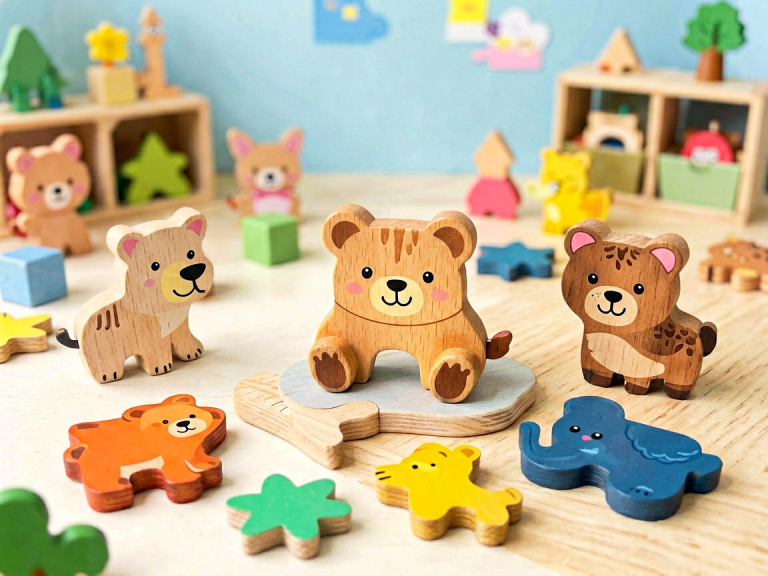
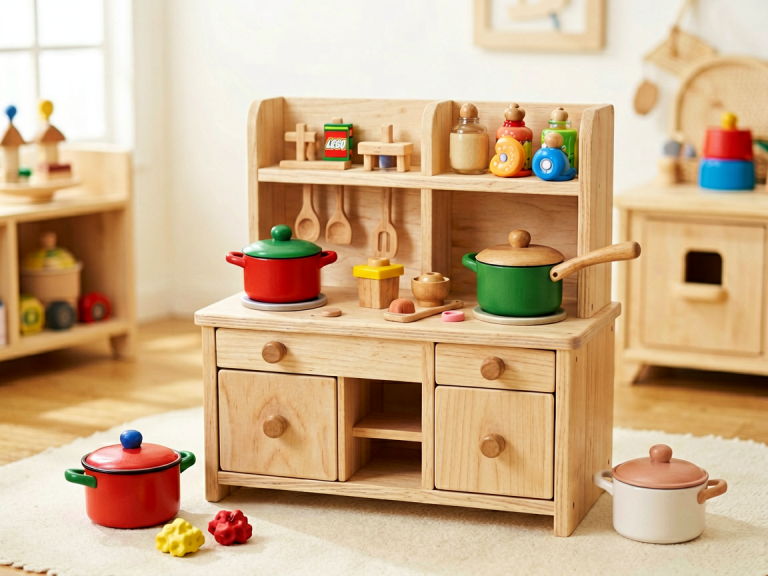
One of the most direct ways toys support language development is by expanding a child’s vocabulary. Toys that are designed around specific themes—such as a farm set with animals, a kitchen playset, or a construction tool kit—provide a contextualized “word bank” that children can explore. When a toddler picks up a plastic cow and hears an adult say, “This is a cow. The cow says ‘moo,’” they are not only learning the noun “cow” but also connecting it to a sound and a visual representation. This multisensory mapping is far more effective than simply showing a flashcard.
Moreover, labeled toys—like puzzle pieces with pictures and words, or interactive books with tactile buttons that speak the name of an object—reinforce the link between spoken and written language. According to a study published in *Child Development*, children who played with thematic toy sets (e.g., a doctor’s kit) over several weeks demonstrated a 30% greater increase in relevant vocabulary compared to children who engaged in free play without props. The reason is simple: toys provide a clear referent. A child can touch, manipulate, and revisit the same object while hearing its name repeatedly, strengthening neural pathways for word retention.
Even everyday toys like shape sorters or stacking cups contribute to vocabulary growth by introducing concepts of size, color, and spatial relationships (“big,” “small,” “under,” “on top”). Caregivers who narrate play (“Look, the red circle goes into the square hole!”) turn these simple activities into rich language lessons. Over time, children internalize these words and begin to use them spontaneously.
—
2. Developing Sentence Structure Through Narrative and Role-Play
Vocabulary alone does not make a language; children must learn how to combine words into meaningful sequences. Toys that encourage narrative play—dolls, action figures, puppets, or any item that can become a character—are instrumental in this process. When a child makes a doll “talk” to another doll, they are practicing syntax, verb tense, and dialogue construction. For instance, a four-year-old playing with a toy ambulance might say, “The doctor is going to fix the teddy bear because he fell down.” This utterance demonstrates a subject-verb-object structure, the use of the present progressive tense (“is going”), and a causal conjunction (“because”).
Role-play toys, such as a cash register, a phone, or a dress-up costume, create scenarios that mimic real-life conversations. A child pretending to order food at a toy restaurant must formulate questions (“Can I have a burger, please?”), respond to prompts (“Would you like fries with that?”), and negotiate meaning. These interactions require them to organize their thoughts into coherent sequences, thereby strengthening their syntactic abilities.
Importantly, narrative play also fosters *decontextualized language*—the ability to talk about things that are not present in the immediate environment. A child who recounts a story their toy dinosaur “had” on a “volcano adventure” is learning to use past tense, descriptive adjectives, and complex sentence structures. This skill is a strong predictor of later literacy success, as decontextualized language forms the basis of reading comprehension and storytelling.
—
3. Conversation and Turn-Taking with Social and Cooperative Toys
Language is inherently social, and toys that require two or more players to interact directly support the development of conversational skills. Board games, card games, and cooperative building activities (like constructing a tower together) teach children the rhythm of dialogue: how to listen, wait for one’s turn, and respond appropriately. A simple game like “I Spy” with a themed set of toys (“I spy with my little eye something that is blue and makes a ringing sound”) demands that children attend to verbal clues, process language, and formulate replies.
More advanced toys, such as puppets used in group settings or walkie-talkies, encourage children to modulate their tone, volume, and clarity to be understood. Research in early childhood education indicates that children who frequently engage in cooperative toy play score higher on measures of pragmatic language—the social rules of communication, such as greeting, requesting, and apologizing. For example, two children playing with a set of toy trains must negotiate who gets the red engine, how to share the tracks, and what to do when a crash occurs. These negotiations are miniature linguistic exercises in persuasion, compromise, and joint attention.
Furthermore, toys that mimic communication devices—such as a play telephone or a microphone—allow children to practice the back-and-forth flow of a conversation without the pressure of a real adult listener. A child can hold a pretend conversation with a toy, experimenting with different tones and phrases. This low-stakes practice builds confidence and fluency, which later translates into more natural, spontaneous interactions with peers and adults.
—
4. Phonological Awareness via Musical and Sound-Based Toys
Before children can read, they must develop phonological awareness—the ability to recognize and manipulate the sounds of spoken language. Toys that emphasize rhythm, rhyme, and sound patterns play a critical role here. Musical instruments like drums, shakers, and xylophones help children distinguish between different pitches, volumes, and tempos, which are auditory skills that underlie phoneme discrimination. A child who learns to tap a drum in time with syllables (“ta-ble,” “ap-ple”) is building the auditory foundation for segmenting words into sounds.
Sound-producing toys—such as toys that recite nursery rhymes, alphabet songs, or animal sounds—expose children to repetitive phonetic patterns. When a child presses a button and hears “B is for ball, bounce, bounce,” they are hearing alliteration and rhythm. Over time, this exposure helps them detect similar sound patterns in speech, a skill directly linked to early reading ability.
Even simple toys like rattles or crinkle books stimulate auditory feedback loops: a baby shakes a rattle and hears a sound, then shakes it again to produce the same sound. This cause-and-effect relationship teaches them that their actions can generate specific auditory outcomes, which encourages vocal experimentation. As they grow, toys that require them to produce a sound (e.g., a talking doll that only responds when a child says a specific word) motivate precise pronunciation and listening.
—
5. Caregiver-Mediated Language: The Adult as the Bridge
No toy can replace the role of a responsive adult. In fact, the most significant language-supporting feature of any toy is not its price tag or electronic features, but the quality of interaction it inspires between child and caregiver. When an adult sits on the floor with a child and a set of blocks, the language that flows naturally—describing colors, asking questions, offering suggestions—turns those blocks into a linguistic treasure chest.
Research consistently shows that “serve and return” interactions—where a child’s gesture or babble is met with a verbal response from an adult—are the single most powerful driver of early language development. Toys that encourage joint attention, such as a picture book with flaps to lift or a puzzle with large pieces, make it easier for adults to follow the child’s focus and expand on their utterances. For example, if a child points to a toy car and says “car go,” the adult can model a more complete form: “Yes, the red car is going very fast! Where do you think it is going?” This process, known as *expansion*, exposes children to more complex grammar and vocabulary than they could produce alone.
Electronic toys that speak or produce sounds can be useful, but studies caution that passive listening—where a toy does all the talking—is far less effective than live interaction. The best toys are those that act as props for conversation, not replacements for it. A simple wooden train set, when paired with an engaged adult, will always outperform a flashy electronic tablet in promoting language growth.
—
Conclusion
Toys are not just entertainment; they are tools for building the architecture of language. From expanding vocabulary through thematic sets to fostering conversational skills via cooperative games, each type of toy offers unique opportunities for linguistic growth. The key lies in how they are used: toys that invite interaction, stimulate the senses, and encourage narrative and social play are the most powerful. Equally important is the role of caregivers, who can transform any plaything into a learning moment by narrating, questioning, and expanding on the child’s language.
As we choose toys for the children in our lives, we should look beyond the packaging and ask: Will this toy encourage a conversation? Does it offer opportunities for back-and-forth dialogue? Can it be used to tell a story? If the answer is yes, then that toy is doing far more than filling a playroom—it is building a foundation for a lifetime of communication. In the end, the best gift we can give a child is not a toy alone, but the language-rich relationship that the toy helps to cultivate.
*(Word count: approximately 1,050)*