Beyond Play: How Toys Cultivate Critical Thinking in the Digital Age
Introduction: The Forgotten Power of Play
In an era dominated by screens, algorithms, and instant gratification, the concept of “critical thinking” has never been more urgent—or more misunderstood. Parents and educators scramble for apps, workbooks, and online courses that promise to sharpen young minds, yet often overlook the humble toy box. Ironically, some of the most profound cognitive development happens not through structured lessons, but through the seemingly chaotic, messy, and joyful act of play. Toys designed specifically to build critical thinking are not just entertainment; they are mental gymnasiums where children learn to question, analyze, hypothesize, and solve problems. This article explores the fascinating intersection of play and cognition, examining both classic and contemporary toys that transform play into a powerful engine for intellectual growth. From wooden blocks to programmable robots, these tools teach children how to think, not what to think—a distinction that becomes increasingly vital in a world overflowing with information but starving for wisdom.
The Anatomy of Critical Thinking: What Are We Building?
Before diving into specific toys, it is essential to define what “critical thinking” means in the context of childhood development. Critical thinking is not mere logic or memorization; it is a complex interplay of skills: observation, questioning, reasoning, evaluating evidence, making connections, and adapting strategies when faced with failure. A toy that builds critical thinking encourages children to experiment with multiple solutions, reflect on their choices, and refine their approaches based on feedback. For example, a simple jigsaw puzzle requires spatial reasoning, pattern recognition, and iterative trial-and-error. A more advanced construction set, like those with gears or pulleys, introduces cause-and-effect relationships and engineering principles. The best toys are those that provide immediate, concrete feedback without a single “correct” answer—they invite exploration, ambiguity, and creativity. Understanding these mechanisms helps parents select tools that nurture problem-solving rather than passive consumption.
Historical Pillars: Classic Toys That Defy Time
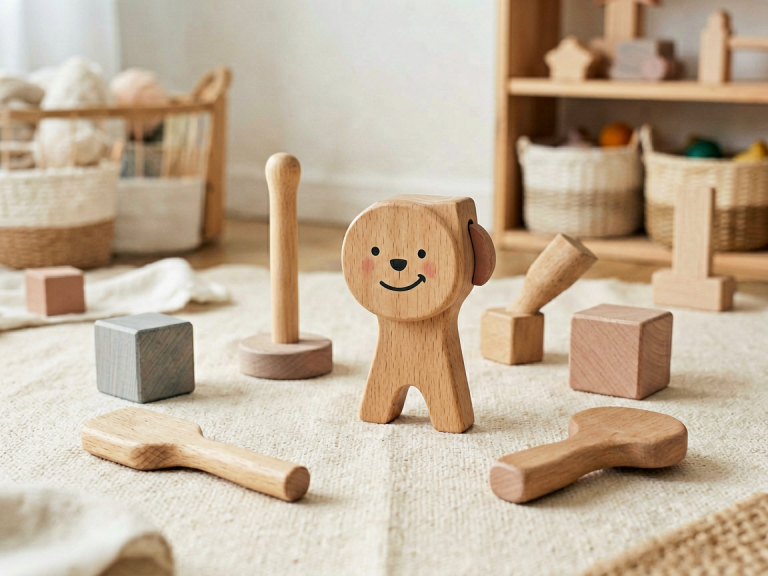
Some toys have demonstrated remarkable staying power precisely because they tap into fundamental cognitive processes. Building blocks, in their simplest form (wooden cubes, planks, or interlocking bricks), remain unparalleled for developing critical thinking. When a child stacks blocks and watches a tower wobble, they are conducting an informal physics experiment: testing weight distribution, balance, and stability. When blocks fall, they must analyze why—was the base too narrow? Did I place a heavy block on a weak point? This iterative process mirrors the scientific method. Similarly, board games like chess, checkers, or even modern games like *Settlers of Catan* require strategic planning, anticipation of opponents’ moves, and flexible thinking. Research from the University of Edinburgh found that children who regularly played strategy games performed better on tests of reasoning and problem-solving. The beauty of these classics is their simplicity: they strip away flashy graphics and rely entirely on the player’s intellect. They teach delayed gratification, patience, and the value of mental rehearsal—skills that are increasingly rare in an age of instant rewards.
Modern Marvels: STEM Toys and the Art of Iteration
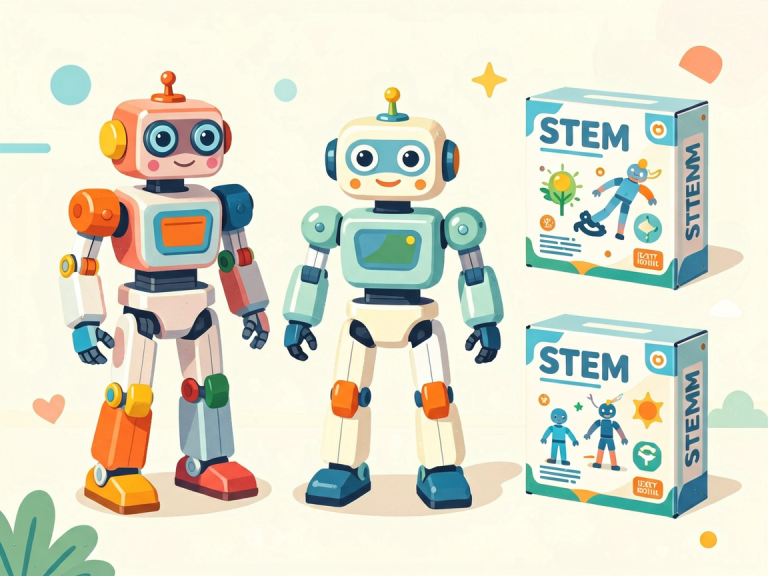
The 21st century has ushered in a golden age of educational toys that explicitly target critical thinking through science, technology, engineering, and mathematics (STEM). Robotics kits such as LEGO Mindstorms, Sphero, or Makeblock allow children to build physical robots and then program them using block-based coding or even Python. This dual process—construction plus coding—forces children to think in sequences, debug errors, and visualize abstract commands in a tangible form. For example, a child might program a robot to navigate a maze; when the robot crashes into a wall, the child must trace the logic of the code to identify the flawed instruction. This “debugging” mindset is the essence of critical thinking: identifying assumptions, testing alternatives, and learning from mistakes. Similarly, circuit-building kits (e.g., Snap Circuits or littleBits) teach electrical concepts through modular components. A child who connects a battery to a light bulb and finds no illumination must question whether the circuit is complete, whether the bulb is faulty, or whether the polarity is correct. Such hands-on experimentation fosters a scientific habit of mind that no worksheet can replicate.
Open-Ended Play: The Unsung Hero of Cognitive Development
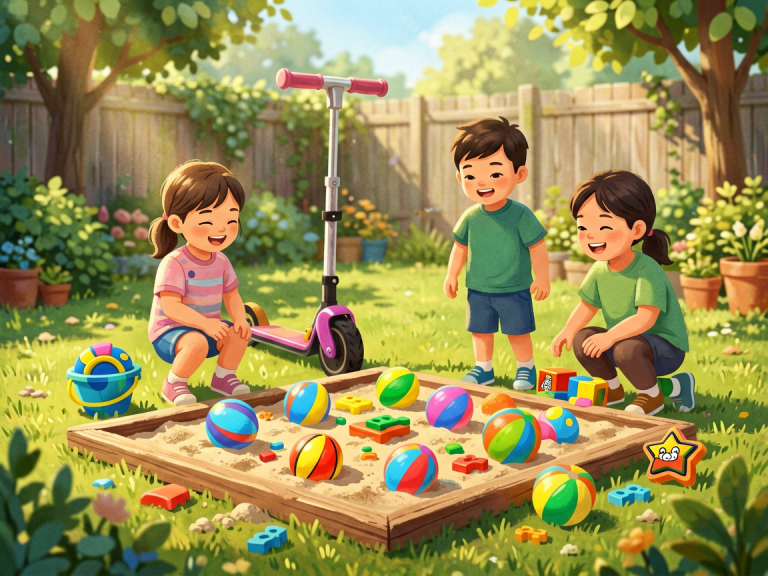
While structured STEM toys are valuable, the most potent tools for critical thinking are often those with no predetermined outcomes. Open-ended toys—such as wooden blocks, magnetic tiles, clay, sand, or loose parts—place the child in full control of the creative process. Piaget famously argued that children construct knowledge through interaction with their environment, and open-ended toys provide the richest terrain for such construction. When a child builds a castle from magnetic tiles, they must consider stability, symmetry, and aesthetic design—all while adapting to the physical constraints of the materials. If the castle collapses, the child must hypothesize why: too much weight on one side? Weak foundation? The absence of a predefined “win state” means the child is constantly asking “What if?” and “How might I improve this?” This type of play also encourages divergent thinking—the ability to generate multiple solutions to a single problem—which is a cornerstone of creativity and innovation. Moreover, open-ended toys promote executive functions like planning, self-regulation, and flexibility. A study published in *Psychological Science* found that children who engaged in more unstructured construction play demonstrated stronger cognitive flexibility and working memory years later.
The Digital Dilemma: Can Screens Also Build Critical Thinkers?
No discussion of modern toys would be complete without addressing the elephant in the room: digital devices. Many parents worry that tablets and video games dull critical thinking by providing passive entertainment. However, a growing body of research suggests that well-designed digital toys can also cultivate analytical skills—provided they are used strategically. Puzzle games like *The Witness*, *Portal*, or *Minecraft* (in creative mode) require spatial reasoning, pattern recognition, and lateral thinking. Strategy games like *Civilization* or *Age of Empires* force players to manage resources, anticipate consequences of political decisions, and adapt to changing environments. The key distinction is interactivity: good digital toys demand active problem-solving rather than passive consumption. For example, coding apps like *Scratch* or *Code.org* teach logical sequencing and debugging through a playful interface. Yet, digital toys have significant downsides: they often reduce tactile feedback, limit social interaction, and can become addictive due to reward loops. The optimal approach is not to demonize screens but to balance them with physical, open-ended play. The best critical thinking emerges when children toggle between the virtual and the real, applying digital insights to physical creations and vice versa.
A Guide for Parents and Educators: Selecting Toys with Purpose
Given the overwhelming variety of toys available, how does one choose those that genuinely build critical thinking? First, look for toys that encourage iteration—products that allow children to fail without severe consequences and try again. Avoid toys with a single “correct” answer or those that do most of the work for the child (e.g., remote-controlled cars that just drive forward). Instead, prioritize construction kits, logic puzzles, building sets, and strategy games. Second, consider age-appropriateness: a toddler benefits from nesting cups that teach size and order, while an older child might thrive with a Rube Goldberg machine kit that experiments with cause and effect. Third, diversity matters. A child who only plays with building blocks may develop strong spatial skills but weaker social reasoning; combine block play with cooperative board games or role-playing toys (e.g., puppets, dollhouses) that require negotiation and perspective-taking. Fourth, model the behavior: children learn critical thinking by watching adults ask questions, hypothesize, and problem-solve. Sit down with your child and build together, narrating your thought process: “I wonder what would happen if I put this piece here…” Finally, embrace minimalism. A toy that does only one thing (e.g., press a button to hear a sound) is often less valuable than a set of simple blocks that can become anything. Quality over quantity, and open-ended over prescriptive.
Conclusion: The Lifelong Return on a Playful Investment
Critical thinking is not a skill that can be taught through lectures or worksheets; it must be practiced, nurtured, and lived. Toys that build critical thinking are not mere distractions—they are laboratories for the mind. From the wooden blocks that taught our ancestors engineering principles to the programmable robots that prepare today’s children for a data-driven world, these tools offer a gentle but profound introduction to the art of reasoning. In a future plagued by misinformation, complex global challenges, and rapidly evolving technology, the ability to question, analyze, and innovate will separate those who merely consume from those who create and lead. By investing in thoughtfully designed toys—and, more importantly, by giving children the time, space, and freedom to play—we are not just buying entertainment. We are constructing the foundation of a resilient, curious, and adaptable intellect. So next time you see a child deeply absorbed in building, stacking, or coding, remember: they are doing something far more important than playing. They are learning how to think.