The Thoughtful Toy Plan: A Parent’s Guide to Intentional Play
Introduction: Why a Toy Plan Matters
Every parent knows the scene: a living room floor buried under a mountain of plastic, stuffed animals peeking out from under the sofa, and a child who, despite the abundance, insists “I have nothing to play with.” The toy industry is a multi-billion-dollar machine that thrives on parental guilt, marketing magic, and children’s ever-shifting desires. But the real cost of this chaos is not just financial—it is developmental, environmental, and emotional. A well-crafted toy plan is not about restricting fun; it is about curating a childhood rich in imagination, learning, and joy while restoring sanity to your home. This article offers a comprehensive, research-backed framework for parents who want to stop drowning in toys and start fostering purposeful play.
Section 1: The Philosophy of Less, But Better
1.1 The Myth of More Toys = Better Development
For decades, parents have been led to believe that more toys stimulate a child’s brain more effectively. In reality, cognitive psychologists have repeatedly shown that an overabundance of choices overwhelms young children, leading to shorter attention spans and less creative engagement. A landmark study from the University of Toledo (2017) found that toddlers who played with fewer toys—just four—engaged in more sustained, varied, and imaginative play than those with sixteen options. The message is clear: when the environment is cluttered, the mind becomes cluttered. A toy plan starts with the conviction that quality trumps quantity.
1.2 Defining “Purposeful Play”
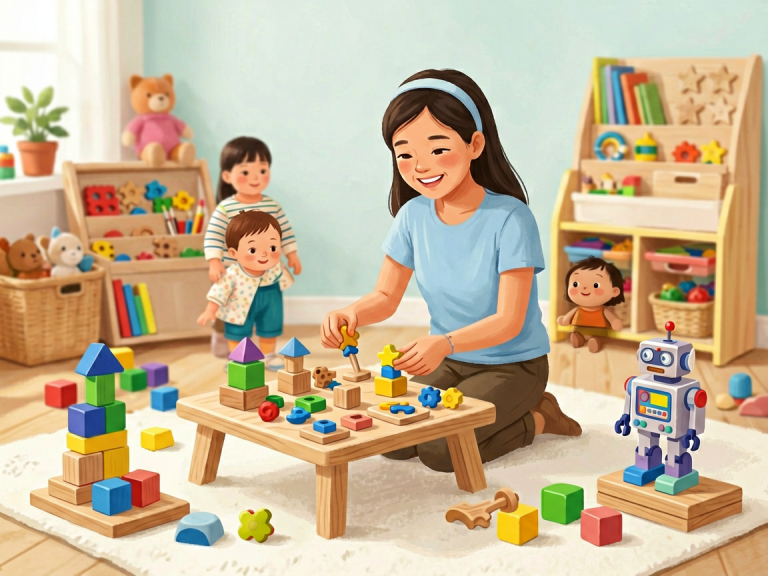
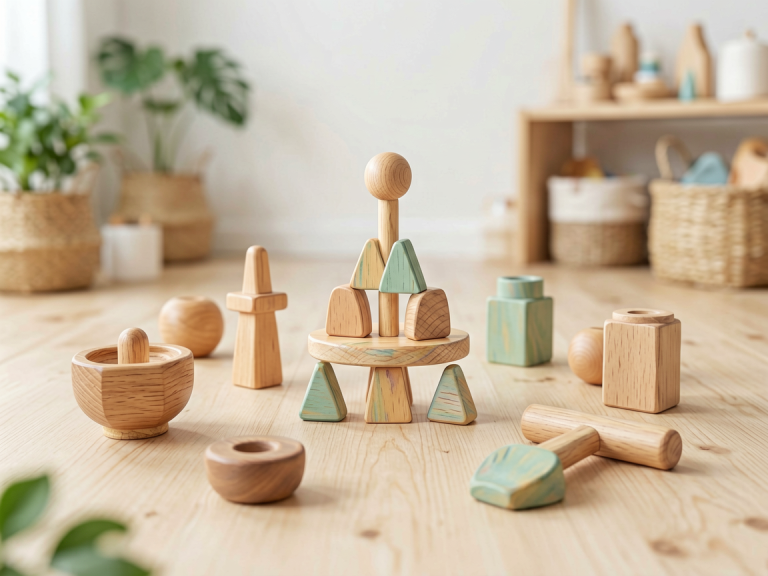
Intentional toys are those that serve multiple purposes and grow with the child. A set of wooden blocks, for instance, can be a tower, a zoo, a spaceship, or a math lesson. An electronic talking robot, by contrast, offers a fixed set of interactions and quickly loses its novelty. The toy plan should prioritize open-ended materials: building sets, art supplies, sensory bins, dress-up clothes, and simple puzzles. These items encourage a child to be an active creator rather than a passive consumer.
Section 2: The Four Pillars of a Sustainable Toy Plan
2.1 Age-Appropriate Rotation
Children’s developmental windows are narrow. A 1-year-old’s fascination with stacking rings fades by age 2, yet many parents hold onto toys for years “just in case.” A rotation system is the antidote. Divide your child’s toy collection into four or five categories: fine motor, gross motor, imaginative, artistic, and sensory. Select three to five items from each category and store the rest in opaque bins in the garage or a closet. Every two to four weeks, swap out the bins. This rotation not only keeps the child engaged—the “new” toys feel fresh—but also reduces clutter and prolongs the lifespan of each toy. The rule of thumb: 20 to 30 total toys in active circulation is more than enough for a preschooler.
2.2 The Educational Value Check
Before any toy enters the home, run it through a simple checklist: Does it require active participation? Can it be used in more than one way? Does it align with a current interest or developmental skill? For example, a set of magnetic tiles scores high on all counts. A toy that simply lights up and plays a song? Low marks. Parents should resist the lure of “educational” marketing claims. True learning happens when a child experiments, fails, and tries again—not when a toy talks to them. The best toys are silent partners in discovery.
2.3 The Budget and Environmental Lens
A toy plan must be realistic. Instead of buying cheap, disposable plastic toys that break within weeks, invest in fewer, sturdier pieces that can be passed down. Wooden toys, cloth books, and metal cars often last for generations. Consider second-hand markets, swap groups, and garage sales—children rarely care whether a toy is new. Also, factor in “experience gifts” (tickets to a museum, a day at the zoo, a cooking class) that create memories without adding physical objects. Environmental consciousness is not just a bonus; it teaches children that fulfillment does not come from consumption.
2.4 Involving the Child in the Plan
Children as young as three can participate in toy curation. A monthly “toy audit” can be a family ritual: lay out all toys in active rotation, and ask the child which ones they still love, which ones feel boring, and which ones might be donated to “new friends.” This practice builds decision-making skills, gratitude, and empathy. It also reduces the power struggle over new purchases—when a child understands the limited number of toys that can live in their room, they become more thoughtful about what they truly want.
Section 3: Implementing the Plan – A Step-by-Step Guide
3.1 The Great Purge: Categorize, Donate, Discard
Start by gathering every toy in the house. Sort into three piles: Keep (currently used, loved, developmentally appropriate), Donate (gently used but not engaging), and Discard (broken, missing pieces, safety hazards). Be ruthless. If a toy has not been touched in three months, it belongs in the donate pile—unless it has sentimental value (e.g., a baby’s first rattle). For sentimental items, take a photo and then store one small box per child in a labeled bin. The goal is to reduce the total inventory by at least 40 percent.
3.2 Setting Up a Toy Ecosystem
Designate specific zones in the home: a quiet corner for reading and puzzles, a mat for building, a small table for art. Each zone should hold no more than five to seven items. Use low, open shelving so that children can see and access their toys independently. Avoid deep bins where toys become lost. A clear system reduces the “dump everything out” syndrome. Also, incorporate a “one in, one out” rule: for every new toy that enters the house (birthday, holiday), an old one must leave.
3.3 Creating a Wishlist and Gifting Strategy
Many toy piles come from well-meaning relatives. Communicate your plan to grandparents, aunts, and uncles. Create an online wishlist of approved toys (open-ended, durable) and share it before birthdays and holidays. Suggest experience gifts or contributions to a college fund. When you do offer suggestions, be specific: “She would love a set of wooden rainbow arches” instead of “Anything educational.” Control the influx at the source.
Section 4: Navigating Challenges and Special Situations
4.1 The Screen and Electronic Toy Dilemma
Screen-based toys are the hardest to manage because they often claim to be educational. Tablets, interactive bears, and coding robots can have a place, but they must be strictly limited. The American Academy of Pediatrics recommends no more than one hour of quality screen time per day for children aged 2 to 5. For electronic toys, apply the same criteria: does it require active problem-solving? Can it be used without a screen? Many “smart” toys lock children into a passive consumption loop. Reserve screen-based toys for short, supervised sessions, and treat them as tools, not playmates.
4.2 The Sibling Age Gap
When siblings span a wide age range, toy planning becomes trickier. A 2-year-old’s blocks are a choking hazard for a baby, and a 10-year-old’s LEGO set is frustratingly small for a preschooler. Solution: create separate low shelves for each child, with clearly marked labels and a “no take” rule enforced with a timer. Invest in a few shared toys that both ages can enjoy in different ways—a large wooden train set, a sand table, a dollhouse. Rotation cycles should be staggered so that each child gets fresh toys at different times.
4.3 The Parental Guilt Trap
You will stray from the plan. A rare sale, a cute stuffed bunny, a child’s tearful plea—expect it. The key is not perfection but flexibility. Allow each child one “fun junk” toy per season (a cheap, non-durable item they adore). Acknowledge that some toys with sentimental value (a handmade gift from a friend) may stay even if they are not “optimal.” The toy plan is a guide, not a prison. Forgive yourself, and return to the system.
Section 5: Long-Term Benefits of a Toy Plan
5.1 Enhanced Cognitive Skills and Creativity
Children who play with fewer, higher-quality toys score higher on tests of divergent thinking (the ability to generate multiple solutions to a problem). They learn to improvise: a bowl becomes a hat, a scarf becomes a river. These skills are the bedrock of innovation. The toy plan cultivates a mindset of resourcefulness that will serve them for life.
5.2 Reduced Stress for Parents and Children
A tidy, curated play space reduces sensory overload for both adult and child. Mornings and evenings become calmer. Cleanup takes ten minutes instead of an hour. The child learns to value and care for their toys because each one has a place and a purpose. Parents report less resentment about buying toys and more joy in watching their child truly engage.
5.3 Financial and Environmental Responsibility
By buying less and choosing better, a family can save hundreds of dollars per year. That money can be redirected to experiences, books, or savings. Environmentally, the reduction in plastic waste—especially from toys that end up in landfills within months—is significant. The toy plan aligns with a minimalist, sustainable lifestyle that teaches children the real meaning of abundance: not having everything, but having enough.
Conclusion: Play is a Relationship, Not a Product
A toy plan is ultimately a love letter to your child. It says, “I trust you to create your own joy. I will not overwhelm you with noise, but I will give you tools to build your world.” The process of curating, rotating, and letting go is not just about organization; it is about modeling intentionality. As you remove the excess, you make room for what truly matters: the moments when a cardboard box becomes a rocket ship, when a handful of pebbles becomes a kingdom, when your child looks up and says, “Will you play with me?” And you can say yes, because the floor is finally clear.