The Art of Play: A Guide to Toy Progression for 6-Year-Olds
—
Introduction
The world of a six-year-old is a fascinating crossroads. They have left behind the sensory-driven exploration of toddlerhood and the simple symbolic play of preschool, yet they are still years away from the abstract reasoning of adolescence. At this age, children are bursting with new cognitive abilities, refined motor skills, a growing sense of social awareness, and an insatiable curiosity about how things work—and how people work. The toys that fill their environments are not mere distractions; they are the tools through which children construct their understanding of the world, themselves, and others.
Understanding toy progression for six-year-olds is not about buying the most expensive or the most popular items. It is about recognizing the developmental milestones that typically occur around this age and selecting toys that challenge, inspire, and comfort a child in equal measure. A perfect toy for a six-year-old is one that meets them where they are—still deeply playful, but hungry for complexity. It should encourage sustained focus, allow for multiple uses, and foster both independence and collaboration. This guide will explore the key domains of development—cognitive, social-emotional, physical, creative, and technological—and suggest toy categories that support healthy progression in each area.
—
Cognitive Development: From Simple Puzzles to Complex Strategy Games
At six, a child’s brain is undergoing a remarkable transformation. The prefrontal cortex, responsible for executive functions like planning, working memory, and impulse control, is developing rapidly. Children begin to understand rules more fully, hold longer sequences of instructions in mind, and enjoy the satisfaction of solving problems that require multiple steps. Toy progression in this domain should move from trial-and-error exploration toward deliberate strategic thinking.
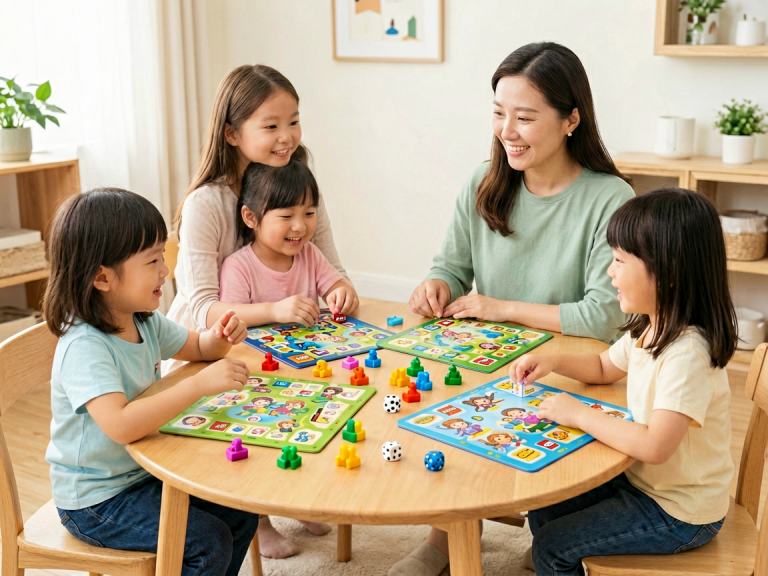
Board games with age-appropriate rules are a cornerstone of cognitive growth at this stage. Games like *Hoot Owl Hoot!* or *Race to the Treasure!* teach turn-taking, pattern recognition, and the concept of working toward a shared goal. Unlike simpler games for younger children, these often involve a small element of chance balanced with decision-making, which helps a six-year-old learn to cope with both winning and losing in a safe context. For more advanced thinkers, cooperative games such as *Castle Logix* or *Mighty Mind* introduce spatial reasoning and logical deduction without the pressure of competition.
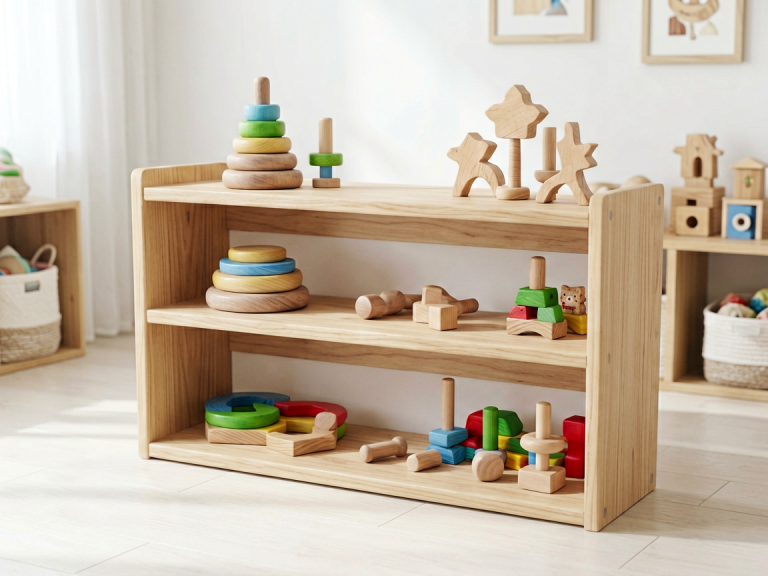
Construction and engineering toys also take on new meaning. While a three-year-old may simply stack blocks, a six-year-old can follow a diagram to build a specific structure, or better yet, design their own. Sets like *LEGO Classic* bricks (without themed instructions) allow for open-ended creation, while *Magnetic Tiles* or *KEVA Planks* demand patience, balance, and an understanding of physics. These toys require children to visualize outcomes, test hypotheses (“If I put this piece here, will the tower fall?”), and revise their plans—skills that are foundational to mathematical and scientific thinking.
Puzzles should increase in piece count and complexity. A 100-piece puzzle with clear images is appropriate for many six-year-olds, but the real cognitive leap comes when children begin to use strategies—sorting by edge pieces, grouping by color, or visualizing the final picture before starting. This kind of systematic thinking is a precursor to reading comprehension and problem-solving in later school years.
—
Social and Emotional Growth: Cooperative Play and Role-Playing
Six-year-olds are deeply invested in friendships, though these relationships can be intense and quickly shifting. They are learning to negotiate, share, empathize, and manage disappointment. Toys that facilitate social interaction are crucial for this developmental work. The key is progression: moving from parallel play (playing alongside others) to cooperative play, and from simple imitation to complex role-playing with negotiated rules.
Dress-up and pretend play sets remain highly valuable, but the themes should grow more sophisticated. Instead of simple doctor kits or firefighter hats, consider sets that encourage storytelling with multiple characters and scenarios. For example, a play grocery store with a cash register, play money, and empty containers allows children to practice taking turns as shopper and cashier, count change, and even make “shopping lists.” Similarly, a puppet theater with a variety of animal or people puppets invites children to create dialogues, act out conflicts, and explore different perspectives.
Cooperative board games are an excellent social tool because they require children to work *together* against a common challenge rather than against each other. Games like *Forbidden Island* (simplified rules) or *The Sneaky, Snacky Squirrel Game* (which involves helping each other collect acorns) teach the language of collaboration: “Let’s try this,” “If you do that, I can do this,” or “It’s okay, we can try again.” These experiences build resilience and the ability to regulate emotions when things don’t go as planned.
Construction toys with a social component—like large building blocks or marble runs that require two children to hold pieces in place—also promote communication and compromise. When a six-year-old says, “No, I want the blue one,” and another says, “But we need the red one to finish the track,” they are practicing vital negotiation skills. Adults can guide these interactions without taking over, helping children find words for their feelings and encouraging them to propose solutions.
—
Fine and Gross Motor Skills: Building, Crafting, and Active Play
By age six, most children have mastered basic motor milestones like running, jumping, and catching a ball. But their fine motor skills are still catching up—handwriting, cutting with scissors, and manipulating small objects can still be challenging. Toy progression should provide opportunities to refine these skills without causing frustration. At the same time, gross motor development continues through more coordinated and rule-based physical play.
Art and craft supplies are among the best tools for fine motor development. But move beyond crayons and coloring books. Introduce scissors with different patterns (crinkle cut, zigzag), hole punches, tweezers for placing small beads, and sewing cards with blunt needles and yarn. Modeling clay or play dough with tools for cutting, rolling, and imprinting strengthens hand muscles and improves dexterity. For a child who loves precision, small bead kits or *Perler Beads* (with adult supervision) require careful placement of tiny objects—a task that directly supports pencil grip and writing readiness.
Construction sets with small pieces, such as *Lego Technic* starter sets or *K’NEX*, challenge children to push, twist, and snap pieces together. These actions build hand-eye coordination and finger strength. However, it’s important to choose sets that are not so complex that a child cannot complete them independently—frustration can undermine the motor benefits.
Active outdoor toys should progress from simple riding toys (tricycles, balance bikes) to two-wheeled bicycles with training wheels, or even pedal-less balance bikes that teach actual balancing. Jump ropes, hula hoops, and large balls for games of catch also become more engaging when rules are introduced. A six-year-old can learn the basics of a simple sport like soccer or baseball, but the emphasis should remain on fun and participation rather than competition. Trampolines (with safety nets) and climbing structures provide whole-body strength and coordination, but always with close supervision.
—
Creativity and Imagination: Open-Ended Toys and Artistic Expression
The imagination of a six-year-old is a powerful engine for learning. They can hold entire worlds in their minds and act them out with enthusiasm. However, as they become more aware of reality and logic, their play often becomes more structured. The goal of toy progression for creativity is to provide materials that are open-ended enough to allow infinite possibilities, yet structured enough to give a starting point.
Building blocks are the original open-ended toy, but at age six, children may benefit from sets that include special pieces—wheels, ramps, windows, and people—that allow them to build scenes rather than just towers. *Magna-Tiles* (clear magnetic tiles) are particularly good because they can be used to build houses, cars, castles, or abstract geometric shapes. The lack of a fixed purpose means that a child can transform the same set of tiles into a space station today and a dollhouse tomorrow.
Art supplies should expand dramatically. A six-year-old is ready for watercolor paints, tempera paints, chalk pastels, and even beginner’s acrylics (with washable versions). Provide a variety of paper sizes, brushes, sponges, and found objects for stamping. The creative process is more important than the final product, so resist the urge to “fix” a drawing or suggest improvements. Instead, ask open-ended questions: “Tell me about your picture,” or “How did you make that color?” This validates their creative choices and encourages risk-taking.
Storytelling and narrative toys—such as blank books, finger puppets, or a simple felt board with cutout characters—allow children to create and retell stories. For a six-year-old who loves to read, consider a “story dice” set or a deck of picture cards that they can arrange to form a sequence. The act of inventing a plot, developing characters, and resolving a conflict is a high-level cognitive skill that also builds language and empathy. Even a simple cardboard box can become a rocket ship, a castle, or a time machine—the toy is only a catalyst for the imagination.
—
The Role of Technology: Balancing Screen Time with Hands-On Play
In today’s world, technology is an unavoidable part of childhood, and it is not inherently harmful. For a six-year-old, well-designed digital toys can complement physical play. However, the key is progression in *quality* and *interaction*. Passive consumption (watching videos) should be minimized in favor of active creation, problem-solving, and shared screen time.
Educational apps and games that focus on logic, pattern recognition, early math, or phonics can be beneficial, but only when used in short, intentional sessions. Apps like *DragonBox Numbers* (teaches number sense) or *Thinkrolls* (physics puzzles) encourage active thinking rather than mindless tapping. The American Academy of Pediatrics recommends that children aged 2–5 have no more than one hour of screen time per day, and for six-year-olds, the emphasis should be on high-quality content and co-viewing with a parent.
Coding toys are a particularly exciting option for six-year-olds. Products like *Botley the Coding Robot* or *Code-a-Pillar* teach sequencing, logic, and problem-solving without requiring reading or typing. Children press buttons to give commands, then watch the robot execute the sequence. This tangible, cause-and-effect interaction is far more developmentally appropriate than a coding app on a tablet. Similarly, *Osmo* systems blend physical pieces with digital feedback, allowing children to move tangram shapes or letters on a table while the iPad responds.
Limiting passive screen time is critical. The brain of a six-year-old is still forming neural connections through real-world sensory experiences—touching, smelling, building, falling, and laughing. No app can replace the feeling of mud between fingers or the satisfaction of stacking blocks until they fall. Parents should treat technology as one tool among many, not the main event. A good rule is to ensure that for every hour of screen time, a child has at least two hours of active, hands-on play.
—
Conclusion: The Progression is a Journey, Not a Destination
Toy progression for six-year-olds is not a rigid checklist; it is a dynamic process guided by observation. A child who thrives on complex puzzles today may be drawn to social role-play tomorrow. The same child might resist art one week and then spend an entire afternoon painting the next. The underlying principle is to offer variety and choice, and to be present as a companion in play. The best “toy” a six-year-old can have is an adult who sits on the floor beside them, asks curious questions, and lets the child lead the way.
As children grow, their toys will become more advanced—electronic gadgets, detailed models, and organized games with lengthy rulebooks. But at six, the magic lies in the tension between control and chaos, between structure and freedom. The right toy, at the right moment, can unlock a new world of understanding. It can teach patience, spark a friendship, or simply bring the pure joy of a block tower that stands, if only for a moment, before it tumbles. That is the art of play, and it is one of the most important arts a child will ever learn.