The Ideal Learning Toy Path for 6-Year-Olds: Building Skills Through Play
Introduction
At the age of six, children stand at a remarkable crossroads of development. They have left behind the purely sensory exploration of toddlerhood and are beginning to master symbolic thinking, logical reasoning, and social cooperation. Their attention spans lengthen, their fine motor skills become more refined, and their curiosity about the world expands exponentially. For parents and educators, selecting the right learning toys is not merely a matter of entertainment—it is a deliberate investment in cognitive, emotional, and physical growth. A well-designed "learning toy path" for six-year-olds should follow a sequence that respects their current abilities while gently challenging them to reach the next stage. This article outlines a structured approach to choosing toys that support language, mathematics, creativity, problem-solving, and social skills, ensuring that playtime becomes a powerful engine for learning.
1. The Foundation: Toys That Strengthen Core Academic Readiness
1.1 Phonics and Early Reading Games
By age six, many children are transitioning from recognizing letters to decoding simple words. Toys that combine phonics with hands-on interaction can accelerate this process. Magnetic letter boards, alphabet puzzles with picture cues, and simple word-building card games (such as matching a picture of a cat with the letters C-A-T) are excellent choices. These toys do not pressure the child to "read" in a formal sense; instead, they make the connection between sounds and symbols a playful discovery. Look for sets that include both uppercase and lowercase letters, as well as common digraphs like "sh" and "ch." A game like "Zingo! Word Builder" or a movable alphabet set from Montessori-inspired brands can turn a rainy afternoon into a literacy adventure.
1.2 Number Sense and Early Math Manipulatives
Six-year-olds are ready to move beyond simple counting to understanding concepts like addition, subtraction, and place value. However, abstract worksheets can be frustrating. The best math toys at this age are tangible and visual. Counting bears, base-ten blocks, and number rods allow children to physically group, separate, and compare quantities. A simple balance scale with numbered weights, for instance, teaches the concept of equality in a concrete way. Board games that involve dice and moving pieces (like "Chutes and Ladders" or "Hi Ho! Cherry-O") subtly reinforce counting skills and one-to-one correspondence. More advanced options include "Math Dice Jr." or "Sum Swamp," which introduce basic arithmetic in a friendly, non-competitive format.
2. The Creative Core: Toys That Inspire Imagination and Fine Motor Skills
2.1 Construction and Building Sets
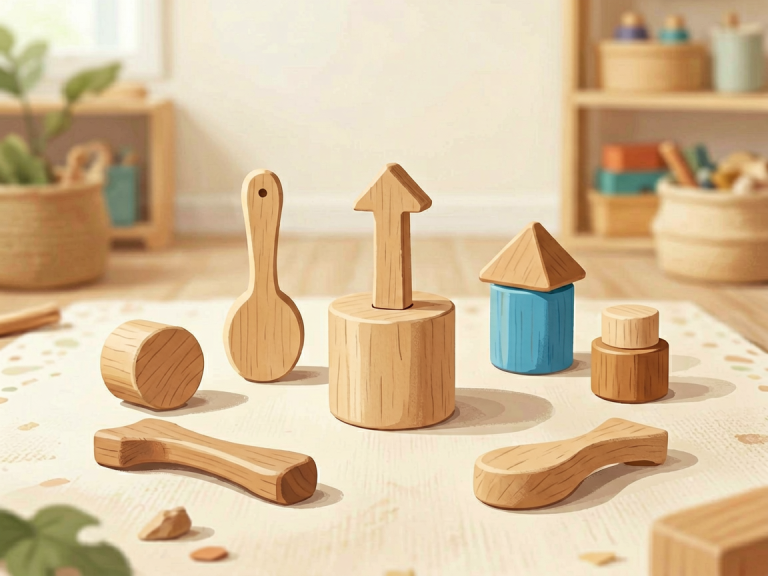
At six, children can follow simple instructions for building models, yet they also enjoy free-form creation. Construction toys such as LEGO Classic bricks, magnetic tiles (like Magna-Tiles), or wooden block sets encourage spatial reasoning, planning, and persistence. When a child builds a tower that collapses, they learn about stability and cause-and-effect. When they follow a step-by-step diagram to construct a car, they practice sequencing and attention to detail. The key is to offer sets that are open-ended enough for original design but include enough pieces to execute complex ideas. A set of 100–200 LEGO bricks with a few specialty pieces (wheels, windows, hinges) provides endless possibilities. Additionally, interlocking plastic gears or marble run kits introduce basic engineering concepts—cause, effect, momentum, and gravity—in a thrilling, hands-on way.
2.2 Art and Craft Kits
Fine motor development continues through drawing, cutting, and assembling. Art supplies should go beyond crayons and coloring books. Consider washable watercolor sets with real brushes, safety scissors with patterned cutting edges, origami paper with guided folding instructions, and modeling clay that doesn't dry out too quickly. Craft kits that involve stringing beads, weaving looms, or making simple jewelry also improve hand-eye coordination and pincer grip, which are essential for handwriting. For a more structured creative outlet, "paint-by-sticker" books or mosaic sticker sets teach color matching and pattern recognition while producing a satisfying finished product. The process of creating something tangible gives a six-year-old immense pride and a sense of accomplishment.
3. The Cognitive Challenge: Puzzles, Logic, and Strategy Games
3.1 Jigsaw Puzzles and Pattern Blocks
Six-year-olds can handle puzzles with 48 to 100 pieces, depending on their experience. Jigsaw puzzles train visual discrimination, patience, and the ability to break a large task into smaller parts (e.g., sorting edge pieces first). Floor puzzles with large pieces are still appropriate, but children often enjoy the challenge of smaller, more detailed images—especially those featuring animals, maps, or scenes from favorite stories. Pattern block sets (wooden shapes like triangles, squares, and hexagons) are another valuable tool. When a child is asked to replicate a geometric design or create their own, they engage in symmetry, fractions, and spatial visualization. These activities lay the groundwork for later mathematical thinking.
3.2 Simple Strategy and Memory Games
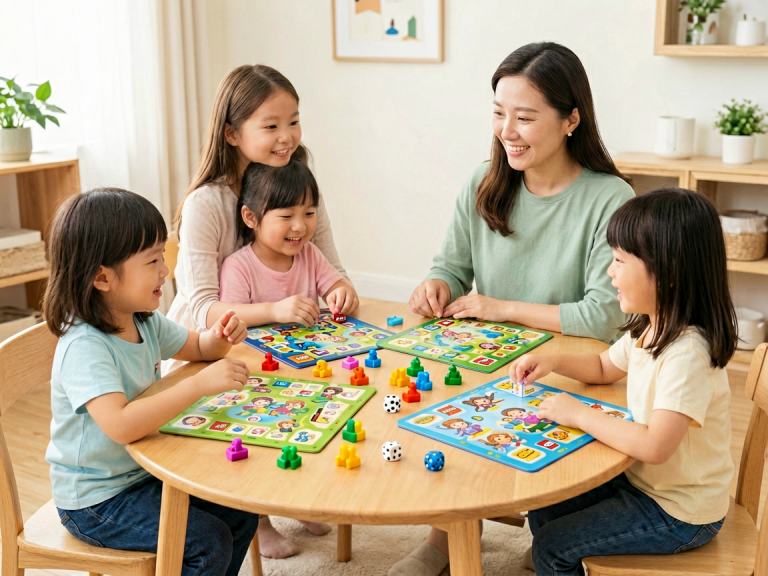
Board games that involve turn-taking, rule-following, and a bit of strategy are ideal for this age. Games like "Candy Land" or "The Sneaky, Snacky Squirrel Game" primarily rely on luck and color matching, but they teach social skills like waiting and handling disappointment. For a cognitive boost, try "Memory" (matching cards), "Sequence for Kids," or "Outfoxed!"—a cooperative whodunit game that requires deductive reasoning. Even classic "Tic-Tac-Toe" and "Connect Four" help children think ahead and consider an opponent's perspective. These games subtly develop executive function skills: working memory, inhibitory control, and cognitive flexibility.
4. The Social and Emotional Dimension: Role-Play and Cooperative Play
4.1 Pretend Play Sets with Realistic Props
While six-year-olds are more grounded in reality than preschoolers, they still delight in imaginative role-play. What changes is the complexity of the scenarios. A simple toy kitchen may now become a full restaurant with menus, order pads, and play money. A doctor's kit can inspire a clinic where the child diagnoses a stuffed animal's ailment and writes a prescription. These activities develop narrative skills, empathy, and language (both receptive and expressive). Dress-up costumes, puppets, and felt storyboards also encourage children to act out stories, which is directly linked to reading comprehension and emotional understanding. The key is to provide open-ended props rather than scripted toys. A cardboard box can be a spaceship, a cave, or a castle—the imagination does the real work.
4.2 Cooperative (Non-Competitive) Games
Not all learning needs to be competitive. In fact, many six-year-olds struggle with losing or become overly focused on winning. Cooperative games, where players work together against a common challenge, teach collaboration, communication, and shared problem-solving. Examples include "Hoot Owl Hoot!" (where players move owls back to their nest before sunrise), "Race to the Treasure!" (building a path to collect keys and reach the treasure before an ogre), or "Stone Soup" (collecting ingredients to make soup together). These games reduce anxiety and allow children to practice compromise and mutual support—skills that are as important as any academic subject.
5. The Physical and Sensory Element: Movement and Exploration
5.1 Active Play and Gross Motor Toys
Six-year-olds have abundant energy and need outlets for large-muscle movement. Learning toys that involve physical activity are often overlooked but are crucial for brain development. Consider a balance board (to strengthen core and coordination), a hopscotch mat (which can also teach number sequences), or a set of simple juggling scarves. Outdoor toys like a tricycle or a two-wheeled bike with training wheels build leg strength and balance. A simple parachute game played with friends develops teamwork and spatial awareness. Even skipping ropes or hula hoops, when paired with counting games or rhymes, integrate physical and cognitive learning.
5.2 Science and Nature Exploration Kits
Six-year-olds are natural scientists: they ask "why" constantly. A magnifying glass, a bug catcher with a viewing container, or a set of colorful test tubes and pipettes (for safe water play) can spark investigations. Kits that allow growing beans in a clear plastic bag, creating a simple volcano with baking soda and vinegar, or using magnets to sort materials are inexpensive but powerful. For more structured exploration, consider a "GeoSafari Jr." microscope that magnifies common objects, or a set of fossil and rock specimens to examine. These toys do not need to come from expensive brands; a nature journal and a pair of binoculars can turn a backyard walk into a treasure hunt.
6. The Digital Frontier: Screen-Based Learning with Caution
6.1 Educational Apps and Interactive Tablets (When Used Intentionally)
In moderation, certain digital tools can complement the physical toy path. Apps that focus on coding fundamentals (such as "ScratchJr" or "Kodable") introduce sequencing and logical thinking through animated puzzles. Interactive e-books with read-aloud features and touch-activated animations can motivate reluctant readers. However, the American Academy of Pediatrics recommends limiting screen time for six-year-olds to no more than one hour per day of high-quality programming, and that time should be co-viewed or discussed with an adult. The key is to choose apps that are active (requiring the child to tap, drag, or solve) rather than passive (watching videos). Physical toys remain superior for sensory integration and social interaction.
6.2 Hybrid Toys: Connecting Physical and Digital Worlds
Some modern learning toys bridge the gap. For example, a programmable robot like "Botley" or "Code & Go Robot Mouse" uses physical coding cards to control a moving toy, teaching cause-and-effect without a screen. Other sets use augmented reality: a child builds a physical structure and then scans it with a tablet to see it come to life as a 3D animation. These hybrid experiences can be highly engaging when used sparingly, but they should never replace the richness of unplugged play.
Conclusion: Crafting a Balanced Path
No single toy will teach a six-year-old everything they need to know. The ideal learning toy path is not a checklist but a philosophy: offer a variety of experiences that challenge different domains—language, math, creativity, logic, social skills, and physical coordination. Rotate toys to maintain novelty, and follow the child's interests. A child who loves dinosaurs might respond to a dinosaur excavation kit (fine motor + science) and a dinosaur-themed board game (social + literacy). Pay attention to the "just-right" level of challenge: too easy leads to boredom, too hard leads to frustration. Finally, remember that the most important learning tool is an attentive adult who plays alongside the child, asking open-ended questions like, "What do you think will happen if we add one more block?" or "How can we work together to solve this puzzle?" The path is not a straight line; it is a joyful, winding journey of discovery. And at six years old, that journey is just beginning.