Unlocking Curiosity: A Guide to the Best Beginner Science Kits for Young Explorers
Introduction
In an age dominated by screens and passive entertainment, few gifts can rival the power of a well-designed science kit. For children—and even curious adults who are just starting their scientific journey—a beginner science kit serves as a portal to hands-on discovery, critical thinking, and genuine wonder. But with hundreds of options flooding the market, how do you choose the *best beginner science kits*? The answer is not simply about picking the most popular brand or the flashiest packaging. The finest kits strike a delicate balance between safety, clarity, engagement, and educational depth. They transform abstract concepts into tangible experiences, turning a kitchen table into a laboratory and a rainy afternoon into an unforgettable moment of learning.
This article will explore the essential criteria for selecting outstanding beginner science kits, highlight a few exemplary categories and products, and explain why investing in the right kit can ignite a lifelong passion for science. Whether you are a parent, a teacher, or a beginner yourself, understanding what makes a kit truly great will help you make a confident, informed choice.
What Makes a Great Beginner Science Kit?
Before diving into specific recommendations, it is vital to establish a framework for evaluation. Not every colorful box labeled “science kit” delivers a meaningful experience. The best beginner science kits share several core characteristics:
1. Clear, Age-Appropriate Instructions
A beginner kit should not frustrate its user. Instructions must be written in simple, step-by-step language, with plenty of illustrations. Ideally, the kit includes a booklet that explains the *science behind* each experiment—not just “do this, then see that.” Children need to understand why baking soda and vinegar fizz, not merely that they do. For very young beginners (ages 4–7), pictorial instructions with minimal text work best. For older beginners (ages 8–12), short paragraphs combined with diagrams foster independence.
2. Safety First
Science should never be scary. The best beginner kits use non-toxic, household-friendly materials. They avoid open flames, dangerous chemicals, or fragile glassware. Look for kits that include safety goggles and gloves, and that clearly label any potential hazards (though ideally there should be none). Trusted brands like Thames & Kosmos, National Geographic, and Learning Resources place safety at the forefront, with rigorous testing and clear warnings.
3. High-Quality, Durable Components
Nothing kills enthusiasm faster than a plastic microscope that breaks on first use or a magnet that loses its magnetism. The best kits use robust materials that can withstand repeated experimentation. They also provide enough components for multiple trials, not just one-shot activities. For example, a chemistry kit with 20+ experiments should include resealable containers, extra chemicals (in safe quantities), and reusable tools.
4. Open-Ended Exploration vs. Prescriptive Activities
A fine balance is needed. Pure open-ended kits (e.g., a box of magnets and wires) can overwhelm a beginner who lacks direction. Conversely, overly prescriptive kits that dictate every move leave no room for creativity. The best beginner science kits offer a core set of guided experiments, then suggest “challenge yourself” extensions where kids can modify variables and observe new outcomes. This hybrid approach builds confidence while nurturing independent thinking.
Top Categories of Beginner Science Kits
Based on the above criteria, several categories consistently produce the most rewarding experiences. Here are three standout types, along with examples of what makes them exceptional.
Chemistry Starter Sets
Chemistry is often the gateway science—its fizzy reactions, color changes, and crystal formations captivate almost every child. The best beginner chemistry kits avoid complex lab equipment and dangerous acids. Instead, they rely on safe, common ingredients like baking soda, citric acid, and natural indicators (e.g., red cabbage powder).
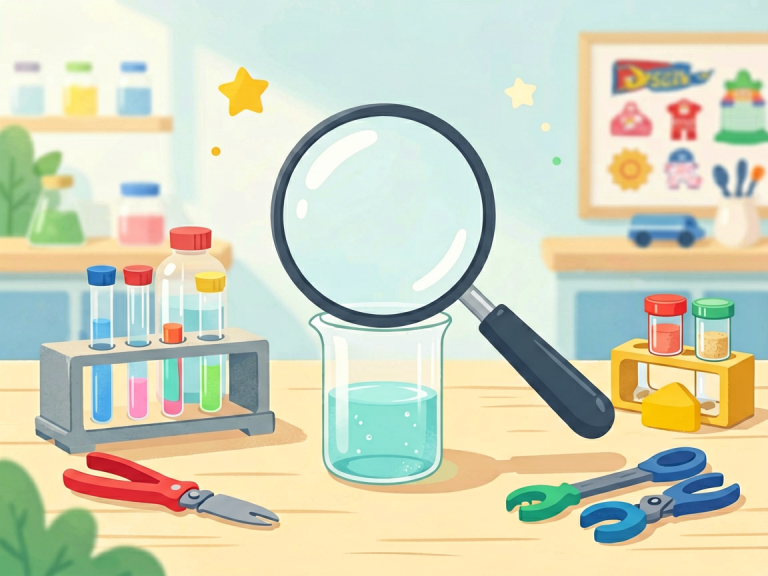
A prime example is the National Geographic Mega Chemistry Set (often cited among the best beginner science kits). It contains more than 45 experiments, including making glow-in-the-dark worms, growing crystals, and testing pH. Each experiment card has a “Science Spotlight” that explains the reaction in kid-friendly terms. The kit also includes real lab tools like test tubes, a beaker, and safety goggles, but all glass is replaced by shatter-resistant plastic. Most importantly, the chemicals are pre-measured and labeled, eliminating the guesswork and mess that can deter a beginner.
Physics & Engineering Kits
For children who love building and motion, physics and engineering kits are unparalleled. They teach concepts like leverage, circuits, magnetism, and simple machines through hands-on construction. The best beginner kits in this category use snap-together pieces that require no soldering or glue. They also include a clear progression: start with a simple lever, then add gears, then a motor.
Thames & Kosmos Physics Discovery kit is a shining example. Targeted at ages 8 and up, it comes with 300+ pieces to build 14 models including a balance scale, a windmill, and a hydraulic lift. The instruction manual is richly illustrated and explains each mechanical principle—such as why inclined planes reduce effort. The kit also encourages kids to redesign models, fostering an engineering mindset. Because parts are modular and robust, the kit remains engaging even after the initial projects are completed.
Earth & Space Exploration Kits
Nothing sparks curiosity like the vastness of space or the hidden world of microscopic life. Beginner kits in this category often include a microscope, a telescope, or a geology set. The key is that the equipment must be functional—not a toy. A beginner telescope with a 70mm aperture and stable tripod is far better than a cheap 50mm model that wobbles. Similarly, a microscope with 40x–400x magnification and LED lighting (not a mirror) transforms a drop of pond water into an alien landscape.
The Educational Insights GeoSafari Jr. My First Microscope is designed for children as young as 3. It is completely unbreakable, has large eyepieces, and provides a fixed magnification of exactly 8x—perfect for looking at leaves, coins, and fingers. While it lacks the power of a full scientific microscope, it builds foundational skills: focusing, observing, and describing. For slightly older beginners, Learning Resources Primary Science Deluxe Lab Set includes real science tools (beakers, magnifiers, tweezers) and 20 activity cards that guide exploration of everyday phenomena like sink-and-float and color mixing.
How to Choose the Right Kit for Your Beginner
Even among the best beginner science kits, suitability depends on the child’s age, interests, and prior exposure. Consider these practical tips:
- Match to interests, not stereotypes. A child who loves art might be thrilled by a chemistry kit that makes colorful crystals or pH paintings. A child who loves animals might prefer a dissection-free biology kit with life-cycle models.
- Start with one broad kit, then specialize. A general “50-experiment science lab” kit covers chemistry, physics, and biology in a single box. It gives the beginner a taste of multiple fields. After finishing it, they can pursue a more focused kit in the area they enjoyed most.
- Check for online support and community. Many top brands offer free video tutorials, printable worksheets, or online forums where kids can share results. This extends the value of the kit and provides social motivation.
- Look for “refill” options. Some chemistry kits sell refill packs for consumable materials (e.g., baking soda, food coloring). This allows repeated experiments without buying a whole new kit.
The Deeper Value: Beyond the Experiments
Why does choosing the best beginner science kits matter so much? Because a single, well-executed experiment can alter a child’s trajectory. When a 7-year-old successfully grows a crystal from a supersaturated solution, she experiences the power of patience and method. When a 10-year-old builds a working electromagnet, he grasps that invisible forces can be controlled. These small triumphs build confidence, resilience, and a mindset that mistakes are simply data.
Moreover, science kits teach critical soft skills: following instructions, recording observations, cleaning up materials, and sharing findings. A good kit often turns into a family activity—parents and children experimenting side by side, debating why the volcano overflowed or why the compass needle moved. That shared joy is irreplaceable.
In a world where misinformation spreads easily, nurturing a habit of questioning, testing, and verifying is more important than ever. The best beginner science kits are not just toys; they are tools for building scientifically literate, curious citizens. So whether you choose a chemistry set, a circuit kit, or a garden terrarium, invest in quality and purpose. Give the gift of discovery, and watch a lifetime of wonder unfold.
Sources and further reading
For additional evidence-based guidance, consult these authoritative resources: