Navigating the Developmental Toy Path for 5-Year-Olds: A Blueprint for Holistic Growth
Introduction
At the age of five, children stand at a remarkable crossroads of development. They have outgrown the simple cause-and-effect play of toddlerhood, yet they are not quite ready for the structured academics of elementary school. This pivotal year is characterized by rapid gains in language, logic, social understanding, and motor coordination. The right toys can serve as powerful catalysts for this growth, but the sheer volume of options on the market can overwhelm parents and educators. Instead of focusing on individual toys, it is more effective to think in terms of a *developmental toy path*—a curated sequence or ecosystem of playthings that target different domains of development in a balanced, progressive manner. Such a path ensures that a five-year-old’s natural curiosity, energy, and need for mastery are all channeled constructively. This article lays out a comprehensive toy path tailored to the specific needs of five-year-olds, organized by developmental area, and explains why each category matters. By following this blueprint, caregivers can transform playtime into a rich, developmental journey that prepares children not just for kindergarten, but for a lifelong love of learning.
—
Understanding the 5-Year-Old Developmental Milestones
Before selecting toys, it is essential to understand what a typical five-year-old is capable of and eager to explore. Cognitively, children at this age are entering what Piaget called the preoperational stage, where symbolic thinking blossoms. They can engage in pretend play with complex scenarios, understand sequences (first, next, last), and begin to grasp simple cause-and-effect relationships. Socially, five-year-olds crave friendship and cooperative play; they learn to negotiate, share, and even empathize, although conflicts over rules and fairness are common. Emotionally, they are developing a stronger sense of self and may exhibit pride in accomplishments, as well as frustration when things do not go their way. Physically, fine motor skills have improved dramatically—most can hold a pencil with a tripod grip, cut along a line with scissors, and manipulate small objects—while gross motor skills allow for running, hopping, skipping, and beginning to catch or throw with accuracy. Language is exploding: five-year-olds use complex sentences, enjoy jokes and riddles, and can tell a simple story with a beginning, middle, and end. A developmental toy path must address all these facets, offering challenges that are just beyond their current abilities to promote growth, but not so difficult as to cause discouragement.
—
Cognitive Development: Puzzles, Games, and Logic Toys
The five-year-old brain is a pattern-seeking machine. Toys that nurture logical thinking, problem-solving, and early mathematical concepts are foundational. Jigsaw puzzles with 24 to 60 pieces teach spatial reasoning, patience, and the ability to break a large task into smaller parts. Classification and sorting games—like sets of colored bears or geometric shapes that can be grouped by attribute—reinforce categorization, which is a precursor to scientific thinking. Simple board games (e.g., Candy Land, Chutes and Ladders, or cooperative games like Hoot Owl Hoot!) introduce turn-taking, counting, and the concept of rules, while also building emotional regulation when a child loses. Matching memory games with cards or tiles strengthen working memory and visual discrimination. Of special note are logic puzzles for preschoolers, such as wooden block pattern cards or “smart games” that require a child to fit pieces into a frame according to a diagram. These toys do not just occupy time; they actively build the cognitive architecture that underlies reading, math, and science. When selecting such toys, look for ones that offer graduated difficulty levels so the toy can grow with the child, keeping the path open-ended.
—
Fine Motor Skills: Building, Drawing, and Crafting
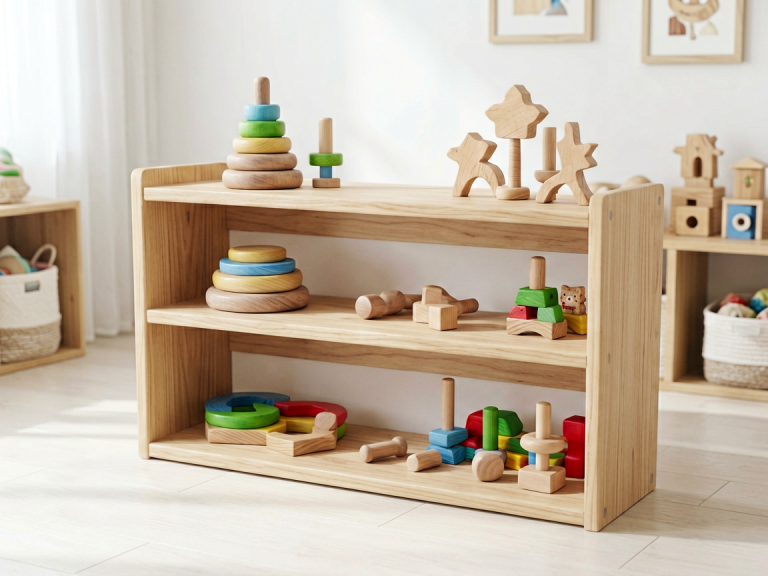
Fine motor control at age five is transitioning from clumsy to deliberate, but it still requires purposeful practice. The best toys in this category combine precision with creativity. Building sets—traditional wooden blocks, magnetic tiles, LEGO Duplo, or interlocking bricks—require the child to align, press, and balance small components. This strengthens the small muscles of the hand and improves hand-eye coordination. Arts and crafts supplies, including safety scissors, glue sticks, pipettes, hole punchers, and a variety of papers and yarns, allow children to cut, paste, thread, and weave. These activities not only refine motor skills but also foster planning and perseverance. Drawing materials—crayons, markers, chalk, and finger paints—should be plentiful, but also consider tracing books, stencils, and dot-to-dot pages that provide structured practice for forming shapes and letters. Lacing beads and sewing cards are excellent for developing the pincer grasp needed for writing. For children who resist fine motor work, a child-safe screwdriver set or a nut-and-bolt board can feel like a “real tool” activity and capture their interest. The goal is to offer variety so that different muscle groups are exercised, and to emphasize process over product—praise the effort of cutting crooked lines rather than demanding perfection.
—
Gross Motor Skills: Active Play and Outdoor Toys
Five-year-olds have boundless energy and a biological drive to move. Gross motor toys should support balance, coordination, strength, and spatial awareness. Tricycles, balance bikes, and scooters are excellent for leg strength and vestibular input. Balls of various sizes (soft soccer balls, playground balls, beanbags) encourage throwing, catching, kicking, and bouncing—all of which develop bilateral coordination and tracking skills. Running games such as tag or obstacle courses can be enhanced with simple props like cones, tunnels, and stepping stones. Climbing structures, whether a backyard jungle gym or a sturdy playset, build upper body strength and risk assessment. For indoor active play, consider a mini trampoline with a handlebar, a beanbag toss set, or floor path mats that combine balance and movement. Jump ropes are wonderful but may require patience; start with a long rope swung by adults. A developmental toy path for gross motor skills should also incorporate body awareness toys—like a large inflatable therapy ball for rolling, or a scooter board that requires core stability. Importantly, these toys need not be expensive; a simple cardboard box can become a tunnel, or a blanket can be a parachute. The key is to provide daily opportunities for vigorous, varied movement that builds confidence and physical literacy.
—
Language and Social Skills: Role Play and Cooperative Games
At five, social play peaks in complexity. The right toys can scaffold emerging language and interpersonal abilities. Dress-up costumes and prop boxes (e.g., a doctor’s kit, a kitchen set, a construction worker’s hat with tools) encourage children to adopt roles, negotiate scripts, and use specific vocabulary. This pretend play is not trivial—it is how children practice empathy, perspective-taking, and narrative thinking. Puppets and puppet theaters allow shy children to speak through a character, making language practice less threatening. Cooperative board games, where players work together toward a common goal (e.g., Race to the Treasure, The Sneaky, Snacky Squirrel Game), teach teamwork, communication, and how to cope with shared outcomes. Simple story-sequencing cards or magnetic storyboards let children create and retell narratives, which boosts comprehension and expressive language. Matching games that involve emotion faces help children label feelings and discuss them. For children who are ready, beginner card games like Go Fish or Old Maid promote turn-taking, question-forming, and memory. Do not overlook audiobooks and music-play toys that invite singing, rhyming, and choral response, as these strengthen phonological awareness—a key reading readiness skill. The social toy path should emphasize interaction over isolation; avoid screens or solo electronic toys in favor of objects that require two or more participants.
—
Creativity and Imagination: Art and Open-Ended Toys
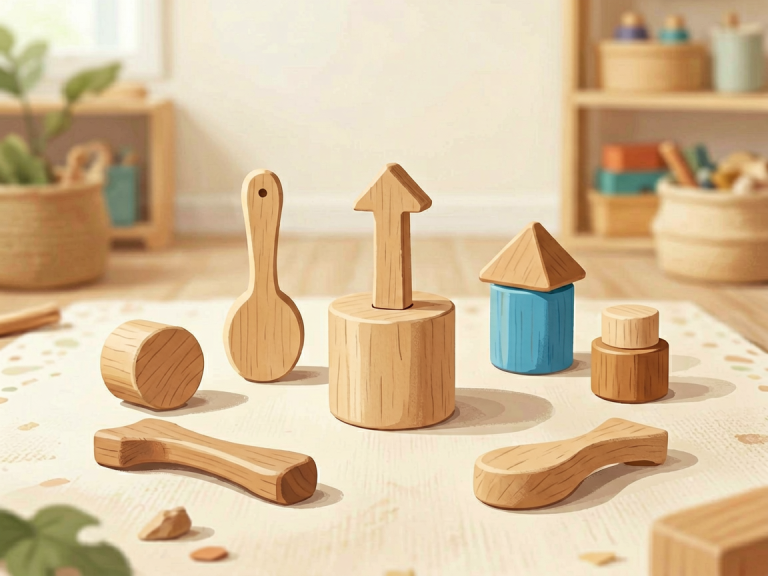
A five-year-old’s imagination is a powerful engine for learning. Open-ended toys—those that can be used in multiple ways with no prescribed outcome—are invaluable because they encourage divergent thinking, problem-solving, and self-expression. Play-dough, clay, and kinetic sand offer sensory feedback and can be shaped into anything from a pizza to a dinosaur. Blocks and loose parts (e.g., wooden discs, fabric scraps, bottle caps, pinecones) invite construction, pattern-making, and symbolic play. Art easels with washable paints, chalk, and large sheets of paper give children freedom to experiment with color, line, and composition. Musical instruments such as a simple xylophone, maracas, a drum, or a recorder introduce rhythm, cause-effect, and emotional expression. Building kits that do not have instructions, like wooden planks or magnetic sticks, challenge children to create their own designs. Perhaps the most powerful open-ended toy is a “maker’s box” filled with glue, tape, cardboard tubes, yarn, beads, and found objects—like a mini junk drawer for engineering and art. These toys foster a growth mindset: because there is no “right” way to use them, children learn to take risks, iterate, and feel proud of their unique creations. In a developmental toy path, open-ended toys should be present at every stage, as they adapt to the child’s changing interests and abilities.
—
Putting It All Together: A Sample Toy Path
A well-designed developmental toy path does not mean buying every toy on the list. Instead, it means selecting a few high-quality items from each category and rotating them to maintain novelty. Here is a sample weekly toy path for a five-year-old:
- Monday (Cognitive focus): A 48-piece floor puzzle + a memory matching game.
- Tuesday (Fine motor focus): Magnetic tiles + child-safe scissors and a collage activity.
- Wednesday (Gross motor focus): A balance bike ride in the park plus a beanbag toss indoors.
- Thursday (Social/Language focus): A cooperative board game or a dress-up scenario with a friend.
- Friday (Creative focus): Open-ended clay and loose parts for building a “town.”
- Weekend (Integrated play): A nature walk with a collection basket, followed by using the finds in a craft.
Rotating toys and introducing a new “challenge of the week” (e.g., “build a bridge that can hold a toy car”) keeps the path dynamic. Observe your child’s interests: a child who loves puzzles might need more logic toys, while one who thrives on movement may need extra outdoor time. The developmental toy path is not a rigid curriculum but a responsive framework—one that respects the five-year-old’s need for fun, agency, and growth.
—
Conclusion
The developmental toy path for five-year-olds is not about accumulating possessions but about curating experiences. By thoughtfully selecting toys that target cognitive, motor, social, language, and creative domains, caregivers provide a rich environment where children can thrive. Each toy becomes a stepping stone—building skills, confidence, and curiosity. The path is never linear: some days the child will return to a simple stacking block with renewed fascination; other days they will dive into a complex game with friends. That is exactly as it should be. Play is the work of childhood, and a well-designed toy path ensures that this work is joyful, meaningful, and deeply developmental. As you navigate this journey with your five-year-old, remember that the most important elements cannot be bought—your presence, encouragement, and willingness to play alongside them are the true catalysts for growth.