The Toy Path for 4-Year-Olds: Designing Play That Builds Minds, Bodies, and Hearts
Introduction: The Power of Play at Age Four
At four years old, a child stands at a remarkable crossroads. The baby years of simple cause-and-effect toys have passed, and the structured academics of kindergarten are still on the horizon. This is the golden age of imaginative play, where every toy becomes a portal to a new world—a cardboard box transforms into a spaceship, a set of blocks becomes a castle, and a stuffed animal becomes a trusted confidant. Yet, as parents and educators, we often face an overwhelming sea of plastic, blinking lights, and marketing claims. How do we choose the right toys? More importantly, how do we create a coherent “toy path”—a sequence of experiences and objects that gently guide a four-year-old’s development across cognitive, physical, social, emotional, and creative domains? This article explores the intentional design of a toy path for four-year-olds, offering a roadmap that balances structured learning with free exploration, and that respects the unique pace of every child.
The Cognitive Toy Path: Laying the Foundations of Thinking
A four-year-old’s brain is a sponge, but it is also a wild garden. The cognitive toy path should provide seeds of logic, pattern recognition, and problem-solving without demanding formal instruction. Board games like “Candy Land” or simple matching games—where a child finds pairs of animals or shapes—teach turn-taking and memory. Puzzles with 12 to 24 pieces encourage spatial reasoning and the understanding that a whole is made of parts. Construction toys such as large interlocking blocks (e.g., Duplo) go a step further: they introduce planning and trial-and-error. A child who builds a tower that falls learns not frustration but persistence. What matters most is that these toys are open-ended enough to allow for multiple solutions. Avoid toys that have only one “correct” answer at this age; instead, choose those that invite experimentation. For example, a set of colored rings that can be stacked in various orders (not just by size) teaches classification and comparison. As the child progresses, you can introduce simple counting toys—like plastic animals numbered from 1 to 10—but always through play, not drilling. The cognitive path for a four-year-old is not about accelerating intellect; it is about fostering curiosity and the joy of figuring things out.
The Motor Skill Toy Path: From Gross to Fine—And Everything in Between
Four-year-olds are in a constant state of motion, but their coordination is still maturing. An effective toy path addresses both gross motor skills (large muscle movements) and fine motor skills (small, precise movements). For gross motor development, consider toys that encourage running, jumping, and balancing: a small tricycle or balance bike, a set of soft foam stepping stones for obstacle courses, or a large bouncy ball for chasing. Outdoor play should not be an afterthought—it is a critical part of the toy path. For fine motor skills, look for toys that strengthen the small hand muscles needed for writing: lacing beads, pegboards with large pegs, sturdy plastic scissors for child-safe cutting, and modeling clay that can be rolled, pinched, and shaped. Playdough alone, with simple tools like a rolling pin and cookie cutters, offers endless practice. A particularly valuable toy for this age is the “threading” activity—a shoelace with a wooden needle and large wooden beads. It requires focus and hand-eye coordination. Note that the toy path should alternate between active and calm activities. A child who has just run for twenty minutes may then happily sit and string beads. The balance prevents burnout and honors the natural rhythm of a four-year-old’s energy.
The Social-Emotional Toy Path: Learning Through Cooperation and Role-Play
At four, children begin to understand that others have feelings and perspectives different from their own. This is the prime time for toys that facilitate social play—not just alongside others, but *with* them. A simple play kitchen set, complete with plastic food and utensils, invites children to take on roles: one child is the chef, another the customer. They must negotiate who gets which pot, what is on the menu, and how to share the stove. Toy doctor kits follow the same logic, allowing a child to practice empathy by “treating” a stuffed animal or a friend. Dollhouses or playsets with small figures (people, animals, cars) are also powerful. When a child re-enacts a family dinner or a trip to the grocery store, they are processing their own experiences and learning to regulate emotions. For example, if a child makes a doll cry because another doll took its toy, the adult can gently ask, “How do you think the doll feels? What could make it feel better?” The toy path should also include cooperative games—not competitive ones. Games where everyone works together to feed a monster pop out of a board, or to build a tower before it falls, teach teamwork over winning. Avoid electronic toys that give instant feedback of “correct” or “wrong”; instead, choose toys that rely on human interaction. The goal is not to program a child’s social behavior but to provide a safe stage for practicing it.
The Language and Literacy Toy Path: Words, Stories, and the Love of Books
Language explodes between ages three and five. A smart toy path for four-year-olds includes materials that expand vocabulary, encourage storytelling, and build pre-reading skills—without pressure. Alphabet puzzles, but with a twist: the letter “A” might have an Apple picture underneath, and the child has to fit the letter into its shape. Magnetic alphabet letters on the refrigerator can be arranged into simple words like “cat” or “dog,” but only if the child is interested. More importantly, a rich collection of picture books is the heart of this path. Toy-like books with flaps, textures, or pop-ups engage reluctant readers. Puppets are another fantastic tool: a simple hand puppet of a bear or a rabbit can “talk” to the child, asking questions and extending their sentences. For example, the puppet says, “I went to the park today,” and the child might reply, “I saw a big slide!” The puppet then asks, “What color was the slide?” This back-and-forth builds narrative skills. Another key toy is a set of storytelling cards—simple images of a boy, a dog, a tree, a rain cloud—that the child can arrange in sequence to tell a story. Avoid flashcards for vocabulary drilling; instead, use toys that embed language in meaningful play. Even a set of plastic farm animals becomes a language lesson when the adult asks, “Where does the pig sleep? What sound does the cow make?” The toy path for language should be joyful, not instructional.
The Creative Toy Path: Imagination, Art, and Self-Expression
Four-year-olds are natural artists, but their creativity can be stifled by toys that dictate how to play. A constructive creative toy path gives them raw materials. Crayons, washable markers, large sheets of paper, and non-toxic finger paints are essential. But go beyond paper: provide a cardboard box that can be painted, cut, and transformed into anything. Offer collage materials—scraps of fabric, feathers, popsicle sticks, yarn—and let the child glue them onto cardboard. For musical creativity, simple percussion instruments (shakers, drums, xylophones) allow a child to experiment with rhythm. Avoid electronic keyboards with preset melodies; instead, a real small xylophone or a set of handbells gives them the freedom to create their own sounds. Dress-up clothes—old hats, scarves, capes, costume jewelry—are the ultimate creative toys. A child wearing a firefighter hat and a tutu is not confused; they are exploring identity and fantasy. The toy path should also include open-ended building sets (like magnetic tiles) that allow for both design and narrative. A child might build a rocket and then “fly” it to the moon with a stuffed animal. There is no “wrong” way to play with these materials. The adult’s role is to offer them, display the results with pride, and resist the urge to say “that doesn’t look like a house”—because to the child, it does.
Choosing the Right Toy Path: Practical Tips for Parents and Educators
Creating a toy path for a four-year-old does not require buying every item on a list. Instead, follow these principles:
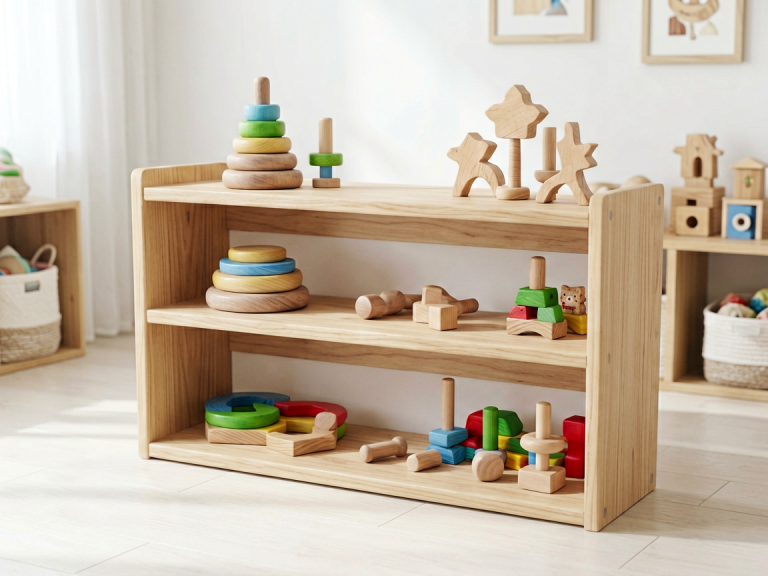
- Rotate toys. Keep only a few toys available at a time (e.g., one puzzle, one building set, one art material, one dress-up item). Rotate every few weeks. This prevents overwhelm and rekindles interest.
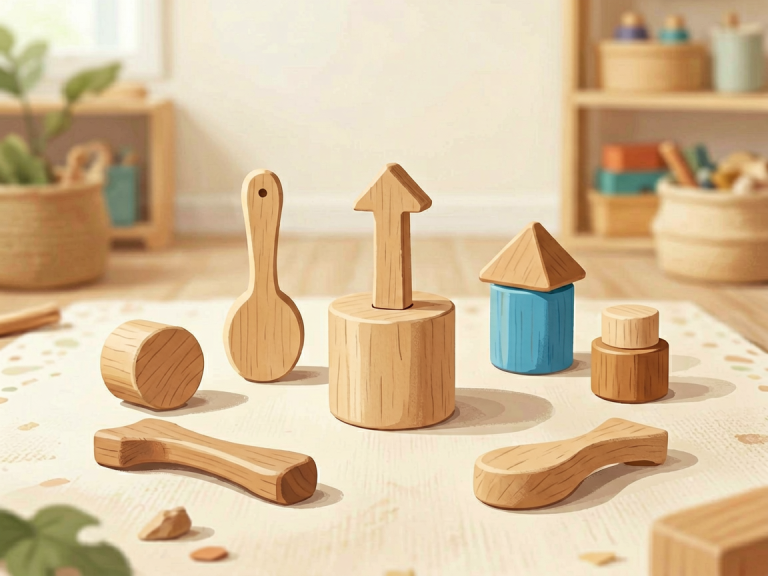
- Prioritize simplicity. A toy that does one thing (like a screen that beeps) is less valuable than a toy that can be used in a hundred ways (like a set of wooden blocks). Wood, fabric, and cardboard are often superior to plastic and batteries.
- Follow the child’s interests. If your four-year-old is obsessed with dinosaurs, feed that interest: dinosaur books, dinosaur figurines, a dinosaur puzzle. The toy path should be flexible, not rigid.
- Include the outside world. The best toy path includes nature: rocks, leaves, sticks, sand, water. A bucket and a shovel in the sandbox are powerful toys.
- Model play. Children learn how to play by watching adults. Sit on the floor and build with blocks. Ask open-ended questions. Show genuine delight.
- Avoid gender stereotypes. Toy paths should not be pink for girls and blue for boys. A four-year-old boy may love playing with a doll; a four-year-old girl may love a truck. Both are entirely normal and healthy.
Conclusion: The Journey, Not the Destination
The toy path for a four-year-old is not a checklist to complete by a certain age. It is a winding, unpredictable journey that mirrors childhood itself. Each toy, each game, each moment of messy play is a stepping stone—not toward some predefined skill, but toward a lifelong love of learning, a sense of competence, and the ability to connect with others. As you select toys for your four-year-old, remember that the most important element is your presence. No toy can replace a parent or caregiver who sits beside them, listens to their stories, and celebrates their creations. The toy path is just the scaffolding; the real building is done by the child, one imaginative leap at a time. So gather your blocks, your crayons, your costumes, and your patience, and join them on the floor. The adventure has only just begun.