Beyond Blocks and Balls: The Next Frontier in Play for Children After Age 3
Introduction
The first three years of a child’s life are a whirlwind of sensory exploration, cause-and-effect learning, and motor development. Toys during this period—soft rattles, stacking rings, shape sorters, and push‑pull carts—are designed to stimulate basic reflexes, fine motor skills, and early object permanence. But what happens when a child turns three? Suddenly, the world of play expands dramatically. Language explodes, imagination takes flight, social interactions become more complex, and physical abilities grow by leaps and bounds. The toys that follow must keep pace with these transformations. This article explores the rich landscape of toys designed for children aged 3 to 7, categorizing them by developmental domain and explaining why each type supports the next stage of growth.
—
The Developmental Leap at Age 3
By their third birthday, most children have mastered walking, running, and climbing. They speak in short sentences, engage in simple pretend play, and begin to understand rules and turn‑taking. Cognitively, they enter what Piaget called the preoperational stage, marked by symbolic thinking, egocentrism, and a burgeoning ability to classify objects. Socially, they start to enjoy playing *with* peers rather than merely alongside them.
Toys for this age group must therefore do more than entertain—they must challenge emerging skills: problem‑solving, creativity, cooperation, fine‑motor dexterity, and gross‑motor coordination. The best toys are “open‑ended,” meaning they can be used in multiple ways, fostering divergent thinking. Below, I break down the major categories that answer the question, “What toys come after 3‑year‑olds’ toys?”
—
Category 1: Construction and Engineering Toys
Why They Matter
Three‑year‑olds love to stack blocks, but after age 3, construction play deepens. Children begin to build intentional structures—towers, bridges, enclosures—and they start to experiment with balance, symmetry, and spatial relationships.
Examples and Benefits
- Duplo or Mega Bloks (larger than standard LEGO): These introduce early engineering concepts without the choking hazard of tiny bricks. Children learn to follow simple pictorial instructions or to create their own designs, exercising planning and persistence.
- Magnetic tiles (e.g., Magna‑Tiles): Magnets allow for gravity‑defying shapes, teaching cause‑and‑effect and geometry. A 4‑year‑old might build a cube, while a 6‑year‑old creates a castle with a working drawbridge.
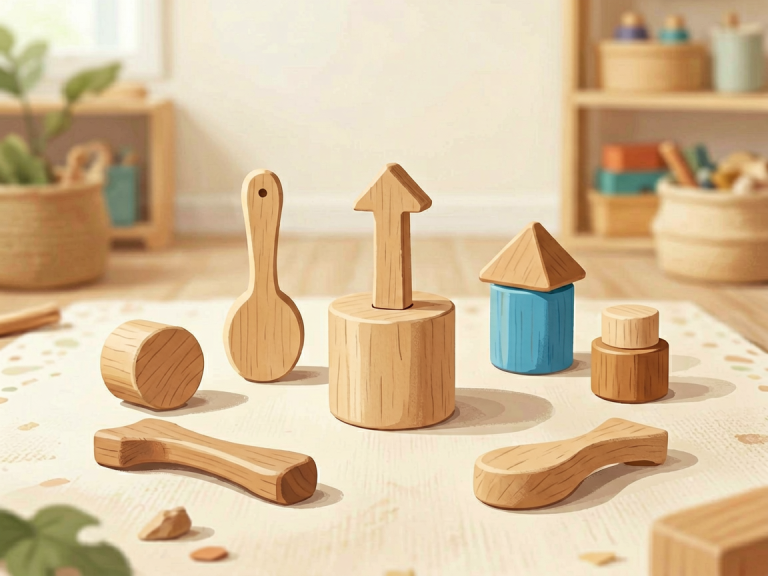
- Wooden unit blocks (standard unit blocks): Open‑ended and timeless, these support cooperative play as children negotiate who builds the tower and who builds the garage.
Developmental Impact
Construction toys strengthen hand‑eye coordination, spatial thinking, and problem‑solving. They also build frustration tolerance: when a tower falls, the child learns to try again—a lesson in resilience. Research shows that block play in early childhood correlates with later math achievement.
—
Category 2: Imaginative and Role‑Playing Toys
Why They Matter
Around age 3, pretend play shifts from simple actions (e.g., pretending to drink from an empty cup) to complex storylines involving multiple characters and settings. This is the foundation of social understanding, narrative skills, and emotional regulation.
Examples and Benefits
- Dress‑up costumes and props: Firefighter hats, princess dresses, doctor kits, tool belts. A child who puts on a police cap instantly adopts a new identity, practicing empathy and perspective‑taking.
- Play kitchen or grocery store: These allow children to re‑enact everyday routines. They “cook” meals, “shop” for food, and “serve” customers, all while practicing sequencing (first wash, then cut, then cook) and cooperation.
- Puppets and dollhouses: Puppets let children externalize feelings. A shy child might speak through a lion puppet; a dollhouse family can re‑enact conflicts and solutions.
- Vehicles with small figurines: A fire truck, a farm set, or a rescue helicopter with minifigures encourages storytelling about community helpers.
Developmental Impact
Role‑playing fosters language development (describing actions, creating dialogues), social skills (negotiating roles, sharing props), and creative thinking. It also helps children process real‑life experiences—a visit to the doctor or a new sibling—in a safe, controlled way.
—
Category 3: Early Learning and Puzzle Toys
Why They Matter
Cognitive development accelerates between ages 3 and 6. Children begin recognizing letters, numbers, patterns, and sequences. They also develop the ability to focus on a task for longer periods.
Examples and Benefits
- Jigsaw puzzles (starting with 12–24 pieces, then 48–100): Puzzles train visual‑spatial reasoning, hand‑eye coordination, and concentration. A child learns to match shapes and colors, and to use the box picture as a guide.
- Simple board games (e.g., Candy Land, Chutes and Ladders): These introduce turn‑taking, counting, following rules, and handling wins and losses gracefully. Games with a spinner or dice also reinforce number recognition.
- Matching games and memory cards: Flipping cards to find pairs exercises working memory and attention.
- Letter and number magnets on a metal board: Children can arrange the alphabet or form simple words, laying the groundwork for literacy.
Developmental Impact
Structured puzzle‑ or game‑based play builds executive functions such as inhibitory control (“Wait for my turn”) and cognitive flexibility (“If this piece doesn’t fit, try another”). It also provides a low‑stress introduction to academic concepts.
—
Category 4: Creative and Artistic Toys
Why They Matter
Three‑year‑olds love to scribble, but after age 3, children’s drawings become more representational. They want to create things that look like something—a house, a person, a rainbow. Art toys fuel self‑expression and fine‑motor refinement.
Examples and Benefits
- Washable markers, crayons, and colored pencils: Drawing and coloring strengthen the tripod grip needed for writing later. Blank paper (not just coloring books) encourages original thought.
- Safety scissors and glue sticks: Cutting and pasting develop bilateral coordination (using both hands simultaneously) and planning (“I need to cut here and glue there”).
- Play‑dough or air‑dry clay: Squeezing, rolling, and shaping clay builds hand muscles. Children can make “food,” “animals,” or abstract sculptures.
- Watercolor paint sets and large brushes: Painting allows for mess‑making in a contained way, teaching color mixing and cause‑and‑effect (too much water makes a wash).
- Sticker books and collage materials: Peeling stickers hones pincer grasp; arranging them on a page exercises design sense.
Developmental Impact
Artistic play promotes sensory integration, emotional expression, and fine‑motor precision. It also builds confidence: a child’s painting may be “abstract” to an adult but is a masterpiece to the young creator.
—
Category 5: Outdoor and Gross Motor Toys
Why They Matter
After age 3, children’s gross‑motor skills become more refined—they can hop, skip, pedal a tricycle, and catch a large ball. Physical play is essential not only for health but also for brain development, as movement activates neural connections.
Examples and Benefits
- Tricycles or balance bikes: These build leg strength, coordination, and spatial awareness. Balance bikes (no pedals) are especially good for preparing children for a two‑wheeler.
- Kickballs, soft foam balls, and beanbags: Catching, throwing, and kicking improve hand‑eye coordination and bilateral coordination. Simple games like “catch” or “kick the ball to the goal” teach rules and turn‑taking.
- Climbing structures (small slides, tunnels, step‑stool platforms): Safely climbing and sliding develops muscle strength and risk‑assessment skills.
- Jump ropes and hop‑scotch mats: Jumping games build cardiovascular endurance and rhythm.
- Gardening tools (child‑size shovel, watering can): Digging, planting, and watering connect children to nature and teach responsibility.
Developmental Impact
Outdoor play reduces stress, improves attention, and provides crucial sensory input (sunlight, air, textures). It also encourages social interaction: a group of children can invent a chasing game or cooperate in a “treasure hunt.”
—
Conclusion: Choosing Toys That Grow with the Child
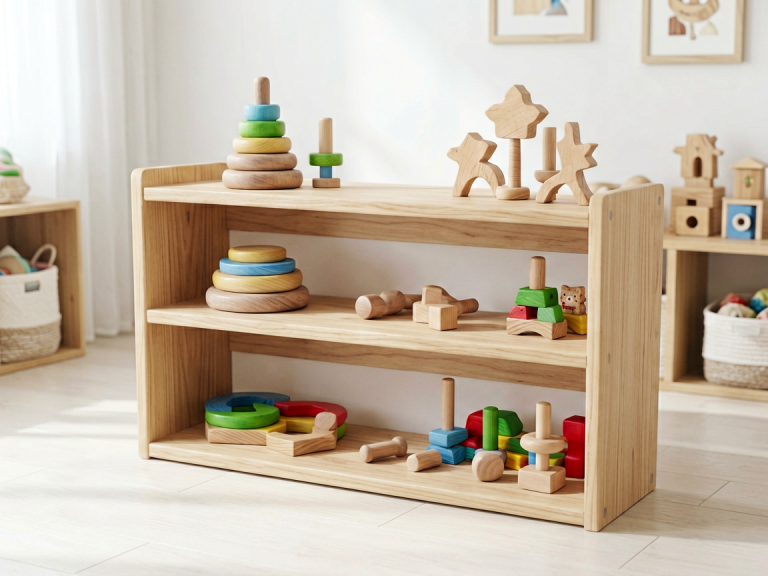
The transition from “3‑year‑olds’ toys” to the next stage is not about discarding all old favorites—it’s about adding layers of complexity. A child who loved stacking rings at 18 months may now enjoy a magnetic tile set; a toddler who babbled into a toy phone now orchestrates a full dramatic scene with puppets.
Parents and caregivers should look for toys that:
- Are open‑ended (multiple uses over time),
- Match the child’s current interests (dinosaurs, fairies, construction vehicles),
- Encourage interaction (with peers or adults),
- Challenge without frustrating (the “Goldilocks” principle: not too easy, not too hard).
By offering a balanced mix of construction, imagination, puzzles, art, and active play, we give children aged 3–7 the tools they need to build not just towers and stories, but also the cognitive, social, and physical foundations for lifelong learning. The toys after 3 are not merely “more advanced” versions of baby gear—they are passports to a world where play mirrors life, and where every block stacked, every dragon defeated, every race won (or lost) becomes a tiny lesson in becoming human.