The Best Toy Path for Problem Solving: Cultivating Critical Thinkers Through Play
Introduction: Why Toys Matter for Problem-Solving Skills
From the moment a child picks up a rattle or stacks a tower of blocks, they are engaging in a form of problem solving: “How do I make this sound?” “What happens if I put this piece on top?” Play is the natural language of childhood, and toys are the tools through which children learn to navigate challenges, experiment with solutions, and build cognitive resilience. Yet not all toys are created equal when it comes to fostering problem-solving abilities. The best toy path for problem solving is not a single gadget or game, but a carefully sequenced journey that progresses from concrete, tactile exploration to abstract, strategic thinking. This path respects developmental stages, encourages a growth mindset, and transforms play into a lifelong habit of analytical curiosity. In this article, we will explore a five‑phase toy path that guides children—from toddlers to teenagers—through increasingly sophisticated problem‑solving experiences, ensuring that each phase builds upon the last and that the child emerges as a confident, creative thinker.
Phase One: Sensory and Manipulative Play – The Foundation
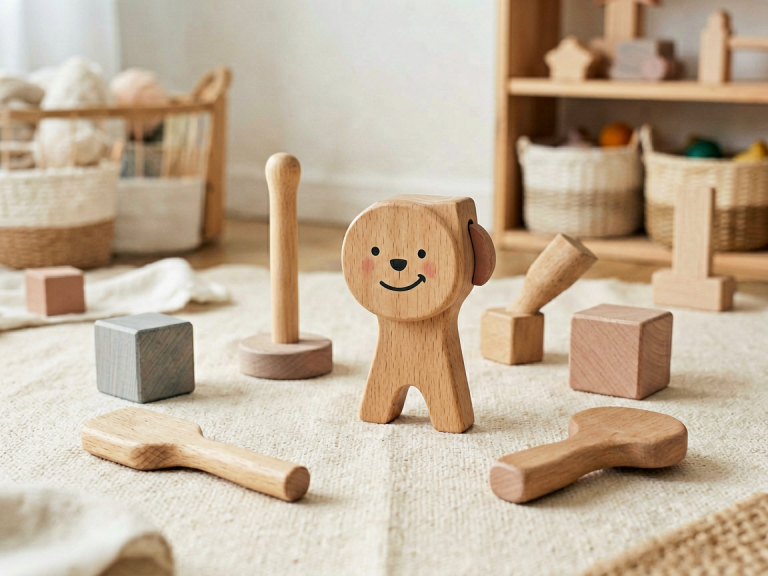
Every problem‑solving journey begins with the simplest of interactions: cause and effect. For infants and toddlers, the best toys are those that invite sensory exploration and basic manipulation. Classic items such as nesting cups, shape sorters, stacking rings, and large, soft building blocks provide the earliest lessons in trial and error. When a child tries to fit a square peg into a round hole, they are not just practicing fine motor skills; they are formulating a hypothesis (“Maybe this shape will go in if I turn it”) and testing it. Failure is immediate, non‑judgmental, and repeatable. This phase is critical because it establishes the foundational mindset that problems have multiple possible solutions and that persistence pays off.
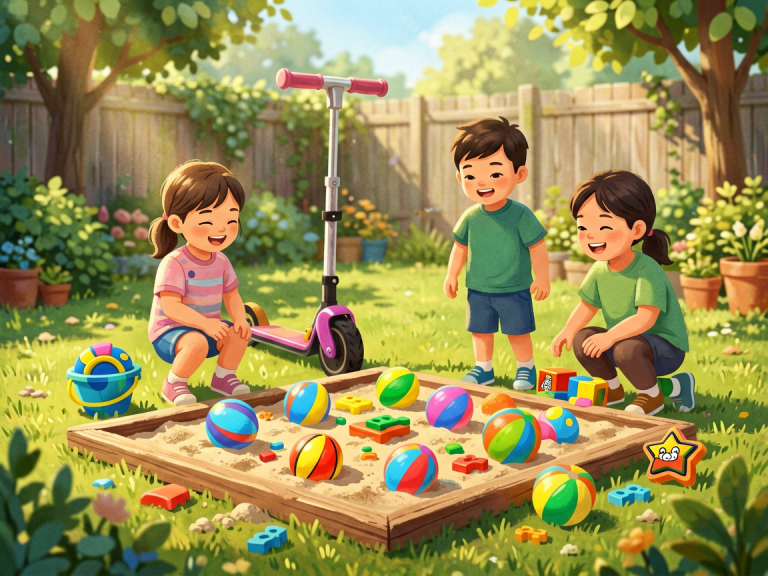
Consider the humble set of wooden blocks. A two‑year‑old must figure out how to balance one block on another without toppling the tower. They learn about gravity, symmetry, and the consequences of their actions. As they grow, they begin to plan: “I’ll put the big blocks at the bottom so the tower doesn’t fall.” This is primitive problem solving, but it is genuine. During this phase, the adult’s role is to provide a rich variety of materials—sand, water, play dough, simple puzzles—and to resist the urge to correct or demonstrate. The child must discover the solution themselves. This builds intrinsic motivation and the willingness to experiment, which are the bedrock of all later problem‑solving skills.
Phase Two: Construction and Engineering – Understanding Cause and Effect
Between the ages of three and six, children’s cognitive abilities blossom. They can hold more than one variable in mind and begin to understand that actions can be planned in sequence. This is the ideal time to introduce construction toys that require more deliberate assembly: LEGO Duplo, magnetic tiles, wooden train tracks, and interlocking bricks. These toys are open‑ended yet structured—they come with constraints (a limited number of pieces, specific connectors) that force the child to think within boundaries.
For example, a child building a bridge with magnetic tiles must solve several problems simultaneously: How high should the supports be? Will the bridge hold the weight of a toy car? What if I add an arch? They begin to engage in “engineering thinking”: they predict outcomes, test their predictions, and revise their designs. Importantly, these toys also introduce the concept of planning. A child who wants to build a house must mentally map out which pieces are needed and in what order to assemble them. This forward‑thinking is a direct precursor to the kind of step‑by‑step analysis required in mathematics and computer programming.
The best toy path at this stage includes both guided sets (e.g., a specific LEGO castle with instructions) and free‑build sets. The instructions teach children to follow a sequence, a crucial problem‑solving skill in itself, while free‑build encourages creative divergence. Parents can scaffold learning by asking open‑ended questions: “What could you change to make your tower stronger?” “How can you get the train to go around that curve?” Such questions train the child to frame problems and consider alternatives.
Phase Three: Logic and Strategy Games – Developing Systematic Thinking
By late elementary school (ages six to ten), children are ready for toys that demand more abstract reasoning. Board games, card games, and logic puzzles become powerful tools. Games like *Chess*, *Checkers*, *Settlers of Catan* (junior version), *Rush Hour*, *Mastermind*, and *Sudoku* require players to analyze patterns, anticipate opponents’ moves, and formulate long‑term strategies. Unlike construction toys, these games are rule‑based and often involve competition or a defined goal, which adds a layer of challenge that motivates children to think critically.
Take the game *Rush Hour*, a plastic grid with cars that must be moved to allow a specific vehicle to exit. The child must visualize the grid, mentally simulate moves, and backtrack when they hit a dead end. This is exactly the kind of spatial reasoning and systematic search that underpins complex problem solving in fields like logistics and computer science. Similarly, strategy board games teach children to evaluate multiple options, weigh risks, and make decisions under uncertainty. They also introduce the concept of “optimal” versus “good enough” solutions—a subtle but important distinction.
This phase is also ideal for introducing puzzles that require deductive logic, such as *Clue* or *Logic Grid Puzzles*. Children learn to eliminate possibilities and combine clues to reach a single solution. The adult’s role shifts from facilitator to coach: rather than giving answers, they help the child articulate their reasoning: “Why do you think that move is better?” “What information do you have that supports that conclusion?” This verbalization strengthens metacognition, the ability to think about one’s own thinking, which is a hallmark of expert problem solvers.
Phase Four: Open‑Ended Creative Kits – Embracing Trial and Error
As children enter pre‑adolescence, they often crave more autonomy and complexity. The next step on the best toy path involves open‑ended kits that combine engineering, physics, and creativity. Marble runs, Rube Goldberg contraptions, K’Nex roller coasters, and simple machine kits (pulleys, levers, gears) allow children to design systems where multiple components interact. These toys are particularly valuable because they teach that problems rarely have a single solution—and that failure is an integral part of the design process.
Consider a marble run kit. To make the marble travel from a starting point to a target, a child must consider height, angle, momentum, and timing. The first attempt rarely works perfectly. The marble might fly off the track, get stuck, or stop short. The child must diagnose the problem: “The curve is too sharp; the marble is moving too fast.” Then they tweak a single element—raising the ramp, smoothing a joint—and test again. This iterative cycle of hypothesize‑test‑analyze‑revise is the essence of scientific problem solving. Moreover, because the final goal is self‑defined (e.g., “I want the marble to ring a bell at the end”), the child is deeply invested in the outcome.
Creative kits also introduce the concept of constraints—limited pieces, specific angles, or physical laws—that force the child to think not just about what they *want* to build, but about what is *possible*. This phase is where children learn to break large problems into smaller subproblems: “First I’ll build the drop, then the loop, then the funnel.” They also learn to use available resources efficiently, a skill that translates directly to real‑world problem solving.
Phase Five: Coding and Robotics – Abstract Problem Solving
The final phase of the best toy path brings children into the realm of abstract, symbolic logic. Toys such as programmable robots (e.g., *Sphero*, *LEGO Mindstorms*, *Botley*), coding apps (e.g., *Scratch*, *Tynker*), and microcontrollers (e.g., *micro:bit*, *Arduino* kits) require children to translate physical actions into sequences of instructions. This is the purest form of problem solving: defining a goal, breaking it into steps, writing commands, debugging errors, and optimizing the solution.
For instance, a child programming a robot to navigate a maze must first understand the maze’s layout, then mentally decompose the path into moves (forward, turn left, repeat). When the robot crashes into a wall, the child must use deductive reasoning to locate the error in the code—was it a missing turn, an incorrect loop count, or a sensor glitch? Debugging teaches patience, attention to detail, and the understanding that problems are often hidden in subtle assumptions.
Coding toys are especially powerful because they make abstract concepts tangible. A child can see that a “loop” repeats an action, and that a “conditional” (if‑then statement) changes the robot’s behavior based on sensor input. This demystifies technology and equips children with a mental framework for tackling complex problems in any domain. Moreover, coding toys encourage collaboration: children often work in pairs to design and debug, learning to communicate ideas, negotiate solutions, and share credit—all essential problem‑solving skills in the real world.
Conclusion: The Path as a Continuous Journey
The best toy path for problem solving is not a rigid checklist but a developmental roadmap that respects each child’s pace and interests. It begins with the sensory delight of stacking blocks, progresses through the structured logic of games and puzzles, embraces the creative chaos of marble runs, and culminates in the abstract elegance of code. Each phase lays the cognitive groundwork for the next, ensuring that skills are built steadily and deeply. The common thread is that all these toys share a fundamental quality: they invite the child to ask “What if?” and “Why not?”—and then to discover the answers through their own effort.
Parents and educators can support this journey by providing a diverse toy library, by allowing ample time for unstructured play, and by celebrating effort over outcome. When a child’s tower falls, when their puzzle piece doesn’t fit, when their robot spins in circles, these are not failures; they are the raw materials of problem solving. The most important lesson is that the process is the goal. By following this path, children come to see themselves as capable, creative problem solvers—a gift that no single toy can give, but that the right sequence of toys can cultivate for a lifetime.