From Blocks to Blueprints: The Power of Toy Progression in Nurturing Creativity
Introduction
In a world that increasingly prizes innovation, adaptability, and original thought, the cultivation of creativity has become a paramount goal for parents, educators, and society at large. Yet creativity is not a fixed trait that children either possess or lack; it is a skill that can be developed, shaped, and refined through experience. Among the most underappreciated catalysts for this development are toys. Not any toys, however, but those that form a coherent *progression*—a carefully sequenced journey from simple, open-ended objects to more complex, structured systems that challenge a child’s imagination, problem-solving abilities, and critical thinking.
Toy progression for creativity is the deliberate design and selection of playthings that grow with the child, offering increasing degrees of complexity, constraint, and possibility. It is the difference between handing a toddler a single plastic car and later introducing a set of modular tracks, ramps, and obstacles. It is the shift from stacking wooden blocks to building a gear-driven machine. This progression mirrors the development of creative thinking itself: from raw exploration and sensory delight to hypothesis testing, pattern recognition, and ultimately, original creation. In this article, I will explore why toy progression matters, how it maps onto cognitive and creative development, and what practical steps caregivers can take to harness its power.
—
The Foundations of Open-Ended Play: Why Simplicity Sparks the First Spark
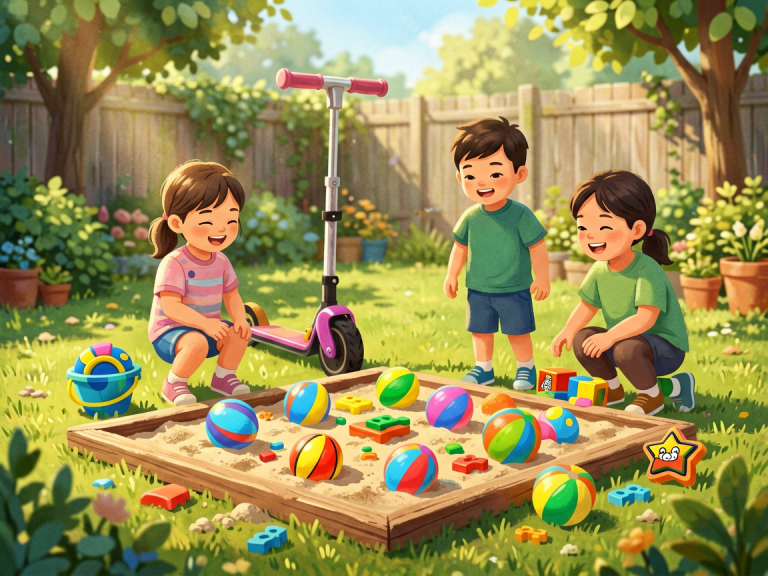
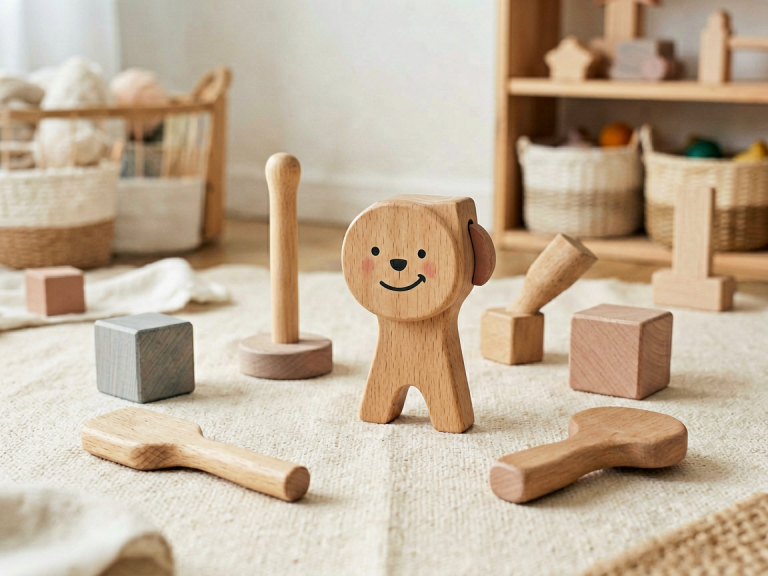
Before a child can design a spaceship, they must first understand what a block feels like. The earliest stage of toy progression emphasizes *open-endedness*—toys that have no predetermined outcome, no single correct use, and no fixed narrative. Think of classic wooden blocks, nesting cups, smooth stones, clay, or simple cloth dolls. These objects are profoundly simple, yet they offer infinite possibilities. A two-year-old stacking blocks is not merely practicing motor skills; they are learning causality (tall towers fall), balance (wider bases are more stable), and symbolic representation (this block is a car, this block is a person).
Research in developmental psychology consistently shows that open-ended toys outperform electronic, single-function toys in fostering divergent thinking. A study published in *Early Childhood Education Journal* found that children who played with simple building materials demonstrated significantly more creative problem-solving than those who played with flashy, pre-programmed toys. The reason is intuitive: when a toy does not dictate its own use, the child must invent the use. This act of invention is the seed of creativity.
Yet many parents mistakenly believe that more features equal more creativity. A singing, flashing, talking toy may entertain, but it rarely invites the child to create. The toy’s function is already complete. In contrast, a set of plain interlocking discs offers no such closure. The child must decide: is this a wheel? A hat? A flower? A flying saucer? This cognitive gap between the object and its possible meanings is precisely what drives imaginative thought. Thus, the first stage of toy progression is not about sophistication—it is about *possibility*.
—
The Role of Complexity and Challenge: Scaffolding Creative Growth
As children mature, typically around ages four to seven, their cognitive abilities expand. They begin to grasp cause and effect more reliably, understand sequences, and engage in symbolic play with more elaborate narratives. At this point, toy progression must introduce *structured complexity*—toys that still allow for open-ended play but now incorporate rules, constraints, or physical principles. Examples include construction sets with specialized pieces (like LEGO or Magnetic Tiles), simple board games, marble runs, and basic science kits (e.g., mixing baking soda and vinegar).
Why is complexity important for creativity? Because creativity does not flourish in a vacuum of infinite freedom. True creative breakthroughs often arise when working within constraints. A poet constrained by a sonnet structure may produce more innovative language than one with endless free verse. Similarly, a child given a limited set of magnetic rods and balls must figure out how to build a stable bridge using only those specific shapes. The constraint forces problem-solving, iteration, and lateral thinking.
Consider the classic marble run. A child is provided with a series of tubes, ramps, and connectors. There is no single correct way to build the run. Yet the physical laws of gravity and momentum impose constraints. If the ramp is too steep, the marble flies off. If the connectors are too loose, the structure collapses. The child must hypothesize, test, revise, and retest. This process is a microcosm of the creative engineering process. Moreover, the toy invites *progressive complexity*: the child can start with a simple, straight drop and gradually add turns, loops, and obstacles. Each new challenge builds on previous knowledge, scaffolding the child’s creative confidence.
Crucially, this stage also nurtures *frustration tolerance*—an essential component of creativity. Many adults abandon creative projects at the first sign of difficulty. A child who learns, through toys, that failure is not an endpoint but a data point will carry that resilience into later life. Toy progression at this stage should therefore offer challenges that are just difficult enough to require effort, but not so difficult as to cause despair. This is the “zone of proximal development” applied to play.
—
From Manipulation to Imagination: Stages of Toy Progression
To fully appreciate the arc of toy progression for creativity, it is helpful to map it onto the typical stages of childhood development. While every child is unique, a general pattern emerges:
Stage 1: Sensory and Exploratory (0–2 years)
Toys: soft blocks, rattles, textured balls, nesting cups, water play.
Goal: Cause-and-effect understanding, sensorimotor integration, and the realization that the child can influence the environment. Creativity here is purely emergent—the baby discovers that shaking a rattle makes a sound, then shakes it differently to vary the sound.
Stage 2: Symbolic and Pretend (2–4 years)
Toys: dollhouses, play kitchens, simple figurines, dress-up clothes, basic construction blocks.
Goal: The child begins to represent one thing with another. A block becomes a phone; a blanket becomes a cape. This is the birth of metaphor, the foundation of creative thinking. Toy progression at this stage should offer *archetypal* objects that can be many things. A plain wooden train track can become a road, a river, or a racecourse.
Stage 3: Constructive and Systematic (4–7 years)
Toys: LEGO, K’NEX, magnetic tiles, marble runs, simple puzzles, pattern blocks.
Goal: The child moves from pure representation to *design*. They plan a structure, execute it, and modify it. Creativity becomes intentional. Toy progression should now include manuals or example projects, but with the freedom to deviate. A LEGO set that builds a police car is fine—but the child should also be encouraged to modify it into a spaceship or a submarine.
Stage 4: Advanced Systems and Collaboration (7–11 years)
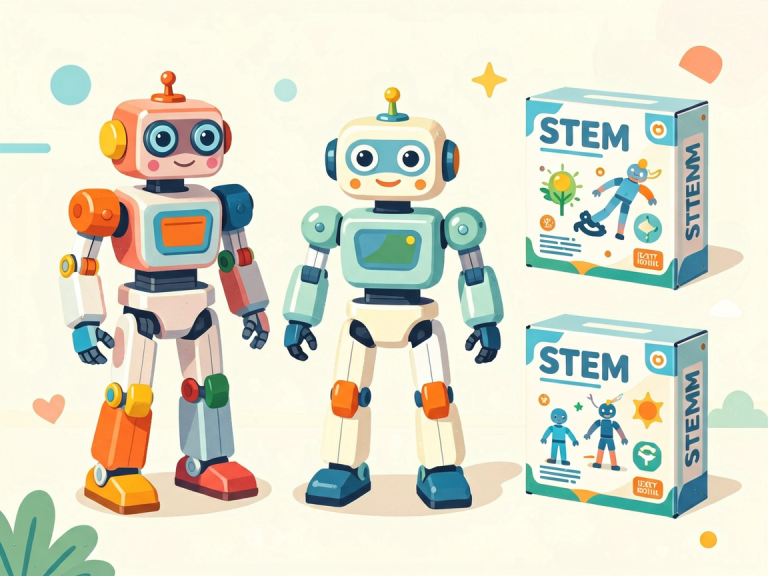
Toys: robotics kits (like LEGO Mindstorms or Sphero), coding games, complex board games with strategy, model kits, electric circuit sets.
Goal: Creativity becomes *systematic*. The child must integrate multiple variables: programming logic, mechanical constraints, aesthetic choices. Collaboration with peers becomes important; cooperative games encourage shared creative problem-solving. Toy progression here often involves *modularity*—the ability to combine different kits or systems (e.g., adding a light sensor to a motorized car).
Stage 5: Independent Creation and Prototyping (11+ years)
Toys: 3D printing pens, advanced construction sets (like Maker’s Studio), digital design tools, open-ended craft supplies, electronics platforms (Arduino).
Goal: The child becomes a *creator* rather than a consumer of play. They identify a need or a desire—a better pencil holder, a remote-controlled vehicle, a cosplay prop—and they use the tools at hand to realize it. Toy progression at this stage is less about specific toys and more about *toolkits* that allow for genuine innovation.
This progression is not rigid; children may cycle through stages or skip some. But the underlying principle holds: creativity flourishes when the child’s environment provides increasingly sophisticated *invitations* to think, build, and invent.
—
How Parents and Educators Can Guide the Journey
Recognizing the value of toy progression is one thing; implementing it is another. Here are practical strategies for parents, teachers, and caregivers who wish to nurture creativity through thoughtful toy selection.
1. Observe, Then Provide
Rather than buying a popular toy, observe the child’s current interests and abilities. A child who loves building tall towers with blocks may be ready for a more structured construction set. A child who invents elaborate stories with figurines may benefit from a set that includes diverse characters and settings. The key is to stay one step ahead—offer a toy that slightly extends the child’s current capacity without overwhelming them.
2. Favor Modularity and Combinability
Toys that can be used together across stages are invaluable. LEGO bricks can be used from age 3 to adulthood. A set of wooden blocks can support sensory play, pretend play, and later, architectural design. Modularity encourages the child to see connections between different types of play. A marble run can be combined with building blocks; a magnetic tile structure can serve as the backdrop for a dollhouse scene. This cross-pollination is creativity’s best friend.
3. Limit Passive Entertainment
Electronic toys that “play themselves” (e.g., a singing robot that dances on its own) often offer little creative stimulation. If a device is interactive, it should require input from the child—programming, building, or customizing. A tablet game that lets a child design a virtual roller coaster is far more creative than one where they simply watch a cartoon.
4. Encourage Process Over Product
Children often become frustrated when their creation does not match their mental image. Instead of fixing it for them, ask questions: “What do you think would happen if you made the base wider?” “What if you tried a different shape here?” Emphasize that the fun is in the trying, not in the final result. This mindset reduces the fear of failure and fosters experimentation.
5. Create a Low-Pressure Environment
Toy progression should feel like play, not a curriculum. Avoid forcing a child to use a toy “correctly.” If they want to use LEGO bricks as pretend food for a dollhouse, let them. The creative impulse often takes unexpected turns. By allowing detours, you honor the child’s autonomy, which is essential for intrinsic motivation.
6. Rotate Toys to Maintain Novelty
A common mistake is offering too many toys at once. Overchoice can lead to shallow play. Instead, rotate toys in and out of circulation. When a child rediscoveres a set of magnetic tiles after a month away, they approach it with fresh eyes and possibly new skills. This also prevents the boredom that comes from overfamiliarity.
—
Conclusion: The Lifelong Gift of Playful Progression
The toys of childhood are not mere diversions. They are the raw material from which a creative mind is forged. By understanding the principle of toy progression—starting with simple, open-ended objects and gradually introducing complexity, constraints, and systematic challenges—we can design an environment that nurtures curiosity, resilience, and original thought.
This approach does not require a fortune spent on the latest gadgets. Some of the most powerful toys are the simplest: a cardboard box, a set of colorful blocks, a handful of magnets. What matters is the *sequence*. A child who learns first to explore freely, then to build within constraints, then to design and innovate, will carry that arc of creative development into every aspect of life. They will become the adults who can see a problem, imagine a solution, and persist through failure—because they learned, through play, that every challenge is an invitation to create.
Toy progression for creativity is not a recipe for producing artists or engineers alone. It is a recipe for producing human beings who are comfortable with uncertainty, who delight in novel possibilities, and who have the courage to turn a simple block into the foundation of a new world. That is the most important lesson a toy can teach.