From Push to Pretend: The Art and Science of Toy Progression for Two-Year-Olds
Introduction
The second year of life is a whirlwind of transformation. A child who once toddled uncertainly now runs, climbs, and chatters with startling speed. Their cognitive world, once a blur of immediate sensations, begins to organize into symbols, categories, and imaginative scenarios. For parents and caregivers, selecting toys during this period is not merely about entertainment—it is about supporting a carefully orchestrated developmental progression. The concept of “toy progression” acknowledges that a two-year-old’s play needs evolve in predictable yet individual ways, moving from sensory-motor exploration toward symbolic thinking, social interaction, and problem-solving. Understanding this journey transforms toy selection from a guess into a deliberate act of nurturing. This article explores the developmental milestones that define the second year, the stages of toy progression that align with those milestones, the specific categories of toys that best support growth, and the crucial role of adult guidance in maximizing play’s benefits. The goal is not to prescribe a rigid list but to equip readers with a framework for observing, choosing, and rotating toys that challenge a toddler just enough—without overwhelming them.
The Cognitive and Motor Landscape of a Two-Year-Old
Before discussing toys, one must appreciate the child’s internal revolution. At age two, the brain is wiring itself at a dizzying pace. Language explodes: a typical two-year-old knows around 50–200 words and begins combining them into two-word phrases (“more juice,” “daddy go”). This linguistic leap parallels a shift in cognition known as the transition from the sensorimotor to the preoperational stage (Jean Piaget, 1952). Where once the child knew the world only through touching, mouthing, and acting, they now begin to form mental representations. A block can *stand for* a car; a spoon can *become* an airplane. This symbolic capacity is the foundation for pretend play.
Meanwhile, fine motor skills advance from the crude whole-hand grasp to a more precise pincer grip, enabling tasks like stacking small blocks or turning pages. Gross motor skills gain confidence: running, jumping off low steps, kicking a ball, and climbing onto furniture. However, balance and coordination remain works in progress. Importantly, the two-year-old is also developing a fledgling sense of autonomy—the “terrible twos” are really the “I do it myself” phase. Toys that frustrate rather than challenge can trigger meltdowns, while those that offer just the right level of difficulty foster resilience and pride.
Stages of Toy Progression: Order from Chaos
Toy progression for a two-year-old is not a one-size-fits-all checklist but a general trajectory from the concrete and controlled to the abstract and imaginative. This progression can be understood in three overlapping phases: Practice Play, Symbolic Play, and Emergent Social Play.
*Practice Play* dominates early in the second year. The child repeats actions to master them: filling and dumping a bucket, pushing a button to hear a sound, or rolling a ball back and forth. Toys that support this phase include shape sorters, nesting cups, simple cause-and-effect toys (pop-up toys, musical instruments), and push toys that aid walking. The key is repetition and sensory feedback. A shape sorter, for instance, teaches spatial reasoning and hand-eye coordination; the child practices until the triangle fits into the triangle hole, experiencing a small triumph each time.
As the child approaches 30 months, *Symbolic Play* emerges with force. A toy telephone becomes a real phone call; a cardboard box transforms into a spaceship. This stage demands toys that are open-ended rather than prescriptive. Dolls, stuffed animals, toy kitchen sets, tool benches, and vehicles all invite the child to assign roles and narratives. Importantly, the toy does not need to be realistic—a block can be a cake, a stick can be a wand. The adult’s role is to follow the child’s lead, narrating their actions (“You are feeding the baby a cookie”) and subtly extending the story.
Finally, *Emergent Social Play* begins around age two and a half. Children start to play alongside peers (parallel play) and occasionally engage in simple cooperative activities like rolling a ball back and forth or “cooking” together in a pretend kitchen. Toys that encourage this include large building blocks (where two children can collaborate on a tower), simple board games with one or two rules (like matching games), and outdoor toys such as a small slide or a wagon that requires shared effort. Social play lays the groundwork for empathy, turn-taking, and negotiation.
Key Toy Categories and Their Developmental Roles
To operationalize the progression, it helps to categorize toys by the developmental domain they most directly support—though the best toys cross multiple domains.
*Sensory and Manipulative Toys*: These are the workhorses of the two-year-old’s toy box. Think of play dough, finger paints, sand and water tables, and large beads for threading. Sensory play soothes and engages the brain’s tactile and proprioceptive systems. For a two-year-old, manipulating play dough strengthens hand muscles and provides an outlet for emotions (pounding, squeezing). It also invites symbolic thought: a flattened circle becomes a pancake. Safety is paramount—avoid small beads that pose choking hazards, and always supervise water play.
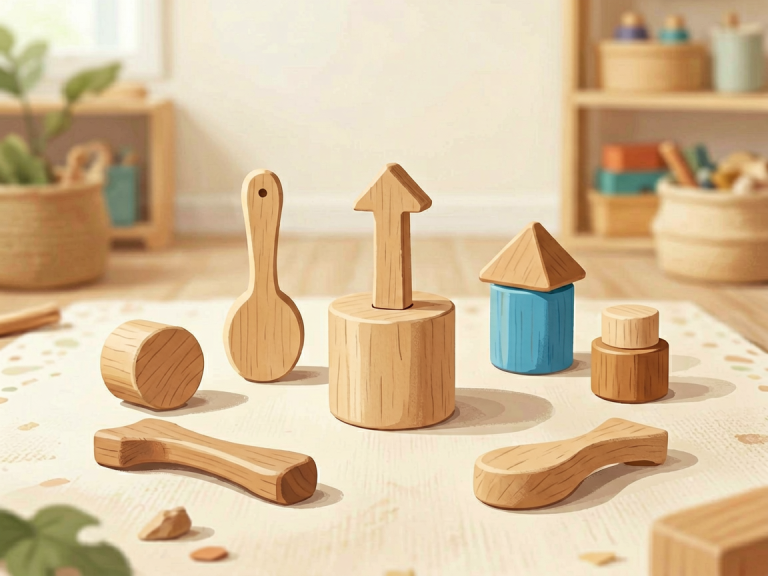
*Construction and Building Toys*: Large wooden blocks, Duplo bricks, and magnetic tiles (with large, sealed magnets) support spatial reasoning, balance, and creativity. A two-year-old may start by simply stacking two blocks, but within months they will attempt towers of six or seven. Knocking them down is not regression; it is experimentation with cause and effect. Construction toys also foster persistence; when a tower topples, the child learns to try again.
*Pretend Play Toys*: Dolls, action figures, play food, pretend phones, doctor kits, and dress-up clothes (simple hats, scarves, capes) are essential. Through pretend play, children process real-life experiences—a visit to the doctor, a bedtime routine—and gain a sense of control. A two-year-old who feeds a doll a bottle is practicing caregiving, language (naming foods), and empathy. The best pretend toys are realistic enough to be recognizable but not so detailed that they dictate the plot.
*Active Movement Toys*: Ride-on toys (without pedals), push cars, small tricycles (if the child’s legs are long enough), balls of various sizes, and low climbing structures. These develop gross motor skills, core strength, and coordination. A ride-on toy that the child propels with their feet encourages leg strength and spatial awareness of speed and direction. Outdoor play is especially important; the American Academy of Pediatrics recommends at least 30 minutes of structured physical activity daily for toddlers.
*Creative and Pretend Building Toys*: Art supplies such as chunky crayons, washable markers, finger paints, and large paper. At two years old, “drawing” is largely scribbling, but those scribbles are the precursors to writing and symbolic representation. The child learns that marks on paper can mean something—a circle is “Mommy.” Offer a variety of materials but avoid frustration by keeping activities short and supervised.
*Puzzles and Matching Games*: Simple puzzles with 2–4 large pieces, peg puzzles, and memory card games with only two or three pairs. These develop logical thinking, visual discrimination, and patience. A child who matches a picture of a dog to a picture of a dog is performing a basic classification task, a cognitive building block for mathematics and reading.
Balancing Safety, Challenge, and the Art of Rotation
Even the most educational toy is useless—or dangerous—if it is not age-appropriate. Safety guidelines for two-year-olds are non-negotiable: no small parts that can fit into a toilet paper roll (choking hazard), avoid toys with long cords or strings (strangulation risk), ensure edges are smooth and paints are non-toxic, and check for loose magnets. Beyond safety, there is the delicate balance of challenge. Vygotsky’s concept of the “zone of proximal development” applies here: a toy should be just beyond what the child can do alone, achievable with minimal adult help. A toy that is too easy bores; one too difficult frustrates. Observing the child’s current abilities—for instance, if they can stack three blocks, a set that encourages stacking six is ideal.
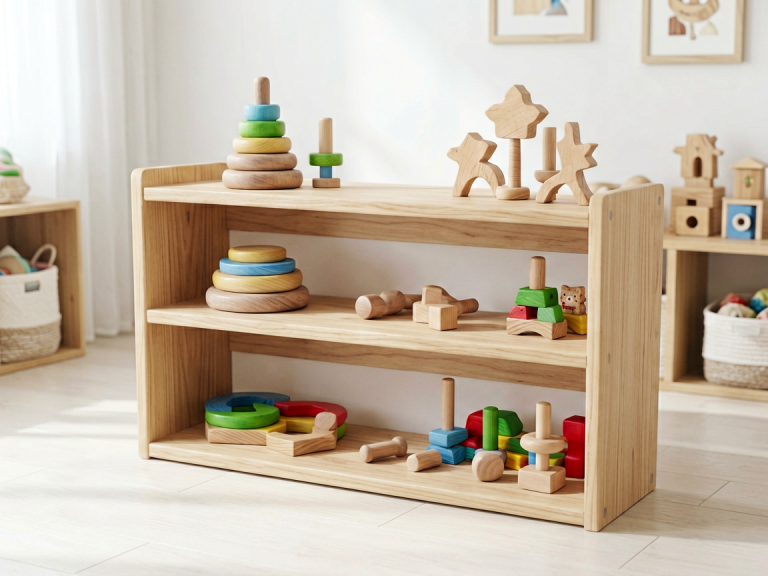
Toy rotation is a powerful strategy. The two-year-old’s limited attention span and need for novelty are best served by storing two-thirds of toys out of sight and rotating a selection every few days or weeks. This keeps the environment fresh, reduces clutter, and prevents overstimulation. When a toy reappears, it feels new again, and the child often engages with it in more advanced ways than before. For example, a shape sorter ignored at 22 months may be rediscovered at 27 months and used not only for sorting but also for stacking or pretend cooking.
The Role of Parental Guidance: More Than Just a Spectator
A toy alone cannot teach a child; the presence of a responsive adult is what transforms play into learning. The two-year-old learns best through joint attention—when an adult follows the child’s focus and adds language or demonstrates a new action. When a child picks up a toy truck, the parent can say, “That’s a big red truck. It goes vroom! Where is the truck going? Oh, to the grocery store? Let’s load it with pretend fruit.” This modeling expands vocabulary, narrative skills, and social understanding. Similarly, when a child struggles with a puzzle, the parent can scaffold by saying, “Try turning that piece around—look, the bumpy part goes here.” Offering just enough help without taking over builds the child’s confidence and problem-solving abilities.
Parental guidance also involves setting limits. A two-year-old may want to throw a block, but the parent can redirect: “Blocks are for building. You can throw this soft ball.” Consistent, gentle redirection teaches appropriate use of materials. Additionally, parents should resist the urge to direct play constantly. Uninterrupted, child-led play—even if it involves a seemingly chaotic sequence of dumping out all the blocks and then walking away—is essential for concentration and creativity. The adult’s presence as a secure base, available for comfort or a quick interaction, is more important than their direct instruction.
Conclusion
The journey of toy progression for a two-year-old is a microcosm of early childhood development itself—messy, nonlinear, and breathtakingly rapid. From the first triumphant bang of a drum to the elaborate tea party staged with stuffed animals, each toy serves as a tool for making sense of the world. The careful selection of toys that honor the child’s current abilities while gently stretching them toward the next milestone is an act of love and respect. By understanding the stages of practice, symbol, and social play; by choosing toys that cross sensory, motor, cognitive, and imaginative domains; by ensuring safety and managing the toy environment through rotation; and by engaging as a thoughtful play partner, adults can turn the simple act of giving a toy into one of the most profound supports for a child’s growth. Ultimately, the best toy is not the one that makes the most noise or has the brightest colors, but the one that invites the child to say, “Look what I can do!”