The Learning Toy Path: Nurturing Development Through Play for 2-Year-Olds
—
Introduction: Why a Learning Toy Path Matters
The second year of life is a whirlwind of discovery. At two years old, children are no longer passive observers of the world; they are active explorers, climbers, talkers, and thinkers. Their brains are forming connections at a staggering rate—nearly 700 new neural connections per second. Every experience, every interaction, and every toy they touch becomes a building block for cognitive, physical, social, and emotional development. Yet, the sheer abundance of toys available can overwhelm parents, caregivers, and educators. How do you choose the right toys that will truly support a two-year-old’s growth? The answer lies in creating a learning toy path—a thoughtful, stage-appropriate sequence of toys and play experiences that scaffold a child’s development without overstimulating or frustrating them.
This article explores what a learning toy path for two-year-olds looks like, why it is crucial at this age, and how you can design one that balances safety, engagement, and challenge. We will examine the developmental milestones of a two-year-old, break down the categories of toys that serve specific learning goals, and offer practical tips to avoid common pitfalls. By the end, you will have a clear roadmap to transform playtime into a rich, supportive learning journey.
—
Understanding the 2-Year-Old Mind: Key Developmental Milestones
Before selecting any toy, we must understand the child. The two-year-old is in a transitional phase—no longer a baby, not yet a preschooler. This age is marked by rapid language acquisition, emerging independence, and a strong drive to make sense of the world through imitation and experimentation.
Cognitive development leaps forward. Two-year-olds begin to engage in symbolic play—pretending a block is a phone or a spoon is a rocket. They can sort objects by one attribute (color or shape), complete simple puzzles, and follow two-step instructions. Memory improves, allowing them to recall where a favorite toy is hidden. However, attention spans remain short—typically only 3–6 minutes for a single activity.
Physical development is equally dynamic. Gross motor skills advance: they run, jump with both feet, climb furniture, and kick a ball. Fine motor skills sharpen: they can turn pages one at a time, hold a crayon with their whole hand (palmar grasp), and stack four to six blocks. They are also learning to feed themselves with a spoon and drink from a cup.
Language development explodes. By age two, most children have a vocabulary of 50–200 words and begin combining two words (“more juice,” “daddy go”). They understand simple questions and enjoy being read to. Socially, they are egocentric but start showing empathy and interest in parallel play (playing alongside but not yet cooperatively). Temper tantrums are common as they struggle with frustration and limited communication skills.
Emotional development centers on autonomy. The famous “terrible twos” reflect a child’s desire for control. They want to choose what to wear, what to eat, and what toy to play with. Toys that offer choices and allow for mastery can channel this drive positively.
A learning toy path must address these milestones simultaneously. A toy that is too simple bores the child; one that is too complex frustrates them. The ideal toy sits in the “zone of proximal development”—challenging enough to stretch their abilities but achievable with a little effort or guidance.
—
Designing the Learning Toy Path: Categories and Principles
A well-structured learning toy path for two-year-olds is not a single toy but a curated collection that rotates and evolves. Below are the essential categories, each targeting specific developmental domains. Within each category, toys should progress from simpler to more complex as the child grows.
Sensory and Exploration Toys
Sensory play forms the foundation of early learning. Two-year-olds are still refining their five senses and building neural pathways through tactile, auditory, visual, and even olfactory input. Sensory toys help them understand cause and effect, develop fine motor skills, and regulate emotions.
- Examples: Textured balls, sensory bins filled with rice or sand, water tables, play dough, instruments like shakers and drums, light-up toys that respond to touch, and fabric books with different textures (furry, bumpy, smooth).
- Progression: Start with large, easy-to-grasp items (a single textured ball) and move to more complex setups (a sensory bin with scoops, containers, and hidden objects). By 2.5 years, children can engage in simple “treasure hunts” in a sensory bin, naming what they find.
Tip: Always supervise sensory play with small items to prevent choking. Use edible sensory materials (like cooked pasta or oatmeal) if mouthing is frequent.
Fine Motor and Manipulative Toys
Fine motor skills are crucial for everyday tasks—buttoning, writing, using utensils. At two, children need toys that strengthen hand muscles and improve hand-eye coordination.
- Examples: Large wooden beads for stringing, shape sorters (with simple shapes), stacking rings, pegboards with oversized pegs, thick crayons or dot markers, puzzles with 2-4 large pieces, and lacing cards with thick laces.
- Progression: Begin with toys that require a whole-hand grasp, like stacking rings. Gradually introduce puzzles that require precise placement. By age 2½, children can try simple “pop beads” or large interlocking blocks.
Warning: Avoid toys with tiny magnets or small parts that can be swallowed. The “choking hazard” label is non-negotiable.
Gross Motor and Active Play Toys
Physical activity is not just about burning energy—it supports balance, spatial awareness, and confidence. Two-year-olds need opportunities to climb, jump, push, pull, and throw.
- Examples: Push/pull toys (wagons, lawn mowers), ride-on toys without pedals (rocking horses, scoot bikes), soft play mats with small slides or tunnels, large balls (8-10 inches in diameter), mini trampolines with handlebars, and stepping stones for balancing.
- Progression: Start with stable push toys that offer support. As balance improves, introduce ride-on toys that require steering. Climbing structures should be low (under 18 inches) with soft landing surfaces.
Safety Note: Never leave a two-year-old unsupervised with active play equipment. Ensure the play area is clear of sharp furniture corners.
Pretend Play and Imaginative Toys
Symbolic play is the gateway to abstract thinking, language development, and social skills. Two-year-olds love to imitate adult activities, which makes pretend play toys powerful learning tools.
- Examples: Play kitchens with pots and pretend food (wooden or fabric), dollhouses with simple furniture, tool benches with plastic hammers and screwdrivers, dress-up clothes with easy fasteners (Velcro, large buttons), doctor kits with stethoscopes, and toy telephones.
- Progression: Start with realistic props (a toy phone that rings) and gradually introduce open-ended items like scarves that can become capes or blankets. At 2, children engage in solitary pretend; by 2.5, they may begin simple role-play with a caregiver.
Observation: Notice what your child imitates in daily life—cooking, cleaning, talking on the phone—and provide toys that mirror those activities.
Language and Literacy Toys
Two-year-olds are language sponges. Toys that encourage vocabulary, conversation, and phonological awareness lay the groundwork for reading.
- Examples: Board books with simple stories and repetitive phrases, interactive books with flaps or sounds, picture cards (flashcards) for naming objects, simple matching games (e.g., “find the dog”), alphabet puzzles with big letters, and toys that sing songs or recite nursery rhymes.
- Progression: At age 2, focus on naming and labeling. By 2.5, children can match pictures to words (with help) and “read” a familiar book by describing the pictures.
Strategy: Read aloud daily and point to objects in the illustrations. Use toy phones to practice turn-taking in “conversation.”
Problem-Solving and Logic Toys
Although two-year-olds are not yet reasoners in the adult sense, they can solve simple problems—how to fit a shape into a hole, how to open a lid, how to reach a toy out of reach. These toys build persistence and cognitive flexibility.
- Examples: Simple cause-and-effect toys (press a button, a figure pops up), nesting cups or barrels, wooden train tracks with large pieces, color-matching games, and “shape sorter” boxes where multiple shapes go into the same hole.
- Progression: Start with one-solution puzzles (the red circle only fits in the red hole). Move to toys that require sequencing (stacking cups from largest to smallest). By age 2½, children can follow a two-step process (e.g., “put the cow in the barn, then close the door”).
—
Tips for Creating and Managing the Toy Path
Designing a learning toy path is as much about curation as it is about usage. Follow these guidelines to maximize benefit and minimize clutter.
1. Rotate Toys Every 2–3 Weeks
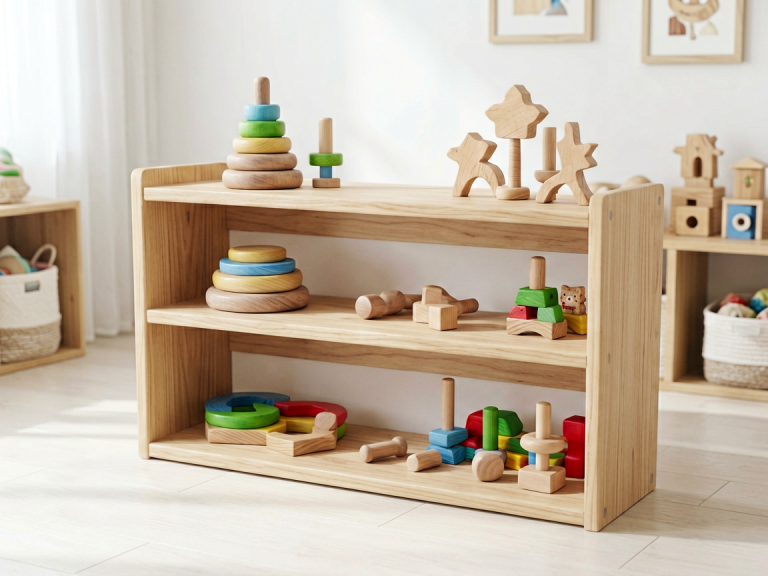
A two-year-old’s interest wanes quickly. Keep only 6–8 toys accessible at a time. Store the rest in opaque bins in a closet. Rotate them every few weeks. This “toy library” approach maintains novelty and deepens engagement with each toy.
2. Prioritize Open-Ended Play
Toys that can be used in multiple ways—blocks, play dough, scarves, cardboard boxes—encourage creativity and problem-solving. Avoid electronic toys that dictate play with lights and sounds, as they often limit imagination.
3. Follow the Child’s Lead
Observe what your child gravitates toward. If they are obsessed with stacking, provide more stacking toys. If they ignore puzzles, try a different type—perhaps floor puzzles with big pieces. The toy path should be flexible, not rigid.
4. Emphasize Safety Above All
For two-year-olds, toys must be:
- Free of small parts that fit inside a toilet paper roll (choking hazard)
- Made of non-toxic materials (look for ASTM, CE, or CPSIA certifications)
- Durable enough to withstand throwing and mouthing
- Without sharp edges, long cords (strangulation risk), or loud noises that could damage hearing
5. Include the Child in Cleanup
Use storage bins with picture labels so the child can help put toys away. This teaches responsibility and categorization—a cognitive skill in itself.
6. Limit Screen-Based “Toys”
The American Academy of Pediatrics recommends no screen time for children under 18 months and only high-quality programming with a caregiver for 2-year-olds. Physical toys that involve hands-on manipulation are far superior for brain development.
—
Conclusion: The Journey, Not the Destination
The learning toy path for two-year-olds is not a prescription for perfection; it is a framework for intentional play. Every child develops at their own pace, and what fascinates one may bore another. The goal is not to accelerate development but to create a rich, supportive environment where curiosity can flourish.
Remember that the most important toy in a two-year-old’s life is you—the caregiver who plays alongside, narrates actions, asks questions, and celebrates every small triumph. A toy can teach a shape, but a smile can teach joy. When you combine thoughtful toys with warm, responsive interaction, you build not just skills, but a lifelong love of learning.
So clear the clutter, watch your child’s eyes light up over a simple set of stacking cups, and know that you are building the foundation for a bright future—one play session at a time. The learning toy path is a journey you take together, and every step is worth celebrating.