Unlocking Imagination: A Parent’s Guide to Nurturing Creative Play at Home
Creative play is far more than a way to keep children busy—it is the foundation upon which problem-solving skills, emotional resilience, and a lifelong love of learning are built. As parents, we often find ourselves caught between the convenience of screens and the messy, unpredictable world of open-ended play. Yet the rewards of stepping back and letting our children lead their own imaginative journeys are immeasurable. This guide will help you understand why creative play matters, how to set up an environment that inspires it, and what you can do—without taking over—to encourage your child’s natural creativity.
Why Creative Play Matters
At its core, creative play is the child’s way of making sense of the world. When a four-year-old turns a cardboard box into a spaceship, she is not just playing; she is practicing narrative thinking, spatial reasoning, and emotional regulation. Research in developmental psychology consistently shows that unstructured, child-led play strengthens executive functions—the cognitive processes that help us plan, focus, and switch between tasks. Unlike structured activities with predetermined outcomes, creative play allows children to experiment without fear of failure. This freedom builds a growth mindset, teaching them that mistakes are simply part of the discovery process.
Moreover, creative play is a powerful vehicle for emotional expression. Children often use dolls, action figures, or imaginary friends to act out scenarios they cannot yet articulate. A child who builds a fortress with blocks and then knocks it down may be working through feelings of frustration or loss. By providing the time and space for this kind of play, parents give their children a safe laboratory for emotional exploration. It is not just fun—it is essential.
Creating an Environment That Invites Play
The single most effective thing parents can do to foster creative play is to design a physical space that says, “Here, you are free to explore.” You do not need a dedicated playroom or expensive toys. In fact, the best play materials are often the simplest: empty containers, fabric scraps, wooden blocks, and art supplies. These are “loose parts”—objects that can be used in countless ways, limited only by a child’s imagination.
To set up a creative play zone, consider these practical tips:
- Keep it accessible. Store materials on low, open shelves so children can choose what they need without asking permission. A few bins labeled “building,” “dressing up,” and “art” help them self-organize.
- Embrace mess. Creativity is messy. A designated spot—a corner with a washable mat or an old tablecloth—can contain the chaos. Let go of the need for tidiness during playtime; you can clean together afterward.
- Rotate materials. Children become bored with the same things. Every few weeks, swap out half the toys and bring in new “loose parts” like pinecones, fabric swatches, or old keys. The novelty reignites curiosity.
- Limit screen time. Screens are passive and highly structured. For creative play to flourish, children need unhurried, unscheduled blocks of time—ideally at least an hour a day—without digital distractions.
Types of Creative Play to Encourage
Creative play takes many forms, and different children gravitate toward different modes. Rather than forcing a particular type, observe what your child naturally enjoys and then offer gentle expansions.
1. Imaginative and Pretend Play
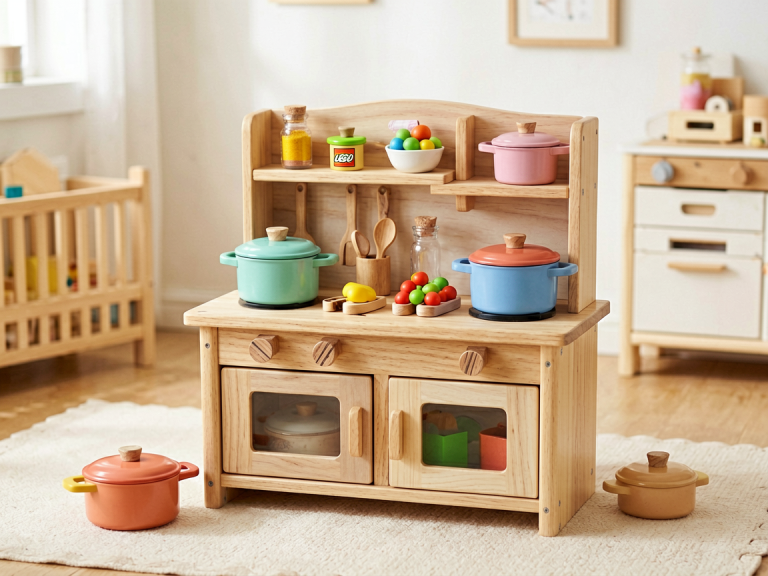
This is the classic “let’s pretend” scenario—playing house, being a superhero, or running an imaginary restaurant. Pretend play is where children practice social roles, negotiate rules, and develop language. You can support it by providing simple costumes (a scarf becomes a cape, a cardboard tube becomes a magic wand) and by asking open-ended questions: “What do you think the dragon eats for breakfast?” Avoid correcting their logic; in their world, dragons eat toast with jam.
2. Construction and Building Play
Blocks, LEGOs, Magna-Tiles, or even recycled materials like yogurt cups and shoeboxes allow children to engineer structures, test balance, and create patterns. This type of play strengthens fine motor skills and spatial awareness. To deepen the experience, challenge gently: “Could you build a bridge that a toy car can drive under?” But let them solve the problem their own way.
3. Artistic and Sensory Play
Finger painting, playdough, sand, water, and clay engage the senses in ways that are deeply calming and rewarding. The process—mixing colors, squishing dough—is more important than the product. Keep a tray or shallow bin for messy materials. Introduce tools like cookie cutters, rolling pins, or even kitchen utensils to expand possibilities. Never force your child to produce a certain result; a lump of clay they declare a “volcano” is a masterpiece.
4. Outdoor and Nature Play
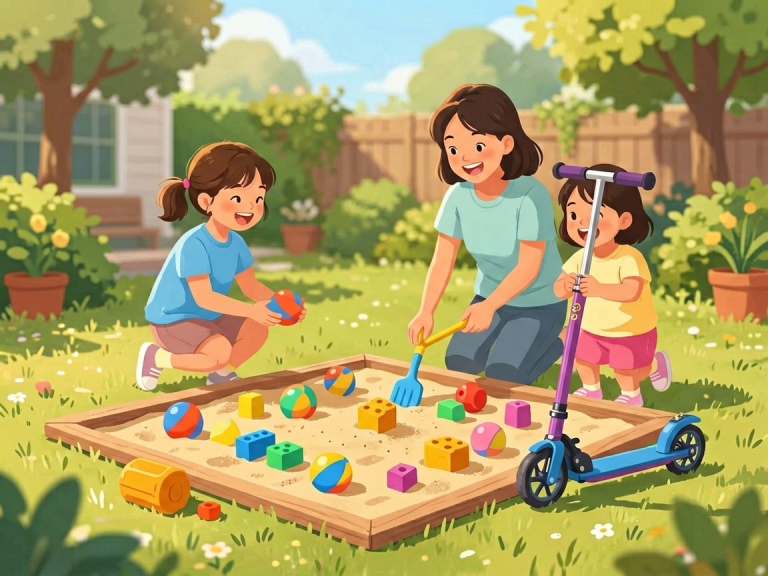
The natural world is the richest play resource. A pile of leaves, a muddy puddle, sticks, and stones invite open-ended play that connects children to their environment. Outdoor play also encourages gross motor development. Encourage digging, building forts, collecting natural treasures, and making mud pies. If you have a garden, let your child have a small patch to dig as they please. Even a balcony with a pot of soil can be a world of discovery.
The Parent’s Role: Facilitator, Not Director
Many parents struggle with the urge to jump in and “teach” during play: “No, that’s not how you build a tower—let me show you.” But the most valuable gift you can give is your quiet presence. You are a stagehand, not the lead actor.
Here are concrete ways to facilitate without taking over:
- Observe first. Before you speak, watch what your child is doing. Notice their focus, their choices, and their body language. Your role is to extend their ideas, not replace them.
- Use descriptive language. Instead of “Good job!” (which evaluates), try “I see you put the red block on top of the blue one—that makes a tall tower!” This validates their effort without shutting down their motivation.
- Ask open-ended questions. Questions like “What would happen if…?” or “How could we make this bigger?” invite thinking. Avoid yes/no questions.
- Model creativity. Let your child see you doodling, building something, or making up a silly song. When you show that creative play is valuable for grown-ups too, you normalize it.
- Know when to step back. If your child is deeply engaged, resist the urge to interrupt. Even if they seem to be struggling, give them time to find their own solution. If they become frustrated, you can offer a small hint rather than a full solution.
Overcoming Common Obstacles
Even with the best intentions, parents face real barriers: lack of time, mess anxiety, and the pressure to have “educational” activities. Let’s address these directly.
“I don’t have time for elaborate setups.” You don’t need them. Creative play can happen in ten minutes with a handful of clothespins and a cardboard tube. The key is consistency, not perfection. Even 15 minutes of uninterrupted, child-led play a day yields benefits.
“The mess drives me crazy.” Set boundaries that work for you. Contain the mess to a specific area, use washable materials, and involve your child in cleanup—make it a game: “Can you put all the red pieces in the basket before I count to ten?” Over time, children learn responsibility without losing the joy of creative freedom.
“My child just wants to watch TV.” This is common, especially with older children. Start small. Turn off screens and put out a simple invitation: a tray of playdough and some buttons, or a stack of blankets for a fort. Sit down and start playing yourself—children often join when they see a parent engaged. Once they remember the satisfaction of creating, they will often choose play over passive entertainment.
Adapting Creative Play for Different Ages
A one-year-old will explore creative play differently from a seven-year-old, but the principles remain the same: open-ended materials, freedom, and a supportive adult.
- Toddlers (1–3 years): Focus on sensory exploration. Offer safe, non-toxic materials like large crayons, playdough, and stacking cups. Follow their lead—if they want to dump a container of blocks, let them; the dumping is the play.
- Preschoolers (3–5 years): Imagination blossoms. Introduce dress-up clothes, simple puppets, and storytelling prompts. They may want you to be a character in their drama. Join in with enthusiasm, but let them direct the plot.
- School-age children (6–9 years): They enjoy more complex projects: building with LEGO kits then modding them, writing simple comics, or creating stop-motion animations. Provide tools like paper, markers, and a tablet with a basic animation app. Encourage collaboration with siblings or friends.
- Older children (10+ years): Creative play evolves into hobbies: coding, knitting, sketching, writing stories, or designing board games. Your role shifts to resource provider and cheerleader. Ask them to teach you something they’ve learned—it affirms their expertise.
Final Thoughts: Trust the Process
Creative play does not need to be Pinterest-worthy. It does not need to produce a framed artwork or a polished performance. Its power lies in the invisible moments—the problem solved, the story invented, the emotion processed. As a parent, you are not required to be an entertainer or a curriculum designer. You simply need to offer trust: trust that your child knows how to play, and trust that play itself is enough.
The next time your child drags a blanket into the living room and announces it’s a castle, resist the urge to suggest a better design. Instead, pull up a cushion, ask if there is a password to enter the castle, and marvel at the world they have built. You are not just allowing play—you are building a bridge to a lifetime of creative thinking, confidence, and joy.