The Power of Play: Toys That Build Logical Thinking
Introduction: Why Logical Thinking Matters
In an age dominated by rapid technological advancement and information overload, the ability to think logically is more valuable than ever. Logical thinking—the capacity to analyze situations, recognize patterns, draw inferences, and solve problems systematically—is not an innate gift but a skill that can be cultivated. While schools emphasize academic curricula, some of the most effective tools for developing this mental muscle are hidden in plain sight: toys. Not all toys are created equal, however. The best ones do more than entertain; they challenge the mind, require strategic reasoning, and reward persistence. From simple wooden blocks to sophisticated coding robots, toys that build logical thinking offer children (and even adults) a playful yet profound way to train the brain. This article explores the diverse categories of such toys, their psychological underpinnings, and why they remain essential in a world dominated by passive screen time.
—
Building Blocks and Construction Sets: The Foundation of Logic
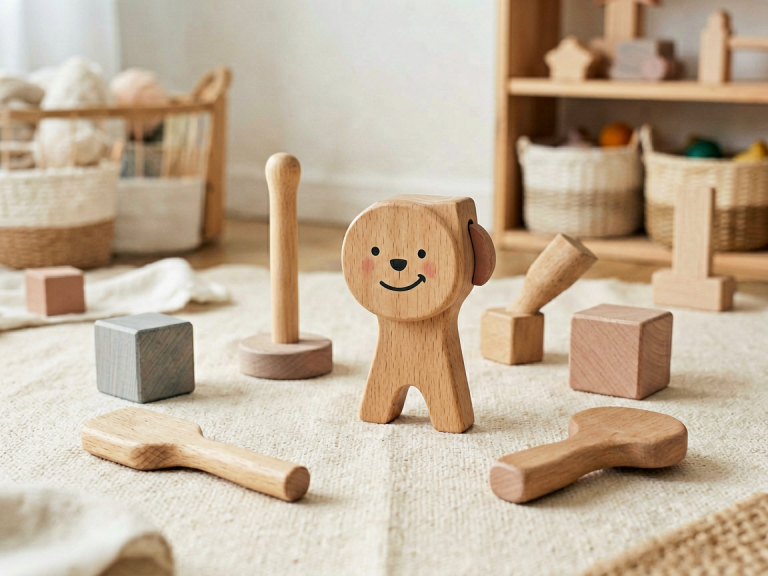
Perhaps the most classic of all logic-building toys are building blocks, from basic wooden cubes to interlocking plastic bricks like LEGO and modular construction systems such as K’NEX or magnetic tiles. At first glance, these toys may seem purely creative, but they are deeply rooted in logical principles. When a child stacks blocks to create a tower, they must intuitively understand balance, weight distribution, and symmetry. The tower collapses if the base is too narrow or the blocks are misaligned—a direct, immediate lesson in cause and effect.
More advanced construction sets introduce constraints: a specific number of pieces, instructions for a complex model, or the need to create a structure that meets particular criteria (e.g., a bridge that can hold a given weight). This forces the child to plan ahead, break a large problem into smaller steps, and troubleshoot failures. For instance, building a LEGO Technic car that actually moves requires understanding gear ratios, axles, and the relationship between different components. These are not just engineering concepts; they are exercises in sequential reasoning—a cornerstone of logical thinking. Research in developmental psychology shows that children who frequently engage with construction toys score higher on spatial reasoning tests and exhibit better problem-solving strategies later in life. The open-ended nature of such play also encourages trial and error, teaching young minds that failure is merely feedback, not an endpoint.
—
Puzzles and Brain Teasers: Sharpening Deductive Reasoning
Puzzles have been a staple of logical thinking for centuries, from ancient tangrams to modern Sudoku and crossword puzzles. What makes puzzles uniquely effective is their requirement for deductive reasoning: starting from given clues and rules, the player must eliminate possibilities and converge on a single correct solution. Jigsaw puzzles, for example, demand pattern recognition—matching shapes and colors—but also strategic organization. Experienced puzzlers often sort by edge pieces first, group by color, and work from the border inward. This meta-cognitive process of planning and sequencing is a direct application of logical thought.
Logic puzzles, such as those found in puzzle books or digital apps like “Logic Grids,” go a step further. They present a set of conditions (e.g., “Alice sits next to Bob but not across from Carol”) and require the solver to construct a coherent scenario. This is pure deductive logic, akin to what mathematicians and computer scientists use. Rubik’s Cubes, another classic, blend memory, pattern recognition, and algorithmic thinking. Solving the cube is not random; it involves learning a series of moves (algorithms) that manipulate the cube’s state in predictable ways. Children who master the Rubik’s Cube often develop a strong sense of systematic problem decomposition. Moreover, puzzles offer a low-stakes environment for practicing the logic of “if-then” statements: “If I turn this row left, then the green piece will move here.” Over time, this reinforces conditional reasoning, which is fundamental to logic and programming.
—
Strategy Board Games: Learning Sequential Thinking and Planning
Board games have experienced a renaissance in recent years, and for good reason. Games like chess, checkers, Settlers of Catan, Ticket to Ride, and even simpler games like Connect Four are powerful vehicles for logical thinking. Unlike puzzles, which have a single correct answer, strategy games involve imperfect information, opponents, and dynamic situations. Players must anticipate consequences several moves ahead, evaluate multiple options, and adapt their plans based on new information. This is the essence of strategic reasoning.
Chess, the archetypal game of logic, trains the mind to consider sequences of moves and their countermoves. It requires evaluating trade-offs—sacrificing a piece now for positional advantage later—which is a form of cost-benefit analysis. Connect Four, though simpler, teaches the importance of looking ahead: a player must think about both their own winning moves and their opponent’s threats. Cooperative games like “Forbidden Island” or “Pandemic” add another layer: players must coordinate actions to achieve a common goal, which requires logical communication and understanding of dependencies. For younger children, games like “Robot Turtles” (a precursor to programming) use a board and cards to teach the concept of commands and debugging. Each of these games forces the player to slow down, think before acting, and consider multiple variables—habits that directly translate to better logical reasoning in academic and real-world contexts.
—
Coding and Robotics Kits: Modern Logic in Action
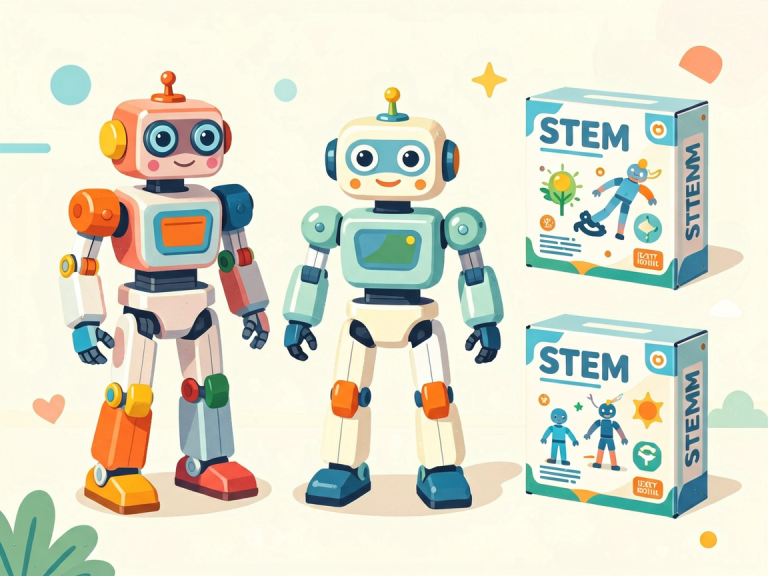
In the 21st century, logical thinking has become synonymous with computational thinking, and toys that teach coding have exploded in popularity. From screen-free options like the “Code-a-Pillar” or “Cubetto” to more advanced robotics kits like LEGO Mindstorms, Sphero, or micro:bit, these toys introduce children to the fundamental logic of programming: sequences, loops, conditionals, and debugging. The beauty of these toys is that they make abstract concepts tangible. A child who programs a robot to navigate a maze must break the task into small steps: move forward, turn left, repeat until obstacle is detected. If the robot crashes, the child must trace the sequence of commands to find the error—a perfect example of debugging, a core logical skill.
Coding toys also teach the importance of precision and order. A single misplaced command can cause the entire program to fail, reinforcing that logic requires exactness. Moreover, many of these kits are open-ended, allowing children to create their own challenges. For instance, using a micro:bit, a child can design a simple game or a temperature logger, which involves understanding input/output relationships and logical conditions (if temperature > 30°C, then show a warning). These activities build a mental model of how systems work, a skill that underlies not only computer science but also engineering, mathematics, and even scientific inquiry. A 2019 study published in the Journal of Educational Psychology found that children who used programmable robotics kits showed significant gains in conditional reasoning and systematic problem-solving compared to a control group.
—
The Role of Open-Ended Play in Developing Logical Thinking
While structured toys like puzzles and board games are excellent, open-ended toys—those without a predetermined outcome—also play a crucial role. Consider a simple set of pattern blocks or a logic-based building game like “Rush Hour” (a sliding puzzle where the player must move a car out of a traffic jam). These toys do not come with a fixed set of steps; instead, they present a problem and let the child discover the solution through trial, error, and reflection. This self-directed exploration is where deep logical thinking flourishes.
For example, the classic game of “Mastermind” (one player sets a secret code of colored pegs, the other tries to deduce it through guesses and feedback) teaches hypothesis testing. A player forms a hypothesis about the code, tests it with a guess, interprets the feedback (correct color in correct position vs. correct color in wrong position), and refines their hypothesis. This is identical to the scientific method. Similarly, toys like “Tinker Toys” or “Magna-Tiles” allow children to build structures purely from imagination, but even here logic emerges: they quickly learn that a triangle is a rigid shape while a square can collapse—an intuitive lesson in structural logic. The key is that open-ended toys provide a fertile ground for developing metacognition: thinking about one’s own thinking. As children experiment, they begin to ask themselves, “Why did that work? What would happen if I tried this instead?” These internal dialogues are the building blocks of logical reasoning.
—
Conclusion: Choosing the Right Toys for a Logical Future
Toys that build logical thinking are not a niche category for “gifted” children; they are essential for every developing mind. In a world where algorithms govern more and more of our daily lives, the ability to think logically is a form of literacy. The best toys are those that engage the child in active problem-solving, reward persistence, and provide immediate, clean feedback—whether through a tower that topples or a puzzle that clicks into place. Parents and educators should look for toys that encourage step-by-step planning, pattern recognition, and cause-and-effect reasoning. A simple set of wooden blocks, a chess board, a coding robot, or a pack of logic grid puzzles each offers a unique pathway to sharpen the mind.
Importantly, the value of these toys extends beyond childhood. Adults too can benefit from engaging with logic-building games to maintain cognitive flexibility and stave off mental stagnation. The process of analyzing a problem, formulating a plan, and iterating toward a solution is a universal skill. So the next time you see a child deeply absorbed in arranging blocks or solving a brain teaser, recognize that they are not just playing—they are building the neural architecture for logical thought that will serve them for a lifetime. In the end, the most powerful toy is one that makes thinking itself a joyful adventure.
Start with the complete guide: Building Minds: The Best Beginner Toys for Problem Solving.