The Best Toy Path for 4-Year-Olds: A Parent’s Guide to Play That Builds Brains, Bodies, and Bonds
Introduction: The Magic of Four
At four years old, a child stands at a remarkable crossroads. The clumsy toddler years are fading, replaced by a surge of confidence, curiosity, and creativity. Four-year-olds ask endless “why” questions, insist on doing things “by myself,” and delight in pretending to be firefighters, princesses, or dinosaurs. This is a golden window for learning through play—and the toys you choose can either open that window wide or accidentally close it.
The best toy path for 4-year-olds is not about buying the most expensive or the most electronic gadget. It is about selecting toys that match the child’s developmental stage: toys that strengthen fine motor skills, encourage imaginative thinking, nurture social-emotional growth, and spark a love for problem-solving. In this article, I will walk you through a clear, research-backed roadmap for building a toy collection that supports your four-year-old’s whole development—from the living room floor to the backyard.
—
Understanding the 4-Year-Old Brain: What Makes Play Different Now?
Before diving into specific toys, it is essential to understand what is happening inside a four-year-old’s mind. At this age, the prefrontal cortex—the part of the brain responsible for planning, self-control, and decision-making—is growing rapidly. Yet it is still very much a work in progress. Children can follow two- or three-step directions, but they still struggle with impulse control. They can remember a short story, but their attention span is still short (usually 10–15 minutes for a single activity).
This means the best toys are those that offer just enough challenge to stretch their abilities without causing frustration. Toys that are too simple become boring; toys that are too complex lead to meltdowns. The sweet spot lies in open-ended toys that can be used in multiple ways, allowing the child to control the play narrative.
Four-year-olds also crave social interaction. They are learning to share, take turns, and negotiate with peers. Therefore, cooperative games and toys that invite two or more players are especially valuable. And because their imaginations are in full bloom, toys that support role-play and storytelling will be used again and again.
—
The Five Pillars of the Best Toy Path
To create a comprehensive toy path, I divide the selection into five developmental pillars. Each pillar addresses a different area of growth, and the toys under each category work together to build a well-rounded child.
1. Cognitive and Problem-Solving Toys
These toys sharpen logic, memory, and early math and language skills. The key is to choose activities that feel like games, not lessons.
*Puzzles* are a classic for a reason. At age four, children can handle 12- to 24-piece jigsaw puzzles with larger pieces. Look for puzzles that feature familiar scenes (a farm, a zoo) or that teach numbers or letters. As your child’s skills grow, gradually increase the piece count.
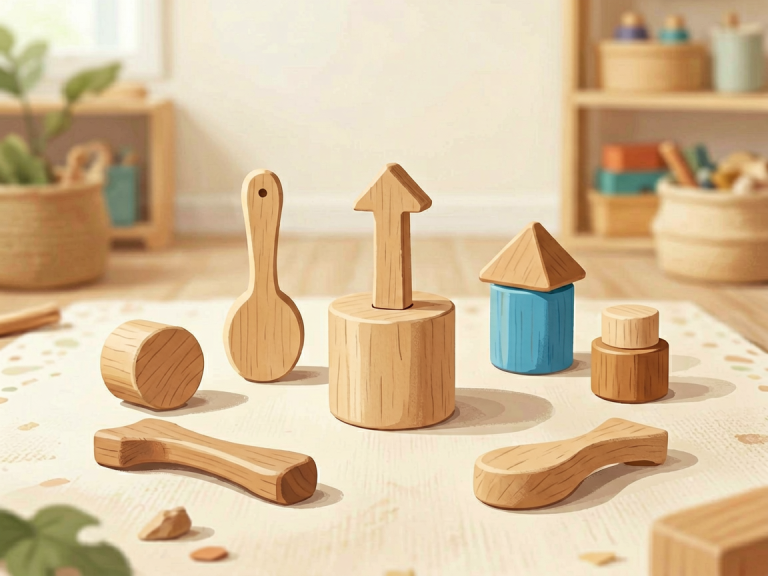
*Building sets* such as wooden blocks, LEGO Duplo, or magnetic tiles are invaluable. They teach spatial reasoning, cause and effect, and early engineering concepts. A four-year-old might build a tower, then knock it down—and that is not just fun; it is physics play.
*Memory matching card games* and simple board games like “Candy Land” or “Hoot Owl Hoot!” (a cooperative game) help develop concentration, turn-taking, and working memory. Avoid games with complex rules; the goal is to build confidence, not confusion.
*Sorting and sequencing toys*—like colored bears or counting beads—introduce patterns and categorization. These are the foundations of early math.
2. Fine Motor and Physical Development Toys
Four-year-olds are refining the small muscles in their hands and fingers. This is critical for future writing, drawing, and self-care tasks like buttoning a coat.
*Art supplies* are perhaps the most powerful fine-motor tools. Crayons, washable markers, child-safe scissors, glue sticks, and play dough allow children to squeeze, cut, roll, and draw. Do not worry about the mess; the motor practice is worth every spilled drop of paint.
*Lacing and beading sets*—where children thread string through large wooden beads—strengthen hand-eye coordination and pincer grip. Similarly, pegboards and tweezers activities (picking up pom-poms with tweezers) provide targeted hand-strengthening exercises.
For gross motor development, consider *ride-on toys* (tricycles, balance bikes), *jumping balls* with handles, and *tunnel-and-tent sets* that encourage crawling, climbing, and balance. Outdoor play is non-negotiable at this age; a simple ball, a small slide, or a set of sidewalk chalk can provide hours of movement.
3. Imaginative and Creative Play Toys
Pretend play peaks around age four. Through make-believe, children process their experiences, experiment with social roles, and develop language skills.
*Dress-up clothes* (community helper costumes, princess dresses, animal hats) and *play kitchens* with empty food boxes and plastic dishes are staples. Add a *doctor’s kit*, a *tool bench*, or a *shopping cart* to expand the scenarios. The more realistic the props, the deeper the immersion—but household items (e.g., old telephones, empty cereal boxes) work just as well.
*Puppets and storytelling sets* (like felt boards or simple finger puppets) encourage narrative thinking. A child can create a whole story around a dragon puppet and a castle.
*Art and craft kits* that are open-ended—not “paint-by-number” but rather “supplies to make whatever you imagine”—nurture creativity. A box of colored paper, stickers, feathers, and glue allows endless invention.
4. Social-Emotional and Cooperative Play Toys
Four-year-olds are learning to manage big emotions. Toys that invite cooperative gameplay teach empathy, patience, and communication.
*Cooperative board games* are excellent. Unlike competitive games where one player loses, these games require everyone to work together toward a common goal. For example, “The Sneaky, Snacky Squirrel Game” involves using tweezers to collect acorns; everyone wins when the tree is full.
*Musical instruments*—simple xylophones, maracas, drums, and shakers—encourage group rhythm-making. Playing together teaches children to listen, wait for cues, and share sounds.
*Emotion flashcards* or *feelings dolls* help children name their emotions. A set of cards showing happy, sad, angry, and scared faces can be used to play “How do you feel today?” This builds emotional vocabulary and self-regulation.
5. Language and Literacy-Enhancing Toys
At four, most children have a vocabulary of around 1,500 words and are starting to recognize letters and simple words. Toys that make language fun accelerate this growth.
*Alphabet puzzles, letter magnets, and magnetic boards* allow children to manipulate letters and form simple words. Pair them with picture cards (e.g., a picture of a cat with the letters C-A-T).
*Storytelling props* like story cubes (dice with pictures) encourage children to invent their own tales. “I rolled a tree, a frog, and a castle—once upon a time, a frog lived in a tree next to a castle…”
*Interactive books* with flaps, sounds, or textures keep reading engaging. But do not underestimate plain old picture books—reading together daily is the single most powerful language-building activity.
—
A Sample Toy Path: Week by Week or Month by Month
Instead of buying everything at once, consider introducing toys gradually. Here is a suggested timeline:
Month 1: Start with open-ended building blocks and a simple puzzle (12 pieces). Add a few dress-up items (a firefighter hat, a cape).
Month 2: Introduce a cooperative board game and a set of washable markers with large paper.
Month 3: Add a balance bike or a tricycle, plus a set of lacing beads.
Month 4: Bring in a play kitchen or a doctor’s kit. Include emotion flashcards.
Month 5: Offer alphabet magnets and a felt storyboard.
Month 6: Add musical instruments (a shaker and a drum).
By rotating toys and introducing new ones every few weeks, you keep the play fresh without overwhelming the child.
—
Safety and Practical Considerations
Of course, the best toy path must also be a safe one. At age four, children still put small objects in their mouths occasionally, so avoid toys with parts smaller than 1.25 inches in diameter. Check for sharp edges, toxic paints, and loose batteries.
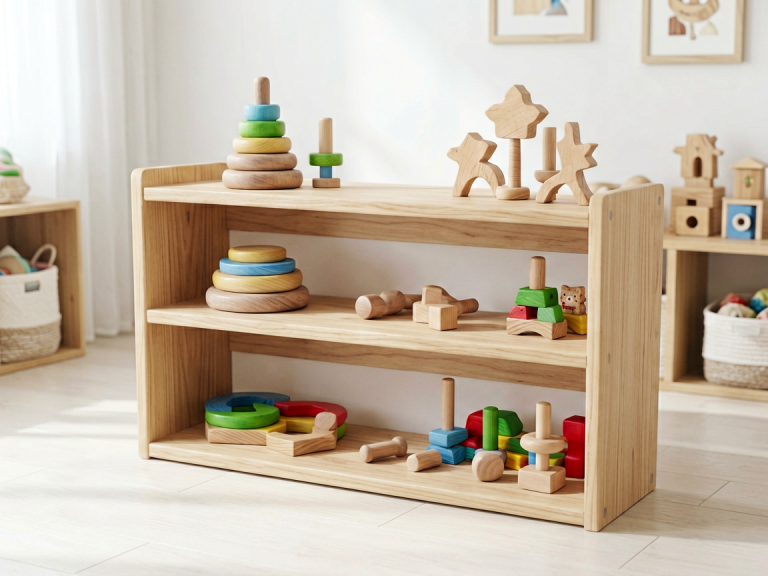
Also, consider storage. An overstuffed toy box makes it hard for a child to find what they need. Use low shelves or clear bins labeled with pictures. Rotate toys every two weeks to maintain interest.
Finally, remember that the most important “toy” is you. A toy is only as valuable as the interaction it inspires. Sit down, play alongside your child, ask open-ended questions (“What happens if we put the red block on top?”), and let your child lead. The best toy path is one that strengthens your connection, not just your child’s skills.
—
Conclusion: Play Is the Work of Childhood
Choosing toys for a four-year-old can feel overwhelming, but it does not have to be. By focusing on the five pillars—cognitive, physical, imaginative, social-emotional, and language—you can create a toy path that nurtures every aspect of your child’s growth. The best toys are not flashy or loud. They are tools for discovery: tools that let a child build, pretend, create, and connect.
As you gather toys for your four-year-old, remember that the goal is not to fill a room, but to fill a childhood with wonder. Each puzzle solved, each tower built, each imaginary tea party shared is a step on that beautiful path. So choose wisely, play joyfully, and watch your little one grow.
*(Word count: approximately 1,200)*