The Ultimate Guide to the Best Toys for Hands-On Learning: Building Skills Through Play
Introduction
In an era dominated by screens and passive entertainment, the value of hands-on learning has never been more critical. Children learn best when they can touch, manipulate, build, and experiment—activities that engage multiple senses and promote deep cognitive processing. Hands-on toys are not merely distractions; they are powerful tools that foster creativity, problem-solving, fine motor skills, and even social-emotional development. Whether you are a parent, educator, or caregiver, choosing the right toys can transform playtime into a rich educational experience. This guide explores the best categories of toys for hands-on learning, highlighting specific products and the skills they nurture. From classic building blocks to modern coding kits, each recommendation is selected for its ability to spark curiosity and encourage active exploration. Let’s dive into the world of tactile, engaging, and truly beneficial play.
—
1. Building Blocks and Construction Sets: Foundations of Engineering and Creativity
Construction toys are the quintessential hands-on learning tools. They teach spatial reasoning, balance, symmetry, and cause-and-effect relationships while allowing children to express their imagination. The open-ended nature of blocks means there is no single “right” way to play, which encourages experimentation and resilience when structures collapse.
LEGO Classic Bricks remain the gold standard. With sets ranging from simple brick boxes to themed kits like the LEGO Creator 3-in-1 series, children learn to follow instructions (a form of procedural literacy) and then deviate to create their own designs. For younger children (ages 1–5), Duplo blocks are larger and safer, promoting fine motor control as they stack and connect.
Magna-Tiles offer a magnetic twist: translucent tiles that snap together to form 3D shapes, houses, bridges, and even geometric models. These tiles teach early concepts of magnetism and polarity, and because they are translucent, children can explore light and color by placing them on a window. Similarly, Tegu Magnetic Wooden Blocks combine the warmth of wood with hidden magnets, allowing for surprising connections that defy gravity—perfect for building towers that wobble but don’t fall.
For older children (ages 8+), K’NEX and Zoob introduce gears, rods, and connectors that mimic real mechanical systems. K’NEX sets often include instructions for building working vehicles, roller coasters, or bridges, integrating principles of physics and engineering. Building these models requires patience and precision, and the sense of accomplishment when a Ferris wheel actually rotates is unparalleled.
Skills developed: Fine motor dexterity, spatial awareness, problem-solving, patience, and basic engineering principles.
—
2. Science and Experiment Kits: Turning Curiosity into Discovery
Nothing captivates a child’s mind like a hands-on experiment that produces a visible, sometimes surprising result. Science kits transform abstract concepts—chemical reactions, electricity, biology—into tangible experiences. They also teach the scientific method: forming a hypothesis, observing outcomes, and drawing conclusions.
Thames & Kosmos produces some of the most comprehensive kits on the market. Their *Chemistry Chem C500* kit (ages 8+) includes 28 experiments with safe chemicals, test tubes, and a burner. Children can create colorful reactions, grow crystals, or make a homemade volcano. The step-by-step manual explains the “why” behind each reaction, blending literacy with experimentation.
For electronics and circuitry, Snap Circuits are unbeatable. Instead of soldering, children snap components onto a grid base to build working radios, alarms, and doorbells. The *Snap Circuits Jr. SC-100* kit introduces basic circuits, resistors, and switches in a foolproof way. As they progress, kits like *Snap Circuits Pro* include microcontrollers and even FM transmitters. This toy lays a foundation for understanding how everyday devices function.
Younger children (ages 4–7) benefit from Learning Resources Primary Science Lab Set. It includes oversized, durable test tubes, goggles, and a microscope with built-in slides. Simple activities like mixing oil and water or using a magnifying glass to examine leaves encourage observation and vocabulary development. For biological exploration, Galt Toys Magnifying Glass and Bug Catcher Kit lets kids safely observe insects, fostering a love for nature and careful scientific inquiry.
Skills developed: Scientific reasoning, observation, patience, following instructions, and an understanding of cause and effect.
—
3. Art and Craft Supplies: The Infinite Canvas of Fine Motor and Creative Expression
Hands-on learning is not limited to science and engineering; art and craft toys develop dexterity, color theory, planning, and emotional expression. When children manipulate clay, weave yarn, or cut paper, they are building neural connections that support writing and coordination.
Modeling clay and play dough are classics for a reason. Play-Doh (with tools like the Play-Doh Kitchen Creations sets) allows children to extrude, stamp, and shape colorful forms. For a more sophisticated experience, Crayola Model Magic is a lightweight, air-drying clay that can be painted. Children can sculpt animals, bowls, or abstract figures, learning about form and texture. The act of rolling, pinching, and smoothing clay strengthens the small muscles in hands and fingers.
Weaving and sewing kits are excellent for older children (ages 7+). Melissa & Doug Lace and Trace panels teach basic stitching patterns, while A Child’s Dream Weaving Loom lets kids create scarves or coasters from yarn. These activities demand bilateral coordination (using both hands) and concentration. Similarly, Klutz Make Your Own Friendship Bracelets kits include step-by-step instructions for knotting patterns—a craft that also teaches math concepts like sequence and symmetry.
For 2D art, watercolor sets like the Kuretake Gansai Tambi (safe for children) encourage color mixing and brush control. Rocket Stomp Rockets and Spirograph drawing tools introduce geometric patterns through manual rotation. Cardboard construction sets like Makedo allow children to turn recycled boxes into forts, costumes, or vehicles using safe saws and connectors—a perfect blend of art, engineering, and environmental awareness.
Skills developed: Fine motor control, creativity, planning, pattern recognition, and self-expression.
—
4. Puzzles and Brain Teasers: Sharpening Logic and Persistence
Puzzles are quiet, focused hands-on activities that train the brain to recognize patterns, manipulate shapes, and think sequentially. They teach children that failure is part of the process—a critical lesson for growth mindset.
3D puzzles elevate the traditional flat jigsaw. Ravensburger 3D Puzzle Globe (ages 8+) comes with curved plastic pieces that interlock to form a sphere, complete with continent labels. Assembling it requires reading the globe’s geographic lines and understanding perspective. Alternatively, Puzzled 3D Knights and Castles sets create large, freestanding structures that children can decorate and play with.
Logic puzzles like Rush Hour (by ThinkFun) test spatial reasoning. In this game, children slide cars and trucks on a grid to navigate a red car through a traffic jam. The increasing difficulty levels teach backward thinking and trial-and-error strategies. Similarly, Gravity Maze is a marble-run logic game where children place towers on a grid to create a path for a marble to reach its target. Each puzzle requires planning the route while considering gravity and obstacles.
For younger children, Montessori-style wooden puzzles like the Melissa & Doug Shape Sorting Cube incorporate shape recognition and matching. Kanoodle (by Educational Insights) is a travel-friendly 2D/3D logic puzzle that challenges children to fit irregular pieces into specified arrangements—a brilliant exercise in mental rotation and flexibility.
Skills developed: Logical reasoning, spatial visualization, patience, perseverance, and focus.
—
5. Role-Playing and Pretend Play Toys: Real-World Skills Through Imagination
Pretend play might seem frivolous, but it is a profound hands-on learning activity. Through imitation, children process their experiences, practice social roles, and develop language. The best role-playing toys provide realistic props that invite exploration of adult tasks.
Kid-sized tool sets like the Little Tikes Workbench and Tool Set come with plastic hammers, screwdrivers, and screws that children can actually turn. They learn the mechanics of fastening, the names of tools, and how to “fix” things. For added realism, Learning Resources Let’s Go Code! Activity Set turns coding into a floor game where children lay out arrow tiles to guide a robot—an early, physical introduction to sequencing.
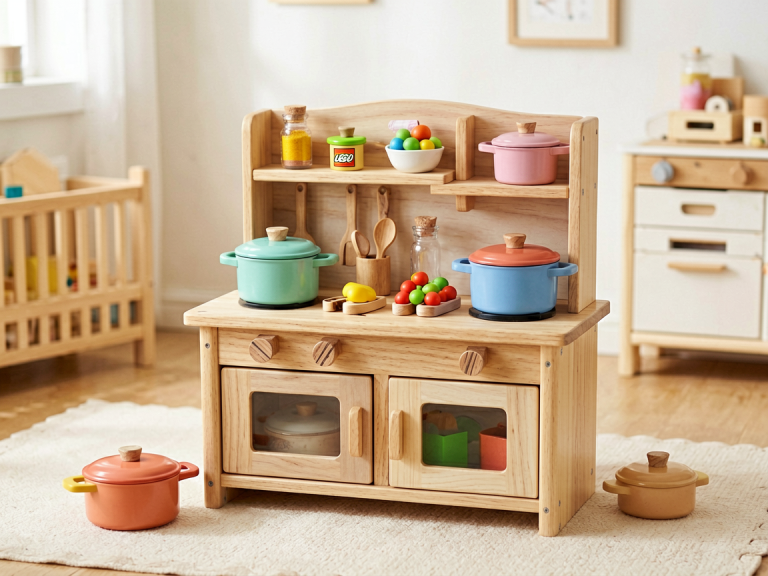
Play kitchens and food sets, such as Melissa & Doug Wooden Chef’s Kitchen, encourage sorting, counting, and role-playing recipes. Children can “bake” a cake by following a pictorial recipe card, learning measurement and order. Doctor kits (with stethoscopes, bandages, and syringes) demystify medical visits and build empathy. Cash registers and play money from brands like Learning Resources teach basic addition, subtraction, and the concept of exchange.
For more open-ended scenarios, wooden dollhouses or train sets (like Brio) allow children to construct miniature worlds, negotiate narratives, and solve logistical problems (e.g., “How do I get the train across the bridge without crashing?”). These toys engage both fine motor skills and social-emotional intelligence when played with others.
Skills developed: Social skills, empathy, language development, early math, and understanding daily routines.
—
6. Outdoor and Active Learning Toys: Engaging the Whole Body
Hands-on learning shouldn’t be confined to a desk. Outdoor toys that involve digging, planting, building, and moving provide gross motor exercise and direct interaction with nature.
Gardening kits like Root Viewer Planter (ages 5+) let children watch seeds sprout through a transparent chamber. They can measure growth, water plants, and learn about photosynthesis and soil health. National Geographic Kids Bug Dig Kits require children to excavate plastic insects from a plaster block using tools—a paleontology simulation that develops patience and careful hand movements.
For construction outdoors, KidKraft Swing Sets with climbing walls and slides promote balance and strength, but more directly hands-on are Kinetic Sand (which molds and cuts without drying) and water tables from brands like Step2. Water tables come with pumps, channels, and cups that teach concepts of flow, volume, and buoyancy. Similarly, Bubble Wands and Bubble Machines are simple but effective for exploring air pressure and surface tension.
Building forts or shelters using tree branches and fabric (with adult supervision) or using Teepee Playhouse kits encourages spatial design and teamwork. Ride-on toys like tricycles develop coordination, but balance bikes (with no pedals) force children to use their legs to push and steer, building core strength and confidence in a low-risk way.
Skills developed: Gross motor coordination, cause-and-effect (e.g., water flow), environmental awareness, and risk assessment.
—
Conclusion: Choosing the Right Hands-On Toys
The best toys for hands-on learning share one trait: they invite active participation rather than passive consumption. A toy that does everything automatically—a singing, dancing, flashing robot—may entertain, but it rarely teaches. In contrast, a box of wooden blocks, a chemistry kit, or a simple loom puts the child in control. When selecting toys, consider your child’s age, interests, and developmental stage. Look for open-ended possibilities, durable materials, and opportunities for repetition and refinement. Above all, remember that hands-on learning is a journey, not a destination. The child who struggles to fit a puzzle piece, spends an hour building a tower that falls, or painstakingly sows a crooked seam is gaining more than any worksheet could offer: resilience, curiosity, and the joy of creating with their own hands. Invest in these tools, and you invest in a lifelong love of learning.