The Ultimate Guide to Language Development Toys by Age: From Babbling to Storytelling
Language development is one of the most critical milestones in early childhood, forming the foundation for communication, literacy, and social interaction. While everyday conversations and reading aloud are invaluable, the right toys can act as powerful catalysts, turning playtime into a rich linguistic experience. However, not all toys are created equal—what works for a six-month-old may frustrate or bore a three-year-old. This guide explores language development toys by age, providing evidence-based recommendations for each stage from infancy to early school years. By understanding how children process sounds, words, and narratives at different ages, parents and educators can select toys that nurture vocabulary, syntax, and conversational skills in a fun, engaging way.
—
Infants (0–12 Months): Laying the Auditory and Sensory Foundation
In the first year of life, babies are primarily absorbing sounds, rhythms, and intonations. Their brains are wired to distinguish phonemes from their native language, and they begin to coo, babble, and eventually produce first words around 12 months. The ideal toys for this stage are those that stimulate auditory perception, encourage vocal imitation, and provide safe, tactile exploration.
Soft Cloth Books with High-Contrast Patterns
Soft, crinkly fabric books featuring bold black-and-white or primary-color images are excellent for newborns. As you turn the pages and name objects (“Look, a red ball!”), the baby begins to associate spoken words with visual cues. The crinkle sound also grabs attention and supports auditory discrimination. From 6 months onward, choose books with simple textures or mirrors to promote joint attention—a precursor to conversation.
Rattles and Sound-Making Toys
Rattles, bells, and shakers that produce gentle, varied sounds help infants learn cause and effect: “I shake it, and it makes noise.” Parents can model language by describing the action (“Shake, shake, shake!”) or imitating the baby’s babbling. This back-and-forth vocal play is the earliest form of dialogue. Look for toys with different pitches to expose the baby to tonal variety.
Teething Toys with Textures
While primarily for oral motor relief, teething toys with bumps, ridges, or soft plastic nubs encourage mouthing, which strengthens the lips and tongue—muscles essential for articulate speech. Naming the colors or shapes (“You’re chewing the green star!”) links physical sensation with vocabulary.
Mirror Toys
Unbreakable, baby-safe mirrors inspire self-recognition and vocalization. Babies often babble at their own reflection, practicing sounds without pressure. Parents can sit with the baby, point to themselves, and say “Mama” or “Dada,” reinforcing word-object connections. The mirror also supports turn-taking: “Look, you smiled, and I smiled back!”
—
Toddlers (12–24 Months): Expanding Vocabulary and First Sentences
Toddlers experience a vocabulary explosion, moving from single words to two-word phrases like “more milk” or “doggie run.” They also begin to understand simple instructions and enjoy imitating sounds. Toys for this age should encourage labeling, categorization, and simple sequencing.
Shape Sorters and Simple Puzzles
When a toddler fits a triangle into its hole, you can narrate the process: “The triangle goes in. You did it! That’s a circle.” These toys teach object names, prepositions (“in,” “out,” “on”), and action verbs. Choose puzzles with knobs and large pieces to avoid frustration. The repetitive labeling helps solidify vocabulary.
Picture Books with Interactive Elements
Board books that feature flaps to lift, tabs to pull, or textures to touch are perfect for this stage. As the child opens a flap to reveal a hidden animal, the adult can ask, “Who’s hiding?” and then model the answer: “It’s a duck! Quack quack!” This builds anticipation, turn-taking, and question-answer structures—all foundational for conversation.
Sound and Music Toys
Simple keyboards, xylophones, or toy phones that play prerecorded words or songs invite toddlers to press buttons and hear sounds. A toy phone with a “hello” button encourages call-and-response imitation. Parents can have pretend conversations: “Ring ring! Is that Grandma? What does she say?” This role-play advances social language.
First Animal and Vehicle Sets
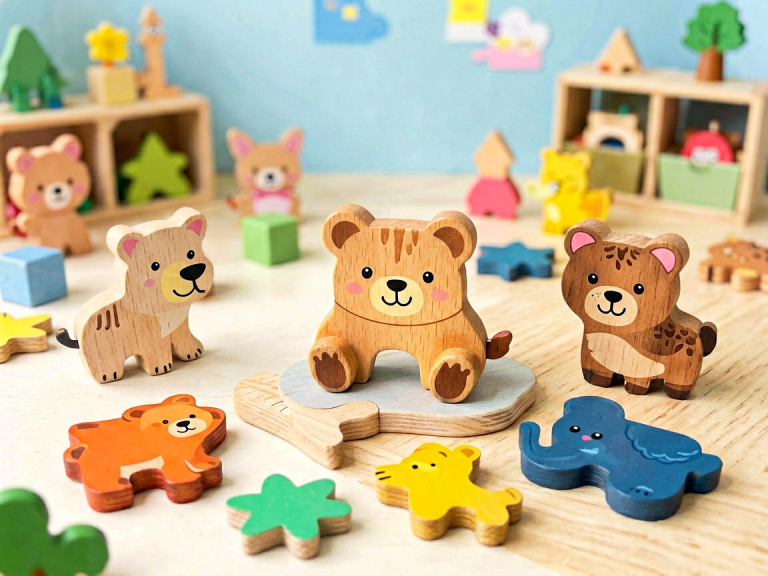
Plastic farm animals, cars, or people figures enable toddlers to act out mini-scenarios. “The cow says moo. The car goes vroom.” By manipulating objects, children practice nouns, onomatopoeia, and early verb use. Keep sets small—three to five pieces—to avoid overstimulation.
—
Preschoolers (2–4 Years): Building Sentences and Narrative Skills
Between ages two and four, children’s sentences grow to three or four words, and they begin to use basic grammar—plurals, past tense, and pronouns. They also enjoy storytelling, pretend play, and asking endless “why” questions. Language development toys should now target sequencing, imaginative dialogue, and sound-letter awareness.
Storytelling Cards or Magnetic Storyboards
Sets of 5–10 cards with images of a simple sequence (e.g., a seed growing into a flower, or a child waking up, brushing teeth, eating breakfast) teach narrative order. As the child arranges the cards, the adult prompts: “What happens first? What comes next?” This builds logical thinking and the use of words like “then,” “after,” and “finally.” Magnetic boards with character and prop pieces allow children to create and retell their own stories.
Alphabet Puzzles and Letter Magnets
At this stage, phonemic awareness begins. Large foam letter puzzles or magnetic alphabet sets let children match letters to sounds. Play games like “Find the letter that says ‘buh’” or “Let’s spell your name.” Don’t pressure memorization—focus on playful exposure. Pair letters with objects: place a letter B magnet next to a toy banana. This associative learning primes pre-reading skills.
Play Kitchens, Doctor Kits, and Dress-Up Costumes
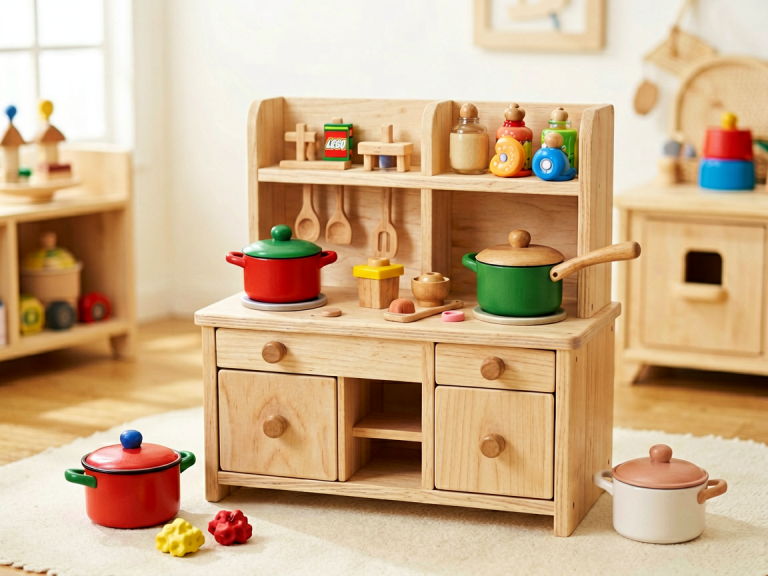
Pretend play is a goldmine for language. A play kitchen invites conversations: “I’m making soup. What do you want?” “I want carrots, please.” Role-play with puppets or costumes encourages children to adopt different voices, ask questions, and negotiate turns. These interactions naturally require complex language structures—requests, offers, explanations. Adults can scaffold by modeling extended responses.
Rhyming and Sound Matching Games
Simple board games or card sets where children match pictures that rhyme (cat–bat, sun–run) strengthen phonological awareness. Similarly, “I Spy” style toys—where the child finds an object that starts with a certain sound—make language learning active. These toys also improve listening comprehension, as children must process a spoken clue.
—
School-Age Children (4–7 Years): Reading, Writing, and Complex Conversations
From age four onward, children typically acquire basic reading skills, expand their vocabulary to thousands of words, and begin to understand humor, idioms, and abstract concepts. Language development toys should now support decoding, comprehension, and structured expression.
Phonics-Based Board Games and Word-Building Kits
Games like “Zingo! Word Builder” or sets with letter tiles and word cards allow children to physically manipulate sounds to form words. For example, a child might arrange tiles to change “cat” into “bat” then “bit.” This hands-on approach reinforces spelling patterns and blending. Parental involvement is key: ask the child to read the word aloud or use it in a sentence.
Story Cubes and Creative Writing Prompts
Sets of dice with pictures (a castle, a dragon, a map, a key) encourage children to roll and invent a story that includes all the images. Start simple: “Tell me a story about a dragon who found a key.” This boosts narrative coherence, cause-and-effect reasoning, and descriptive language. Older children can write or draw their stories, linking oral to written language.
Conversation Starters or Question Cards
Some toys are designed purely for dialogue: a deck of cards with open-ended questions like “What makes you feel brave?” or “If you could have any superpower, what would it be?” These encourage elaborated responses and perspective-taking. Play them during car rides or family dinners to build vocabulary around emotions and hypotheticals.
Audio Books with Companion Toys
While not strictly a toy, an audio player combined with a related physical object (e.g., a stuffed T-Rex that accompanies a dinosaur story) immerses children in rich language. Listening to stories read aloud models fluency, intonation, and new vocabulary. Children can then retell the story using the toy, reinforcing comprehension.
Board Games Requiring Reading and Following Directions
Games like “Feed the Woozle” (which involves reading action cards) or “The Sneaky, Snacky Squirrel Game” (color matching while reading simple instructions) motivate children to process written or spoken multi-step directions. They also practice turn-taking and polite language: “Your turn,” “Good game,” “Can I have the blue acorn?” These social pragmatics are vital for school success.
—
Conclusion: Choosing Toys That Grow with the Child
Language development is not a linear sprint but a dynamic, recursive journey. The best toys for language growth are those that meet a child at their current developmental level while stretching them slightly beyond. A rattle that coaxes a coo from an infant becomes the shape sorter that teaches “round” to a one-year-old, which in turn evolves into the phonics game that unlocks words for a kindergartner. Parents and caregivers should look for toys that are responsive — those that “talk back” through sounds, images, or prompts — and that invite joint engagement rather than passive consumption. Above all, remember that no toy can replace the warmth of a human voice, the back-and-forth of a genuine conversation, or the shared joy of reading together. Use these toys as tools, not tutors, and the language will flourish naturally.
*(Word count: Approximately 1,050 words)*